Cost of Living in Yangshuo
Where this figure comes from. No cost survey covers Yangshuo, so the $800 a month above is our own estimate rather than a measurement. On 416 of our 999 city guides the figure is built from a published Numbeo basket, a one-bedroom rent in the centre plus one person's monthly costs without rent, converted to USD; this city is not one of them. How we source everything.
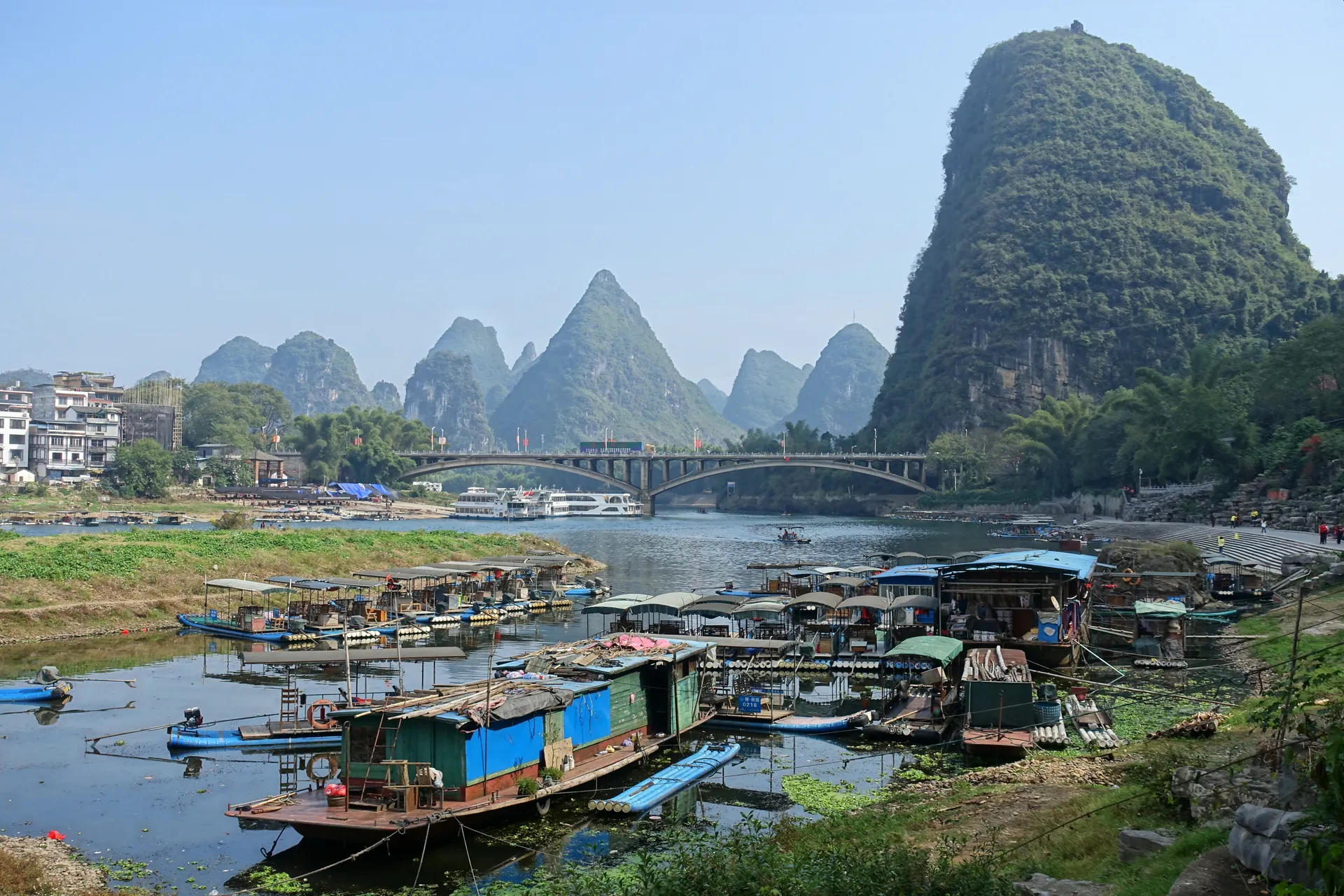
Yangshuo is one of the more affordable bases a nomad can pick in China, especially set against the karst scenery you get for the money. A comfortable solo budget runs roughly $700 to $1,300 a month, depending on whether you nest in town or in a countryside guesthouse. Rent is the swing factor: a modest studio or long-stay guesthouse room in or near town is inexpensive, while a boutique riverside retreat in the Yulong valley costs noticeably more. Everyday spending stays low because local food, beer, buses, and bike rentals are cheap, and street markets undercut anything tourist-facing on West Street. Budget mid-range if you want reliable heating or air conditioning, since older buildings can be damp in winter and sweltering in summer.
- Budget end (~$700 to $850): shared or simple guesthouse room, local meals, cycling and buses.
- Mid-range (~$900 to $1,100): private studio, mix of local and Western food, occasional tours.
- Comfortable (~$1,200 to $1,300+): riverside room, frequent dining out, e-bike or scooter rental.
- Cash still rules for small vendors, though mobile pay dominates and can be tricky for foreigners.
Where to Work in Yangshuo
The Great Firewall is the first thing a remote worker hits in Yangshuo: Google Workspace, Gmail, WhatsApp, most social platforms and some cloud services are blocked or unreliable here until a working VPN is running on both your laptop and your phone. Set up and test a reputable VPN before you land, since app stores and VPN sites can be hard to reach once you are inside the country. Local fixed-line and mobile internet is genuinely decent and often fast, so raw speed is rarely the problem; access is. There is no big dedicated coworking scene, but plenty of laptop-friendly cafes sit on and just off West Street and out in the quieter countryside guesthouses, many with strong wifi and good coffee. Guesthouse common areas and your own room often make the calmest office.
- Install and verify a VPN in advance; keep a backup provider in case one stops working.
- Local internet speeds are usually solid; reliability of Western services is the real constraint.
- Cafes off West Street are quieter and better for calls than the busy tourist strip.
- Buy a local SIM with data for a mobile hotspot fallback.
Getting Around Yangshuo
The town itself is small and walkable, and half the joy of Yangshuo is that you do not need a car. Most nomads get around the countryside by bicycle or a rented e-bike or scooter, weaving along the Yulong River and through villages framed by limestone peaks. Bamboo rafts drift down the gentler stretches of the Yulong for a slow, scenic afternoon rather than real transport. For longer hops, local buses connect Yangshuo with Guilin and nearby towns cheaply, and the Guilin high-speed rail network reaches Yangshuo station (outside the town center), putting fast trains to Guilin, Guangzhou, and beyond within easy reach. Ride-hailing and taxis cover the gap between the station and town.
- Walk the town; rent a bicycle or e-bike for the Yulong valley and back roads.
- Bamboo rafting on the Yulong is a scenic experience, not a commute.
- Yangshuo high-speed rail station sits outside town; budget a taxi or bus transfer.
- Buses to Guilin are frequent, cheap, and straightforward.
Sorting transport? Book an airport transfer, or compare car rental on Auto Europe and QEEQ.
Visas for Yangshuo
China is one of the more demanding places to arrange a stay, and Yangshuo is no exception. The 30-day visa-free entry that most Yangshuo visitors use applies to about 50 countries, most of Europe plus the UK, Canada, Australia, New Zealand, Japan and South Korea among them, and it currently runs to 31 December 2026. US citizens are not on that list and come on a tourist (L) visa arranged in advance, which typically means an application, supporting documents, and sometimes an in-person appointment. China also runs a 240-hour visa-free transit exemption for travellers passing through designated ports on an onward ticket to a third country, but Yangshuo is not a primary entry hub, so it is situational. If you plan a longer stay, research your options early, keep documentation tidy, and do not assume flexibility once you are in country.
- Most European, UK, Canadian and Australian passports enter visa-free for 30 days; US citizens need a tourist (L) visa.
- The 240-hour transit exemption depends on nationality, port, and an onward ticket to a third country.
- Overstaying carries real penalties; track your permitted dates carefully.
Best Time to Visit Yangshuo
Spring and autumn are the sweet spots. From roughly April to May and again from September to November, temperatures are pleasant, the peaks are clear, and cycling or climbing is comfortable rather than punishing. Summer brings the greenest, most dramatic scenery as rice paddies and hillsides burst into color, but it is hot, humid, and prone to heavy downpours; the wet season also carries a real risk of flooding along the Li and Yulong rivers, which can disrupt cruises and rafting. Winters are cool to cold and damp rather than freezing, quieter with fewer crowds, and buildings often lack good heating. Aim for shoulder seasons if you want the best balance of weather, scenery, and manageable tourist numbers.
- Spring (Apr to May) and autumn (Sep to Nov): mild, clear, ideal for climbing and cycling.
- Summer: lushest scenery but hot, humid, and flood-prone; expect sudden heavy rain.
- Winter: cool, damp, and quiet, with limited indoor heating.
- National holidays bring big domestic crowds; avoid them if you want calm.
Pros and Cons of Yangshuo
Yangshuo trades on one enormous asset: some of the most beautiful landscape in the world, the karst-and-river scenery famous enough to feature on the 20-yuan note. Add in low costs, a long-standing backpacker and rock-climbing culture, real outdoor activity, and a lively (if touristy) nightlife on West Street, and it is easy to see the appeal. The trade-offs are equally real. The Great Firewall complicates daily digital work, English is limited once you step away from tourism, visas are relatively hard, and the town can feel overrun during peak domestic holidays. The expat scene is modest and transient rather than a deep, settled community. It rewards independent, adaptable travelers more than those wanting plug-and-play convenience.
- Pros: world-class scenery, low cost, climbing and cycling, friendly backpacker energy.
- Pros: cheap food and beer, easy rail links, genuine outdoor lifestyle.
- Cons: VPN needed for many Western tools; censorship friction is constant.
- Cons: limited English, demanding visas, and heavy crowds at holiday peaks.
Who Yangshuo Is For
Yangshuo suits the independent nomad who values landscape and lifestyle over infrastructure and community. If you climb, cycle, hike, or simply want to wake up among limestone peaks and river mist, few places deliver more for the money. It rewards travelers who are comfortable with a VPN, patient with a language barrier, and happy to build their own rhythm rather than plug into a ready-made expat network. It is a weaker fit if you need frictionless access to Western tools, a large coworking community, easy long-stay visas, or English everywhere. Think of it as a scenic, affordable base for a focused stay, a climbing season, or a slower interlude, rather than a long-term hub with all the conveniences.
- Great for: climbers, cyclists, outdoor lovers, and self-sufficient solo travelers.
- Good for: budget-conscious nomads wanting standout scenery for a season.
- Less ideal for: those needing seamless Western tools and big community.
- Less ideal for: anyone wanting simple long-stay visas and English convenience.