Cost of Living in Dushanbe
Where this figure comes from. No cost survey covers Dushanbe, so the $700 a month above is our own estimate rather than a measurement. On 416 of our 999 city guides the figure is built from a published Numbeo basket, a one-bedroom rent in the centre plus one person's monthly costs without rent, converted to USD; this city is not one of them. How we source everything.
Budget around $700 a month as a solo remote worker in Dushanbe, which is among the lowest figures on this site. A one-bedroom flat runs roughly $200 to $400, with the centre near Rudaki Avenue at the top of that. Food from the bazaars is very cheap and the produce, particularly the fruit, is famously good; Tajikistan grows apricots, melons and pomegranates that the whole region buys. Imported goods and anything electronic are expensive and hard to find. The somoni is stable but not freely convertible outside the country. This is our own estimate rather than measured data. Fixed internet runs $30 to $60 a month for speeds that would cost a tenth of that elsewhere, which is the single worst value on this site. The somoni cannot be exchanged abroad, so bring dollars and change what you need locally, and expect cash to be the only option for most transactions. A marshrutka fare is a few cents and a taxi across the city a dollar or two. Rents in the Soviet-era blocks away from Rudaki run well below the centre and are what most residents pay.
Where to Work in Dushanbe
Dushanbe's connectivity is the real constraint: Tajikistan has among the slowest and most expensive internet in the region, the state controls the backbone, and access has been restricted during politically sensitive periods. Fibre reaches parts of the capital at modest speeds and mobile data is the common fallback. Power supply in the capital is reliable, though the rest of the country still sees winter rationing. There is essentially no coworking. Russian is the working language of business and Tajik of daily life; English is rare. Anyone planning to work here should treat the connection as the thing to verify first. Tajikistan runs five hours ahead of GMT, which gives a European afternoon overlap and no useful American window at all. The state telecom holds the international gateway and pricing reflects that, which is the structural reason the internet is both slow and expensive rather than merely one or the other.
Getting Around Dushanbe
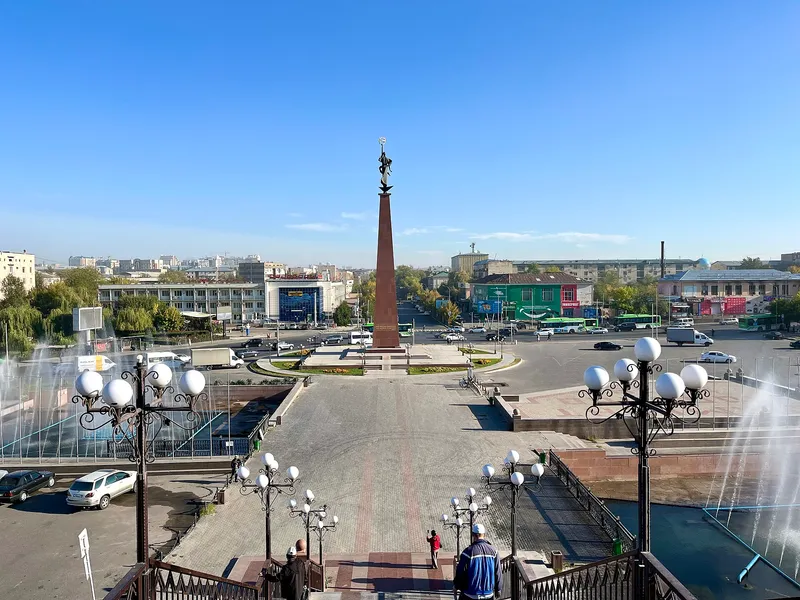
Dushanbe is a low-rise city laid out along Rudaki Avenue, a long tree-lined boulevard that most of the centre hangs off, and the walkable core is genuinely pleasant with fountains and parks along its length. Marshrutka minibuses and buses cover the city for very little, and taxis are cheap and usually unmetered, so agree the fare first. Dushanbe airport has connections to Istanbul, Dubai, Moscow and the region. The Pamir Highway, the second-highest road in the world, starts here and runs east towards the Wakhan Corridor and Kyrgyzstan, which is why most foreign visitors come at all. Rudaki Avenue carries what is claimed to be one of the tallest flagpoles in the world outside the palace, and the Navruz Palace and the national museum along it were built in the same wave of state construction. The road north to the Fann Mountains and Iskanderkul reaches genuinely alpine country within four hours. Shared taxis to Khujand through the Anzob tunnel take about five hours and are the standard way north, the tunnel itself having a poor reputation that has improved since its rebuild.
Sorting transport? Book an airport transfer, or compare car rental on Auto Europe and QEEQ.
Visas for Dushanbe
Tajikistan operates an e-visa that most nationalities can obtain online in a few days, typically valid for forty-five to sixty days, and it is one of the more straightforward systems in Central Asia. There is no remote work visa. Anyone intending to travel the Pamir Highway needs an additional GBAO permit for the Gorno-Badakhshan autonomous region, which can be requested with the e-visa application and is checked at road posts. Registration with the authorities is required for stays beyond a set period, usually handled by the hotel. The GBAO permit is free when requested alongside the e-visa but is often refused or delayed during periods of tension in Gorno-Badakhshan, which has been closed to foreigners more than once in recent years. Anyone planning the Pamir Highway should check whether the region is currently open before booking anything.
Best Time to Visit Dushanbe
April to June and September to October are the comfortable windows, with warm dry days and the mountains accessible. Dushanbe sits low at around 800 metres and its summers are hot, regularly above thirty-five degrees in July and August, though the dry air makes that more bearable than the number suggests. Winter is cold and grey with snow, and the air quality in the capital drops sharply as coal heating comes on. The Pamir Highway season is short, roughly June to September, and the passes are closed by snow outside it. Navruz in late March is the largest holiday of the year and Dushanbe marks it on a scale that closes the city for several days. Winter air quality in the capital is genuinely poor, with coal and low-grade fuel burned for heating and the valley position trapping it. The mountains hold snow into June, so the high valleys open later than the capital's weather suggests, and the trekking season is correspondingly short.
Pros and Cons of Dushanbe
Dushanbe is the gateway to the Pamirs, which is one of the great mountain regions on earth and almost entirely unvisited, and the city itself is greener and more pleasant than its reputation, with a genuinely walkable central boulevard. Costs are among the lowest anywhere and the fruit is remarkable. The internet is slow and politically controlled, English is rare, not one remote worker is in evidence here, air quality in winter is genuinely poor, and Tajikistan is an authoritarian state where political topics are best left alone. The city was also rebuilt on a Soviet plan with the widest boulevards in Central Asia, which makes it feel larger and emptier than its population. Tajikistan is over ninety per cent mountain and the Pamirs contain peaks above seven thousand metres, including Ismoil Somoni, the highest in the former Soviet Union, which is the scale of what sits a day's drive from a very ordinary capital. Yagnob valley to the north still speaks a direct descendant of Sogdian, the language of the Silk Road merchants, and is one of the last places it survives.
Who Dushanbe Is For
A traveller heading into the Pamirs needs somewhere to arrange permits, buy supplies and rest, and that is what this is rather than a place to sit and work for months. Anyone with Russian will find it far easier. Work that depends on a fast or uncensored connection cannot be done here, and that single fact disqualifies most remote workers before any of the other considerations get a hearing. Come for the mountains, plan the connection around what the country actually offers, and time it for the short Pamir season. Anyone attempting the Pamir Highway should also plan the GBAO permit and the vehicle before arriving, since neither is quick to arrange once here. It also suits cyclists specifically, since the Pamir Highway is one of the classic long-distance rides in the world and Dushanbe is where almost every attempt is provisioned and repaired. Central Asian water politics is a subject best studied from the country that controls the taps. Tajikistan holds the headwaters the whole region depends on, and the Rogun dam is the project the entire argument now turns on.
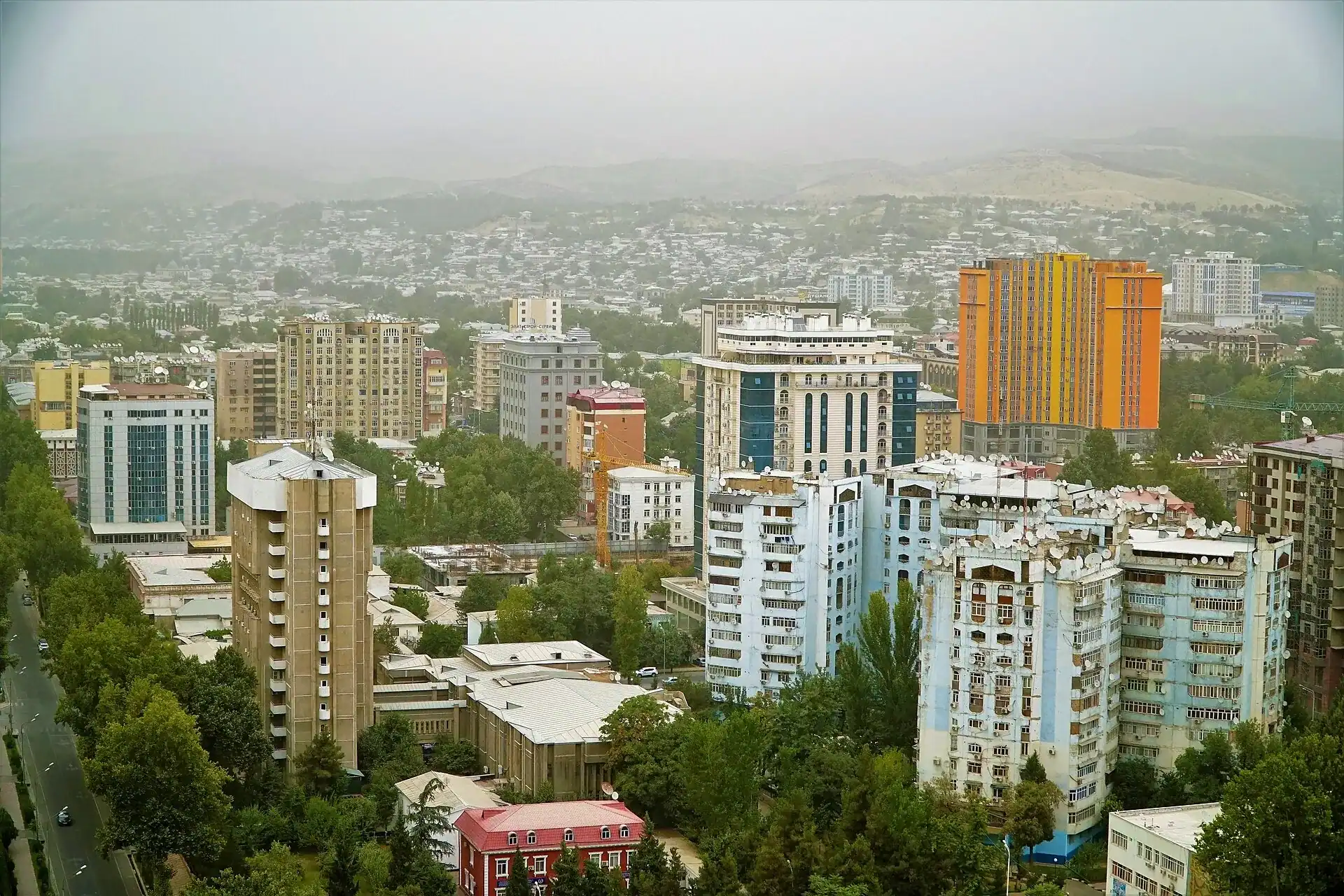 Photo: Adam Harangozó / Wikimedia Commons (CC BY-SA 4.0)