Cost of Living in Kuala Lumpur
Real market data
Source: Numbeo · August 2026
$1,040/moSolo nomad1-bed centre + living costs
$1,360/moCoupleshared 1-bed + costs
$760/moLean / localcheaper area + costs
- 1-bed rent, city centre$630RM2,588
- 1-bed rent, outside centre$360RM1,478
- Monthly costs excl. rent (1 person)$400RM1,645
- Meal, inexpensive restaurant$5RM20
- Monthly transit pass$12RM50
- Buy price, per m² (centre)$4,020RM16,429
Prices are from Numbeo (August 2026), converted to USD at $1 = RM4.09 (01 Aug 2026). The monthly living-costs figure is our transparent one-person basket, groceries, a few meals out, utilities, phone, internet, transport and essentials, priced from those figures. Solo adds central rent; couple and lean are estimates from the same numbers.
Kuala Lumpur sits near the top of Southeast Asia for value. Your monthly spend depends heavily on where you rent and how often you eat out, but the city rewards those who learn to navigate both.
Rent: A furnished studio or one-bedroom in central areas like KLCC, Bangsar, or Bukit Bintang runs $490-1,100 per month. Move out to Petaling Jaya, Chow Kit, or areas further from the core and the same size apartment costs $170-440.
Groceries: Cooking at home occasionally alongside regular hawker meals, expect to spend $98-170 per month on groceries.
Eating out: A hawker meal costs $1-3 and is genuinely good food, not a compromise. A sit-down meal at a mid-range restaurant costs $6-15 per person. You can eat extremely well in KL without much effort.
Coworking hot desk: $86-200 per month depending on the space and location. Premium spots like Colony KLCC run toward the top of that range; mid-tier operators like Common Ground sit in the middle.
Local transport: The rail network charges $0.29-1 per journey. A monthly unlimited transit pass runs $24-37. Grab (the regional ride-share app) is cheap for trips the rail does not cover.
Total monthly range: A budget nomad sharing an apartment in an outer area can manage on $780-930. A comfortable solo lifestyle with central rent, coworking, and regular dining out lands between $1,350-1,700. These figures use approximately 3.95 MYR per USD as of early 2026.
Where to Work
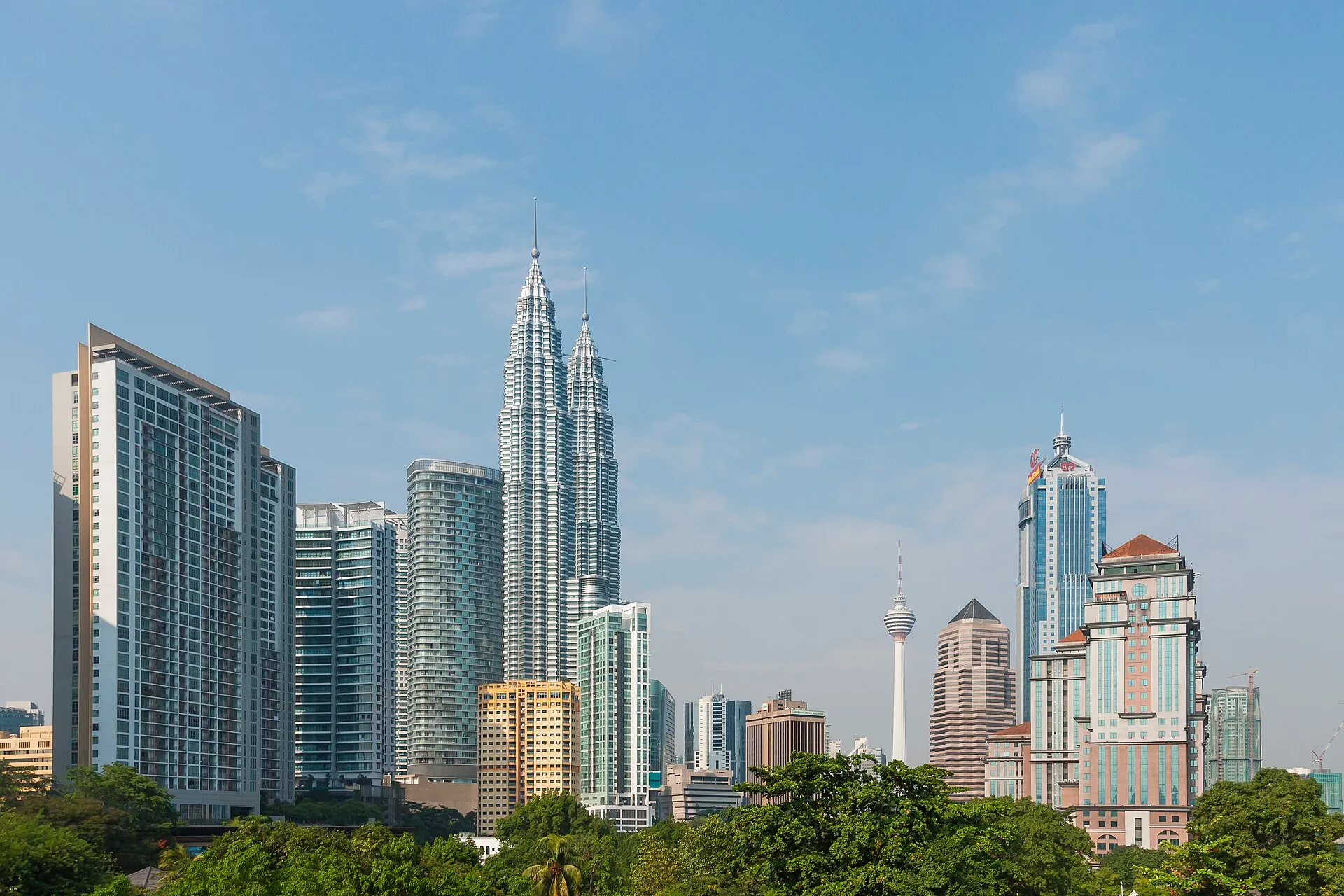
KL has a mature coworking scene. WORQ is the most nomad-friendly operator, with nine locations all connected to MRT or LRT stations, 24/7 access, and consistently strong reviews (4.7 stars across hundreds of Google reviews). Hot desks run from $10 per day. Colony at KLCC is the showpiece option: 19,000 sq ft, floor-to-ceiling views of the Petronas Towers, an in-house cafe, and a rooftop pool. Day passes start at $15. Common Ground runs the largest network with locations in Bangsar, Mont Kiara, Damansara Heights, and a new KLCC flagship. Hot desks typically start around $98-120 per month.
Cafe working culture is real here. Laptop users are welcome in most independent cafes, and most provide strong WiFi without a time limit. Specialty coffee has landed in KL in a serious way, and you will not struggle to find a quiet table with good espresso. The main constraint is seating: popular cafes fill up by mid-morning on weekdays.
Residential internet is typically fast (fiber is standard in newer buildings) and usually included in rent. Mobile data is genuinely cheap: $6-7.50 for a 10GB SIM from operators like Digi, Maxis, or Celcom. Coworking spaces and most cafes deliver speeds more than adequate for video calls.
Getting Around
KL has multiple rail lines (MRT, LRT, Monorail) that cover the main nomad neighborhoods reasonably well. KLCC, Bukit Bintang, Bangsar, and KL Sentral all have rail access. Fares are cheap and trains run reliably. The honest caveat: KL was designed around cars, and street-level walking between many destinations is unpleasant due to incomplete sidewalks and the maze of flyovers. You will find yourself walking through malls to cross from one block to another. This is not a city where you wander on foot the way you might in Penang or Chiang Mai.
Grab fills the gaps cheaply. A cross-city ride rarely exceeds $3.50-6. For anything within your neighborhood, walking is fine; for longer or multi-stop days, Grab is the practical choice.
From the airport: the KLIA Ekspres connects Kuala Lumpur International Airport to KL Sentral in 28 minutes, running every 20 minutes and costing $13 one way. It has onboard WiFi and luggage space. If you land at KLIA2 (low-cost terminal), the same line serves it with a slightly longer journey. Grab from the airport to central KL takes 45-75 minutes depending on traffic and costs $13-22.
Sorting transport? Book an airport transfer, or compare car rental on Auto Europe and QEEQ.
Visas and Staying Long-Term
Citizens of the US, UK, Canada, Australia, New Zealand, Japan, South Korea, and most EU countries enter Malaysia visa-free for 90 days. Many other nationalities receive 30-day visa-free entry. These stays cannot be extended from within the country in most cases, meaning you need to exit and re-enter to reset.
For longer stays, Malaysia offers the DE Rantau Nomad Pass: a pass of three to twelve months, renewable once for up to twelve more, for remote workers employed by or contracting with companies outside Malaysia. Requirements include annual income above $24,000 for tech and digital roles or above $60,000 for other professions, proof of remote work, and a fee of about $240. MDEC (Malaysia Digital Economy Corporation) puts processing at six to eight weeks from a complete application. The pass is renewable and foreign-sourced income is not taxed in Malaysia.
Best Time to Visit
KL is a year-round destination in the sense that it is always hot and humid, around 32-33C (89-92F) by day, never dropping much below 22C (72F) at night. There is no true dry season: rain falls throughout the year, mostly as short, intense afternoon showers that pass within an hour.
The least rainy months are May through July and again in January to February, with rainfall averaging around 125-130mm in June and July versus 350+ mm in November. For remote work purposes, the weather difference is marginal since you are mostly indoors, but June and July give you cleaner skies and better conditions for any outdoor exploring.
The main weather hazard worth planning around is haze: smoke from land-clearing fires on Sumatra can blanket KL during August and September, pushing air quality into unhealthy territory for days or weeks at a stretch. If you have respiratory sensitivities, avoid this window. The rest of the year, air quality is generally acceptable with occasional urban pollution spikes.
Pros and Cons
- Food variety and quality is exceptional: Malay, Chinese, Indian, and international cuisines all at hawker prices or above, and the city has produced genuine fine dining worth seeking out
- Low cost relative to quality of life: comfortable apartment, fast internet, and coworking for well under $1,500 a month
- English is widely spoken across all contexts, making daily life easy to navigate from day one
- Strong digital infrastructure: fast residential internet, cheap mobile data, large coworking market
- DE Rantau visa provides a legal, renewable long-stay path at a realistic income threshold
- International connectivity: KLIA is a major hub with direct routes to Europe, the Middle East, Australia, and across Asia
- Poor walkability in most areas: the city is built for cars, and navigating on foot between neighborhoods is often impractical
- Haze season (August to September) can be genuinely bad some years, not just inconvenient
- Heavy traffic: Grab times expand significantly during rush hours, and road congestion affects ride times citywide
- LGBTQ+ travelers face real legal risk: same-sex relations are criminalized under both civil and Sharia law, and enforcement is not purely theoretical
- Limited nature access within the city itself; day trips are possible but require planning
- Heat and humidity are relentless year-round; outdoor time is limited and the indoor-to-outdoor shock is constant
Who Kuala Lumpur Is Best For
KL works well for nomads who want Southeast Asia infrastructure at Southeast Asia prices without the rougher edges of smaller cities. If you value fast internet, a functioning public transit system, excellent food at all price points, and an established coworking scene with a real professional community, KL delivers consistently. It suits people who primarily work inside and explore outside in short bursts rather than those who want to walk everywhere or live close to nature. The DE Rantau pass makes it a strong base for those wanting a legally clean long-stay without committing to a tax residency change.
Skip KL if walkable, outdoor-oriented city living is a priority. Skip it too if you need reliable air quality year-round, or if the LGBTQ+ legal environment is a concern for your safety or wellbeing. Those drawn to a slower, more walkable Southeast Asian pace will likely find Penang, Chiang Mai, or Hoi An a better fit.