Cost of Living in Cameron Highlands
Where this figure comes from. No cost survey covers Cameron Highlands, so the $900 a month above is our own estimate rather than a measurement. On 416 of our 999 city guides the figure is built from a published Numbeo basket, a one-bedroom rent in the centre plus one person's monthly costs without rent, converted to USD; this city is not one of them. How we source everything.
Budget roughly $900 a month as a solo remote worker in the Cameron Highlands, which is inexpensive even by Malaysian standards. A one-bedroom apartment or a room in one of the apartment blocks in Tanah Rata or Brinchang runs about $250 to $400, with older properties cheaper and the small supply of newer builds more. Groceries land around $200 to $270, helped considerably by the fact that this is Malaysia's vegetable garden and produce at the local markets is both excellent and very cheap. A meal at a local restaurant is $3 to $5, a steamboat dinner for two $15 to $20, and a pot of tea at one of the plantations about $4. Utilities are low at $40 to $80: nobody needs air conditioning at 1,500 metres.
Where to Work in Cameron Highlands
There is no coworking space in the Cameron Highlands and there is unlikely to be one. Remote workers here work from their accommodation, and the practical question is entirely about connectivity, which is the weak point: fixed-line internet in Tanah Rata is workable but not fast, and speeds vary considerably between buildings and drop in heavy rain, which is frequent. Mobile 4G coverage is reasonable in the main towns and poor in the plantations and on the trails. Anyone whose work depends on video calls should test a specific property's connection before committing. A handful of cafes in Tanah Rata have wifi and are tolerant of laptops, but the town is oriented towards weekend visitors rather than residents. The tea estates here were laid out under British planters in the nineteen twenties and the largest is still a family firm, which is why the plantation architecture and the estate roads look the way they do. The vegetable farms below them run on migrant labour from South Asia, and that workforce rather than the visitors is what fills the towns on a weekday. None of it has any use for a foreigner with a laptop, and nobody will ask what you do.
Getting Around Cameron Highlands
The Cameron Highlands is a string of small towns along a single winding road climbing through the Titiwangsa range: Ringlet, Tanah Rata, Brinchang and Kampung Raja. Tanah Rata is the main base and is walkable end to end in fifteen minutes. Local buses run between the towns cheaply and infrequently, and taxis are available but not plentiful. Most visitors and many residents rent a car or a scooter, which is how you reach the tea estates, the mossy forest and the trailheads. The road up from Tapah or Simpang Pulai is steep and twisting and takes about an hour and a half from the plains. Kuala Lumpur is roughly four hours by bus, Ipoh about two and a half. Several of the jungle trails were closed after walkers went missing on them, and the ones still open are marked far less clearly than a national park elsewhere would manage, so the sensible approach is a guide or a route you have already walked once. The old road up from the west has a history of landslides and closes without much notice in the wet months. Tour vans dominate the roads at weekends and overtake on blind bends, which is the real hazard.
Sorting transport? Book an airport transfer, or compare car rental on Auto Europe and QEEQ.
Visas for Cameron Highlands
Malaysia grants most Western passports, including EU, UK, US, Canadian and Australian, 90 days visa-free on arrival, which is generous and covers a substantial stay. For longer, Malaysia runs the DE Rantau Nomad Pass, a purpose-built digital nomad visa for remote workers and freelancers in digital fields, granting up to twelve months with the possibility of a further twelve and allowing dependants. It has an income threshold and requires proof of remote work for foreign clients or employers. Malaysia also operates the Malaysia My Second Home programme, a longer-term residence scheme with substantial financial requirements that has been revised several times. Both are administered nationally rather than locally, so the Highlands present no particular obstacle. The two states on the other island run their own immigration and stamp you separately on arrival, often for less than ninety days, so a trip across does not extend a stay on this side and can shorten it. Repeated back-to-back entries on the visa-free allowance attract questions at the counter, and an officer can give thirty days instead of ninety without explaining why. The nomad pass exists partly to remove that uncertainty and is worth the paperwork for a stay of months.
Best Time to Visit Cameron Highlands
The Cameron Highlands has no bad season in temperature terms, which is the entire point of the place: at around 1,500 metres it stays between roughly 15 and 25 degrees all year while the Malaysian lowlands sit at 33 and humid. What varies is rain. The drier months are broadly January to March and June to August, and the wettest are October to December, when afternoon downpours are close to daily and can be heavy enough to cause landslides on the access roads. Malaysian school holidays and public holidays fill the towns with domestic visitors and push accommodation prices up sharply, particularly around Chinese New Year and the mid-year break, so a weekday arrival is much cheaper. Smoke from fires burning on the islands to the south drifts over the peninsula in some years and settles into these valleys, which is the one thing capable of spoiling the air in a place people come to precisely for it. It is unpredictable from one year to the next. Nights are cool enough for a blanket all year and cold enough in the small hours that a room with no heating and single glazing is worth thinking about before a long stay.
Pros and Cons of Cameron Highlands
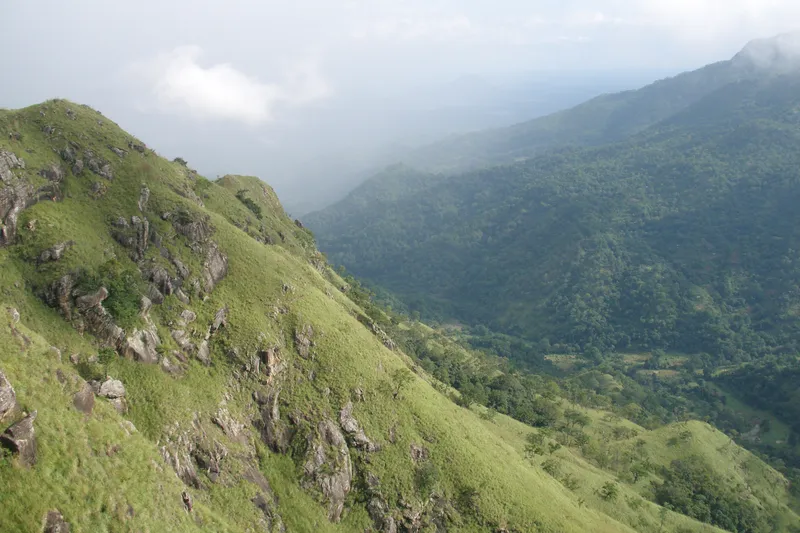
The Cameron Highlands offers something genuinely scarce in Southeast Asia: a cool climate. Sleeping without air conditioning, walking without sweating and hiking in temperate forest are real quality-of-life gains, and they come with very low costs, excellent cheap produce, good hiking and some of the most photogenic agricultural landscape in Asia. Malaysia's visa options are among the region's best. The weak link is the internet, and a fast connection should never be assumed. The towns are small, functional and not attractive; over-development of the hillsides for farming has done visible damage. There is no community of remote workers, limited healthcare, and getting anywhere means a winding mountain road. Weekends bring heavy domestic tourism.
Who Cameron Highlands Is For
The Cameron Highlands suits remote workers who cannot tolerate tropical heat but want tropical costs, and whose work does not depend on a fast, guaranteed connection. Hikers do well, and so does anybody who needs somewhere cool and quiet to write or to study. It works best as a month or two inside a longer Malaysian stay, and it is not really a place to settle into for good. It is a reasonable escape from Kuala Lumpur or Penang. Reliable video calls cannot be promised, there is no social scene or nightlife to speak of, healthcare means descending to the lowlands, and the nearest airport is a long drive down a winding road. Penang and Kuala Lumpur have all of that, at higher cost and in far more heat.
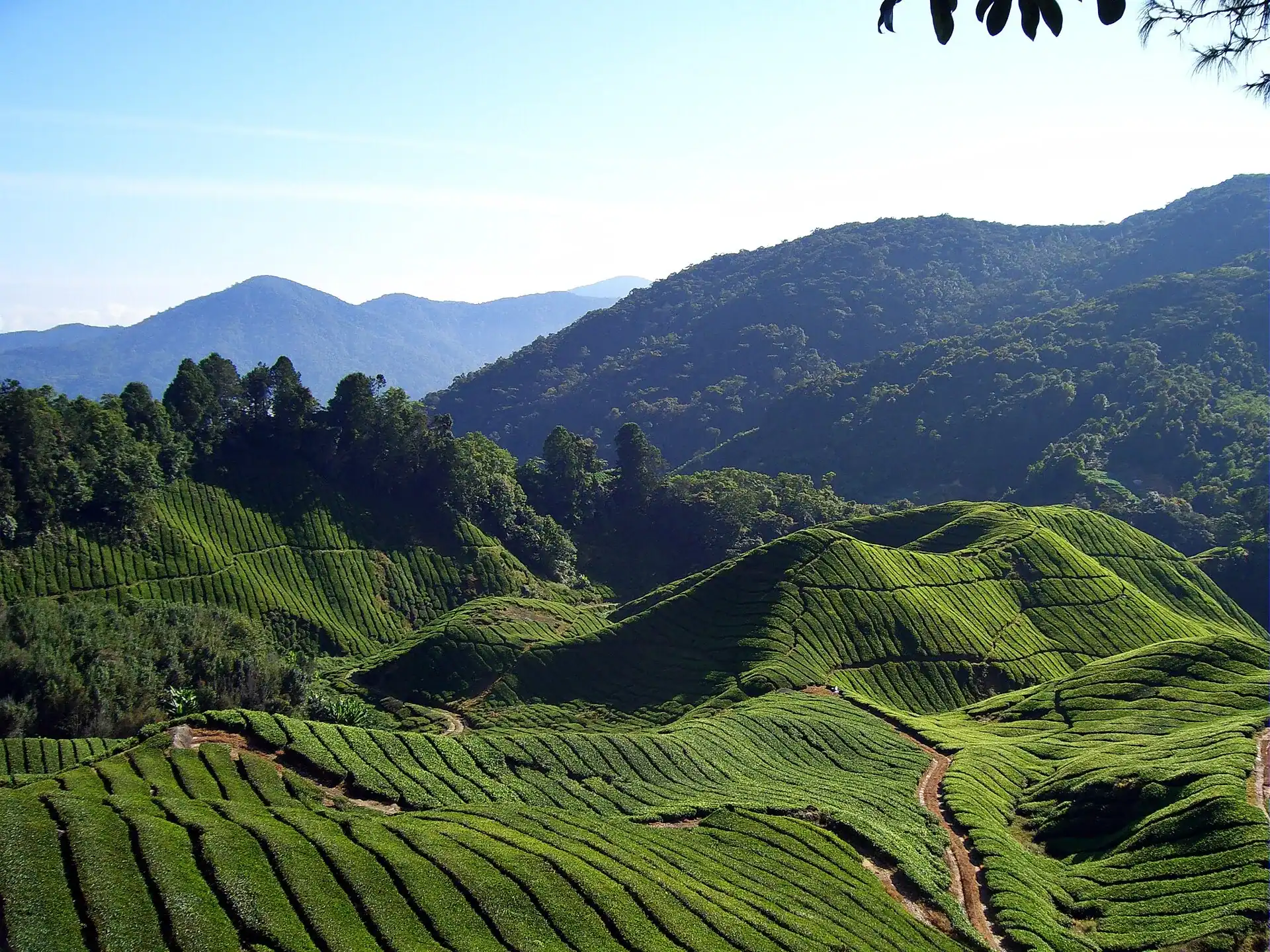 Photo: Will Ellis from Reading, England / Wikimedia Commons (CC BY 2.0)