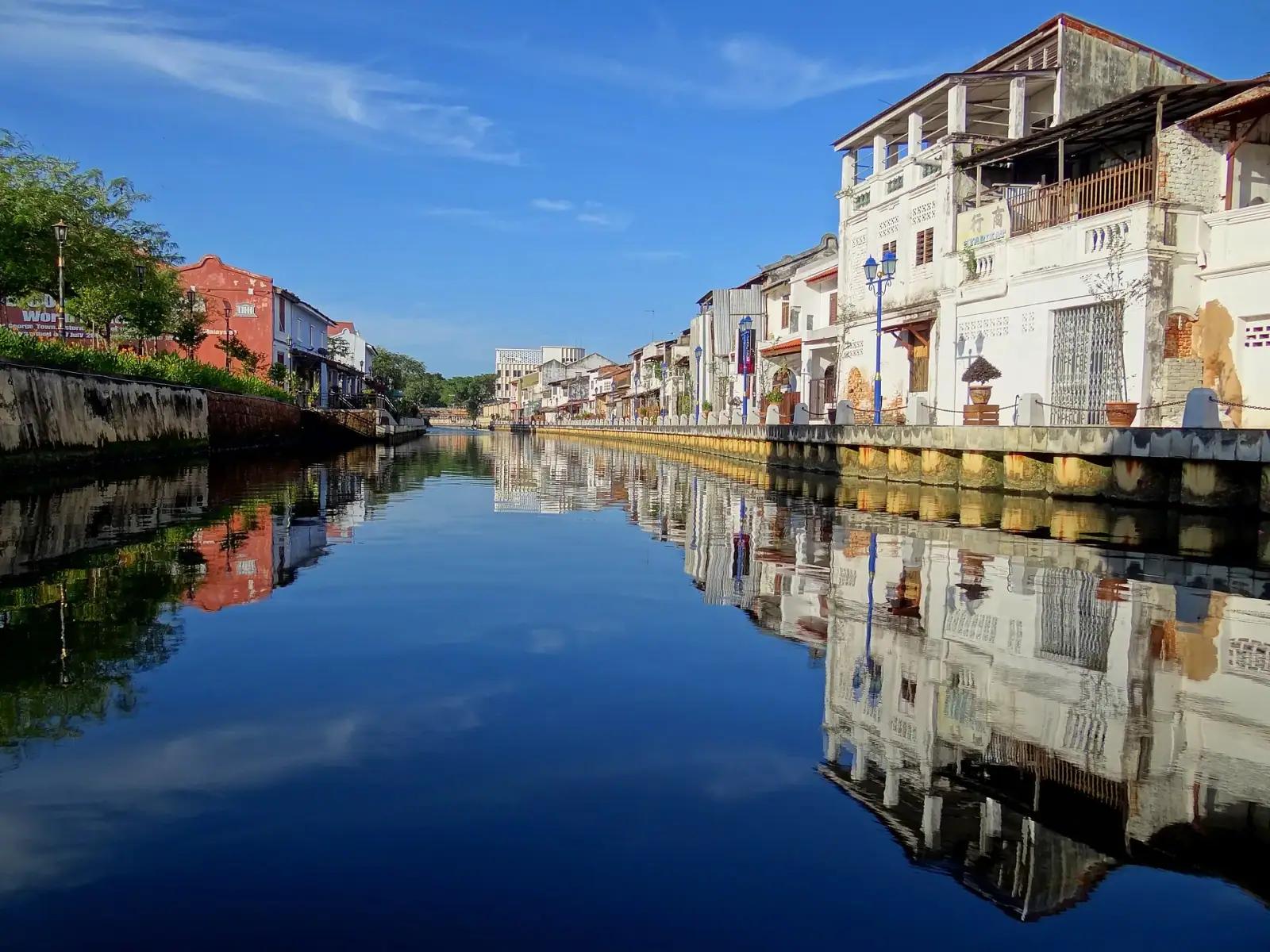
Historic shophouses reflected in the calm Malacca River on a clear blue-sky morning
Photo: Bjørn Christian Tørrissen / Wikimedia Commons (CC BY-SA 3.0)
Malaysia flag

Malacca

Malaysia

Experience straits heritage, UNESCO old town, Peranakan culture, and food paradise.

RM1.100
Monthly Budget
--
Current Weather
Tropical
Climate Type
50 Mbps
Avg. WiFi Speed
8/10
Safety Score
500+
Active Nomads
--
Time Difference
Scroll
0
Nomad Score

Why Malacca Works for Remote Work

Experience straits heritage, UNESCO old town, Peranakan culture, and food paradise. A tropical climate and strong low costs make Malacca an easy base, and at about $1,100 a month it fits a range of budgets. Keep the size of the nomad scene in mind.

Compare Malacca vs Kuala Lumpur →

Category Breakdown

How Malacca scores across all 13 factors

Weather in Malacca

Monthly averages from 2019-2023 (Open-Meteo), and the best time to visit

30°
24°
Jan
31°
24°
Feb
31°
24°
Mar
30°
25°
Apr
30°
25°
May
29°
25°
Jun
29°
25°
Jul
29°
25°
Aug
29°
24°
Sep
29°
24°
Oct
29°
24°
Nov
29°
24°
Dec
Daily high & low (°C)Rainfall (mm/month)Best months to visit

The best time to visit Malacca for comfortable weather is Jan, Feb, Jul. The warmest month is Feb (around 31°C by day), and the wettest is Nov (about 266mm of rain).

Chasing good weather? See other cities that are warm in Jan, or plan a multi-city route around the seasons. Staying a while in Malacca? Check visa options, your time-zone overlap and how far your budget stretches, or find it on the world map.

Historical monthly averages, not a forecast. Source: Open-Meteo.

Best Neighborhoods in Malacca

Where to base yourself for the perfect nomad experience

Jonker Street

$$
Heritage & Tourist

Heritage heart with weekend night market

UNESCO-listed Jonker Street forms the cultural core of historic Malacca with antique shops, Peranakan mansions, and the famous weekend night market. The concentration of heritage and tourism makes it ground zero for visitors.

Best for: First-time visitors, culture seekers, and antique hunters
✓ Pros
  • UNESCO heritage
  • Famous night market
  • Peranakan culture
  • Antique shopping
✗ Cons
  • Very crowded on weekends
  • Tourist prices
  • Can feel overwhelming

Dutch Square

$$
Colonial & Iconic

Red buildings and colonial grandeur

The iconic red Stadthuys and Christ Church define Malacca's most photographed area. The Dutch colonial architecture and surrounding museums make it the historic showcase zone.

Best for: History buffs, photographers, and colonial heritage enthusiasts
✓ Pros
  • Iconic red buildings
  • Museums
  • Photo opportunities
  • Historic significance
✗ Cons
  • Tourist trap feel
  • Trishaw hassle
  • Crowded

Bukit China

$
Spiritual & Quiet

Ancient cemetery with hilltop views

The largest Chinese cemetery outside China offers peaceful walks, historic temples, and hilltop views over the city. The spiritual atmosphere contrasts with the busy heritage zone below.

Best for: History seekers, peace lovers, and those escaping crowds
✓ Pros
  • Historic significance
  • Quiet atmosphere
  • Temple visits
  • City views
✗ Cons
  • Far from center
  • Hot for walking
  • Limited amenities

Kampung Morten

$
Traditional & Village

Living Malay village preserved

This traditional Malay village along the river maintains authentic kampung life within the city. The wooden stilt houses and riverside setting offer a glimpse of pre-modern Malacca.

Best for: Culture seekers, photographers, and those wanting authentic Malaysia
✓ Pros
  • Authentic Malay village
  • Riverside setting
  • Traditional houses
  • Peaceful walks
✗ Cons
  • Limited services
  • Residential respect needed
  • Small area

Klebang Beach

$
Beach & Local

Coconut shakes and coastal escape

The coastal area north of the center offers beach access and the famous coconut shake stalls. The local weekend destination provides relief from heritage zone intensity.

Best for: Beach seekers, families, and those wanting local atmosphere
✓ Pros
  • Beach access
  • Famous coconut shakes
  • Local atmosphere
  • Seafood restaurants
✗ Cons
  • Far from heritage zone
  • Basic beach
  • Need transport

Cost of Living in Malacca

Malacca is one of the cheapest places to base yourself in Southeast Asia. As a single remote worker, you can live comfortably on a modest budget.

  • Rent, central heritage area (Old Town / Jonker Street zone): MYR 1,400-2,000/month (~USD 300-430) for a furnished studio or one-bedroom. Central units are limited and often booked by longer-term residents, so expect a search.
  • Rent, outer areas (Bukit Beruang, Ayer Keroh, Batu Berendam): MYR 800-1,400/month (~USD 170-300) for a one-bedroom with pool, usually newer and more spacious than central options.
  • Groceries: MYR 250-400/month (~USD 55-85). Most nomads barely cook because eating out is so affordable.
  • Eating out: MYR 600-900/month (~USD 130-195) covers lunch and dinner daily at local kopitiams and restaurants. A plate of noodles runs MYR 7-10; a coffee MYR 3-5.
  • Coworking hot desk: MYR 200-400/month (~USD 43-85) at a dedicated coworking space. Daily passes at Grind Shack start at MYR 20 (~USD 4.30).
  • Local transport (Grab mostly): MYR 150-300/month (~USD 32-65) depending on how often you leave the heritage core.
  • Total monthly range: MYR 2,500-4,500 (~USD 535-960) for a solo remote worker. A comfortable mid-level budget lands around USD 800-900/month all-in.

Currency note: 1 USD is approximately MYR 4.65 (mid-2025 rate). Prices are lower than Kuala Lumpur and substantially lower than Penang for comparable quality.

Where to Work

Malacca has a small but functional coworking scene. Dedicated options are limited compared to Kuala Lumpur or Penang, but the ones that exist are well-rated and affordable.

Coworking Spaces

Grind Shack Workspace (Bukit Beruang, about 10 minutes from Old Town by Grab) is the most popular option among nomads. Hot desks run MYR 20/day or MYR 5/hour, with free flow drinks included. Reliably fast WiFi and a casual, focused atmosphere. Open Monday to Saturday.

Utopia Workspaces (Batu Berendam) is the largest and most professional coworking space in Melaka, with 5,000 sq ft across three floors. Better suited to longer-term residents than drop-in tourists; monthly memberships available. Located further from Old Town.

Casuarina Space (Jalan Tun Perak, near town center) is a smaller multipurpose space with coworking desks and an event hall.

Cafe Work Culture

The heritage shophouse cafes along Jonker Street look ideal for working but are often crowded with tourists and prioritize table turnover at peak hours. Weekday mornings before 11am are your best window. Cafes like The Daily Fix have solid WiFi but expect ambient noise. For sustained productive work, a coworking space beats the historic district cafes.

WiFi Situation

Speeds average 15-25 Mbps at coworking spaces and decent cafes, which handles video calls and basic cloud work fine. Mobile data is fast and cheap: MYR 25-35/month gets you a 50-80 GB local SIM from Celcom, Maxis, or Digi. Use mobile data as your backup for reliability. Free public WiFi in the heritage area is inconsistent.

Getting Around

The UNESCO heritage core is compact, roughly 1.2 km across, and walkable in 15 minutes. Stadthuys, Christ Church, Jonker Street, and most food spots cluster within a 12-minute walking circle. However, Malacca as a whole is not a walking city: coworking spaces, supermarkets, and residential areas outside the core require transport.

Grab is the main way to get around. Short trips within the city cost MYR 5-12 (~USD 1-2.50). AirAsia Ride is also available and sometimes cheaper for longer trips. Street taxis exist but negotiate fares upfront.

The public bus network (revamped as of late 2024 with newer buses and contactless TnG card payment) covers main routes from Melaka Sentral bus hub to surrounding areas, but schedules are infrequent and not nomad-friendly for daily commutes.

Getting to/from a major airport: Malacca has no major commercial airport. Most people travel to/from Kuala Lumpur via express bus: MYR 10-25, 2-2.5 hours to KLIA or TBS bus terminal. Grab rides to/from KL are available but expensive (MYR 120-200+). Scoot operates limited flights to Melaka International Airport (MKZ) from Singapore a few times per week if that route suits your itinerary.

Trishaw rides are a tourist attraction, not practical transport.

Visas and Staying Long-Term

Malaysia offers generous visa-free entry for most Western passport holders. Citizens of the USA, UK, Canada, Australia, New Zealand, most EU countries, Japan, and South Korea receive 90 days on arrival, no visa required. Some nationalities receive 30 or 60 days; check your specific passport before traveling.

For longer stays, Malaysia launched the DE Rantau Nomad Pass, a purpose-built digital nomad visa. Key details: valid for 3-12 months, renewable for an additional 12 months, multiple entry, and covers all of Peninsular Malaysia including Malacca. Requirements include a minimum annual income of USD 24,000 for tech professionals or USD 60,000 for non-tech roles (as of 2024 expansion). Application fee is MYR 1,000 for the main applicant. The program is administered by MDEC.

For shorter stays, the 90-day tourist entry is usually enough for a first visit or trial period. Visa runs to Singapore or Thailand are straightforward if you need to reset.

Always confirm current entry requirements with the official Malaysia Immigration Department website before traveling, as rules change.

Best Time to Visit

Malacca is hot and humid year-round, with temperatures between 28-33C (82-91F) and humidity rarely dropping below 75%. There is no cool season, only drier and wetter periods.

Best window for remote work: January through March and June through August offer the lowest rainfall and relatively lower humidity. February and March are considered the driest months overall. You get more outdoor time and fewer weather-related internet outages during these periods.

Rainier periods to be aware of: October through December bring heavier monsoon-influenced rainfall. Downpours are usually intense but short, not all-day, so work is rarely disrupted indoors. November tends to be the wettest month.

The city never gets cold, which is good for those avoiding European winters. The tradeoff is that you will sweat most of the day if you are outside. Air-conditioned coworking spaces and cafes become your best friends from April through September when heat peaks.

Pros and Cons

  • Very affordable cost of living, one of the cheapest sustainable bases in Southeast Asia
  • Rich history and culture: UNESCO-listed heritage zone, Nyonya food scene, interesting museums
  • Outstanding local food, especially chicken rice balls, satay celup, and Nyonya dishes
  • Safe and low crime relative to regional peers
  • Easy visa situation for most Western passports (90 days on arrival)
  • Central location in Peninsular Malaysia: easy bus connections to KL, Johor Bahru, and Singapore
  • Friendly locals and English is widely spoken in the tourism and business zones
  • Very small digital nomad community, limited coworking options compared to KL or Penang
  • Not walkable outside the heritage core: Grab is essential for daily life
  • Hot and very humid year-round with no cool relief
  • Limited nightlife: the city winds down early outside Jonker Night Market weekends
  • No major commercial airport on-site; travel in and out requires going through KL
  • Average WiFi speeds are modest (15-25 Mbps); not ideal for high-bandwidth work without a mobile backup
  • Tourist crowds on weekends in the heritage district make it feel very different from the quiet weekdays

Who Malacca Is Best For

Malacca suits remote workers who want a genuinely budget-friendly base in Southeast Asia without the chaos of a big city. If you are happy to self-motivate in a quieter environment, eat incredible food for almost nothing, and explore a historically layered city at your own pace, Malacca delivers real value. It works well as a month-long base between KL or Penang stints, or as a slow-travel stop where you actually settle in rather than race through.

It is a particularly good fit if you are doing solo-focused work that does not require daily collaboration or networking, enjoy food-led travel, and prefer safety and affordability over nightlife and community events.

Skip it if you need a large, active nomad community with daily coworking events, fast airport access for frequent travel, or a coastal beach lifestyle. Also not recommended for travelers who are sensitive to heat and humidity, or those who rely on strong public transport rather than ride-sharing apps.

Where to Stay in Malacca

Top neighborhoods and accommodations for digital nomads

Casa del Rio Melaka

Boutique hotel
Jonker Walk

Riverside 5-star boutique hotel steps from UNESCO heritage streets, with strong Wi-Fi and a rooftop pool for unwinding after work.

Check availability →

The Majestic Malacca

Boutique hotel
Kampung Morten

Restored 1920s heritage mansion with colonial charm, reliable Wi-Fi, a pool, and a walkable riverside location near all major sights.

Check availability →

The Straits Suites by Ciconia

Aparthotel
Melaka Raya

Modern condo-style suites with kitchenettes, rooftop and indoor pools, and a high-scoring central location suited to longer stays.

Check availability →

Straits Suite by C Homestay Malacca

Serviced apartments
Bandar Hilir

Fully equipped condo apartments with kitchen, rooftop pool, and a short walk to Porta de Santiago, ideal for a productive medium stay.

Check availability →

Dreambox Malacca

Hostel
Jonker Street

Top-rated heritage-area hostel with clean private rooms, strong Wi-Fi, and a quiet location a short stroll from Jonker Walk nightlife.

Check availability →

Browse apartments, aparthotels and hotels across Malacca. Compare prices and book a base that suits a remote-work stay.

See available stays in Malacca →

Affiliate link. See our disclosure.

Best Coworking Spaces

Where nomads get work done in Malacca

Grind Shack Workspace

Coworking space
Bukit Beruang

Casual coworking space with MYR 20 day passes, free flow drinks, beanbags and desks in a converted shophouse.

Visit website →

Utopia Workspaces

Coworking space
Batu Berendam

The largest coworking space in Melaka across three floors with hot desks, meeting rooms, and event facilities.

Visit website →

Casuarina Space Melaka

Coworking space
Melaka Town

Compact coworking and event space near the town center on Jalan Tun Perak, with hot desks and a studio.

View on Maps →

The Daily Fix

Heritage cafe
Jonker Street

Popular shophouse cafe on Jonker Street with reliable WiFi, good coffee, and laptop-friendly seating on weekday mornings.

Visit website →

Geographer Cafe

Heritage cafe
Jonker Street

Long-running cafe on Jalan Hang Jebat with WiFi, food, drinks, and evening live music in a restored shophouse.

View on Maps →

Cafe 1511

Heritage guesthouse cafe
Heeren Street

Charming Nyonya-style cafe at a heritage guesthouse near the Baba Nyonya Museum with WiFi and authentic local dishes.

View on Maps →

Where to Eat & Drink

Best food and drink spots in Malacca

Kedai Kopi Chung Wah

Kopitiam
Jonker Street

Legendary kopitiam on Jonker Street serving Malacca's famous chicken rice balls since the 1950s, closes by afternoon.

View on Maps →

Restoran Ban Lee Siang

Satay celup
Jalan Ong Kim Wee

One of Melaka's oldest satay celup restaurants where diners cook skewers in a communal spiced broth hotpot.

View on Maps →

Nancy's Kitchen

Nyonya restaurant
Jalan Hang Lekir

Well-known Peranakan restaurant serving authentic Nyonya dishes including laksa, pie tee, and otak-otak in a heritage setting.

View on Maps →

Pak Putra Tandoori and Naan Restaurant

Indian Muslim
Jalan Tun Sri Lanang

Open-air Pakistani and North Indian restaurant famous for its tandoori chicken and fresh naan, especially popular late night.

View on Maps →

Reggae on the River

Riverside bar
Lorong Hang Jebat

Laid-back bar right on the Malacca River playing reggae music, with cold beers and rattan seating open around the clock.

View on Maps →

Alley Lounge and Bar

Cocktail bar
Jonker Street area

Compact cocktail bar in the heritage zone with locally inspired drinks and a relaxed evening atmosphere.

View on Maps →

What Do Nomads Say?

Vote on how accurate these scores are based on your experience

Cities with a Similar Vibe to Malacca

Different places that score alike across our 13 categories, if you like Malacca, these tend to feel similar.

Frequently Asked Questions About Malacca

How much does it cost to live in Malacca as a digital nomad?

A comfortable nomad budget in Malacca is around $1,100 a month: a furnished rental, food, coworking, and getting around. Live a little outside the center or eat local to spend less.

Is the internet fast enough for remote work in Malacca?

With a WiFi score of 5/10, connectivity in Malacca is workable for calls and focused work. A prepaid local SIM keeps you online when you are away from the apartment.

Is Malacca safe for digital nomads?

Malacca scores 8 out of 10 for safety in our ratings, which is excellent for solo travel and long stays. Use normal precautions at night and with valuables, and choose well-reviewed areas.

Is Malacca a good city for digital nomads overall?

For nomads, Malacca is worth a look if you value low costs and safety. Costs sit near $1,100 a month and the community keeps growing, though, like anywhere, it will not match every checklist.