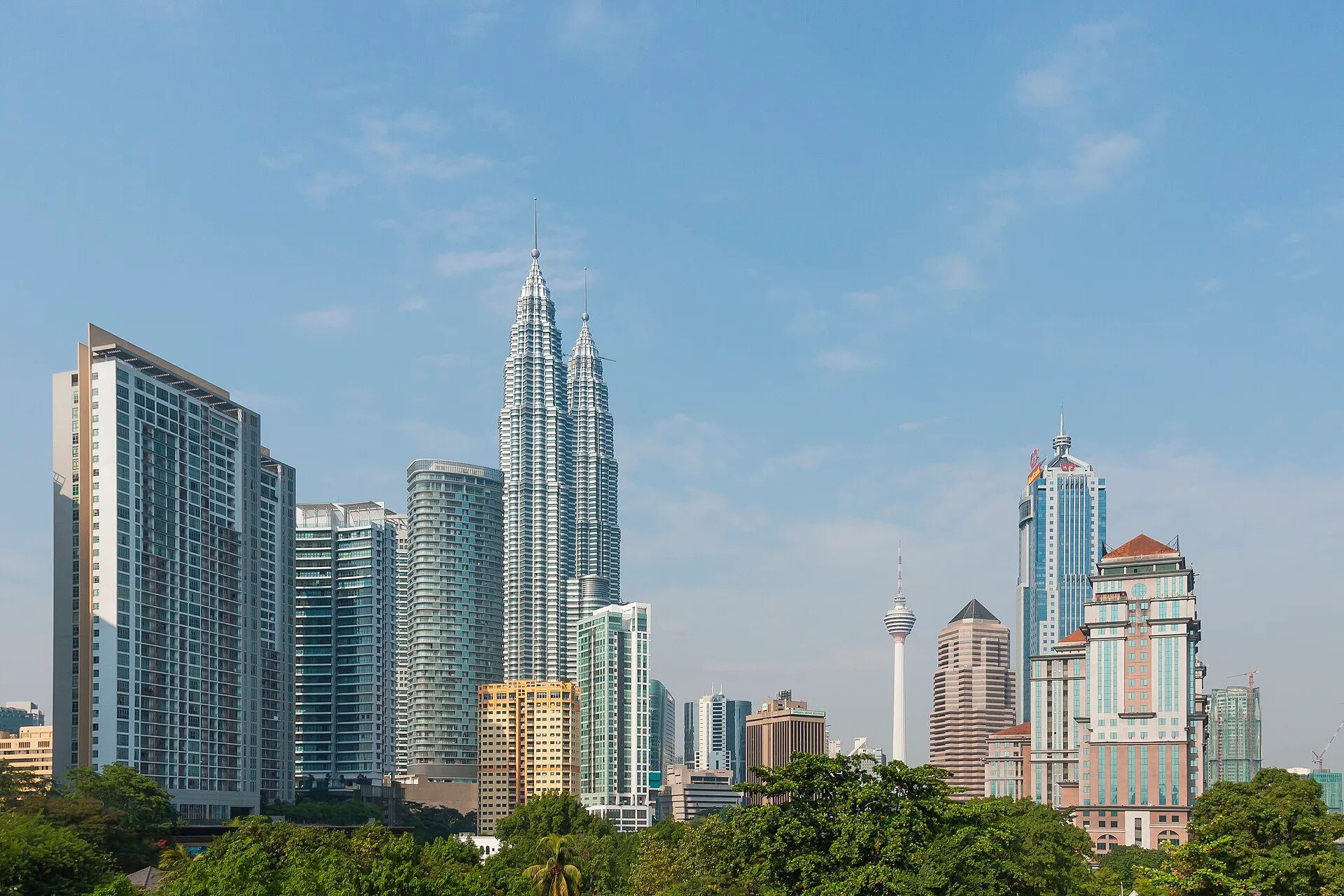
 Kuala Lumpur
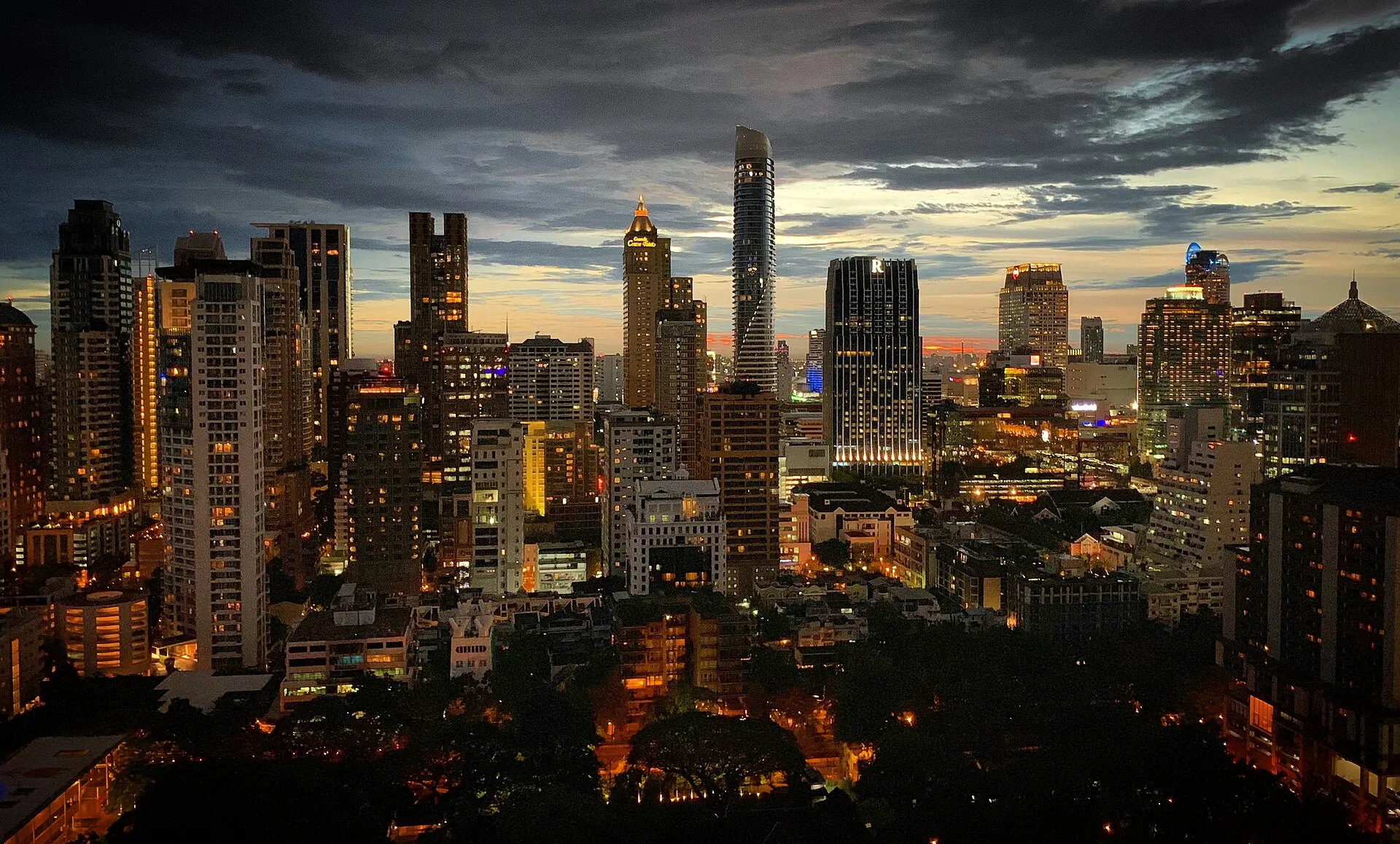
 Bangkok
Kuala Lumpur is named after its mud: the Malay words mean "muddy confluence", the spot behind Masjid Jamek where the Gombak runs into the Klang. Bangkok was swamp until people dug canals to drain it, and it now stands about a metre and a half above the sea on average, with parts of it a metre below. Both cities have spent their whole history negotiating with water, and they have come to very different terms. Those terms will shape your year in each more than the malls or the condos will.
When the rain comes
Kuala Lumpur gets at least 2,600 millimetres a year, and it is among the places on Earth where thunderstorms are seen most often. The heaviest rain falls from October to March, November brings around 344 millimetres, and even the relatively dry months of June to August average over 131. You will never have a season when you can leave the umbrella at home. Temperature hardly moves: about 31°C by day, every month.
Bangkok has actual seasons. The rain starts around the middle of May and builds to about 336 millimetres in September, then stops, and from November the air is cool and dry by local standards. In April it is simply hot, around 36°C, and on 13 April the whole city turns the problem into a party: for Songkran, Silom Road closes to traffic and people stand along it with water guns and buckets, day and night.
Where the water goes
The most striking piece of engineering in either city runs under Kuala Lumpur. The SMART Tunnel is a 9.7-kilometre storm drain with a 4-kilometre motorway inside it. In a normal week cars use it. When a big storm comes the road closes, the last vehicles clear out, watertight gates open, and floodwater goes through where the traffic was. Within 48 hours it has been washed and reopened. Flash floods still catch the centre after heavy downpours, because drainage has not kept up with building and the Klang in places has been narrowed until it resembles a ditch. Think twice about a ground-floor unit near the river.
Bangkok's trouble is slower and bigger. Pumping groundwater made the city sink by as much as 120 millimetres a year in 1981, and the rate was still 10 to 30 millimetres in the early 2000s. In 2011 floods covered most of the northern, eastern and western districts, some for over two months. Before you sign a long lease on the city's outer edge, ask the landlord where the water reached that year. Anyone who was there will remember.
What you can do on it
Here Bangkok is far ahead. Its canals and its river are still public transport. On the Khlong Saen Saep, long boats run 18 kilometres parallel to Phetchaburi Road, fares under a dollar, paid in cash to a collector on board, from 5.30 in the morning, slipping behind the towers while the road alongside stands still. On the Chao Phraya the express boats start at about 30 cents and connect at Sathorn pier with the Skytrain. You could easily build a commute around them, and we would choose a flat with that in mind.
Kuala Lumpur's rivers offer you nothing like that. You will move by MRT and monorail, and by Grab when the sky opens.
When the water stops
This is the catch in Bangkok's lovely dry season. With no rain to wash the air, haze settles in: PM2.5 reached 94 µg/m³ in parts of the city in February of both 2018 and 2019, and in 2019 the authorities tried cloud seeding and high-pressure cannons. Kuala Lumpur's bad air comes from elsewhere, when forest fires in Sumatra and Kalimantan send smoke across the strait.
The calendar we would use
Malaysia's DE Rantau pass asks for about $2,000 a month and runs up to two years. Thailand's Destination Thailand Visa looks instead for about $14,950 in the bank and lets you stay 180 days per entry over five years, though since 31 August 2026 you must apply in a country where you hold citizenship or permanent residence. Both are set out on our nomad visa page, and between them you need not choose once and for all.
Our own estimate of a month is $1,800 in Kuala Lumpur and $2,200 in Bangkok, and the water suggests a timetable to go with it. Be in Bangkok for November and December, when Kuala Lumpur is at its wettest and Bangkok at its best. Fly south in January, before the haze, and stay in Kuala Lumpur for the rest of the time unless something draws you back. Bangkok is the more exciting city and Kuala Lumpur the easier one to live in, and the rain has already worked out the schedule.
 United States
 United Kingdom
 Germany
 Canada
 Australia
 India