Cost of Living in Fethiye
Real market data
Source: Numbeo · September 2026
$1,250/moSolo nomad1-bed centre + living costs
$1,650/moCoupleshared 1-bed + costs
$1,040/moLean / localcheaper area + costs
- 1-bed rent, city centre$750₺35,875
- 1-bed rent, outside centre$550₺26,000
- Monthly costs excl. rent (1 person)$490₺23,528
- Meal, inexpensive restaurant$11₺500
- Buy price, per m² (centre)$2,160₺102,706
Prices are from Numbeo (September 2026), converted to USD at $1 = ₺47.54 (01 Aug 2026). The monthly living-costs figure is our transparent one-person basket, groceries, a few meals out, utilities, phone, internet, transport and essentials, priced from those figures. Solo adds central rent; couple and lean are estimates from the same numbers. The guide below quotes its own monthly range, which is a different measurement rather than a competing one: this table prices a defined basket at the figures above, while that range is a judgement about how somebody actually lives here.
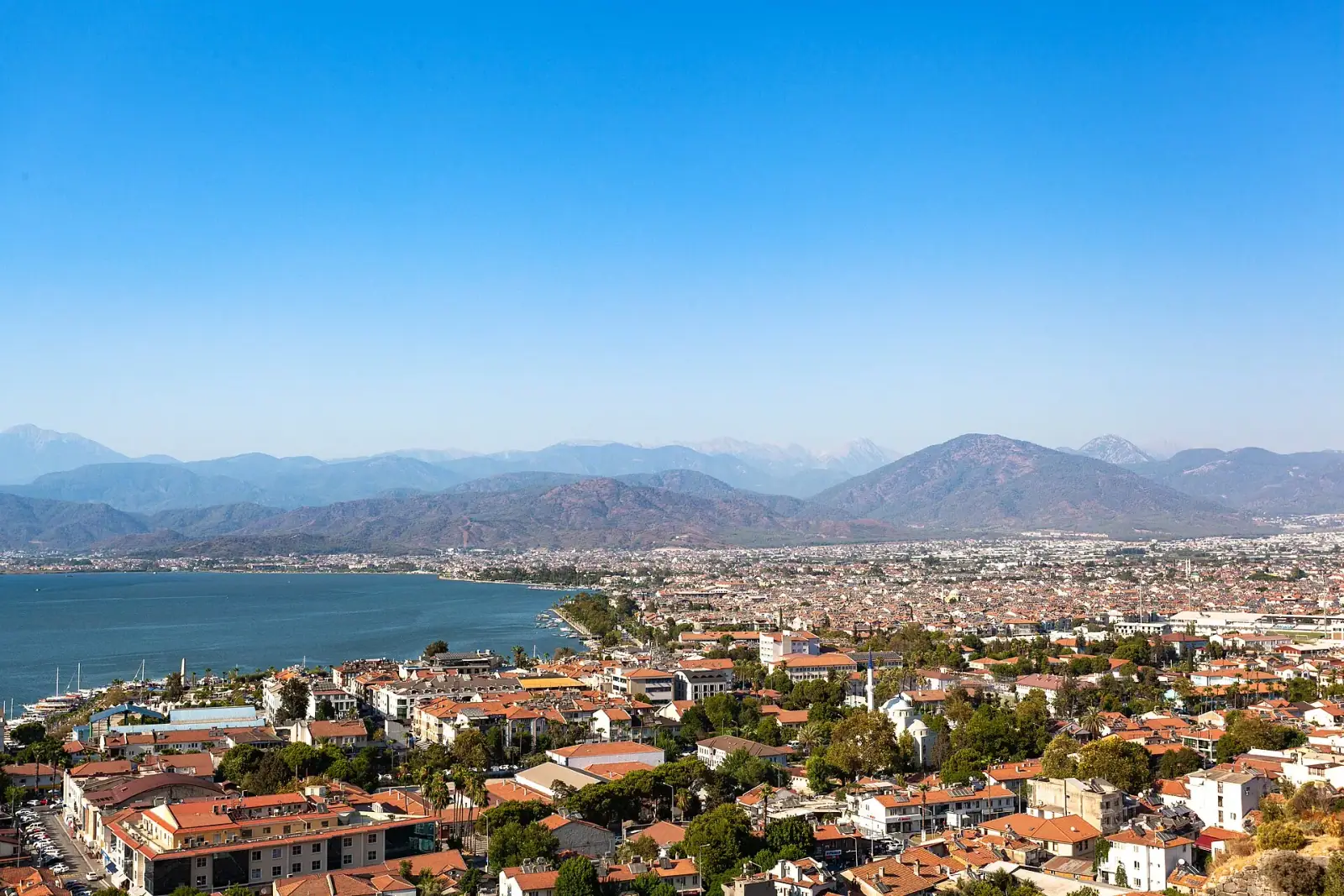
Fethiye sits at the affordable end of Turkish coastal towns. The Turkish lira's weakness against the dollar makes it particularly attractive for earners in harder currencies. Here is a realistic monthly breakdown:
- Rent, 1-bedroom central (near marina or bazaar): roughly $500-620
- Rent, 1-bedroom outer neighborhoods (Karagozler, Taşyaka): $420-500
- Groceries (cooking most meals): $84-125
- Eating out (mix of local lokantas and mid-range restaurants): $74-125
- Coworking hot desk (monthly): $62-63
- Local transport (dolmus, occasional taxi): $17-32
- Utilities + internet: ~$38
Total realistic range: $700-1,100 per month depending on your rent choice and lifestyle. You can live comfortably on $900. At $1,100 you live well, with evenings out and occasional boat trips included.
Where to Work
Fethiye has a small but functional coworking scene. You have three solid options:
- Hipokampus Coworking Space is the largest, located by the sea near Sehit Fethi Bey Park, with silent zones, open zones, a garden, sea views, and meeting rooms. It handles a full team as easily as a solo freelancer. Hot desk runs about $62 per month, or $5.50 per day.
- Lokal Cowork is a community-first hybrid: part coffee shop, part dedicated workspace. Central location, high-speed WiFi, and a daily pass at $4. It closes Sundays.
- Likya Workstation sits near the marina and Ugur Mumcu Park. It has an attractive glass-enclosed outdoor area, solid internet, and a quieter member crowd.
Cafe work culture exists but is uneven. Tourist-facing cafes near the marina tend to have patchy WiFi and noise; smaller neighborhood places are more reliable for a few hours of quiet work. Outside of coworking spaces, do not count on stable fiber-grade speeds everywhere. Mobile data (Turkcell or Vodafone Turkey SIM cards) is a practical backup.
Getting Around
The town center is compact and walkable. The bazaar, marina, fish market, and most coworking spaces are within a 15-20 minute walk of central apartments. For longer hauls you rely on dolmus minibuses, which are frequent and cheap (around $0.50 per ride). Taxis exist but prices are higher than the dolmus for short hops; negotiate or insist on the meter.
The nearest airport is Dalaman Airport (DLM), about 45-50 km away. A Havabus airport shuttle costs around $3-4; a private transfer is $13-19. Budget around 30-40 minutes driving time outside peak summer traffic. In July and August that can stretch longer.
Oludeniz, Calis Beach, and surrounding villages are reachable by dolmus. You do not need a car to live comfortably here, though one helps if you want to explore the Lycian Way trailheads or more remote beaches independently.
Sorting transport? Book an airport transfer, or compare car rental on Auto Europe and QEEQ.
Visas and Staying Long-Term
Most US, UK, EU, and Canadian passport holders can enter Turkey visa-free or with a simple e-Visa for up to 90 days within any 180-day rolling window. The 180-day rule is applied as a rolling calculation, so leaving and re-entering does not reset the clock.
Turkey launched a formal Digital Nomad Visa. It targets remote workers aged 21-55 with at least $3,000 monthly income and a university degree. Eligible countries include the US, UK, most EU states, Canada, Norway, and a handful of others. The visa lasts one year, renewable for a second. You apply for a Digital Nomad Identification Certificate online first, then use it to apply at a Turkish consulate. The certificate itself is free.
Tourist residence permits still exist in law, but since 2022 migration offices have refused most first-time tourism applications, so do not count on one. The Digital Nomad Visa is now the cleanest legal route for staying beyond 90 days.
Best Time to Visit
Fethiye has a classic Mediterranean climate: hot dry summers, mild wet winters. For remote work, the shoulder seasons are clearly the sweet spot.
- May and June: warm (22-28°C), low humidity, very few crowds, good prices on accommodation. Excellent for combining focused work with hiking or sailing.
- September and October: the best window overall. Summer heat has broken (28-30°C dropping to 20-24°C by October), the sea is still warm, tourist numbers fall sharply, and prices drop. Productivity is easy when it is not punishingly hot outside.
- July and August: temperatures hit 33-36°C, humidity is high, and Fethiye fills with package tourists. Coworking spaces get busier, accommodation prices spike, and the town loses its quiet character. Workable if you have reliable air conditioning, but harder to enjoy the place.
- November to March: quieter and cheap, with some weeks of steady rain. Many tourist businesses close or run reduced hours. If you prefer a slow, off-season pace and do not mind grey days, it can work.
Pros and Cons
- Pro: Genuinely low cost of living for the quality of life on offer.
- Pro: Stunning natural surroundings: Oludeniz lagoon, Butterfly Valley, the Lycian Way, boat trips to coves.
- Pro: Compact, walkable town center with enough cafes, markets, and restaurants to feel alive year-round.
- Pro: Three dedicated coworking spaces that are affordable and reliably air-conditioned in summer.
- Pro: Genuine local Turkish character, not a fully tourist-sanitized resort.
- Con: Tiny nomad community compared to Istanbul or Antalya. You will need to build your own social circle.
- Con: Coworking options are limited to three spaces; none are open 24/7.
- Con: Peak summer (July-August) is genuinely unpleasant for productivity due to heat and tourist crowds.
- Con: Long-term residence is legally complicated post-2025. The nomad visa has income and age requirements that exclude many.
- Con: English is spoken at tourist venues but drops off quickly outside them. Learning basic Turkish helps a lot.
- Con: Dalaman Airport is 45 km away, with no direct train. Getting to major hubs requires planning.
Who Fethiye Is Best For
Fethiye suits you well if you work a standard remote schedule, want a low cost of living, and value access to the outdoors as much as a good coworking setup. If you thrive on quiet mornings, afternoon swims, and a distinct Turkish town feel rather than an expat bubble, this place delivers. It also works well as a two-to-three month slow travel base in spring or autumn.
It is a poor fit if you need a large, active nomad community around you, rely on frequent flights to multiple European cities, or want the full-service infrastructure of Istanbul. If your productivity depends on buzzing social energy and constant networking, Fethiye will feel isolated within a few weeks. Those who want a genuine town over a nomad hotspot tend to leave satisfied; those chasing a scene tend to move on quickly.