Cost of Living in Bukittinggi
Where this figure comes from. No cost survey covers Bukittinggi, so the $700 a month above is our own estimate rather than a measurement. On 416 of our 999 city guides the figure is built from a published Numbeo basket, a one-bedroom rent in the centre plus one person's monthly costs without rent, converted to USD; this city is not one of them. How we source everything.
Bukittinggi is one of the most affordable highland bases in Southeast Asia, and your money stretches remarkably far here. A comfortable solo budget lands roughly between $500 and $1,000 a month, with most slow-travellers settling comfortably in the middle. Guesthouse rooms and simple longer-stay rentals are cheap, local nasi Padang meals cost a couple of dollars, and transport is close to nothing. The main costs that creep up are imported goods, Western-style cafes, and weekend trips out to the canyon, Lake Maninjau, or the Harau Valley. Because the nomad scene is tiny, there are few premium apartments, so most people live simply and eat local, which is honestly part of the appeal. Budget more if you want a private driver on tap or a Western diet.
- Guesthouse or simple room: roughly $150 to $350 per month for longer stays
- Local Minang meals (nasi Padang, nasi Kapau): around $1.50 to $3 each
- Telkomsel data package: about $5 to $12 per month
- Scooter rental: roughly $50 to $80 per month, negotiable for longer stays
Where to Work in Bukittinggi
Heavy remote work is the thing Bukittinggi handles least well, because this is a modest highland town, not a hub for nomads, and its connectivity is variable. Dedicated coworking is essentially absent, so you will work from your guesthouse, a handful of laptop-friendly cafes, or a coffee shop near the square. Wifi in accommodation ranges from decent to frustrating, so always test the connection before committing to a stay, and ask the host directly about speeds. The single most reliable move is a local SIM with a generous data package, tethered to your laptop, which usually outperforms cafe wifi. Mobile coverage in the compact center is good, though it thins out in the canyon and on the mountain roads.
- Buy a Telkomsel SIM with data as your primary connection and tether when needed
- Cafes around Jam Gadang and Kampung Cina are the usual laptop-friendly spots
- Keep a backup plan for video calls; schedule important ones for off-peak hours
Getting Around Bukittinggi
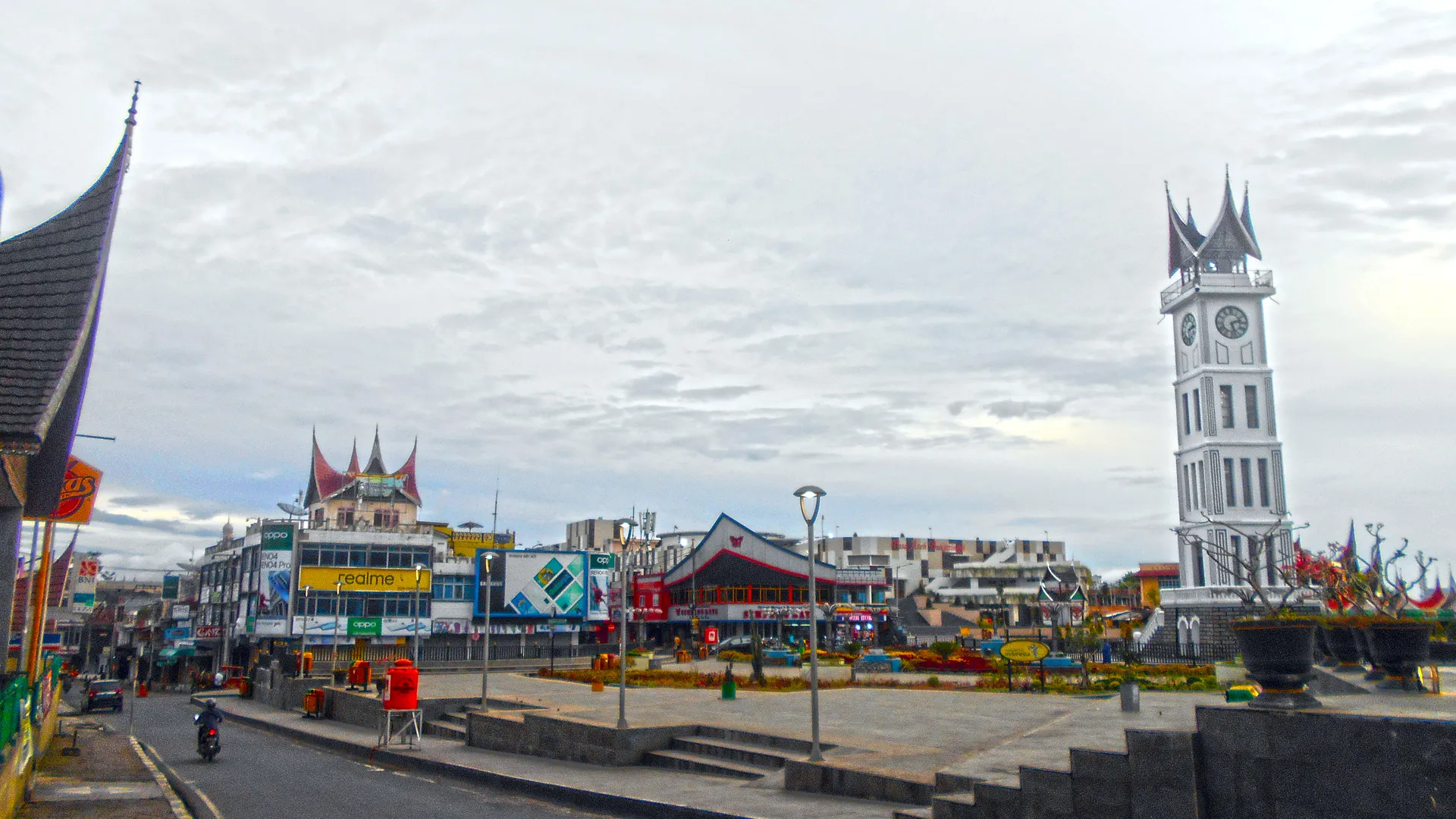
The heart of Bukittinggi is genuinely walkable. The central square around the landmark Jam Gadang clock tower, the Pasar Atas market, and the main strip of shops and cafes all sit within an easy stroll, and the cool highland air makes walking pleasant rather than sweaty. For anything further, angkot minibuses run set routes cheaply, ojek motorbike taxis and Grab bikes are quick and easy to hail, and the traditional becak pedicabs still ply the center. A rented scooter gives you the most freedom, especially for reaching Sianok Canyon, the famous 44-bend road down to Lake Maninjau, and the Harau Valley, though hiring a driver for those day trips is stress-free. The nearest airport is Minangkabau International (PDG) near Padang, about two hours away by bus or minibus. On foot, a walled stairway nicknamed the Great Wall drops into the canyon from the edge of town and climbs the far side to a village known for its silversmiths, which makes a morning's loop without any transport at all.
- Angkot minibuses: the cheapest way to hop across town on set routes
- Ojek, Grab bikes, and becak for short point-to-point trips
- Scooter or hired driver for Sianok Canyon, Lake Maninjau, and Harau Valley
- Bus or minibus to Padang and Minangkabau International Airport (PDG), around two hours
Sorting transport? Book an airport transfer, or compare car rental on Auto Europe and QEEQ.
Visas for Bukittinggi
Most visitors arrive on Indonesia's visa-on-arrival, available at major airports including Minangkabau International near Padang, or as an electronic e-VOA arranged online before you fly. This commonly grants 30 days and can typically be extended once for another 30 days, giving you a comfortable two-month window for a slow highland stay. If you want to settle in for longer, the B211 visit visa and the newer longer-stay and remote-worker style options allow multi-month stays, usually arranged through an agent or sponsor. Since mid-2025 an extension of the visa on arrival can be started online but needs one in-person visit for photographs and fingerprints, and the immigration office for this district stands about nine kilometres out on the Payakumbuh road, which spares the two-hour trip down to the coast.
- Visa-on-arrival or e-VOA: commonly 30 days, usually extendable once
- C1 visit visa (formerly B211A): 60 days, extendable in-country, for longer multi-month stays, usually arranged through an agent
- Longer-stay and remote-worker options exist
Best Time to Visit Bukittinggi
Sitting at around 930 metres in the West Sumatran highlands, Bukittinggi is cool and pleasant year-round, a welcome contrast to the coastal heat of Padang below. The drier months, roughly May through September, are the best window for hiking Sianok Canyon, exploring the Harau Valley, and driving the winding road to Lake Maninjau with clear views. Even in the dry season the evenings are crisp, so pack a light layer or fleece, something first-time visitors to tropical Indonesia often forget. The wetter months bring reliable afternoon downpours that can wash out day trips and turn trails muddy, though mornings often stay bright. Whenever you come, the highland climate keeps things comfortable, and the mist rolling through the canyon at dawn is worth an early start.
- May to September: driest and best for hiking and day trips
- Cool year-round thanks to the highland elevation; bring a light layer
- Wetter months bring afternoon rain that can disrupt outdoor plans
- Mornings are often clearest, ideal for canyon views and photos
Pros and Cons of Bukittinggi
Bukittinggi rewards a certain kind of traveller and frustrates another. On the plus side, it is cheap, cool, and culturally rich, set among some of Sumatra's most dramatic scenery and serving up the food that made West Sumatra famous, from rendang to fresh nasi Padang and nasi Kapau. The Minangkabau culture, matrilineal, warm, and proud, gives the place real character. The trade-offs are just as real: infrastructure is modest, wifi is inconsistent, English is limited outside tourism, nightlife is essentially nonexistent in this conservative region, and the nomad community is small, so you will not find a ready-made social scene. Come for depth, food, and nature, not convenience or a plug-and-play remote-work setup, and Bukittinggi delivers something genuinely memorable.
- Pros: very affordable, cool highland climate, superb Minang food, stunning nature
- Pros: strong, welcoming Minangkabau culture and a walkable center
- Cons: variable wifi and modest infrastructure for remote work
- Cons: limited English, near-zero nightlife, and a tiny nomad scene
Who Bukittinggi Is For
Bukittinggi suits the culturally curious slow traveller far more than the always-online digital nomad. If you are drawn to Minangkabau heritage, horned-roof rumah gadang architecture, market mornings at Pasar Atas, and long lunches of rendang and nasi Kapau, you will feel at home here. It is ideal for nature lovers who want a cool, affordable base for hiking Sianok Canyon, chasing waterfalls in the Harau Valley, and circling Lake Maninjau. It works best if your work is light, flexible, and forgiving of the occasional dropped call, and if you value depth and quiet over convenience and community. It is a poor fit for anyone needing rock-solid wifi, a lively social scene, nightlife, or English everywhere. Approach it on its own terms and it is quietly rewarding. History readers get more than the clock tower: Mohammad Hatta, Indonesia's first vice-president, was born here, and his family house on Jalan Soekarno-Hatta was rebuilt in the 1990s as a museum, while the Lobang Jepang tunnels under the canyon rim were dug by forced labour during the Japanese occupation.
- Great for: culture and food lovers drawn to Minangkabau heritage
- Great for: nature-focused slow travellers who want a cool, cheap base
- Less ideal for: remote workers needing reliable, fast connectivity
- Less ideal for: those wanting nightlife, big social scenes, or easy English