Cost of Living in Rotterdam
Real market data
Source: Numbeo · August 2026
$2,970/moSolo nomad1-bed centre + living costs
$3,860/moCoupleshared 1-bed + costs
$2,650/moLean / localcheaper area + costs
- 1-bed rent, city centre$1,870€1,627
- 1-bed rent, outside centre$1,550€1,347
- Monthly costs excl. rent (1 person)$1,100€957
- Meal, inexpensive restaurant$26€23
- Monthly transit pass$110€99
- Buy price, per m² (centre)$6,110€5,304
Prices are from Numbeo (August 2026), converted to USD at $1 = €0.87 (01 Aug 2026). The monthly living-costs figure is our transparent one-person basket, groceries, a few meals out, utilities, phone, internet, transport and essentials, priced from those figures. Solo adds central rent; couple and lean are estimates from the same numbers.
Rotterdam is one of Western Europe's more affordable major cities, though it still demands a serious budget. Rent is the biggest variable. A one-bedroom apartment in the city centre (Stadsdriehoek, Witte de Withstraat area, Kralingse Zoom) runs roughly $1,730-1,960/month. Move to outer districts like Hillegersberg, Overschie, or Prins Alexander and the same size drops to around $1,380-1,610/month.
Beyond rent, expect to spend roughly:
- Groceries: $320-415/month cooking at home at an Albert Heijn or Jumbo
- Eating out: $25-29 for a sit-down lunch; $81-105 for a dinner for two at a mid-range restaurant
- Coworking hot-desk: $23-33/day pass; $280-520/month for a dedicated desk depending on the space
- Local transport (OV-chipkaart monthly pass): $115/month for unlimited metro, tram, and bus within Rotterdam
- Utilities (electricity, heat, water for an 85m flat): $205-255/month
Total monthly range: $2,530-3,220 including rent in a cheaper area. Budget $3,110-3,910 if you rent centrally and eat out regularly.
Where to Work
Rotterdam has a well-developed coworking scene relative to its size. StartDock on Westplein is the most community-oriented option, housed in a 19th-century canal-side building in the Scheepvaartkwartier; it has a 4.9-star Google rating and monthly desks from around $290. 42workspace on Schiedamse Vest caters specifically to tech and startup workers, with fibre, a rooftop terrace, $23 day passes, and $280/month for a hot desk. Tribes Rotterdam Blaak near the Markthal is a polished, corporate-friendly option with a $33 day pass and flexible monthly plans.
Cafe-working is very practical here. Man Met Bril Koffie in Rotterdam Noord is a top-tier specialty roaster with wide tables and reliable WiFi. Hopper Coffee on Schiedamse Vest is calm, well-lit, and genuinely laptop-friendly. Baker and Moore on Westblaak has a dedicated upstairs workspace. Most city-centre cafes tolerate laptops during off-peak hours, and WiFi quality is generally strong across the city.
The main WiFi caveat: a few of the more atmospheric spots cap your session at 60-90 minutes during busy lunch periods. Arrive before noon or after 14:30 for uninterrupted stretches.
Getting Around
Rotterdam's public transport is fast and reliable. The metro network (four lines) connects all major neighbourhoods and runs until around 00:30 on weekdays, later on weekends. Trams and buses fill the gaps. The OV-chipkaart is a reloadable smartcard that covers all public transport across the Netherlands; tap in and out on every journey.
The city is very cyclable: flat terrain, well-maintained bike lanes, and a dense network make a second-hand bike ($92-175) one of the best investments you can make here. Most locals commute by bike even in light rain.
Rotterdam Centraal is a major intercity rail hub. Amsterdam is 40 minutes by Intercity Direct, Utrecht around 35 minutes. International Thalys and Eurostar services also run from here to Brussels and Paris.
For the airport: Rotterdam The Hague Airport (RTM) is a 20-minute bus ride from the centre (Bus 33). It serves mostly European budget carriers. For wider international connections, Amsterdam Schiphol (AMS) is 65-75 minutes away by direct train from Rotterdam Centraal.
Sorting transport? Book an airport transfer, or compare car rental on Auto Europe and QEEQ.
Visas and Staying Long-Term
The Netherlands is part of the Schengen Area. Most non-EU passport holders from countries like the US, Canada, Australia, UK, and Japan can enter visa-free for up to 90 days within any 180-day period. This is the Schengen tourist allowance and it covers the entire zone, not just the Netherlands.
There is no dedicated Dutch digital nomad visa. If you want to stay longer than 90 days, your main route is the Self-Employed Residence Permit (for freelancers running their own business), which requires a detailed business plan and passes a points-based assessment by the Netherlands Enterprise Agency (RVO). It is a serious long-term option, not a quick workaround. EU citizens have full freedom of movement and can live and work in the Netherlands without any permit.
Best Time to Visit
Rotterdam's climate is maritime and honestly overcast for much of the year. Rain is possible in every month, usually in short bursts rather than all-day downpours.
For remote work combined with a liveable experience, May through September is the sweet spot. Temperatures sit around 18-23C (65-73F), the city's outdoor terraces and waterfront come alive, and daylight hours are long (up to 17 hours in June). July and August are the warmest and sunniest, though also busiest with summer events.
Late spring (May-June) is often the best combination of pleasant weather, manageable crowds, and affordable short-term accommodation. September remains warm and quieter as student populations thin out.
October through March brings cold (5-10C / 41-50F), frequent grey skies, and wind from the North Sea. The city is fully functional and the coworking scene is actually more lively, but you will spend more time indoors and need good rain gear.
Pros and Cons
Pros
- English is spoken almost universally; you will rarely need Dutch day-to-day
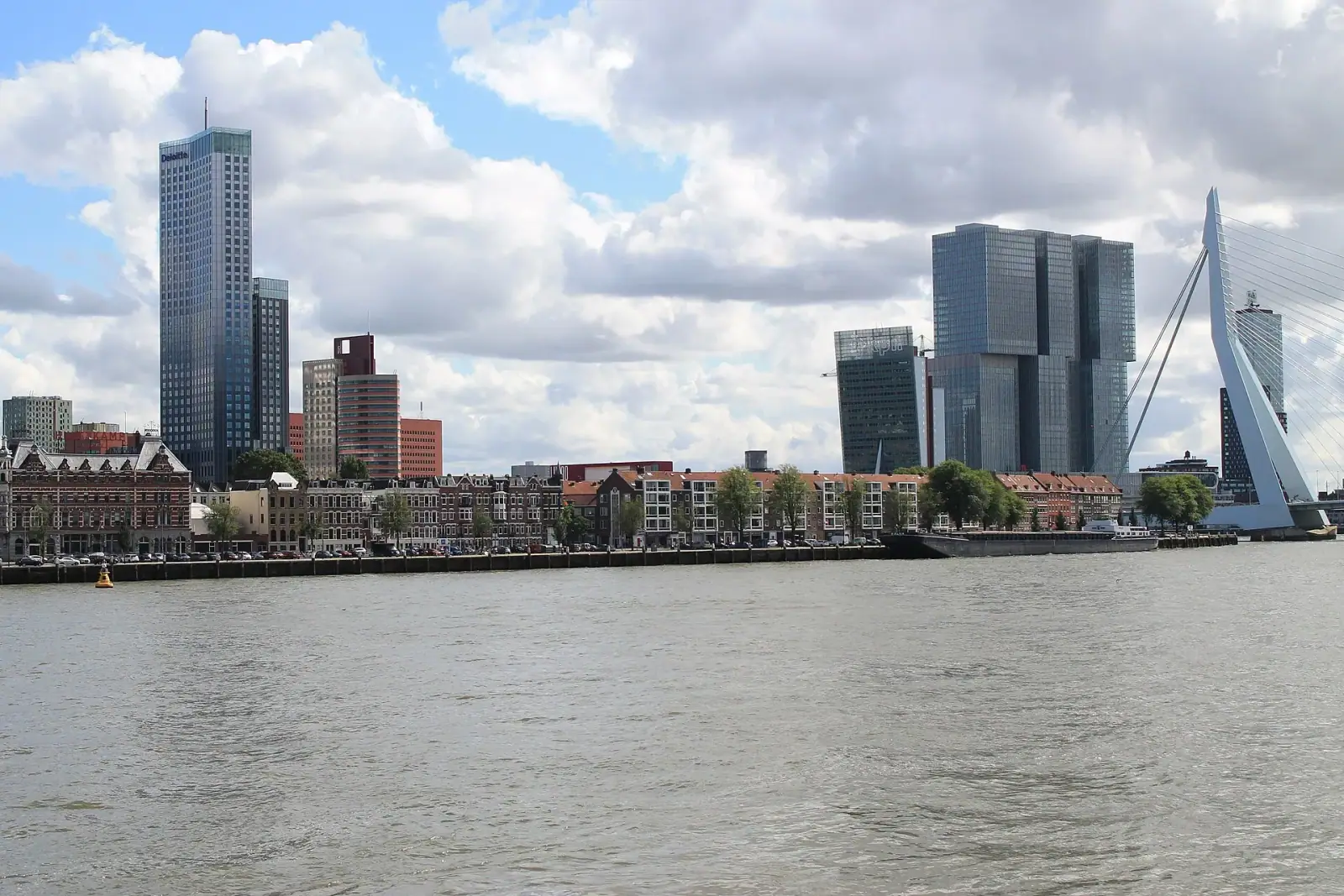
- Architecture and urban design are genuinely striking and stimulating to work around
- Fast, reliable broadband almost everywhere including most cafes
- Excellent rail connections to Amsterdam, Brussels, Paris, and London
- More affordable than Amsterdam with a less tourist-saturated atmosphere
- Strong freelancer and startup culture with a large expat community
- Clean, safe, and very well organised city infrastructure
Cons
- Rent is still high by global nomad standards; this is not Southeast Asia pricing
- Weather is grey and wet for a significant chunk of the year
- No digital nomad visa; 90-day Schengen rule applies to non-EU nationals
- Summers are warm but rarely hot; outdoor enthusiasts may find it underwhelming
- City centre can feel quiet on Sundays; some shops and cafes close or open late
- Nature access is limited close to the city; you need to travel for countryside escapes
Who Rotterdam Is Best For
Rotterdam suits remote workers who want a real European city with a business-minded, forward-looking culture rather than a postcard-pretty tourist hub. If you value modern architecture, a diverse food scene, fast public transport, and a city that feels lived-in rather than performatively charming, Rotterdam delivers consistently.
It is a particularly good fit for people in tech, design, logistics, or entrepreneurship who want proximity to Amsterdam and Brussels without Amsterdam's prices. The coworking scene and freelancer community are both mature, so networking is genuinely viable.
Consider looking elsewhere if you are on a tight budget (under $2,070/month all-in), need warm sunny winters, or want easy access to beach or mountain environments. Non-EU travellers extending beyond 90 days will also find the visa options limited and fairly demanding to qualify for.