Cost of Living in Ghent
Where this figure comes from. No cost survey covers Ghent, so the $2,600 a month above is our own estimate rather than a measurement. On 416 of our 999 city guides the figure is built from a published Numbeo basket, a one-bedroom rent in the centre plus one person's monthly costs without rent, converted to USD; this city is not one of them. How we source everything.
Ghent sits in a middle ground for Western Europe: more affordable than Brussels or Amsterdam, but not cheap by global nomad standards. Expect to spend roughly $2,070-2,760 per month ($1,950-2,600) for a comfortable solo setup, or closer to $1,610-1,960 if you keep costs lean.
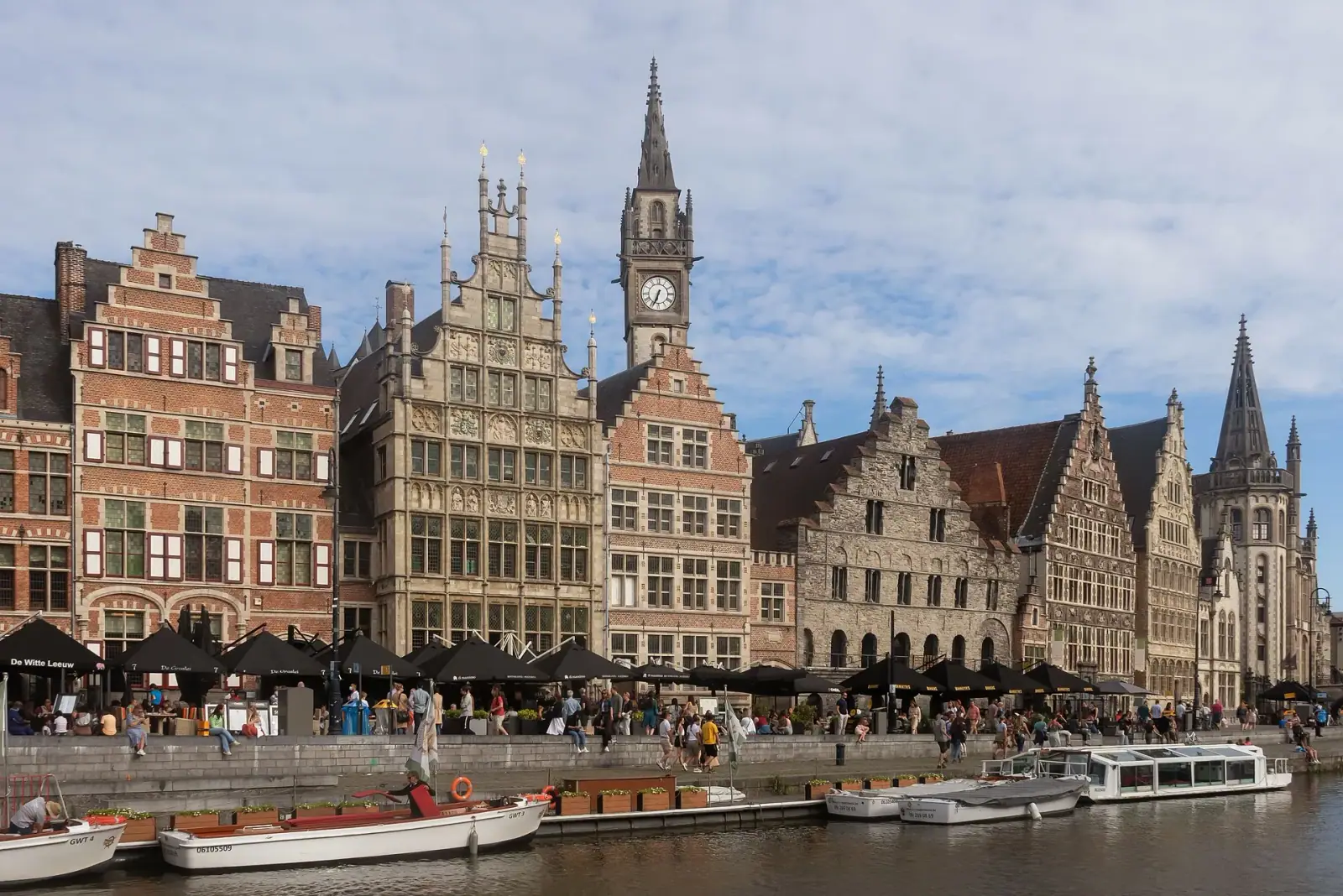
- Rent, city center (Patershol, Korenmarkt, Graslei area): $995-1,380/month for a 1-bedroom apartment
- Rent, cheaper areas (Sint-Amandsberg, Ledeberg, Nieuw Gent): $805-1,040/month
- Groceries: $290-405/month shopping at Colruyt or Lidl
- Eating out (inexpensive meal): $17-25 per meal; lunch deals around $14-17
- Coworking hot desk: $175-345/month depending on space and access level
- Local public transport pass (De Lijn): $58-68/month
- Broadband internet (home): $40-59/month
- Total range: $1,610-2,760/month depending on lifestyle and rent choice
Ghent's student population keeps food prices reasonable in many areas. You can eat well without spending Brussels prices, but rent is the main cost to watch.
Where to Work
Ghent has a small but solid coworking scene alongside genuinely good cafes for laptop work.
Coworking Spaces
- Ampla House (No.18): A converted historic building on Coupure canal with a former library workspace, landscaped garden, and marble reception. Elegant environment, good for focused work.
- LikeBirds at Eskimofabriek: A creative coworking community on Wiedauwkaai 23K, aimed at freelancers and designers. Warm community feel, free parking available.
- UR.zone: A regenerative business center on De Pintelaan with a strong community focus, rated 4.7 on Google. Good for longer stays and networking.
Cafe Work Culture
Ghent has a real cafe culture and many spots tolerate laptop workers during off-peak hours. Cafe Labath near Sint-Michielsbrug is one of the best specialty coffee stops in the city with reliable wifi and a 4.4 average rating, though power outlets can be scarce. Bidon in Patershol suits cycling-themed hipster aesthetics and draws laptop workers. Cafe culture here leans more social than cowork-tolerant, so avoid the busy lunch window.
WiFi Situation
Home and office internet in Belgium is fast, and most cafes offer stable connections. Mobile data on a Belgian SIM (Proximus, Orange, Base) is reliable across the city. You will not struggle to get connected.
Getting Around
Ghent is one of Belgium's most walkable cities. The historic center is compact enough to cross on foot in about 20 minutes. Most of your day-to-day life can happen without any transit at all.
Bikes
Cycling is genuinely the best way to get around. Ghent has dedicated bike lanes throughout, and the city's Blue-bike rental network is cheap. Many residents and nomads simply use a secondhand bike bought locally for $92-175.
Trams and Buses
De Lijn runs trams (lines 1, 2, 3, 4) through the city center and out to the train station. A single ride costs $3.50 with contactless payment, and a monthly pass runs $58-68. Service is frequent and reliable.
Getting to and from the Airport
Ghent has no commercial airport of its own. Brussels Airport (BRU) is the main international hub, reached by a direct shuttle bus that runs about 10 times daily to Gent-Sint-Pieters station, or by train via Brussels-North (roughly 1 hour total). Charleroi Airport (CRL, served by budget airlines) takes about 90 minutes by combination of bus and train. Ghent's own station connects to Brussels in about 30 minutes with multiple direct trains per hour.
Sorting transport? Book an airport transfer, or compare car rental on Auto Europe and QEEQ.
Visas and Staying Long-Term
Belgium is part of the Schengen Area. Most Western passport holders (US, UK, Canada, Australia, and most of Latin America) can enter visa-free for up to 90 days in any 180-day window. Belgium does not currently offer a dedicated digital nomad visa.
For stays beyond 90 days, the main route for non-EU remote workers is the Professional Card (Beroepskaart), which applies to self-employed freelancers. This is combined with a Type D national long-stay visa and allows an initial two-year stay, extendable to five. The process involves applying at a Belgian embassy or consulate in your home country and demonstrating a viable self-employed business plan. EU citizens face no restrictions and can register as residents freely.
Best Time to Visit
Ghent has a temperate maritime climate: mild, damp, and overcast for much of the year, with no extreme heat or cold.
Best window for remote work: May through September. Temperatures sit between 18-24 degrees C (64-75 F), daylight runs long (up to 16.5 hours in June), and the city is at its most liveable. Spring (April-May) is the sweet spot: fewer tourists than summer, pleasant temperatures, and cafes spill onto the streets.
Summer (June-August): The most popular period, with outdoor events, festivals (including Gentse Feesten in July, a massive 10-day street festival), and a buzzing atmosphere. Can get crowded in the center.
Autumn (September-October): Still workable, with crisp air and golden light, but rain picks up.
Winter (November-March): Short daylight hours (as few as 8 hours in December), persistent damp cold, and a noticeably quieter city. Manageable if you stay productive indoors, but not the most motivating environment for most nomads.
Pros and Cons
Pros
- Beautiful, compact medieval city that is genuinely pleasant to live in daily
- Strong cycling infrastructure makes car-free life easy
- Excellent food scene anchored in Flemish tradition with modern updates
- English is widely spoken, especially among students and younger locals
- Active student population creates a lively, open-minded atmosphere year-round
- Fast, reliable internet and solid coworking options
- Ghent is 30 minutes from Brussels and well-connected to Amsterdam, Paris, and London by rail
Cons
- No dedicated digital nomad visa; 90-day Schengen cap limits long stays for non-EU citizens
- Rent in the center is not cheap and has been rising
- Winter is grey, damp, and dark for months at a stretch
- The nomad community is small compared to cities like Lisbon or Berlin
- No commercial airport; international travel requires a trip to Brussels or Charleroi
- Finding short-term furnished apartments can be competitive in a student-heavy rental market
Who Ghent Is Best For
Ghent suits nomads who want to be based in a genuinely beautiful, functional European city rather than a purpose-built nomad hub. If you appreciate good food, medieval architecture, a cycling lifestyle, and a lively local culture that is not overrun by tourists, Ghent delivers. EU passport holders face the fewest friction points and can stay indefinitely. It also works well as a medium-term base for those exploring Belgium, the Netherlands, and northern France, given its central rail position.
Skip Ghent if you need a large English-speaking coworking community to stay motivated, want year-round sunshine, are on a tight budget (Southeast Asia or Latin America will stretch your money far further), or hold a non-EU passport and need to stay more than 90 days without a complex freelance visa process.