Cost of Living in Antwerp
Real market data
Source: Numbeo · August 2026
$1,950/moSolo nomad1-bed centre + living costs
$2,660/moCoupleshared 1-bed + costs
$1,750/moLean / localcheaper area + costs
- 1-bed rent, city centre$1,060€920
- 1-bed rent, outside centre$860€745
- Monthly costs excl. rent (1 person)$890€773
- Meal, inexpensive restaurant$23€20
- Monthly transit pass$56€49
- Buy price, per m² (centre)$4,550€3,957
Prices are from Numbeo (August 2026), converted to USD at $1 = €0.87 (01 Aug 2026). The monthly living-costs figure is our transparent one-person basket, groceries, a few meals out, utilities, phone, internet, transport and essentials, priced from those figures. Solo adds central rent; couple and lean are estimates from the same numbers. The guide below quotes its own monthly range, which is a different measurement rather than a competing one: this table prices a defined basket at the figures above, while that range is a judgement about how somebody actually lives here.
What this figure covers. The measured average covers the whole city including the outer districts. The guide below prices the centre and the areas around it, where the difference is substantial. How we source everything.
Antwerp sits firmly in the expensive tier of Western European cities. Expect to spend more than in Lisbon or Tbilisi, though slightly less than Amsterdam or Paris.
Monthly breakdown for a single person:
- Rent, central (Meir, Het Zuid, Eilandje): $1,500-2,190 for a studio or one-bedroom
- Rent, cheaper areas (Borgerhout, Berchem, Hoboken): $920-1,380
- Groceries (cooking most meals): $290-405 at Albert Heijn or Colruyt
- Eating out (mix of lunch spots and sit-down dinners): $345-575
- Coworking hot desk: $175-290 per month
- Local transport (De Lijn tram/bus unlimited monthly pass): $58-75
- Utilities and internet (if not included in rent): $115-205
Total realistic range: $2,300-3,680 per month depending on neighborhood and lifestyle. Budget travelers sharing a flat can push this toward $1,610-1,960, but you will feel the squeeze.
Where to Work
Antwerp has a solid coworking scene. Silversquare Antwerp Tower (Frankrijklei 5, near Central Station) is the most prominent dedicated coworking hub, with flexible hot desks, fast fiber, meeting rooms, and a strong community calendar. Fosbury and Sons (Mechelsesteenweg 180) occupies the WATT Tower and leans toward a design-forward creative crowd, with 24/7 access and a premium feel. Clockwise Antwerp (Olijftakstraat 7) sits in the renovated Maritiem Huis near the waterfront and gets strong marks for natural light and staff. Day passes and drop-in options are available at all three.
Cafe work culture is real here. Caffenation (Mechelsesteenweg 16) is a well-established specialty roaster with seating, power outlets, and reliable WiFi that draws a regular laptop crowd. Normo (Minderbroedersrui 30) is a micro-roastery near the student quarter with a relaxed vibe and a reputation as a good spot to hunker down.
WiFi quality across the city is generally strong. Most cafes offer free connections but you will want a backup SIM or hotspot during peak hours at busier spots. Fiber speeds at coworking spaces are consistently fast.
Getting Around
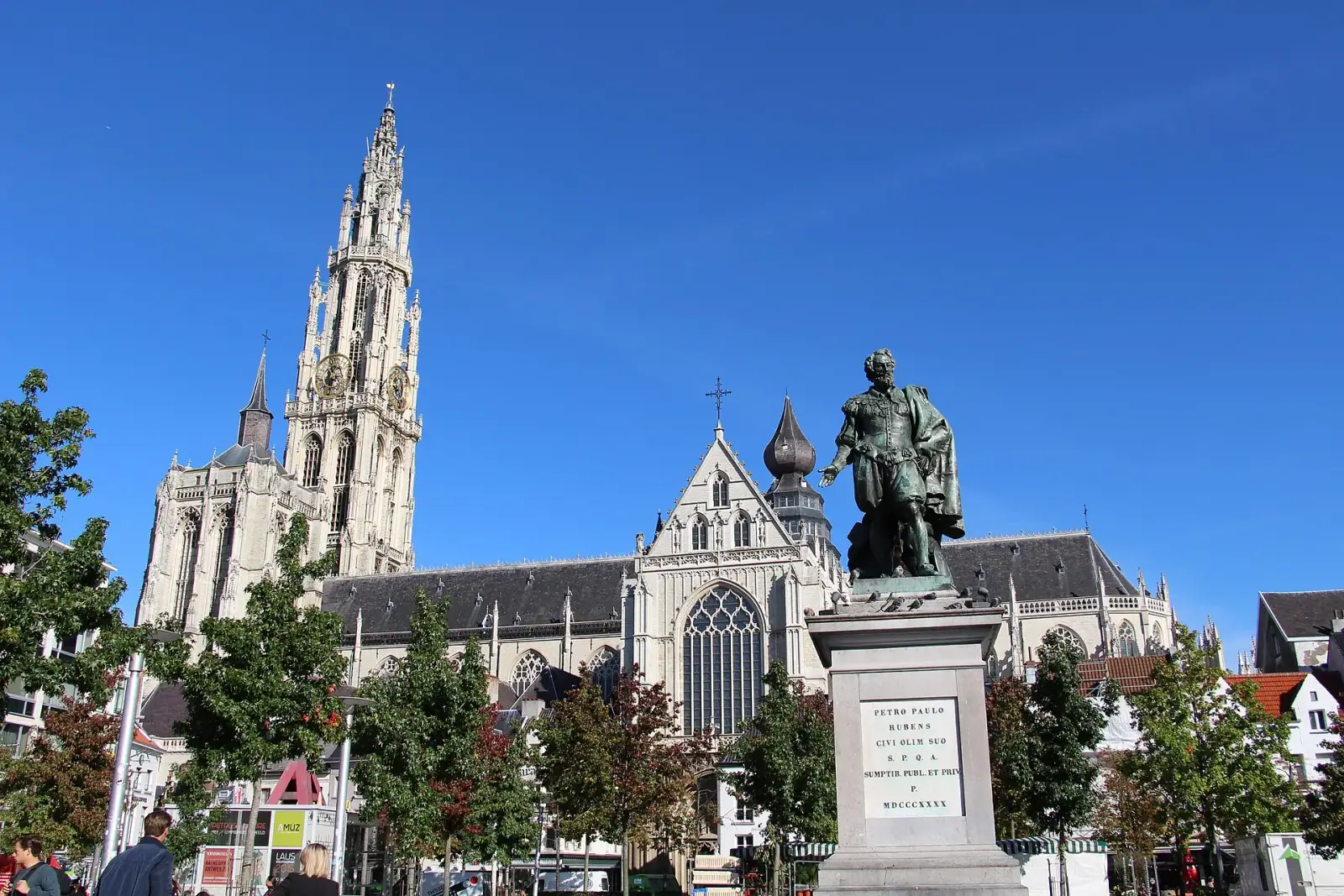
The center of Antwerp is compact and very walkable. Most key neighborhoods, from the old town around the Cathedral to Het Zuid and Eilandje, are reachable on foot in under 30 minutes. Cycling is practical and the city has invested heavily in protected lanes, though bike theft is common so use a quality lock.
Public transport is run by De Lijn and covers trams, buses, and a pre-metro (underground tram) network. Core stations include Groenplaats, Meir, and Opera. A single trip costs $3.50; a monthly unlimited pass runs around $58-75 and is worth it if you move around regularly. Buy tickets in advance at newsagents or supermarkets to save about 20% versus buying on the vehicle.
For the airport, you have two options. Antwerp Airport (ANR) is small but convenient: bus lines 51, 52, and 53 connect it to Antwerp-Berchem station in about 10 minutes. Brussels Airport (BRU) is the main international hub and is linked to Antwerp Central Station by the Diabolo train service, running twice per hour on weekdays and taking about 35 minutes.
Trains to Brussels take around 40 minutes; Ghent is also under an hour. Antwerp Central Station is a working architectural landmark and one of the most beautiful train stations in Europe.
Sorting transport? Book an airport transfer, or compare car rental on Auto Europe and QEEQ.
Visas and Staying Long-Term
Belgium is part of the Schengen Area. Citizens of the US, Canada, Australia, the UK, and most other Western countries can enter visa-free and stay up to 90 days within any 180-day period across the whole Schengen zone, not just Belgium.
Belgium has no dedicated digital nomad visa. If you want to stay beyond 90 days, your main options are the Type D long-stay visa (requires a specific purpose such as work, study, or family reunification) or the Professional Card for self-employed individuals who intend to actively conduct business in Belgium, which requires demonstrating a minimum annual income of roughly $29,930. Processing times for long-stay applications are typically around 120 days. A handling fee of approximately $300 applies as of mid-2026.
Best Time to Visit
Antwerp has a maritime oceanic climate with mild temperatures year-round, consistent cloud cover, and rain distributed throughout all four seasons. There is no true dry season.
May through September is the best window for remote workers. Average highs reach 20-25 degrees Celsius (68-77 F) in summer, outdoor terrace culture is in full swing, and the city's festival calendar is busiest. Late May and early September are particularly good: pleasant temperatures, longer daylight hours, and fewer tourists than July and August.
October through March is the harder stretch. Days are short, skies are frequently grey, temperatures drop to near-freezing at night in January and February, and strong winds off the North Sea arrive from November onward. The city does not grind to a halt and coworking spaces stay busy, but be honest with yourself if grey weather affects your productivity.
Pros and Cons
Pros:
- World-class food scene at every price point, from street falafel to two-Michelin-star dining
- English is very widely spoken; day-to-day life is easy without Dutch
- Compact, walkable city with excellent architecture and genuinely interesting neighborhoods
- Strong coworking infrastructure with multiple premium spaces
- Excellent rail connections to Brussels, Amsterdam, Paris, and London
- High safety levels compared to other major European ports; low violent crime rate
- Vibrant fashion, design, and arts culture gives the city real personality
Cons:
- Cost of living is high; central rent is not far behind Amsterdam or London
- Weather is reliably grey and rainy for much of the year
- No digital nomad visa; 90-day Schengen limit applies to most passport holders
- Some bureaucratic friction if you need to register or deal with local administration in Dutch
- Petty theft (pickpocketing) is a real issue around Central Station and the Meir
- In 2026, metro renovation works are expected to disrupt tram and pre-metro services
Who Antwerp Is Best For
Antwerp works well for nomads who value culture, food, and a genuinely interesting city over cost savings. If you are coming from a tech or creative background and want to feel plugged into a real urban environment rather than a nomad bubble, Antwerp delivers that. It suits people who can work a full European schedule and enjoy exploring a city on evenings and weekends without needing organized nomad meetups to feel connected.
It is a strong base for anyone using Schengen days strategically: you get a functional, well-connected Western European city without the tourist overwhelm of Amsterdam or Brussels. The rail links make it easy to do day trips or weekend trips across Belgium, the Netherlands, and northern France.
Skip Antwerp if budget is your primary constraint, if extended grey weather depresses your output, or if you need a warm-weather, beach-adjacent base. Nomads looking for a large English-speaking remote work community or structured coworking meetups will find the scene quieter than in Lisbon or Barcelona.