Cost of Living in Düsseldorf
Real market data
Source: Numbeo · August 2026
$2,120/moSolo nomad1-bed centre + living costs
$2,920/moCoupleshared 1-bed + costs
$1,900/moLean / localcheaper area + costs
- 1-bed rent, city centre$1,130€981
- 1-bed rent, outside centre$910€791
- Monthly costs excl. rent (1 person)$990€862
- Meal, inexpensive restaurant$17€15
- Monthly transit pass$73€63
- Buy price, per m² (centre)$9,360€8,132
Prices are from Numbeo (August 2026), converted to USD at $1 = €0.87 (01 Aug 2026). The monthly living-costs figure is our transparent one-person basket, groceries, a few meals out, utilities, phone, internet, transport and essentials, priced from those figures. Solo adds central rent; couple and lean are estimates from the same numbers.
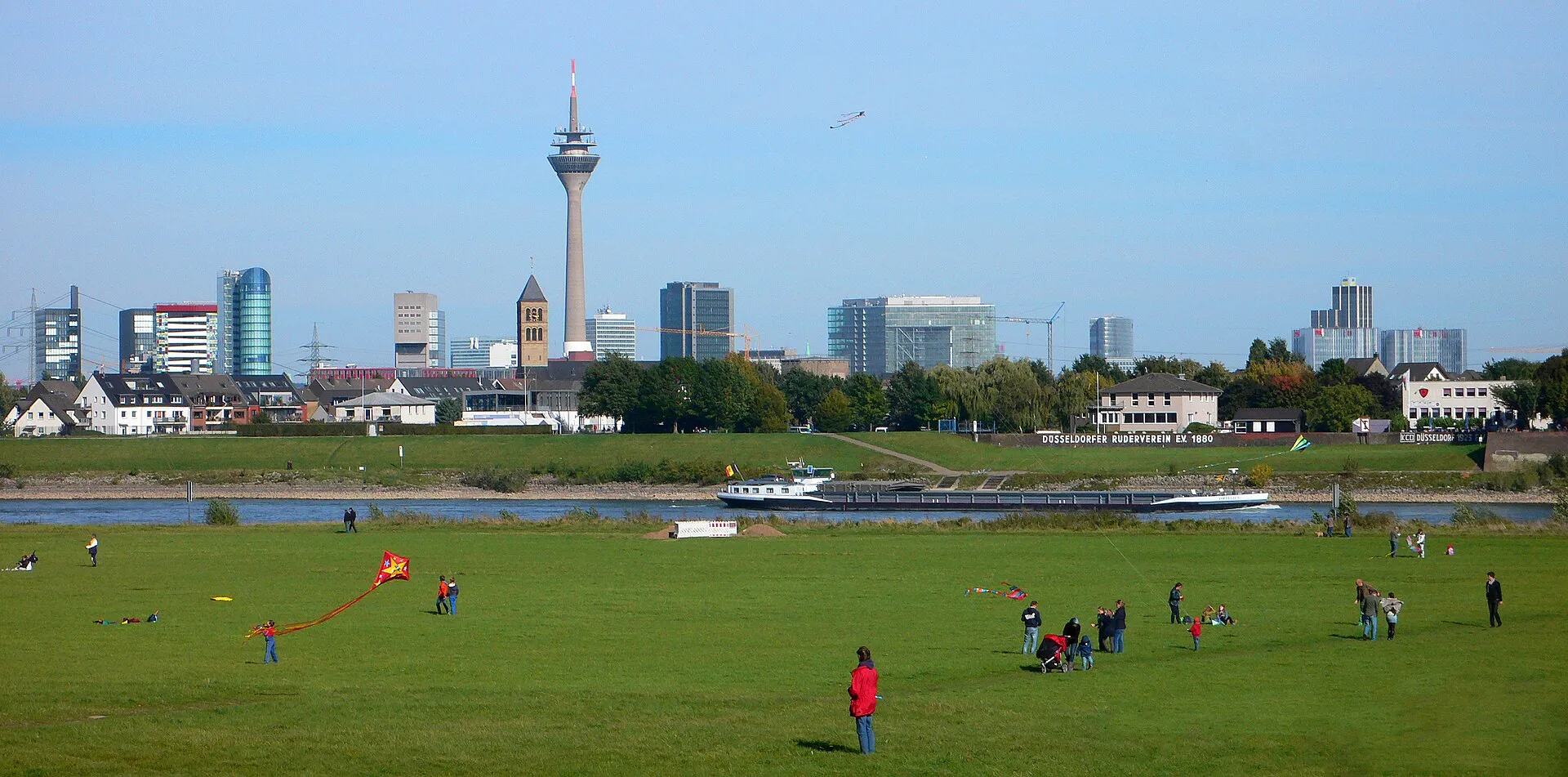
Düsseldorf sits comfortably in the middle tier of German cities for cost. It is cheaper than Munich and Frankfurt, but noticeably more expensive than Leipzig or Dresden. Budget accordingly.
Rent: A one-bedroom apartment in the city center (Stadtmitte, Pempelfort, Unterbilk) runs $1,250-1,600/month. In cheaper areas like Flingern, Lierenfeld, or Bilk you can find the same size for $910-1,200/month. Furnished short-term rentals carry a premium of 20-40% above those figures.
Groceries: A week of cooking at home costs roughly $68-100/month per person if you shop at Aldi or Lidl. Buying at REWE or Edeka adds maybe 15-20% on top. Monthly grocery budget for one: $280-400.
Eating out: A sit-down lunch at a casual restaurant runs $14-18. Dinner at a mid-range place is $20-34 per person before drinks. A Döner or bakery lunch keeps you under $8.
Coworking hot desk: Expect $200-360/month depending on the space. Startplatz starts at $200/month; Design Offices and Mindspace sit higher. Day passes are typically $28-40.
Local transport: A monthly Rheinbahn pass for zone A (covers all of Düsseldorf) costs $84/month. The Deutschlandticket, which gives you unlimited regional transport across all of Germany, is available for $56/month and is worth serious consideration if you travel to nearby cities like Cologne or Essen.
Total monthly range: A solo nomad renting centrally, cooking most meals, and using a coworking space realistically spends $2,300-3,200/month. Sharing a flat or renting in a cheaper district drops that to $1,700-2,300/month.
Where to Work
Coworking spaces are well-developed and professionally run. Startplatz in MedienHafen is the largest hub, built around a startup community with hot desks from $200/month. Mindspace on Grünstraße opened in 2024 and offers a polished, design-forward environment near Königsallee. Tribes Düsseldorf GAP at Graf-Adolf-Platz is a solid option if you want a flexible day pass without committing to a membership. Design Offices has two Düsseldorf locations and leans more toward teams and freelancers needing quiet.
Cafe-working culture is more reserved here than in, say, Lisbon or Berlin. Many traditional cafes and bakeries in Düsseldorf do not encourage laptops, especially on weekends. That said, a handful of dedicated laptop-friendly cafes exist. Mercy Coffee in Unterbilk actively welcomes remote workers and has reliable WiFi. Copenhagen Coffee Lab in the Altstadt works well for a half-day session. TenTen Coffee in the Japanese Quarter (Immermannstrasse area) has a laptop-tolerant crowd on weekday mornings.
WiFi quality at coworking spaces is consistently excellent, with gigabit-grade connections standard. Cafe WiFi is functional but varies. Mobile data via a German SIM is a reliable backup: all major operators offer solid 4G/5G coverage throughout the city.
Getting Around
Düsseldorf's central districts are very walkable. The Altstadt, Carlstadt, Friedrichstadt, and Unterbilk are compact enough to cover on foot, and the flat terrain makes cycling an easy option. The city has a growing network of bike lanes.
Public transit is run by Rheinbahn and covers the city with U-Bahn, Stadtbahn trams, S-Bahn, and buses. The network is reliable and clean. A zone A single ticket costs $4.50; the monthly pass is $84. The Deutschlandticket at about $74/month is the better deal for anyone here longer than a few weeks, as it covers regional trains across Germany.
Airport access: Düsseldorf International (DUS) is Germany's third-largest airport and serves a vast range of European and intercontinental routes. From the Hauptbahnhof, the S11 S-Bahn reaches the airport terminal in about 12 minutes. The fare is covered by a standard zone A-B ticket. By taxi, the journey takes 15-20 minutes and costs around $34-46.
Connections to other cities: Cologne is 25-30 minutes by regional train. Amsterdam is about 2.5 hours by ICE. This makes Düsseldorf a genuine base for anyone working across the Benelux-Rhineland corridor.
Sorting transport? Book an airport transfer, or compare car rental on Auto Europe and QEEQ.
Visas and Staying Long-Term
Visa-free entry: Citizens of the US, Canada, Australia, the UK, and most other Western countries can enter Germany (and the broader Schengen Area) without a visa for up to 90 days within any 180-day period. This is sufficient for a short-term stay but does not allow you to work legally for German clients or employers.
Germany does not have a dedicated digital nomad visa. The closest equivalents are the Freelance Visa (Freiberufler) and the Self-Employment Visa (Selbständiger). Both require proof of a business plan, existing clients or contracts, sufficient funds, and health insurance. If approved, they are initially valid for 1-3 years. Applying requires going through the Ausländerbehörde (foreigners' office) in Düsseldorf, and the process takes months rather than days.
EU/EEA citizens have freedom of movement and can live and work in Düsseldorf without any visa restrictions. Anyone flying long-haul into Amsterdam Schiphol and taking the ICE here has their biometrics registered for the EU Entry/Exit System by the Dutch border police at Schiphol, and the train over the Dutch border passes no further check at all.
Best Time to Visit
Düsseldorf has a mild oceanic climate. It is rarely extreme but reliably grey outside of summer.
May through September is the clear window for remote work visits. Temperatures range from 18-25°C (64-77°F), daylight is long, the Rhine promenade fills up, and the city feels genuinely animated. June and September offer the best balance: warm enough, fewer tourists than August, and less of the summer thunderstorm pattern that can disrupt afternoons in July.
October is tolerable and surprisingly uncrowded. Autumn color along the Rhine can be genuinely beautiful. Temperatures drop toward 10-15°C (50-60°F) and rain becomes more frequent.
November through March is the toughest stretch. Daylight is limited, skies are reliably overcast, and temperatures hover near 2-8°C (35-46°F). If you are accustomed to darker winters (Scandinavia, Scotland, northern Canada), this is manageable. For anyone used to sunnier climates, this period takes real adjustment. Coworking spaces fill with people who have made peace with staying indoors.
Pros and Cons
- Strong English proficiency citywide, especially among younger residents and in professional settings
- Excellent transport links to Cologne, Amsterdam, Brussels, and beyond
- Safe and orderly with very low street crime
- Large international community, particularly the Japanese Quarter, making expat integration easier
- High-quality infrastructure: fast internet, reliable transit, clean streets
- Compact city that rewards walking and cycling without being overwhelming
- Not cheap by European nomad standards; more expensive than Berlin, Leipzig, or most of Eastern Europe
- Limited sunshine from October through March; grey weather can wear on you
- Cafe-work culture is underdeveloped; finding a laptop-tolerant spot for a full day takes planning
- Nightlife is quieter than Berlin or Cologne; the Altstadt bar scene is lively but short on variety
- Visa paths for non-EU nomads are complex and require serious planning
Who Düsseldorf Is Best For
Düsseldorf works well for nomads who value stability, infrastructure, and connectivity over low cost and street-level buzz. If you are working across European time zones and need fast rail access to Amsterdam, Cologne, or Brussels, Düsseldorf's geography is genuinely useful. The large Japanese expat community and strong international presence mean you are unlikely to feel isolated even without speaking German.
It suits people who prefer a quieter rhythm: a city that functions extremely well without demanding your attention. Families or couples base here comfortably. Freelancers who can justify the cost for quality of life often find it a productive base.
If you are primarily chasing a low budget, constant social energy, a thriving nomad cafe scene, or year-round sunshine, Düsseldorf is the wrong city. Berlin, Lisbon, or cities in Southeast Asia will serve those priorities far better. Düsseldorf rewards those who appreciate competence and polish over character and chaos.