Cost of Living in Evora
Where this figure comes from. No cost survey covers Evora, so the $1,050 a month above is our own estimate rather than a measurement. On 416 of our 999 city guides the figure is built from a published Numbeo basket, a one-bedroom rent in the centre plus one person's monthly costs without rent, converted to USD; this city is not one of them. How we source everything.
Budget around $1,050 a month, which is moderate for Portugal and considerably cheaper than Lisbon. A one-bedroom runs roughly $450 to $750, though the university and the tourist market together keep the centre tighter than the town's size suggests. Market produce is cheap and the Alentejo produces excellent bread, cheese, olive oil and wine, most of it locally. Eating out is inexpensive and the regional cooking, heavy on pork, bread and coriander, is distinctive. Utilities are moderate, with summer cooling the main cost rather than winter heating. Anyone comparing with Lisbon should note that rents here run well under half the capital's, which is why a good number of people have moved inland since the Lisbon market tightened. Coworking desks, where the town has them, run about $90 to $140 a month, and a menu do dia at lunch is $10 to $14, which is what most people here actually eat.
Where to Work in Evora
Connectivity is good. Portugal has extensive fibre at reasonable speeds and prices, comprehensive mobile coverage and reliable power. There is a small coworking presence, helped by the University of Evora, which was founded in 1559 and is among the oldest in Portugal. The time zone is GMT with Western European summer time, which gives a good overlap with the rest of Europe and a workable afternoon with the eastern United States. Portugal's digital nomad visa and the broader D7 route both apply here and have brought a substantial number of people to the country. The university term shapes the town more than the tourist season does, so cafes and the rental market both loosen noticeably between June and September. The reservoir built on the river east of here is the largest artificial lake in western Europe, and it turned a dry province into irrigated farmland, which is why olive and almond plantations now run in rows to the horizon where there used to be cork oak and pasture. That is the biggest thing to have happened to this region in a century, and opinions on it locally are not settled.
Getting Around Evora
Evora inside the walls is small and entirely walkable, which is the point: the historic centre is a compact grid of whitewashed houses that has changed little since the sixteenth century. Buses cover the modern town outside the walls. The train to Lisbon takes about ninety minutes and buses are frequent. A car is needed to see the Alentejo properly, since the megalithic sites, the cork oak plantations and the hill towns are spread across an emptier landscape than most of Europe still has. Lisbon Airport is the practical air connection. Trains to Lisbon are infrequent rather than slow, running a handful of times a day, so the timetable matters more than the ninety minutes does when planning a trip. Motorway tolls here are collected electronically with no booths, so a hire car needs a transponder fitted or the charges arrive later with penalties attached, and this catches out more visitors than any other piece of Portuguese administration. Away from the motorway the plain carries so little traffic that a drive becomes a pleasure rather than a chore, which is an unusual thing to be able to say anywhere in Europe now.
Sorting transport? Book an airport transfer, or compare car rental on Auto Europe and QEEQ.
Visas for Evora
Portugal is a member of the European Union and the Schengen area, so European Union and EEA citizens may live and work here with no permit, registering with the local council. Everyone else needs a Schengen visa for short stays or a residence permit for longer ones. Portugal operates a digital nomad visa introduced in 2022, with a temporary stay version for up to a year and a residence version renewable towards permanent residence, both requiring proof of remote income above a threshold. The D7 passive income route is the other common one. Portugal ended its golden visa route for residential property in 2023, so anyone researching older guidance should be aware the investment options have narrowed considerably since. The tax regime that drew so many people to this country was closed to new entrants and replaced by a narrower one aimed at research and qualified professions, so anybody working from advice written before that is planning around something which no longer exists. A local bank account and a registered lease are both needed before an application will even be accepted, which is a circular problem most people solve with a short let first. At Lisbon airport the Entry/Exit System counts both the arrival day and the departure day as full Schengen days, whatever time the flights are.
Best Time to Visit Evora
March to May and September to October are the best windows, warm at around twenty two degrees with the Alentejo green in spring and golden in autumn. Summer from June to August is severe: the Alentejo is among the hottest parts of Portugal and forty degrees is normal in July, with the town emptying into the shade in the afternoons. Winter is mild at around twelve degrees and wet, and the plains can be foggy. The wildflowers across the Alentejo in April are one of the better sights in southern Europe. Cork is stripped across the Alentejo between June and August, which is why the oaks stand bare-trunked and painted with a number through the summer, each tree cut once every nine years. The plains east of here hold one of the first certified dark sky reserves anywhere, with almost no light pollution across an area the size of a small country, and the clear dry nights of late summer are when it is at its best. Stargazing is a local industry here rather than a novelty, with observatories that take bookings and villages that have rewired their street lighting for it.
Pros and Cons of Evora
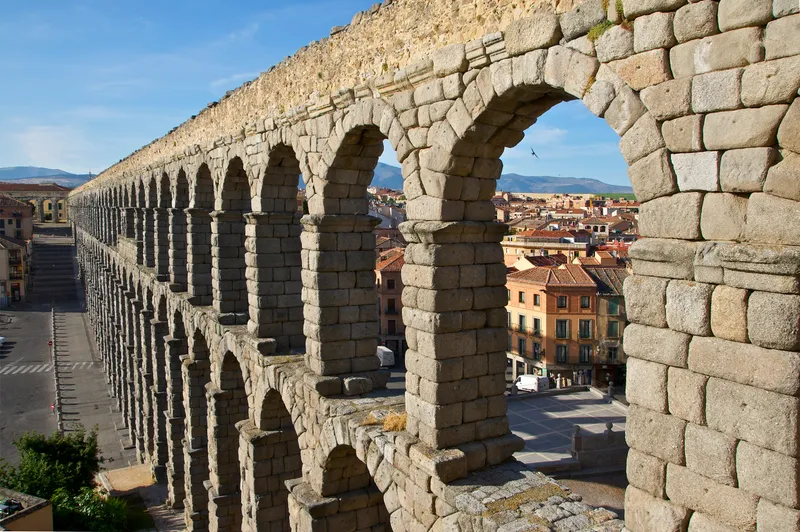
Evora is a walled town that UNESCO listed in 1986 and that genuinely earns it: a Roman temple standing in the middle of it, a cathedral, a Chapel of Bones lined with the remains of five thousand people, and an aqueduct that houses have been built into over the centuries. The Alentejo around it holds more megaliths than anywhere in the Iberian peninsula. Costs are low and the food and wine are excellent. The summer heat is serious, the winter is very quiet, and most people exhaust a town of this size inside a single season of living here. Evora is also small enough to be walked end to end inside the walls in twenty minutes, which is either the appeal or the limit depending on how long you intend to stay.
Who Evora Is For
Anyone drawn to Roman and medieval Portugal, to megalithic archaeology, or to wine, since the Alentejo produces a great deal of the best in the country and the estates are visitable. It suits people using Portugal's residence routes who want somewhere quieter and cheaper than Lisbon or the Algarve. It suits walkers and cyclists in spring and autumn. The Alentejo summer is genuinely hot rather than pleasantly warm, and anybody who cannot tolerate forty degrees should come in another season or not at all. Fifty thousand people also make a town rather than a city, and it behaves like one in every way that matters. A Portuguese residence route still requires somewhere to live, and the rental market here is effectively a different country from Lisbon's, where the gap has now widened to more than double for the same kind of flat.
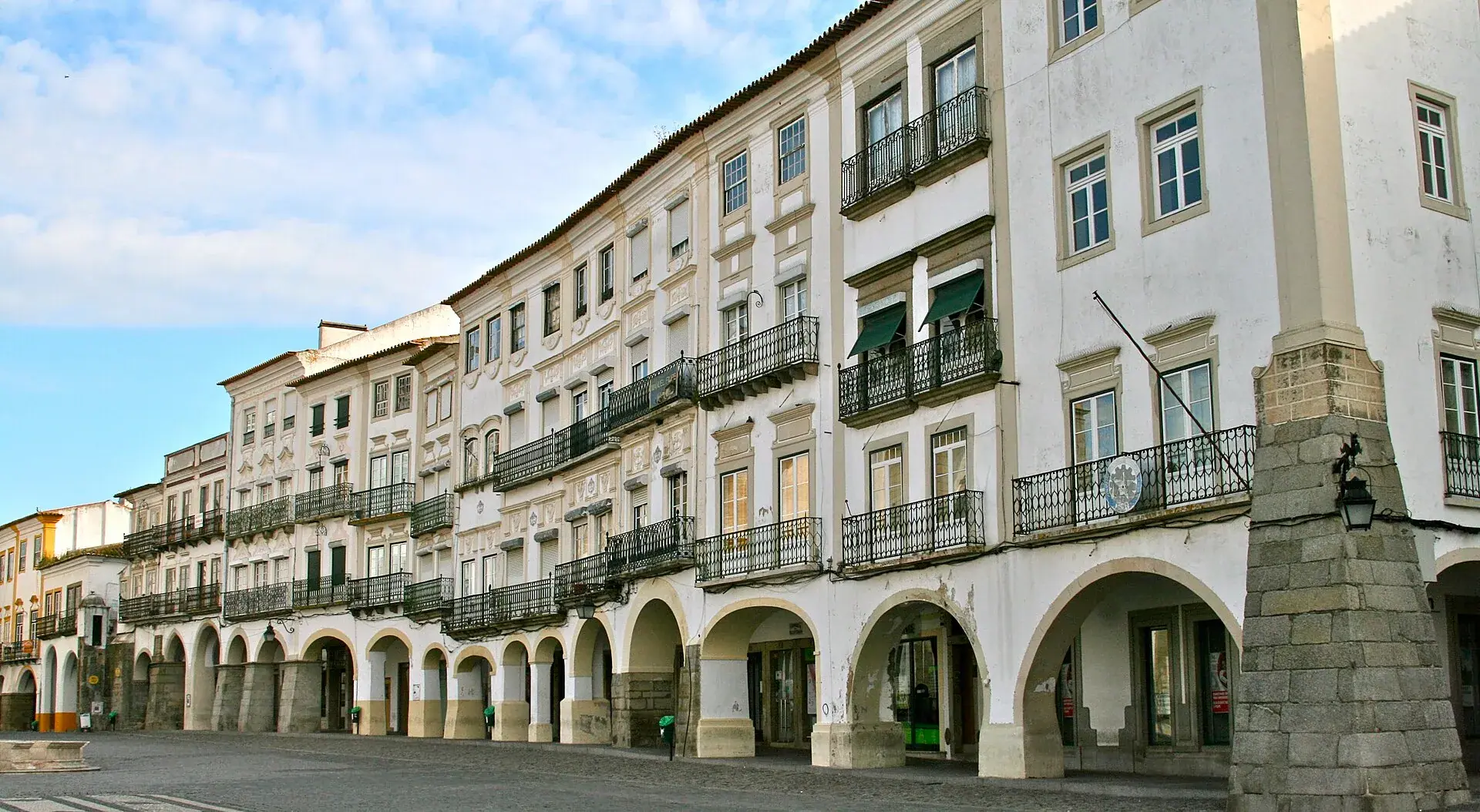 Photo: François Philipp from Darmstadt, Germany / Wikimedia Commons (CC BY 2.0)