Cost of Living in Setúbal
Where this figure comes from. No cost survey covers Setúbal, so the $1,400 a month above is our own estimate rather than a measurement. On 416 of our 999 city guides the figure is built from a published Numbeo basket, a one-bedroom rent in the centre plus one person's monthly costs without rent, converted to USD; this city is not one of them. How we source everything.
Budget roughly $1,400 a month as a solo remote worker in Setúbal, which is the main argument for it: Lisbon is forty minutes north and costs a third more. A one-bedroom apartment near the centre or the Avenida Luísa Todi runs about $600 to $820, and the districts inland drop that to $480 to $620. Portuguese rents have risen fast everywhere and Setúbal is no exception, though it remains well below the capital. Groceries land around $270 to $340. A worker's lunch is $8 to $11, a grilled fish dinner with wine $20 to $30, and the sardines here are the ones Lisbon buys. A monthly transit pass is roughly $45, or $42 for the Lisbon-wide Navegante pass.
Where to Work in Setúbal
Setúbal has a small coworking presence at roughly $110 to $180 a month, and a polytechnic that keeps a young population in the city. Most remote workers use their apartment or the cafes along the Avenida and around the Bocage square. Portuguese internet is excellent: fibre is close to universal, fast and inexpensive, and mobile data is cheap. That reliability, plus the commute, is what makes Setúbal work as a Lisbon-adjacent base rather than an isolated one, and a number of people here work in Lisbon two or three days a week. English is reasonably common among younger Portuguese, which is the norm nationally, though Setúbal is less internationalised than the capital. The largest car plant in the country sits a few kilometres inland and accounts for a remarkable share of national exports on its own, which is why the motorway and the rail freight here look overbuilt for a city this size. The port handles containers and vehicles rather than fish these days, whatever the quayside suggests. For a freelancer none of that is a client base, but it does mean the local economy does not depend on visitors and therefore does not empty out in the winter.
Getting Around Setúbal
Setúbal is flat along the waterfront and walkable through its centre in twenty minutes. Buses cover the wider city and the Arrábida coast. The Fertagus train and the local line reach Lisbon in about fifty minutes to an hour, and the Navegante monthly pass covers the whole metropolitan area including Lisbon's metro, which is the single most useful thing about living here. Ferries cross the Sado estuary to Tróia in fifteen minutes, landing on a long sand spit of empty beach. For the Arrábida natural park, its beaches and the Serra, a car helps a great deal, though buses run in summer. Lisbon airport is about an hour by road. Driving north means one of two bridges and both are tolled, with the traffic on the older one backing up at the same hours every weekday, which is why the train wins on almost every trip. The road that climbs over the ridge to the coves is narrow, steep and closed to anything large, and in summer it is reduced to a single lane by parked cars. A coastal road runs east along the estuary through saltpans and is flat enough to cycle, which few visitors ever discover.
Sorting transport? Book an airport transfer, or compare car rental on Auto Europe and QEEQ.
Visas for Setúbal
Portugal is in the European Union and the Schengen area, so EU and EEA citizens may live and work here after registering, and most other Western passports get 90 days in any 180. Portugal's D8 digital nomad visa, introduced in late 2022, is one of the most used schemes in Europe: it covers non-EU remote workers earning above a multiple of the Portuguese minimum wage from foreign sources, and comes in a temporary-stay and a residence version, the latter leading towards permanent residence. Portugal's tax treatment of new residents has changed substantially since the old non-habitual resident regime closed, so take current advice rather than relying on older summaries. The agency that handles residence was reorganised a couple of years ago and inherited a backlog measured in hundreds of thousands of files, so waiting times for an appointment and then for a card have been the main complaint of new arrivals ever since. A tax number comes first whatever the route: you can request it in person at a tax office, or from abroad through someone holding your power of attorney, and no fiscal representative is needed to get one. Citizenship used to follow five years of legal residence, but since May 2026 most non-EU nationals need ten, and citizens of the EU and Portuguese-speaking countries seven.
Best Time to Visit Setúbal
April to June and September to October are the best months in Setúbal: warm, dry and comfortable, with the Arrábida beaches usable and the summer crowds either not yet arrived or gone. July and August are hot, into the low thirties, and the Portuguese holiday season fills Tróia and the Arrábida coves. Winter is mild, around 15 degrees in the day, and wet in the Atlantic manner, with grey stretches from November to February but rarely cold. The dolphins in the Sado estuary, a resident population of bottlenose, are present year-round and the boat trips run mostly from spring to autumn. The Festa de Santiago in late July is the city's own week. The north wind gets up most summer afternoons and is the reason a morning on the sand and an afternoon on it feel like different places, and it is why the sheltered coves on the far side of the ridge are worth the drive. Sardines are at their best late in their season rather than at the start of it, once the fish has fattened, which is not when most visitors come looking for them. The rain arrives in bands off the ocean with bright days between them, rather than as one settled grey.
Pros and Cons of Setúbal
Setúbal gives you the Lisbon metropolitan area at a discount, with a working fishing port, the best grilled fish in Portugal, the Arrábida natural park behind the city and a resident dolphin population in the estuary. The train and the Navegante pass make the capital genuinely accessible, fibre is fast and cheap, and Portugal's D8 visa is among the easiest routes into Europe for non-EU remote workers. It is an industrial port city just as much as it is a pretty one, and parts of it are plainly working-class and unrenovated. There is little foreign community and no nomad scene, unlike Lisbon or the Algarve. Summer beach traffic on the Arrábida road is severe.
Who Setúbal Is For
The Lisbon area without Lisbon rents, if you will trade a central address for forty minutes on a train. The Portuguese D8 visa plus being priced out of Lisbon is how most people arrive here. Arrábida and the Sado give swimmers, hikers and divers plenty to work with, and anybody who ranks fish above everything else has already made up their mind. The town is flat and safe and the beaches are a short way out, and all of that matters more to families than to anybody else. No established nomad community has formed, the historic core is a few streets rather than a whole centre, and the nightlife assumes you are going to Lisbon for it. Lisbon has all of that forty minutes away, at a price that is the reason to be here instead.
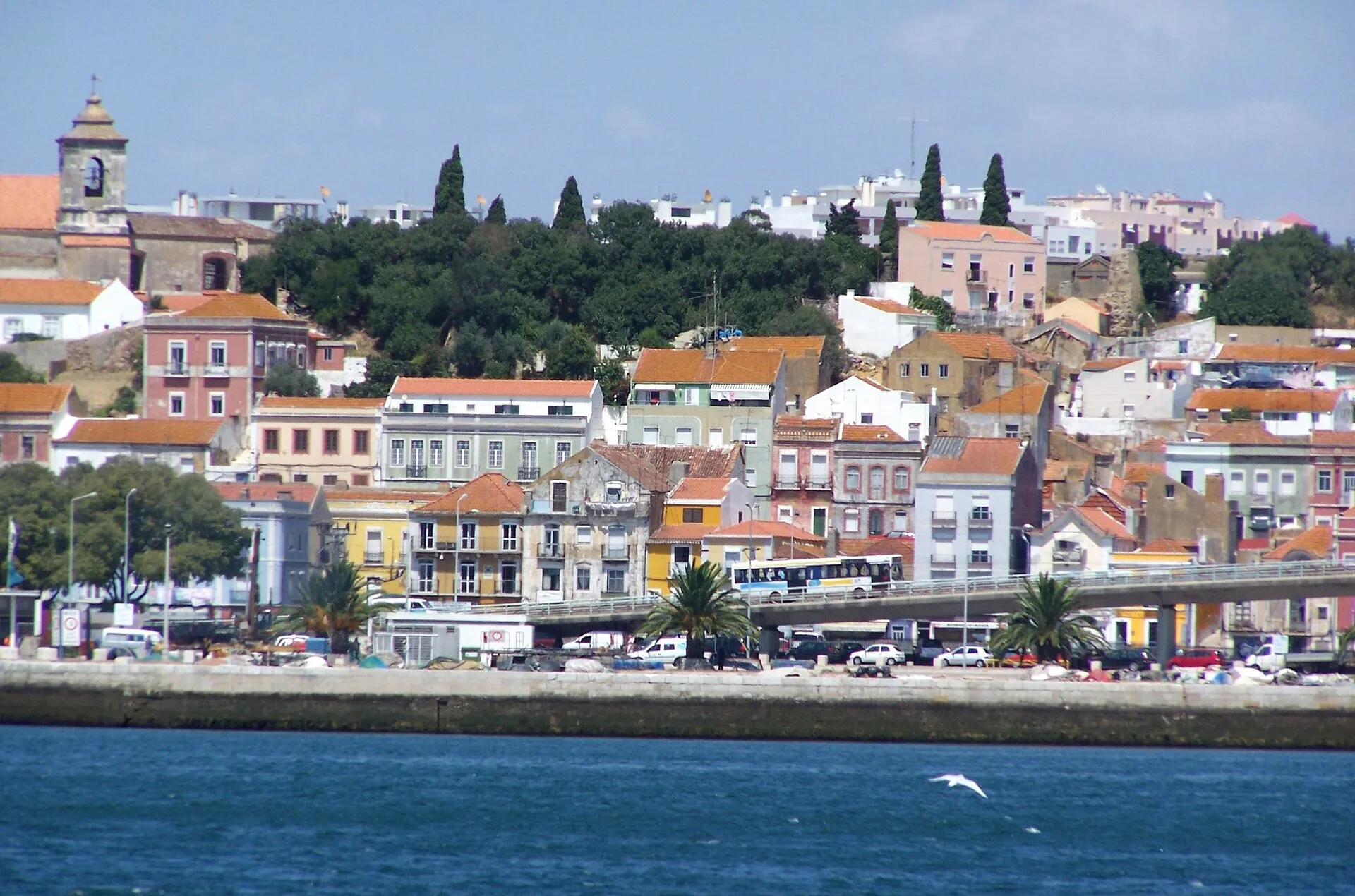 Photo: Filipe Rocha,user:sacavem (pt) http://pt.wikipedia.org/wiki/Usu%C3%A1rio:Sacavem (pt:usuário:sacavem) / Wikimedia Commons (CC BY-SA 3.0)