Cost of Living in Delft
Real market data
Source: Numbeo · August 2026
$2,720/moSolo nomad1-bed centre + living costs
$3,500/moCoupleshared 1-bed + costs
$2,410/moLean / localcheaper area + costs
- 1-bed rent, city centre$1,750€1,520
- 1-bed rent, outside centre$1,430€1,243
- Monthly costs excl. rent (1 person)$970€847
- Meal, inexpensive restaurant$23€20
- Monthly transit pass$76€66
- Buy price, per m² (centre)$7,040€6,118
Prices are from Numbeo (August 2026), converted to USD at $1 = €0.87 (01 Aug 2026). The monthly living-costs figure is our transparent one-person basket, groceries, a few meals out, utilities, phone, internet, transport and essentials, priced from those figures. Solo adds central rent; couple and lean are estimates from the same numbers.
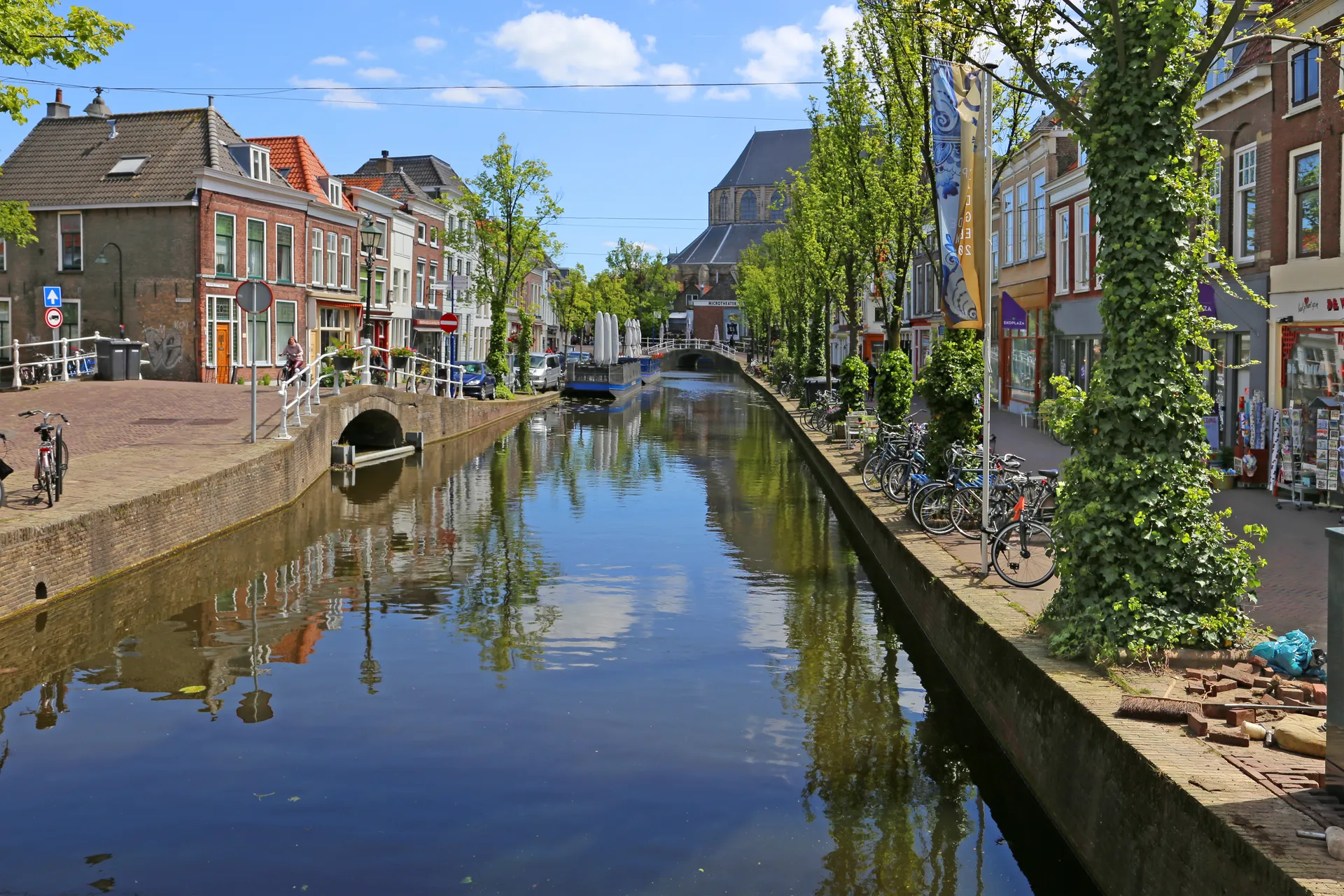
Delft is genuinely expensive, as anywhere in the Netherlands is, and the biggest squeeze is housing. A solo nomad renting a modest furnished studio or one-bedroom and living comfortably should budget roughly $1,500 to $2,500 a month, with rent swallowing the largest slice. The city is small and in demand from TU Delft students and commuting professionals working in The Hague and Rotterdam, so supply is tight and short-term furnished lets carry a premium. Day-to-day costs, groceries, transport and coffee, sit at typical Dutch levels: manageable but never cheap. You get real value for the money in the form of superb infrastructure, safety and quality of life, but this is not a budget base.
- Rent (studio or one-bed): roughly $1,100 to $1,900, and finding it furnished short-term is the hard part.
- Groceries at Albert Heijn or the Markt farmers stalls: around $300 to $450.
- Coffee, terraces and eating out add up fast at Dutch cafe prices.
- Public transport and a rented bike are modest and often the best value in town.
Where to Work in Delft
Delft is a genuinely good work base. Dutch internet is among the best in the world, so fast fibre and reliable mobile coverage are a given whether you are in an apartment, a cafe or a train. The city carries a real university-town buzz from TU Delft, which means plenty of laptop-friendly cafes, quiet study-style spots and a steady flow of engineers, researchers and students who treat public workspaces as normal. There is a modest but real coworking scene for those who want a desk, a meeting room and company. The dream setup is a canal-side apartment with a view of the water, though those are exactly the flats everyone wants, so expect to compromise or search hard. For focused deep work, Delft delivers.
- Excellent, fast fibre internet almost everywhere, including on the trains.
- Laptop-friendly cafes and a student-town culture that welcomes long sessions.
- A small selection of coworking spaces for desks and meeting rooms.
- The nearby TU Delft campus lends a productive, focused atmosphere.
Getting Around Delft
You do not need a car in Delft, and honestly you would not want one. The compact historic center is superbly walkable, and cycling is simply the default way to move: rent a bike and you can reach almost anything in minutes on flat, well-designed cycle paths. Beyond the city, the Dutch rail network makes Delft feel like the middle of everything. Frequent trains reach Rotterdam in around fifteen minutes, The Hague in about twelve, and Amsterdam in roughly an hour. Trams connect directly to The Hague, and both Rotterdam The Hague Airport and Amsterdam Schiphol are easy to reach for flights. This connectivity is one of Delft's quiet superpowers: a small, calm home base with three major cities and two airports on your doorstep. Tickets need no planning: every train, tram and bus in the country now accepts a contactless bank card or phone tapped in and out at the gates, the OVpay system completed in 2023, so a visitor never has to buy a travel card or queue at a machine.
- Walk the Binnenstad: the canal center is small and pedestrian-friendly.
- Rent a bike; cycling is fast, flat and the local default.
- Trains: Rotterdam about 15 min, The Hague about 12 min, Amsterdam about 1 hr.
- Trams to The Hague, plus easy access to Rotterdam and Schiphol airports.
Sorting transport? Book an airport transfer, or compare car rental on Auto Europe and QEEQ.
Visas for Delft
For most visitors, Delft falls under the standard Schengen rules: citizens of many countries can stay up to 90 days within any 180-day period visa-free, which suits a shorter nomad stint. Staying longer means engaging with Dutch immigration properly, since the Netherlands does not offer a dedicated digital-nomad visa. Options at a high level include the Dutch self-employment route for freelancers who can meet its requirements, and, for United States citizens, the Dutch American Friendship Treaty (DAFT), a well-known pathway that lets Americans establish a business in the Netherlands with a relatively modest capital deposit. These routes involve real paperwork, registration and often professional help. For anyone arriving from Britain by sea, the external border is close by: the Stena Line ferry from Harwich docks at Hook of Holland, about 16 km to the west, and Stena warns that the Entry/Exit System checks have lengthened disembarkation for non-EU passengers, so leave slack before any onward train.
- Schengen: up to 90 days in any 180-day window for many nationalities.
- No dedicated Dutch digital-nomad visa exists at present.
- The Dutch self-employment route can suit qualifying freelancers.
- Americans often explore DAFT to base a business in the Netherlands.
Best Time to Visit Delft
Delft is at its most magical in late spring and summer, when the canals sparkle, terraces spill onto the Markt and the days stretch long into the evening. This is also festival and event season, culminating in the nationwide King's Day celebrations, when the whole country turns orange and the streets fill with music and markets. Autumn is quieter and genuinely pleasant, with golden light on the water and fewer crowds, though the weather grows changeable. Winters are the honest weak spot: cold, grey and short on daylight, with the Dutch drizzle a regular companion. That said, Delft does cosy well, with warm cafes, gabled houses and Christmas lights along the canals making the dark months feel snug rather than bleak.
- Late spring and summer: canals, terraces, long days and festivals.
- King's Day and event season bring the city vividly to life.
- Autumn is calm, atmospheric and pleasant despite changeable weather.
- Winters are cold, grey and short-dayed, but cosy in the cafes.
Pros and Cons of Delft
Delft's strengths are easy to love. It is a beautiful, compact and very liveable canal city with world-class Dutch infrastructure, superb internet, near-universal English and a real student-and-professional buzz thanks to TU Delft. Walkability and cycling are exceptional, safety and cleanliness are outstanding, and Rotterdam, The Hague and Amsterdam are all a short train ride away. The trade-offs are just as clear. It is expensive, and housing in particular is tight and competitive, which can make settling in stressful. The setting is flat rather than scenically dramatic, nightlife is fairly quiet outside the student scene, and winters test anyone who craves sunshine. For the right person, though, the pros comfortably outweigh the cons.
- Pros: gorgeous canals, top internet, English everywhere, brilliant cycling and safety.
- Pros: superb rail links to three major cities and two airports.
- Cons: expensive, with tight and competitive housing.
- Cons: flat landscape, quiet-ish nightlife and grey, cold winters.
Who Delft Is For
Delft suits the nomad who values calm, quality and connection over cheapness and party energy. If you love walkable historic streets, daily cycling, spotless safe surroundings and reliable infrastructure that simply works, this is a joy to live in. It is ideal for professionals and remote workers who want a peaceful, productive home base with easy access to the buzz of Rotterdam, The Hague and Amsterdam whenever they want it. Techies, academics and anyone drawn to the TU Delft orbit will feel especially at home. It is less suited to budget travelers, sun-seekers or those chasing a big nightlife scene. But for lovers of European charm, cycling and effortless liveability, Delft is a genuinely rewarding place to stay a while.
- Ideal for remote professionals who prize calm, safety and reliability.
- Great for lovers of walkable, cyclable historic cities.
- A natural fit for the tech and academic crowd near TU Delft.
- Less suited to budget nomads, sun-chasers or nightlife-seekers.