Cost of Living in Utrecht
Real market data
Source: Numbeo · August 2026
$2,950/moSolo nomad1-bed centre + living costs
$3,760/moCoupleshared 1-bed + costs
$2,540/moLean / localcheaper area + costs
- 1-bed rent, city centre$1,930€1,678
- 1-bed rent, outside centre$1,530€1,327
- Monthly costs excl. rent (1 person)$1,020€882
- Meal, inexpensive restaurant$23€20
- Monthly transit pass$140€120
- Buy price, per m² (centre)$7,240€6,292
Prices are from Numbeo (August 2026), converted to USD at $1 = €0.87 (01 Aug 2026). The monthly living-costs figure is our transparent one-person basket, groceries, a few meals out, utilities, phone, internet, transport and essentials, priced from those figures. Solo adds central rent; couple and lean are estimates from the same numbers. The guide below quotes its own monthly range, which is a different measurement rather than a competing one: this table prices a defined basket at the figures above, while that range is a judgement about how somebody actually lives here.
Utrecht is noticeably cheaper than Amsterdam, but it is still one of the more expensive cities in the Netherlands. Expect to spend in the range of $2,500 to $3,650 per month depending on your lifestyle and where you choose to live.
Rent: A one-bedroom apartment in the city center (Binnenstad, Neude, Oudegracht area) costs roughly $1,500 to $1,800 per month. In more residential areas like Zuilen, Overvecht, or Leidsche Rijn, you can find similar apartments for $1,150 to $1,500. The housing market is tight and competitive, so budget extra time to find a good place.
Groceries: Expect to spend $230 to $340 per month shopping at Albert Heijn, Jumbo, or Lidl. Cooking at home regularly keeps this manageable.
Eating out: A casual lunch or dinner runs $14 to $23 per person. Sit-down dinners at mid-range restaurants cost $28 to $51 per person.
Coworking hot desk: A flexible hot desk at spaces like WERF5, Mindspace, or Spaces Utrecht runs $74 to $340 per month, depending on the space and access tier.
Local transport: A monthly public transport pass costs around $110. Most people use a bicycle and rarely need transit. A decent second-hand bike costs $110 to $230 upfront.
Total monthly range: A frugal nomad can live on $2,050 to $2,500. A comfortable mid-range budget sits around $2,850 to $3,650.
Where to Work
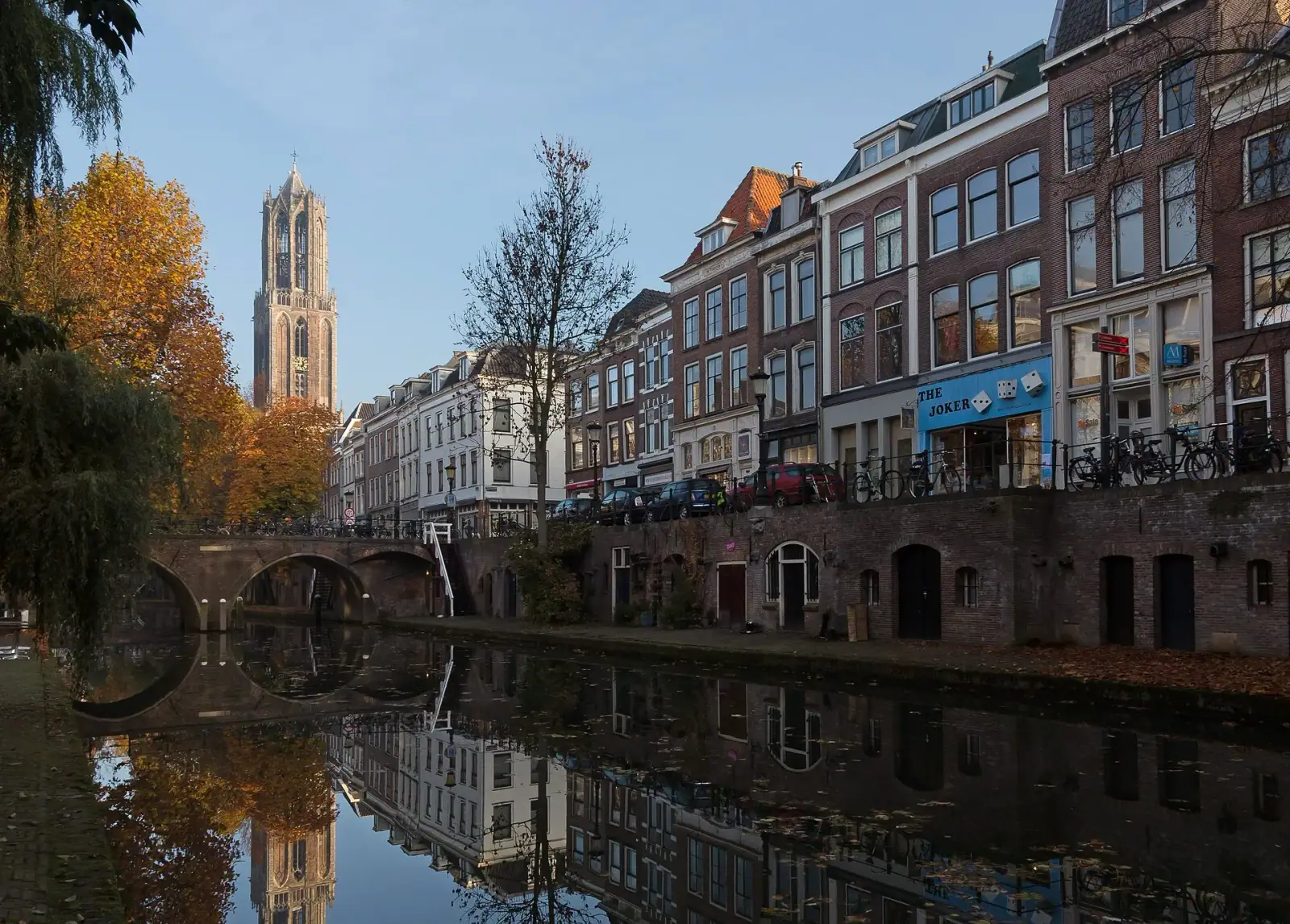
Utrecht has a solid mix of formal coworking spaces and relaxed cafes. Coworking is well-developed here. WERF5 on the Oudegracht canal is a community favorite with a very approachable price point (from $74/month) and a genuine community feel. Mindspace Utrecht near Central Station is more upscale, with a polished setup and 24/7 access. The Forty Hub on Maliebaan occupies a beautiful historical building with a rooftop terrace and a quieter, focus-oriented atmosphere. Spaces Utrecht offers two locations with professional amenities and meeting rooms starting at $100/month for part-time access.
For cafe working, Utrecht is genuinely welcoming. Coffeecompany at Vismarkt has reliable fast WiFi, plenty of power outlets, and a good tolerance for laptop workers. The 5th on Neude is a popular choice, with comfortable seating, sockets throughout, and a central location next to the public library. DUBBEL/DWARS near Weerdsingel has dedicated laptop-friendly seating with charging ports built into the tables. Most cafe-work spots expect you to order periodically, but nobody will rush you out.
The WiFi situation is strong by European standards. Fiber is the norm in most buildings, at home and at coworking spaces. Public cafe WiFi is generally reliable enough for video calls.
Getting Around
Utrecht is one of the best cycling cities in the world. The city center is compact and almost entirely navigable by bike. Once you have a bicycle, you will rarely need anything else for day-to-day movement. The bike parking under Utrecht Centraal station holds over 12,000 bikes, which tells you everything about cycling culture here.
The bus and tram network (operated by Connexxion and U-OV) covers areas outside the center well. Trains from Utrecht Centraal connect to Amsterdam, Rotterdam, Den Haag, and Eindhoven in under an hour, with trains running every 10 to 15 minutes during the day.
Getting to the airport: Utrecht Centraal to Amsterdam Schiphol Airport (AMS) by direct train takes around 30 to 35 minutes, with trains running roughly every 15 minutes. This is one of Utrecht's biggest practical advantages over other Dutch cities.
Sorting transport? Book an airport transfer, or compare car rental on Auto Europe and QEEQ.
Visas and Staying Long-Term
The Netherlands is part of the Schengen Area. Most Western passport holders (US, UK, Canada, Australia, and others) can enter visa-free and stay up to 90 days in any 180-day period across the Schengen zone. EU and EEA citizens have full freedom of movement and can stay and work indefinitely after registering with the municipality.
The Netherlands does not currently offer a dedicated digital nomad visa for remote workers employed abroad. The closest option for freelancers or entrepreneurs is the Self-Employed Residence Permit (Zelfstandig Ondernemer), which requires demonstrating a business plan with proven economic value to the Netherlands. It is a more involved process than a simple nomad visa.
For most nomads, the practical approach is staying within the 90-day Schengen limit and rotating out to non-Schengen countries between visits. For a break outside the Schengen area, London by Eurostar from Amsterdam or Rotterdam Centraal is the obvious rotation, and the Schengen exit check happens in the station terminal before boarding, so that is where the Entry/Exit System closes the record of your stay; the days spent in Britain do not count against the allowance.
Best Time to Visit
Utrecht has a temperate maritime climate with mild, damp winters and cool summers. Average highs in summer reach around 22°C (72°F), while winters rarely drop below freezing but are grey and wet for long stretches.
The best months for a working visit are May, June, and September. Spring brings longer daylight hours, blooming canals, and outdoor cafe season. Early September offers similar weather with thinner tourist crowds. July and August are pleasant but busier and slightly more expensive.
Avoid November through February unless you are comfortable with short, overcast days and frequent rain. Winter has its own charm, particularly around the December holiday markets along the canals, but it is not ideal for the kind of outdoor exploration that makes Utrecht enjoyable day-to-day. The calendar has two fixtures worth planning a visit around: the Festival Oude Muziek, which fills the city's churches with early music for ten days from late August into early September, and the Netherlands Film Festival at the turn of September and October; anyone renting short term for those weeks should book early.
Pros and Cons
Pros
- Exceptionally bikeable, compact, and walkable city center
- 30 minutes by direct train to Schiphol Airport
- Strong coworking scene at multiple price points
- Very high internet speeds, both at home and in cafes
- Lower rent than Amsterdam with a similar quality of life
- English spoken widely and confidently across the city
- Active university town with a young, international population
- Low crime and a relaxed, safe atmosphere
Cons
- Housing is genuinely difficult to find and competition is fierce
- No dedicated digital nomad visa means the 90-day Schengen cap applies
- Cost of living is high by global nomad standards
- Weather from November to March is reliably grey and rainy
- Nightlife is decent but quieter than Amsterdam
- Healthcare requires registration and proof of insurance for non-EU visitors
Who Utrecht Is Best For
Utrecht works well for nomads who want a genuinely livable European base rather than a tourist destination. If you value a walkable canal city with excellent infrastructure, fast internet, and easy access to the rest of Europe, it rewards longer stays. It suits people who are comfortable with higher costs, can work within the Schengen 90-day window, and want a city that feels real rather than overrun. It is a strong choice for freelancers in design, tech, or writing who value focus and quality of life over hustle and nightlife.
Skip Utrecht if you are on a tight budget (Southeast Asia or Eastern Europe will stretch your money far further), if you need a nomad visa pathway, or if you want a warmer climate for most of the year. It is also a poor fit if a buzzing nightlife scene is a priority. Amsterdam is just 25 minutes away by train, but Utrecht itself is not a party city.