Cost of Living in York
Real market data
Source: Numbeo · August 2026
$2,220/moSolo nomad1-bed centre + living costs
$3,000/moCoupleshared 1-bed + costs
$1,910/moLean / localcheaper area + costs
- 1-bed rent, city centre$1,240£921
- 1-bed rent, outside centre$930£695
- Monthly costs excl. rent (1 person)$980£728
- Meal, inexpensive restaurant$27£20
- Monthly transit pass$110£85
- Buy price, per m² (centre)$5,080£3,774
Prices are from Numbeo (August 2026), converted to USD at $1 = £0.74 (01 Aug 2026). The monthly living-costs figure is our transparent one-person basket, groceries, a few meals out, utilities, phone, internet, transport and essentials, priced from those figures. Solo adds central rent; couple and lean are estimates from the same numbers.
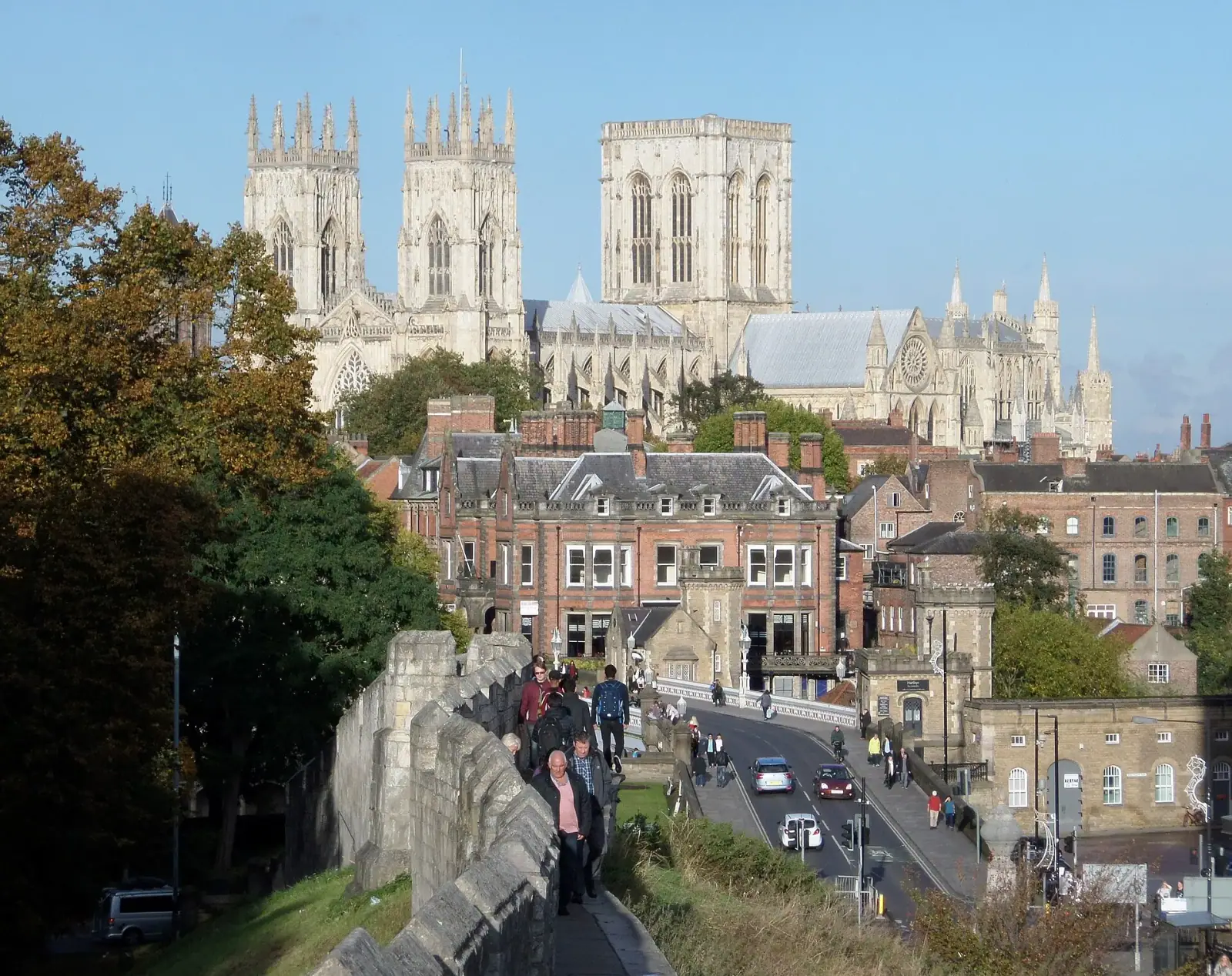
York sits in a comfortable middle ground for UK cities: cheaper than London or Edinburgh, but not as lean as smaller northern towns. Expect to spend more than in Southeast Asia or Southern Europe, but you get a genuinely liveable, well-serviced city in return.
Rent is the biggest variable. A one-bedroom flat in the city centre (Micklegate, Gillygate, Bootham) runs $1,200-1,600/month. Move out to suburbs like Acomb, Tang Hall, or Clifton and the same flat costs $930-1,200/month. Sharing a house with others is common and cuts costs significantly.
- Rent (1-bed, central): $1,200-1,600/month
- Rent (1-bed, outer): $930-1,200/month
- Groceries (cooking at home): $270-370/month
- Eating out (casual, per meal): $16-27
- Coffee shop working (daily spend): $5.50-11
- Coworking hot-desk: $13-39/day; $160-290/month
- Local bus travel (unlimited monthly): $80-110
- Total range (solo, renting): $1,750-2,550/month
York is walkable enough that many residents spend nothing on daily transport. If you cook most meals and use a mid-range coworking space a few days a week, a comfortable budget sits around $2,000/month.
Where to Work
York has a functional coworking scene that punches a bit above its size. The main spaces are tightly clustered in and around the centre.
SPARK York on Piccadilly is the standout value option at $13/day or $210/month, with a food market on site and a genuine community feel. York Hub on Peter Lane offers fast internet, meeting rooms, and 24/7 access for members at $160-290/month. Blake House on Blake Street is polished and centrally located, with day passes around $33 and reliable connectivity. Patch offers ergonomic chairs and bean-to-cup coffee. My Bureau on Micklegate has an interesting hybrid model: spend $6.50 at the on-site cafe and you can work there for free.
Cafe-work culture is moderate. York has strong independent cafes, but many smaller ones do not explicitly welcome laptop workers for extended sessions, especially during busy tourist periods. Black Sheep Coffee on High Ousegate offers confirmed free WiFi and is explicitly laptop-friendly. 200 Degrees on Low Petergate and Spring Espresso are also solid choices. Avoid peak tourist hours on summer weekends if you need a reliable seat.
York's central library provides free WiFi and quieter upstairs space as a backup option. Overall, WiFi quality across cafes and coworking spaces is reliable by UK standards.
Getting Around
York is one of the most walkable cities in the UK. The historic centre is compact, and most things you need as a daily resident (supermarkets, cafes, coworking spaces, restaurants) are within a 15-20 minute walk of each other. Cycling is popular and there is a decent network of cycle paths.
For longer trips within York, local buses run frequently and cover the suburbs well. A monthly unlimited bus pass costs around $80-110. Taxis are available but unnecessary for most daily movement.
Getting to/from the airport: York does not have its own airport. Leeds Bradford Airport (LBA) is roughly 25-30 miles away and takes 45-60 minutes by taxi ($53-73) or a combination of bus and train. Manchester Airport is about 1.5 hours by direct train and offers far more international routes, making it the more practical choice for frequent flyers. London Kings Cross is reachable in under 2 hours by train, giving you access to Heathrow and Gatwick.
York train station is excellent. Direct services to London, Edinburgh, Leeds, and Manchester make it easy to travel for meetings or weekend trips without needing a car.
Sorting transport? Book an airport transfer, or compare car rental on Auto Europe and QEEQ.
Visas and Staying Long-Term
The UK has no dedicated digital nomad visa. Visitors on a standard tourist entry are permitted to stay for up to 6 months and are allowed to do remote work for a foreign employer during that time, provided they are not doing paid work for UK clients or employers. This is the interpretation most nomads rely on, but the rules are not entirely explicit.
US passport holders can enter visa-free for up to 6 months, but since January 2025 must first obtain an Electronic Travel Authorisation (ETA). The ETA costs $27, is valid for 2 years, and allows multiple entries. Apply at least a few days before travel.
EU/EEA passport holders can also enter visa-free for up to 6 months but have needed an ETA since April 2025.
Extending your stay beyond 6 months is not straightforward. There is no easy path to long-term residence purely as a remote worker. Options include a Skilled Worker visa (requires a UK employer sponsor), a Global Talent visa (for those with exceptional track records), or an Innovator Founder visa. None of these were designed for the freelance nomad.
Best Time to Visit
York has an oceanic climate: mild, frequently overcast, and wet enough year-round that packing a rain jacket is never wrong. The Pennines to the west shield York from the heaviest Atlantic rainfall, making it marginally drier than cities on the west coast.
May to September is the most comfortable window. Temperatures reach 18-22°C (64-72°F) in summer and the city is at its most animated. June and July are the peak tourist months, particularly in the medieval centre around The Shambles and York Minster, which can feel genuinely crowded on weekends.
For remote workers, late May and September offer the best balance: pleasant temperatures, fewer crowds, and the city still fully operational. Spring (March-April) can be lovely on good days but changeable. Winters are cold, damp, and grey from November through February, though York's Christmas market in December is famous and draws large crowds if that appeals to you.
York is a genuine four-season city: there is no terrible time to work here, just months where the weather works with you more than against you.
Pros and Cons
- Pro: Genuinely beautiful, walkable city with a rich medieval core
- Pro: Good coworking options, solid cafe scene, reliable UK internet
- Pro: Excellent train connections to London, Edinburgh, and the north
- Pro: Strong food and drink scene, including Michelin-starred restaurants
- Pro: Safe, clean, and easy to navigate as an outsider
- Pro: Significantly cheaper than London while still feeling like a real city
- Con: No digital nomad visa; 6-month cap on tourist stays with no easy extension
- Con: Weather is grey and wet for much of the year
- Con: Tourist crowds make summer weekends hectic in the historic centre
- Con: No nearby international airport; flying requires a significant journey
- Con: Smaller nomad community than major European hubs
- Con: Cost of living, while moderate for the UK, is high by global nomad standards
Who York Is Best For
York suits remote workers who want a beautiful, historic European base with a high quality of daily life and do not need a large nomad community around them. If you already speak English, value walkability, love good food and independent pubs, and work for a non-UK employer on a rolling basis, York works well for a stay of a few weeks to several months.
It is also a strong choice for people on a UK extended visit who want an alternative to London: lower costs, a more relaxed pace, and easy day-trip access to the North York Moors and Yorkshire Dales.
Skip York if you are chasing warm weather, low cost of living, or a well-established nomad meetup scene. It also makes little sense as a long-term base if you need to fly frequently for work, given the distance to any major airport. Those looking to stay in the UK longer than 6 months will find the visa situation genuinely limiting.