Cost of Living in Chennai
Real market data
Source: Numbeo · September 2026
$350/moSolo nomad1-bed centre + living costs
$490/moCoupleshared 1-bed + costs
$280/moLean / localcheaper area + costs
- 1-bed rent, city centre$180₹17,067
- 1-bed rent, outside centre$100₹9,714
- Monthly costs excl. rent (1 person)$170₹16,675
- Meal, inexpensive restaurant$2₹200
- Monthly transit pass$10₹1,000
- Buy price, per m² (centre)$1,960₹187,499
Prices are from Numbeo (September 2026), converted to USD at $1 = ₹95.52 (01 Aug 2026). The monthly living-costs figure is our transparent one-person basket, groceries, a few meals out, utilities, phone, internet, transport and essentials, priced from those figures. Solo adds central rent; couple and lean are estimates from the same numbers.
Chennai runs around $350 per month for a comfortable single nomad. A furnished one-bedroom in a central area like Nungambakkam or T. Nagar costs roughly $250 to $400, with cheaper options further out. Eating local is very affordable, and a filling South Indian meal can run $2 to $4, so budget $180 to $250 for food if you mix home cooking, cafes, and the odd restaurant. A prepaid SIM with generous data is about $3 to $5 monthly. Add $40 to $70 for a coworking hot desk, plus transport, utilities, and air conditioning during the hot months. Air conditioning pushes electricity bills up noticeably from March through June. Domestic help and laundry are cheap. You can live on less by choosing a shared flat and eating at local messes, or spend more for a sea-facing apartment and frequent cabs. Water is the cost newcomers miss. Many buildings top up a thin municipal supply with borewells and private tanker lorries, a habit that hardened after the city's reservoirs ran almost dry in 2019, so ask a landlord how the flat gets its water and who pays for the tanker before signing.
Where to Work in Chennai
Chennai has a solid coworking scene concentrated around Guindy, Nungambakkam, and the OMR tech corridor, with day passes and monthly hot desks widely available. Home wifi is generally decent in the city but can be inconsistent during monsoon and outages, so keep a backup 4G or 5G SIM topped up with data as a reliable fallback. Mobile coverage is strong and cheap, which matters when fixed lines wobble. Cafe culture leans toward filter coffee spots and modern cafes in Besant Nagar and Alwarpet where you can plug in for a few hours, though not every place welcomes long laptop sessions. Power cuts still happen occasionally, so a coworking space with backup power is the safest bet for calls. Working from your apartment is fine most days, but treat unmetered fixed broadband as a bonus rather than a guarantee. This is the country's car manufacturing centre, with assembly plants and a deep supplier network south of the city that together account for a large share of national vehicle exports. Medical treatment is the other export, and the hospitals here draw patients from across the region, which is why a good many of the flights arriving are not carrying tourists at all.
Getting Around Chennai
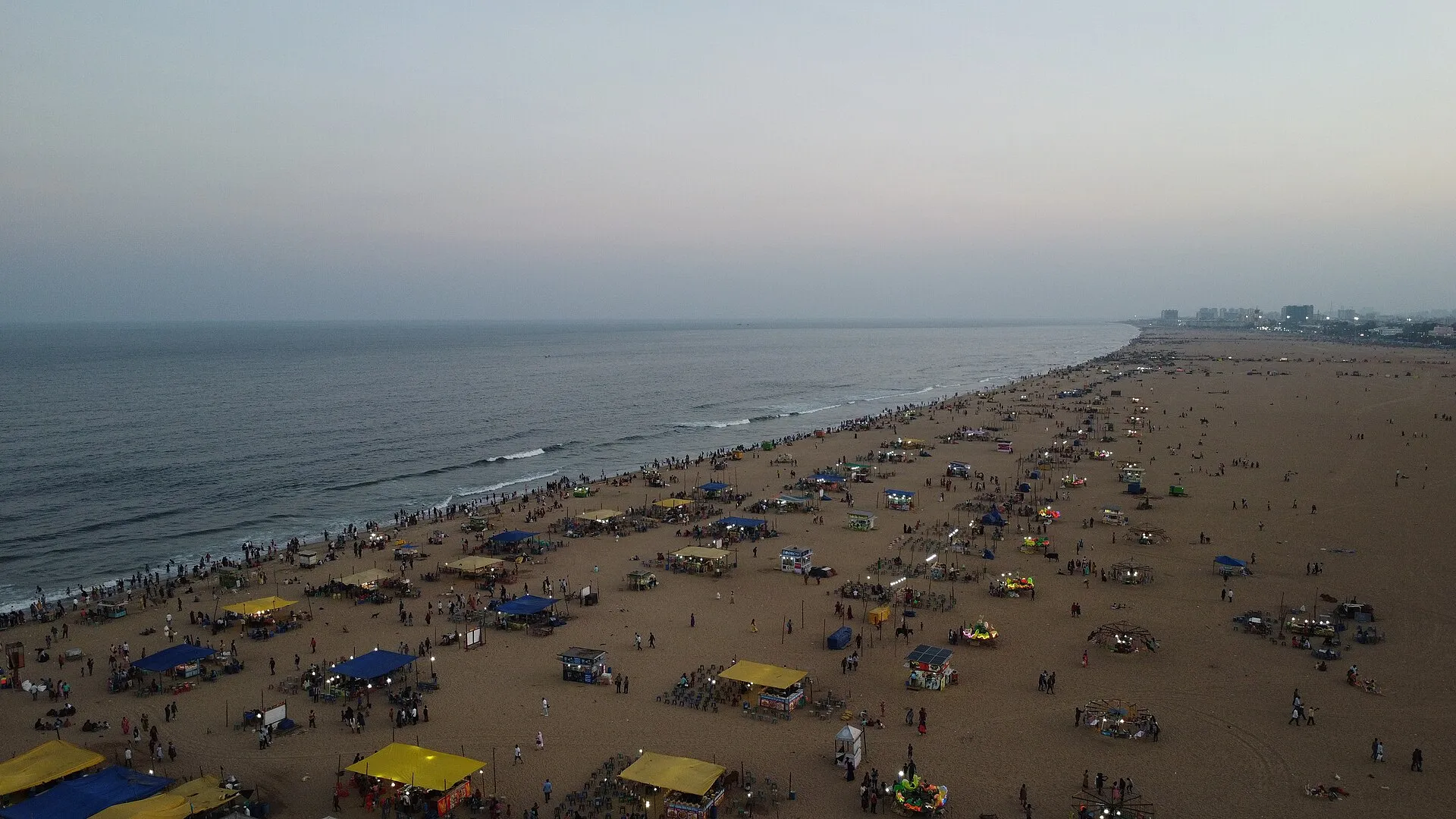
Chennai is spread out and fairly flat, but heat and traffic make walking long distances tiring outside cooler months. The metro is clean, cheap, and expanding, though it does not yet cover every neighborhood, so many nomads rely on ride-hailing. Ola and Uber both operate widely, and autorickshaws are everywhere, though metered fares are inconsistent, so agree a price or use the app. Suburban trains and city buses are extremely cheap but crowded and less intuitive for newcomers. Chennai International Airport is well connected domestically and to Southeast Asia and the Gulf, roughly 30 to 45 minutes from the center depending on traffic, and reachable by metro. Owning or renting a two-wheeler is common among longer-stay residents but traffic is chaotic. For most short-term nomads, a mix of metro plus app cabs and autos covers daily life comfortably. The coast road south is the drive that opens the region up, running past the shore temples to a former French territory a couple of hours down, and it is the standard weekend out. In the city, the beach fronting the centre is one of the longest urban stretches of sand anywhere, and the evening crowd on it is a fixture rather than an event.
Sorting transport? Book an airport transfer, or compare car rental on Auto Europe and QEEQ.
Visas for Chennai
India has no dedicated digital nomad visa. Most visitors enter on the e-Tourist Visa, applied for online before travel, available in 30-day, one-year, and five-year variants depending on nationality. It is straightforward to obtain and is the standard route for nomads staying a few weeks to months. Working remotely for a foreign employer while on a tourist visa sits in a legal grey area that Indian rules do not clearly address, so understand you are not formally authorized to work and weigh that risk yourself. For any local employment or paid activity inside India you would need a proper employment or business visa. Some longer stays trigger FRRO registration. Anybody with Indian ancestry or an Indian spouse can hold an overseas citizen card, which removes the visa question permanently and allows an indefinite stay, so eligibility is worth checking before assuming a tourist route. The longer electronic visas run from the date they are granted rather than the date of arrival, so applying too early quietly shortens the time actually available.
Best Time to Visit Chennai
The most comfortable window in Chennai is November through February, when temperatures ease and humidity drops to bearable levels, making this the clear peak for visitors. March through June is hot and very humid, with pre-monsoon heat that can feel punishing, so avoid this stretch if you are heat-sensitive. Chennai gets most of its rain from the northeast monsoon between October and December, and heavy downpours can cause flooding and disrupt travel, so factor that in if you visit late in the year. Coastal humidity is a constant, meaning even pleasant months feel sticky compared to inland India. If you want festivals, the Margazhi music and dance season peaks in December and January, coinciding with the best weather. For remote work with reliable power and comfortable evenings, aim for the December to February sweet spot and treat everything else as a compromise. Cyclones here are not a remote possibility: in December 2023 Cyclone Michaung stalled offshore and dropped more than 40 centimetres of rain on the city in two days, flooding Velachery and Tambaram and shutting the airport for a day.
Pros and Cons of Chennai
Chennai's strengths are low costs, excellent and cheap South Indian food, a genuine tech industry with real coworking options, warm and orderly local culture, and good air links to Southeast Asia and the Gulf. The beaches and the nearby heritage sites of Mahabalipuram add appeal. On the downside, the heat and humidity are relentless for much of the year, traffic is heavy, and the city is more conservative and less overtly nomad-oriented than places like Goa or Bangalore. English is widely spoken, but Tamil dominates daily life. Wifi can be patchy, power cuts still occur, and monsoon flooding is a real risk. Nightlife is limited compared to other metros. It is a practical, affordable base with authentic culture rather than a polished nomad hub, rewarding travelers who value substance and value over scene and convenience.
Who Chennai Is For
Budget-conscious arrivals who want a working South Indian city rather than a curated nomad bubble are the right audience. Tech people who want to be near an actual industry rather than a coworking desk get exactly that here. So do food lovers, between the filter coffee, the vegetarian cooking and Chettinad, and so does anybody who came for the temples and the classical arts. If you tolerate heat and humidity well and can handle occasional infrastructure hiccups with a backup SIM, you will find great value here. It is a strong pick for longer stays where low costs compound. It is less ideal for those who need a buzzing party scene, cool weather, or a large ready-made international community. Solo travelers and couples who like calm, orderly cities will feel comfortable, and the strong English usage lowers the language barrier for getting set up and finding services quickly.