Cost of Living in Jaffna
Where this figure comes from. No cost survey covers Jaffna, so the $620 a month above is our own estimate rather than a measurement. On 416 of our 999 city guides the figure is built from a published Numbeo basket, a one-bedroom rent in the centre plus one person's monthly costs without rent, converted to USD; this city is not one of them. How we source everything.
Budget around $620 a month. A one-bedroom runs roughly $150 to $350, and the market is small, with much of the housing stock either rebuilt since the war or still showing it. Market produce is cheap and the peninsula grows its own vegetables, mangoes and palmyra. Eating out is inexpensive and Jaffna cooking, which uses more coconut, chilli and crab than the south, is regarded by many as the best food in Sri Lanka. Imported goods carry a markup and Colombo is where people go for choice. The rupee's collapse in 2022 and the recovery since mean prices have moved a great deal. Fibre runs about $15 to $25 a month and mobile data less, which is among the better value in South Asia and one of the practical reasons a longer stay works here. A rice and curry lunch at a local place is well under two dollars, and the crab curry that Jaffna is known for costs a few dollars even at the restaurants people travel for. Autorickshaw rides across town are a dollar or two. The one line to budget properly is a fan or air conditioning through the hot months, which is not optional on this peninsula.
Where to Work in Jaffna
Connectivity is reasonable. Fibre reaches central Jaffna at workable speeds and mobile data from Dialog and SLT covers the peninsula, with prices low by regional standards. Power is more reliable than it was during the 2022 crisis, when scheduled cuts ran for hours daily, but the underlying situation is fragile. There is a small coworking presence and the university brings a young population. The time zone is five and a half hours ahead of GMT, which gives a good European afternoon overlap. Anyone planning a longer stay should have a mobile data fallback, since it has been the more reliable option during power problems. The University of Jaffna is the largest institution in the north and its presence explains most of what coworking and cafe culture exists, so the town is livelier in term time than out of it. Anyone staying through a power problem should know that the mobile networks held up considerably better than the grid during 2022, and that a data-heavy plan and a power bank were what kept people working. Dialog's coverage on the outer islands is patchier than on the peninsula itself.
Getting Around Jaffna
Jaffna town is flat and compact, which makes it the most bicycle-friendly city in Sri Lanka and cycling the way most residents move. Autorickshaws are cheap and everywhere. The peninsula's islands are reached by causeways and a ferry, and Delft with its wild ponies and baobab trees is a genuine day out. The Yal Devi train from Colombo takes about seven hours on a line that was destroyed in the war and rebuilt in 2014, which is itself part of the story. Jaffna Airport reopened in 2019 with flights to Colombo and Chennai. Bicycles can be hired for a couple of dollars a day and are genuinely the best way to see the peninsula, which is flat, quiet and full of small roads between palmyra palms. The causeway to Kayts and the ferry onward to Delft take most of a day each way, so the outer islands are a planned trip rather than an afternoon. Buses run to Point Pedro and the northern coast frequently and cost almost nothing.
Sorting transport? Book an airport transfer, or compare car rental on Auto Europe and QEEQ.
Visas for Jaffna
Sri Lanka has moved between visa systems repeatedly and the current position needs checking. Most nationalities need an Electronic Travel Authorisation applied for online before arrival, issued for thirty days and extendable to six months in-country, and the country has at various points offered free or waived tourist visas to selected nationalities as a tourism measure. Remote workers paid from abroad can apply for Sri Lanka's Digital Nomad Visa, a one-year residence visa that requires at least $2,000 remitted each month. Extensions are handled in Colombo. Overstaying carries fines. Sri Lanka has changed its visa arrangements repeatedly since 2023, including a period of free entry for selected nationalities and a contested switch of the processing contract, so the fee and the process should both be confirmed on the official portal rather than through a third-party site, several of which charge a substantial markup for the same thing.
Best Time to Visit Jaffna
January to March is the best window, dry and warm at around thirty degrees, and it is also when the peninsula's festivals fall. The dry season runs roughly from February to September, which is the opposite of Sri Lanka's southwest and is worth knowing, since Jaffna is a good destination exactly when the southern beaches are wet. The northeast monsoon from October to December brings the region's rain. The Nallur festival in August is the great event of the year, twenty five days of processions culminating in enormous crowds around the temple, and accommodation is impossible without booking. The dry season here running February to September is genuinely the inverse of the southwest coast, which means Jaffna is at its best exactly when Galle and the south are wettest, and a Sri Lankan itinerary that uses both can stay dry year-round. Nallur's twenty-five days in July and August fill every room on the peninsula, so a stay in that window needs booking months out.
Pros and Cons of Jaffna
Jaffna holds a Tamil culture that is quite distinct from the rest of Sri Lanka, a Dutch fort on the lagoon that is among the largest colonial fortifications in Asia, the Nallur Kandaswamy temple, exceptional food, and a peninsula of islands, palmyra and lagoons that almost nobody troubles to visit. It is also a place actively rebuilding after a thirty year war that ended in 2009, which is visible everywhere. The heat and the limited infrastructure are the everyday objections, and the war's aftermath, including unresolved questions of accountability and land, remains politically live and is not something anybody should be casual about. The peninsula's landscape is also unlike anywhere else in the country: flat limestone, palmyra palms, salt lagoons and islands reached by causeway, with none of the hills or rainforest that define the south. Delft's wild ponies descend from Dutch colonial stock and the island's baobabs were planted by Arab traders, which gives some sense of how many layers are here.
Who Jaffna Is For
Anyone interested in Tamil culture, in post-conflict recovery, or in the parts of Sri Lanka that the beach and hill country circuit misses entirely. It suits cyclists, since the flat peninsula is genuinely made for it. It suits people who take food seriously. The north of Sri Lanka is not set up for beaches and comfort and does not pretend to be. The larger thing is the war, which ended within living memory and is present here in the buildings, the demographics and the conversations, so anybody who would rather not encounter that should choose the south. The Tamil diaspora runs back to this town. Communities in Toronto, London and Sydney trace their origin to Jaffna, and a great deal of the reconstruction visible in the streets was funded from them, which makes the last two decades of the town's history readable on the ground rather than only in an account of it.
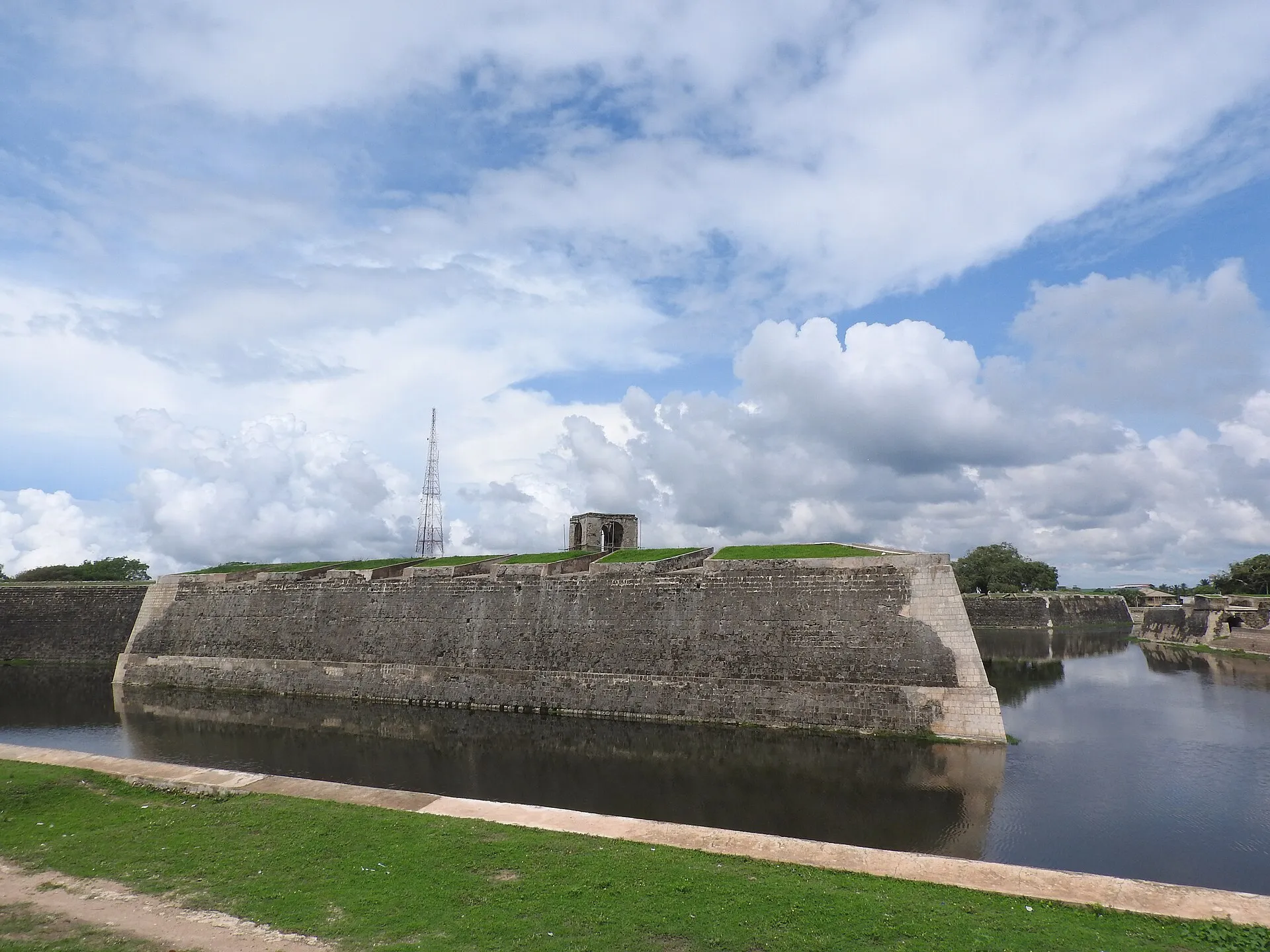 Photo: Yercaud-elango / Wikimedia Commons (CC BY-SA 4.0)