Cost of Living in Mysore
Real market data
Source: Numbeo · August 2026
$290/moSolo nomad1-bed centre + living costs
$410/moCoupleshared 1-bed + costs
$230/moLean / localcheaper area + costs
- 1-bed rent, city centre$140₹12,940
- 1-bed rent, outside centre$76₹7,250
- Monthly costs excl. rent (1 person)$150₹14,378
- Meal, inexpensive restaurant$1₹110
- Monthly transit pass$9₹850
- Buy price, per m² (centre)$930₹88,742
Prices are from Numbeo (August 2026), converted to USD at $1 = ₹95.52 (01 Aug 2026). The monthly living-costs figure is our transparent one-person basket, groceries, a few meals out, utilities, phone, internet, transport and essentials, priced from those figures. Solo adds central rent; couple and lean are estimates from the same numbers.
Mysore, officially Mysuru, is very affordable, one of the gentler-priced cities in southern India and a long-time favourite of yoga students on extended stays. A comfortable single-person budget runs roughly $600 to $1,000 a month. The measured local basket is $230 to $290, and the difference between the two figures is imported habits rather than a different city. A furnished flat in a pleasant residential area, including the yoga district of Gokulam, costs about $200 to $450, and superb South Indian meals cost a dollar or two. These are our editorial estimates in US dollars. The city's calm, clean feel and low costs make it easy to settle in for weeks or months without stretching a modest remote income. A budget in the yoga district sits above the city average for two reasons. Rooms there are priced for the season and can cost half again what an equivalent flat costs a few kilometres away, with the gap widest between November and March. And the practice itself is the largest single line for most people who come for it: a month at a serious school costs more than a month of rent and food together, and is paid up front. Budget it as tuition rather than as a hobby and the arithmetic stops being a surprise.
- Furnished flat, Gokulam or a central area: roughly $200 to $450 a month
- South Indian thali or a masala dosa: roughly $1 to $3
- Autorickshaw across town: roughly $1 to $2
- Monthly ashtanga yoga class fees: variable, a common draw
Where to Work in Mysore
Mysore is calmer, cleaner and easier to work in than India's big metros, which is part of its appeal for long-stay visitors. Home fibre is widely available and reasonably fast, handling calls well in a good building, and there are cafes and a small but growing set of coworking spaces, especially around the yoga-heavy Gokulam neighbourhood. A Jio or Airtel SIM adds cheap, fast mobile data. The pleasant climate and relaxed pace make for comfortable, focused working days, and the established community of long-stay yoga students means you are rarely the only foreigner working from a cafe. The practice schedule reorganises a working day more thoroughly than any office would. Students are at the shala between four and eight in the morning, asleep or eating by mid-afternoon, and in bed by nine, which means the cafes are busy at ten and empty at seven and the social life runs at breakfast. If your clients sit in European or American time zones, that timetable will fight you and you will end up choosing one or the other. Power is steadier here than in much of the state, but the residential districts do still lose it for an hour on hot afternoons.
Getting Around Mysore
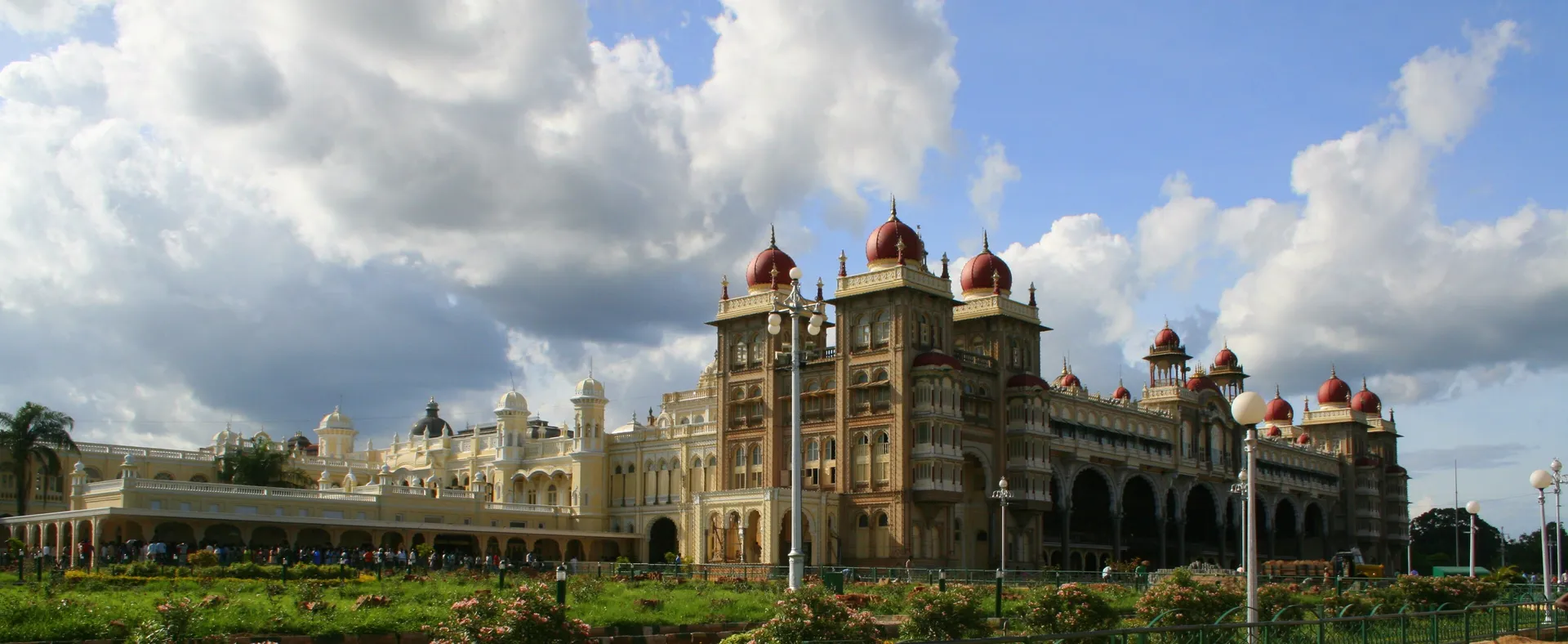
Mysore is a mid-sized, relatively orderly city that is easier to navigate than most of urban India, with wide roads and a walkable feel in many areas. Autorickshaws are the default for getting around and are cheap once metered or negotiated, and ride apps operate in the city. Many long-stayers in Gokulam simply walk or rent a scooter. Buses cover the city and the wider region. Mysore has a small airport with limited flights, but most travellers arrive via Bengaluru, about three hours away by frequent train or road, which has the nearest major international airport. A scooter is what most long-stayers end up on, and the same licence rule applies as everywhere in the country: a home licence plus an international permit, carried together, or the insurance is worthless. Hire shops rarely ask, police occasionally do. The palace is lit with tens of thousands of bulbs on Sunday evenings and on public holidays, which draws the whole city out, and the thousand-odd steps up the hill behind town are the standard morning climb for anyone who wants a view and a reason to get up.
Sorting transport? Book an airport transfer, or compare car rental on Auto Europe and QEEQ.
Visas for Mysore
Foreign visitors reach Mysore on India's e-Tourist Visa, arranged online before arrival and issued in 30-day, one-year and five-year forms, with the longer versions allowing multiple entries and up to 180 days per calendar year in total, which suits the extended stays many yoga students plan. A tourist visa does not permit local employment, though remote work for a foreign employer sits in the same grey area many long-stayers occupy. Keep copies of your visa. Anyone coming to study rather than to sightsee should think about this carefully. A short course is generally fine on a tourist entry, but a long, formal enrolment at a recognised institution is what the student category exists for, and schools differ on what they will confirm in writing. Ask before paying, because the answer affects both the paperwork and any insurance claim. Landlords in the long-stay neighbourhoods are also used to being asked for a signed rental agreement, which is the document that makes a local SIM, a bank account or a registration straightforward rather than a week of arguing.
Best Time to Visit Mysore
Mysore enjoys a pleasant climate for much of the year, moderated by its elevation on the Deccan plateau, without the extreme heat of the plains. The best time to visit is the cool, dry season from October to March, with warm days and comfortable evenings ideal for exploring. This window also includes the spectacular Dasara festival, usually in September or October, when the palace is illuminated with thousands of lights and the city fills with processions. Summer, from April to June, is warmer but rarely oppressive, and the monsoon from June to September brings refreshing rain. Aim for the cool season. A practical note for anyone here to practise: the main schools close for part of the year, typically around the hottest months and again for a shorter break, so a stay planned around study should be checked against the school calendar rather than the weather. The festival is the other date that reshapes the city, filling every hotel for ten days and closing roads around the palace; it is genuinely worth seeing once and genuinely inconvenient if you are trying to work through it. Outside those windows the city is quiet and consistently pleasant.
Pros and Cons of Mysore
Mysore pairs graceful heritage and superb food with a calm, affordable base and a real long-stay community. The community is worth being precise about, because it is not a general one. What exists here is a yoga community, concentrated in one neighbourhood, organised around an early morning practice and a shared vocabulary, and it is welcoming to anyone inside it and largely invisible to anyone outside. A remote worker who does not practise will find a pleasant, orderly South Indian city with very few other foreigners in it and no particular reason to meet the ones there are. That is not a criticism of the place, it is simply what shapes the experience more than anything on the usual list. The rest is easy to recommend. It is clean by the standards of the region, the climate is mild all year, the food is exceptional and costs almost nothing, and the pace lets you actually get work done, which is more than can be said for most Indian cities of this size.
- Pros: a beautiful palace city with rich culture, world-famous ashtanga yoga schools drawing a global community, excellent South Indian food, very low costs, a pleasant climate, and a calmer, cleaner feel than India's big metros.
- Cons: limited nightlife, infrastructure and amenities that trail the major cities, air quality that is moderate rather than pristine, and a nomad scene centred heavily on yoga rather than a broad remote-work crowd.
Who Mysore Is For
Mysore is a natural home for yoga practitioners, especially students of ashtanga drawn to Gokulam's famous schools, and for culture-loving nomads who want a calm, affordable and welcoming South Indian base. Anyone who values palaces and heritage, outstanding vegetarian food, a gentle pace and an established long-stay community will feel at home, and the pleasant climate makes extended stays a pleasure. It suits those happy with a quieter social scene focused on wellness and culture. It is a weaker fit for those seeking nightlife, cutting-edge infrastructure or a big-city buzz. Base yourself in Gokulam or the centre, and let Mysore's grace and calm shape your stay. Length depends entirely on which of those two versions you are. A practitioner comes for the season, two to four months, and that is the standard arc. Everyone else should think in weeks: a month is plenty to see the palace, eat well, ride out to the hills and get a stretch of quiet work done, and by month three the absence of much to do will have become the defining feature. Either way, live in a residential street rather than near the main road; the difference in noise between the two is the difference between sleeping and not.