Cost of Living in Campo Grande
Where this figure comes from. No cost survey covers Campo Grande, so the $850 a month above is our own estimate rather than a measurement. On 416 of our 999 city guides the figure is built from a published Numbeo basket, a one-bedroom rent in the centre plus one person's monthly costs without rent, converted to USD; this city is not one of them. How we source everything.
Budget around $850 a month as a solo remote worker in Campo Grande, which is inexpensive for a Brazilian state capital and reflects a city in the centre of the country rather than on the coast. A one-bedroom place runs roughly $250 to $450, with the areas around Afonso Pena and the Parque dos Poderes at the upper end. Beef is exceptional and cheap here, which follows from the cattle economy the whole state runs on. Fuel and internal flights are the two lines that cost more than the coast. This figure is our own estimate rather than measured data. Distance from the coast shows up in anything manufactured or imported, since it arrives by road across a continent, while anything grown or raised nearby is cheap in a way the coastal cities cannot match. Budget separately for the region itself: a Pantanal lodge with transfers costs several times a week in the city, and Bonito's rivers run on a fixed-attraction ticketing system with prices set by the municipality rather than by competition. Rents hold steady through the year, since no tourist season pushes them about.
Where to Work in Campo Grande
Campo Grande has a modest coworking market serving agribusiness, logistics and a growing services sector, with desks at low prices by any international measure. The federal university and the state government both keep professional depth in the city. Fibre reaches most of the central neighbourhoods and Brazilian mobile data is cheap and fast, with good 4G and increasing 5G coverage. Power is reliable. Portuguese is essential and English is rare outside the university, which is the usual position in Brazilian cities away from the tourist coast. Anyone working with Europe should note the city sits five hours behind central European time, which makes a morning here a late afternoon there. Agribusiness is the whole professional story here and it is a serious one. The state runs on cattle, soy, maize and cellulose, and the trading, logistics and veterinary businesses around them are where the money and the offices are, with Embrapa's research station adding a scientific layer. For anyone outside those fields the local network is of limited use, and the city works as somewhere to work from rather than somewhere to find work.
Getting Around Campo Grande
Campo Grande is laid out on a wide grid with Avenida Afonso Pena running through the middle as one of the broadest urban avenues in the country, tree-lined and genuinely pleasant to walk. The city is flat and cycling works, though most residents drive. Buses cover the metro area and ride-hailing is cheap and widely used. The Parque das Nacoes Indigenas is one of the largest urban parks anywhere and sits inside the city. The airport has domestic connections, and the Pantanal, Bonito and the Bolivian border all lie a long drive west. Distances out here are continental rather than regional and the map flatters them: Bonito is around four hours by road, Corumba on the Bolivian border seven, and Sao Paulo eleven or a flight. The BR-262 heading west is the artery for all of it. Buses are comfortable, frequent and how most people travel, with overnight services on the longer runs. Hiring a car earns its cost for the Estrada Parque, the unsealed road across the wetland with wildlife on both sides, where high clearance matters rather more than four-wheel drive.
Sorting transport? Book an airport transfer, or compare car rental on Auto Europe and QEEQ.
Visas for Campo Grande
Brazil introduced a digital nomad visa in January 2022 for remote workers employed or contracted abroad, requiring proof of around $1,500 a month in income or $18,000 in savings, valid a year and renewable once. It is among the more accessible schemes anywhere. Travellers from the United States, Canada and Australia should note that Brazil reinstated visitor visa requirements for those three nationalities in April 2025 through an eVisa system, reversing an earlier waiver, so any guidance written before that date is out of step with the current rules. Anyone applying from within Brazil should expect the federal police appointment system to be the slow part of the process rather than the paperwork itself. The regional agreement is the route nobody mentions. Mercosur nationals, Argentines, Uruguayans, Paraguayans and Bolivians among them, can obtain temporary residence in Brazil on a far simpler basis than anyone else, and the reverse applies to Brazilians. For everyone else the land borders here are the practical detail: Ponta Pora, four hours south, runs straight into Pedro Juan Caballero in Paraguay with no physical barrier at all, and crossing that street without visiting the immigration posts on either side is exactly the sort of thing that unravels months later.
Best Time to Visit Campo Grande
April to September is the dry season and the better half for anything outdoors, with warm days, cool nights and the Pantanal at its most accessible as the floodwaters recede and the wildlife concentrates around what water remains. July can be genuinely cold at night by Brazilian standards. October to March is the wet season, hot and humid with heavy afternoon storms, and the Pantanal floods, which changes the region from a wildlife destination into a waterscape. The city itself is workable year-round; the region around it is not. Anyone here specifically for wildlife should plan the Pantanal trip for July or August, when the animals are most concentrated and the tracks are passable. The wildfire season is what the dry-season pitch leaves out. Smoke from burning in the wetland and the surrounding farmland can settle over the region in August and September, and the 2020 fires burned a substantial share of the Pantanal, so air quality late in the dry season should be checked against current reports rather than taken on trust. Cold fronts sweeping up from the south, the friagem, drop temperatures sharply for a few days in June and July and catch out anyone who packed for the tropics.
Pros and Cons of Campo Grande
Campo Grande is the gateway to the Pantanal, the largest tropical wetland on earth, with Bonito's crystal rivers a few hours southwest and one of the world's biggest freshwater aquariums in the city itself. There is a substantial Okinawan community whose soba at the central market is a genuinely local dish found nowhere else in Brazil. The city is a long way from anywhere, no foreign circle exists to join, and English will not get you far, and the summer heat and humidity are heavy. It is a base for the region rather than a destination. The tension underneath the region is worth understanding, because it is a local argument rather than an imported one. Cattle and soy pay for the state, the Pantanal depends on the water and the land that expansion takes, and every conservation question here is also somebody's household economics. Mato Grosso do Sul also holds one of Brazil's largest indigenous populations, and the land disputes involving Guarani-Kaiowa communities are ongoing and serious. Healthcare in the city is good by regional standards, with the federal university hospital as the referral centre.
Who Campo Grande Is For
A cheap, functional and safe Brazilian city as a base for the Pantanal and Bonito, for Portuguese speakers who value space and low costs over coastline. Anybody in agriculture, conservation or wildlife work will find the regional network here unusually deep, which is how most foreigners in the city got here. Portuguese is required, there is no beach within a thousand kilometres, and the foreign community amounts to a handful of people. Cheap international flights are the other constraint, because almost everything routes through Sao Paulo and the connection eats both the saving and the day. Overland travellers between Brazil, Bolivia and Paraguay end up here whether they planned to or not. The city is the natural junction on that route and the bus connections show it. Anyone choosing a Pantanal base should weigh Cuiaba to the north, which serves the Transpantaneira and is the better side for jaguars, against this one, which serves the southern wetland and Bonito. Birders do extraordinarily well from either. A stay of weeks attached to fieldwork or a project makes more sense than an open-ended one, since the appeal is what surrounds the city rather than what is in it.
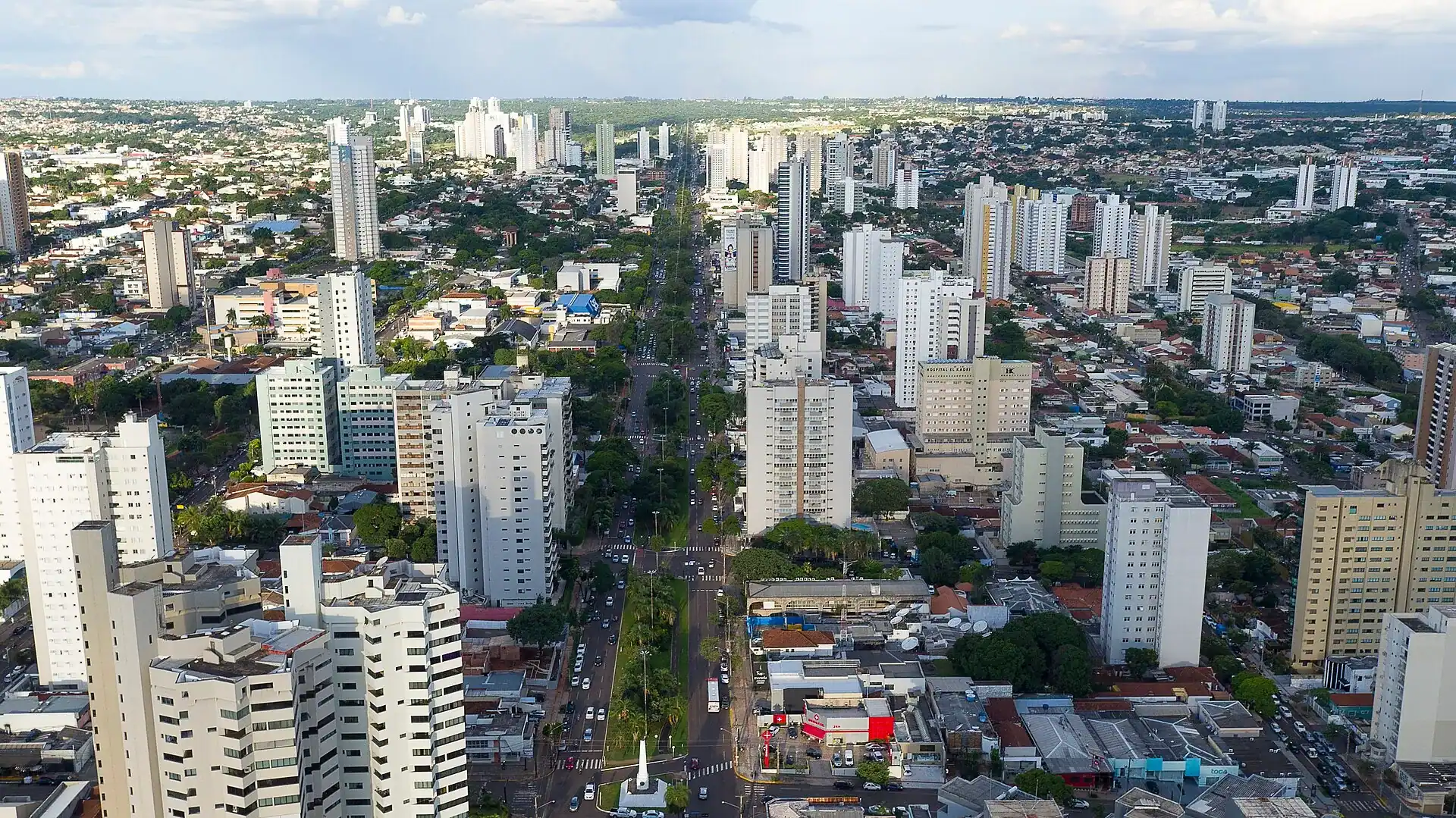 Photo: Flavio Andre/MTur Destinos / Wikimedia Commons (Attribution)