Cost of Living in Brasília
Where this figure comes from. No cost survey covers Brasília, so the $1,100 a month above is our own estimate rather than a measurement. On 416 of our 999 city guides the figure is built from a published Numbeo basket, a one-bedroom rent in the centre plus one person's monthly costs without rent, converted to USD; this city is not one of them. How we source everything.
Brasília runs about $1,100 a month for a single nomad, a figure inflated by government-city rents and deflated by cheap food and fuel. A furnished one-bedroom in Asa Sul, Asa Norte or Sudoeste costs $400 to $700 monthly; the Águas Claras and Taguatinga satellite areas drop to $250 to $400 but add commuting. Groceries run $200 to $300, and the prato feito or per-kilo lunch, a Brasília institution, costs $5 to $9. A Vivo, Claro or TIM prepaid SIM with a solid data allowance is $8 to $15. Coworking hot desks are $90 to $180, with plenty of supply thanks to the consulting and government-contractor economy. Utilities are $50 to $90, higher in the hot dry months when air conditioning runs, and fibre internet is $25 to $45. Transport is $40 to $80. Value verdict: solid value for a capital, though weaker than Brazil's cheaper northeastern cities.
Where to Work in Brasília
Base yourself in Asa Sul or Asa Norte along the residential superquadras, or in Sudoeste and Noroeste for newer, quieter stock. These give access to the commercial blocks where the cafes cluster. Coworking is plentiful because the city's economy runs on government contractors and consultancies: national chains such as WeWork have operated in the central business sectors, and local spaces populate the SCS, SCN and Asa Norte commercial areas alongside CLDF-adjacent offices. Specialty coffee has grown steadily around the Asa Norte commercial blocks and in the shopping centres, though Brasília's superblock design means cafes sit in commercial strips rather than on a walkable high street. Fibre is widely available and fast. The caveats are architectural: distances between blocks are large, and the city empties on weekends when politicians fly home. Federal salaries give this city the highest average income in the country by a wide margin, which explains both the restaurant prices and the fact that nothing here looks like the Brazil most visitors picture. The economy is the state, and in the recess months it moves at the pace of the state. Consultancies follow the ministries and account for most of the private sector.
Getting Around Brasília
Brasília was designed for cars, and it shows. The Metrô-DF has two lines running from the central bus station out toward Águas Claras, Taguatinga and Samambaia, with fares around $1; it serves commuters from the satellite cities well but barely touches the residential superquadras. Buses cover the gaps at $0.60 to $1.20 but are slow. Uber and 99 both operate strongly and are the default for most residents and visitors, with typical fares of $3 to $10 across the Plano Piloto and higher out to the satellites. Distances are the real issue: crossing from Asa Norte to Asa Sul is a several-kilometre trip along highway-scale axes. Walkability is poor between sectors and pleasant only within a superquadra. Brasília International is 12 km south of the centre: Uber is $8 to $15. A car is genuinely useful here, more so than in most Brazilian cities. Addresses here are codes rather than names, a sector letter and a block number, and once the logic clicks the whole city can be navigated off a single string of characters, which is either the most rational address system anywhere or entirely alienating depending on the day you are having.
Sorting transport? Book an airport transfer, or compare car rental on Auto Europe and QEEQ.
Visas for Brasília
Brazil reinstated visa requirements for US, Canadian and Australian citizens in April 2025, and those nationals now need an eVisa obtained online before travel, costing around $81, valid for multiple entries over ten years with stays of up to 90 days. Citizens of the UK, the EU, New Zealand and most other Western countries continue to enter visa free for 90 days. Either way, the 90-day allowance can be extended once at a Polícia Federal office for a further 90 days, giving a maximum of 180 days within any twelve-month period, after which departure is required. Brazil does operate a genuine digital nomad visa, created in 2022, granting one year with the possibility of a one-year renewal. It requires proof of remote employment or contracts with a non-Brazilian entity plus either monthly income of at least $1,500 or available bank funds of at least $18,000, along with health insurance. Applications go through a Brazilian consulate abroad.
Best Time to Visit Brasília
Brasília sits at about 1,100 m on the cerrado plateau, giving a savanna climate of two sharply different halves and daily highs of 26C to 30C most of the year with cool nights. The dry season, May to September, is the best window for comfort and clear skies, with warm days, chilly mornings near 13C and virtually no rain, though humidity crashes to 15 or 20 percent in August and September, causing dry skin, nosebleeds and heavy smoke from cerrado fires. The wet season, October to March, brings dramatic afternoon thunderstorms, greener surroundings and better air, with January and February the wettest. April and May are the sweet spot: rain has eased and the air is still comfortable. There is no hurricane risk. Key dates include Carnival in February or March, though Brasília's version is muted, Independence Day on 7 September with military parades along the Esplanada, and the city's anniversary on 21 April. Weekends in the dry months have a fixed address: the craft and food fair at the foot of the TV Tower, whose free observation deck looks straight down the Monumental Axis to Congress.
Pros and Cons of Brasília
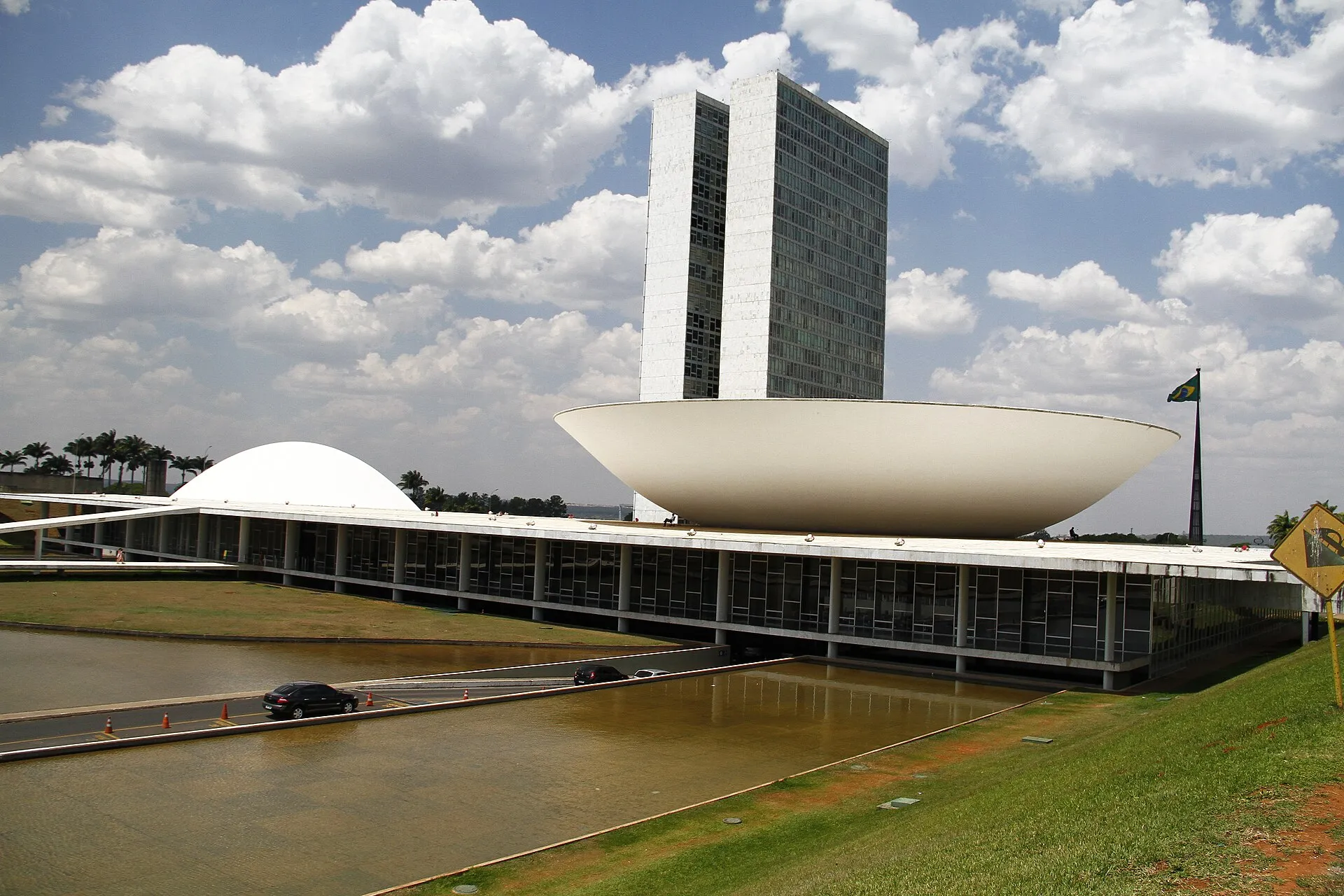
Brasília's strengths are underrated. It is Brazil's most orderly large city, with fast fibre, plentiful coworking, high average incomes, good private healthcare and a UNESCO-listed modernist landscape: Niemeyer's Congress, Cathedral and Itamaraty are world class. Altitude makes the climate more comfortable than coastal Brazil, food is cheap and good, the airport is a national hub, and the central Plano Piloto is safer than most Brazilian metropolises. The drawbacks are structural. The city was built for cars, so walkability is poor, distances are large and street life is nearly absent outside a few commercial blocks; the spontaneous urban texture that makes Rio or Salvador compelling does not exist. Rents are high by Brazilian norms, the population skews civil servant and conservative, and the city empties at weekends. Crime rises sharply in the satellite cities. There is almost no nomad community, English is rare, and dry-season air turns harsh. The car problem has one weekly cure. On Sundays and public holidays the Eixão, the highway through the residential wings, closes to traffic and becomes a fourteen-kilometre strip for cycling, running and picnics, and for that one day the capital gets the street life its plan left out.
Who Brasília Is For
Brazilian value and infrastructure without the chaos, the noise and the crime of the big coastal cities is what this is, and it asks for self-sufficiency in return. It fits people with business in the capital, consultants and anyone working with government or NGOs, plus architecture and design enthusiasts who will get more from the city than casual visitors. It rewards those who will rent or hire a car, speak or want to learn Portuguese, and treat the city as a calm, well-wired base for domestic travel across a country that Brasília connects to better than anywhere else. Families and older nomads often prefer its order and space. Walkable street life, beaches, nightlife and a ready-made foreign social scene are precisely what this city was not built to provide, and that omission is deliberate rather than accidental. Skip it if car-dependence is a dealbreaker, if a lively historic centre matters, or if the appeal of Brazil is specifically coastal and spontaneous.