Cost of Living in Tiradentes
Where this figure comes from. No cost survey covers Tiradentes, so the $900 a month above is our own estimate rather than a measurement. On 416 of our 999 city guides the figure is built from a published Numbeo basket, a one-bedroom rent in the centre plus one person's monthly costs without rent, converted to USD; this city is not one of them. How we source everything.
Tiradentes is a small, upmarket heritage town, and prices reflect its status as a beloved weekend and gastronomy destination rather than a budget backpacker stop. A slow-traveling nomad can realistically expect to spend roughly $700 to $1,400 a month, depending heavily on whether you rent by the month and eat like a local or pay the inflated weekend rates that pousadas and restaurants charge on Fridays and Saturdays. Midweek is markedly cheaper and calmer, and a monthly apartment or long-stay pousada rate will save you a great deal. Food at simple lunch spots and the local market is affordable, while the celebrated fine-dining scene is a splurge. Most long-stayers do their big grocery shop in Sao Joao del Rei, a city of about 90,000 with ordinary supermarket prices, rather than paying the markup at the few small markets in Tiradentes. Budget a little for warmth as well: colonial houses here have neither heating nor insulation, and in June and July a room with a fireplace or a space heater makes early-morning work far more bearable.
- Monthly apartment or long-stay pousada room: roughly $400 to $800.
- Local prato feito lunch or comida mineira buffet: $6 to $12.
- Fine-dining dinner at a celebrated restaurant: $30 to $60 per person.
- Weekend nights cost noticeably more than midweek across lodging and dining.
Where to Work in Tiradentes
Tiradentes has no coworking space, which is unsurprising in a municipality of fewer than ten thousand people, so the desk you work at will come with your room. That said, the working setup is more pleasant than you might expect. Wifi in the better pousadas is generally decent for a Brazilian small town, and the cafe scene is small but genuine, with a handful of laptop-friendly spots where a flat white and a slow morning are welcome. The most comfortable base is a quiet pousada or a monthly apartment with a reliable connection and a good desk or courtyard. Work midweek, when the town empties of weekenders and cafes are calm, and treat weekends as time to explore.
- Choose a pousada that advertises solid wifi.
- A monthly apartment gives you a dedicated desk and kitchen for longer stays.
- Cafes are best for morning sessions; expect them busier on weekends.
- Keep a mobile data plan as backup, since coverage is good in town.
Getting Around Tiradentes
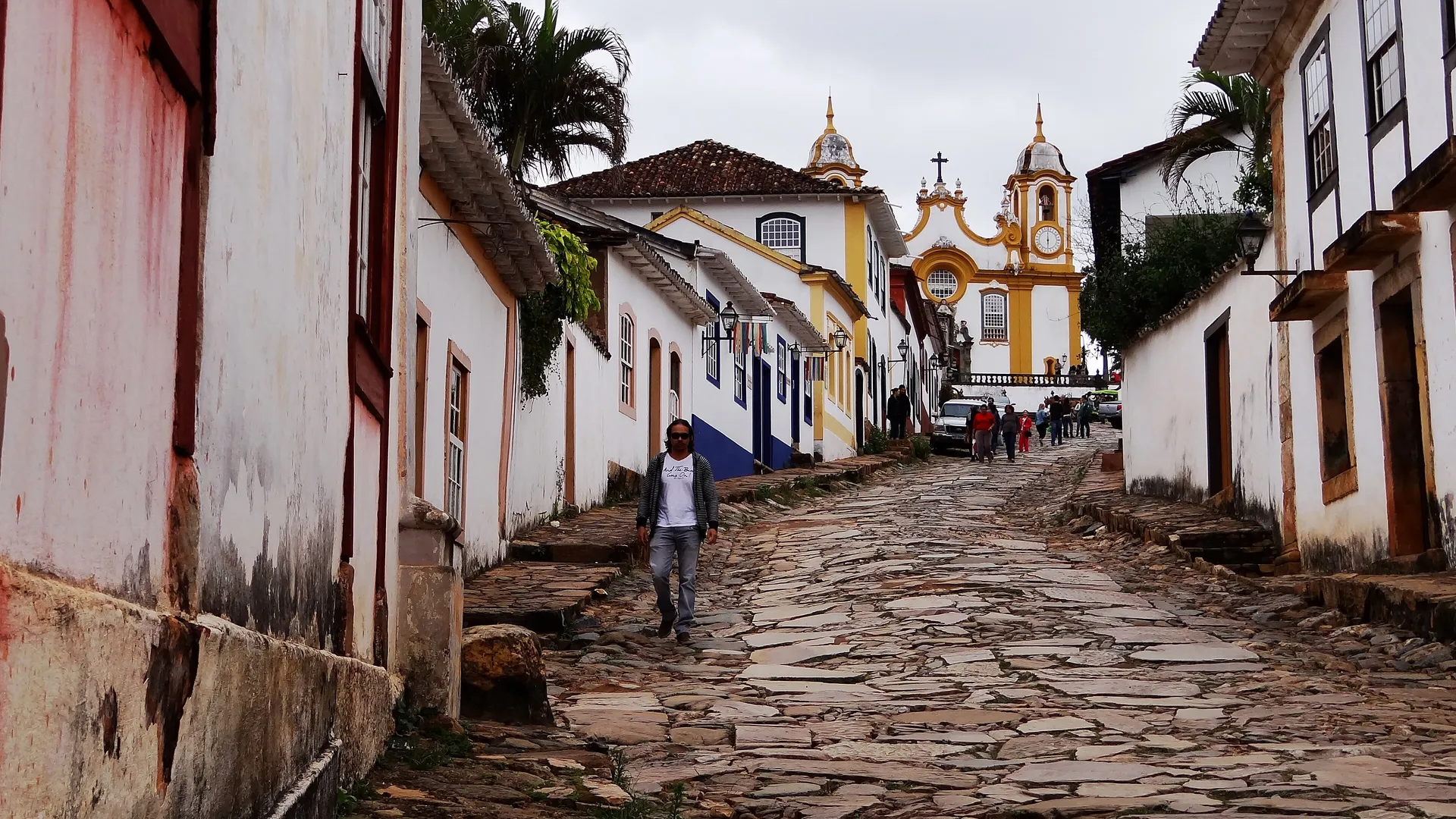
The historic center is small and walked entirely on foot, though a warning is in order: the streets are original colonial cobblestones, uneven and hard on ankles and wheeled luggage, so pack sturdy shoes and travel light. Everything you need day to day sits within a short, scenic walk. For getting out, the charming Maria Fumaca steam train and a short drive or bus connect you to Sao Joao del Rei, about 12km away, which has far more services and onward bus links. From there and from the town itself you can reach Belo Horizonte in roughly three and a half hours and Rio or Sao Paulo in about four to five hours by bus or car.
- The cobbled center is walkable; wear supportive shoes for the uneven stones.
- The Maria Fumaca steam train links scenically to Sao Joao del Rei.
- Sao Joao del Rei (~12km) has more shops, services, and bus connections.
- Belo Horizonte is ~3.5 hours; Rio and Sao Paulo are ~4 to 5 hours.
- Nearest airports are Belo Horizonte and the smaller Sao Joao del Rei.
Sorting transport? Book an airport transfer, or compare car rental on Auto Europe and QEEQ.
Visas for Tiradentes
Tiradentes follows the same entry rules as the rest of Brazil, so your visa situation depends on your nationality and your plans. Many visitors enter visa-free for tourism for up to 90 days, while some nationalities need an e-visa arranged in advance. For those wanting to stay longer and work remotely, Brazil offers a digital-nomad visa aimed at remote workers employed by a company outside Brazil, with income and documentation requirements. The Federal Police keep a foreigners' desk in Sao Joao del Rei, which is unusual luck for a town this size, since that is the office that handles a request to extend a tourist stay. Anyone arriving on the digital-nomad visa has a second errand there: the visa must be converted into a migration registration within ninety days of entry, and the resulting card, the CRNM, is the identity document Brazilian offices ask for from then on. Appointments are booked online and a small office has few slots, so book well before either deadline.
- Tourist entry is visa-free or e-visa depending on your nationality.
- Tourist stays are commonly up to 90 days, subject to current rules.
- Brazil's digital-nomad visa targets remote workers with foreign income.
Best Time to Visit Tiradentes
The most comfortable window is the cooler dry season, roughly April to September, when days are mild and sunny and nights turn genuinely cool in these Mantiqueira foothills, so bring a jacket. This is prime time for hiking the Serra de Sao Jose and wandering the town without the sticky heat. Keep the festival calendar in mind, because Tiradentes is famous for its cultural events, above all the renowned gastronomy festival, which fills the town and pushes lodging prices up and availability down. The October to March wetter season is greener and more atmospheric but brings frequent afternoon rain and mugginess. Whenever you come, midweek stays are calmer and cheaper than the busy weekends. The Mostra de Cinema de Tiradentes takes over the last week of January with free screenings of new Brazilian films and fills rooms even midweek, while the gastronomy festival lands in late August, in the middle of the dry season, so the best weather and the highest prices meet that month. The 21 April national holiday, named after the independence martyr the town itself is named for, makes another crowded long weekend.
- April to September: mild dry days, cool nights, best for hiking.
- The gastronomy festival draws big crowds and higher prices; book early.
- October to March: greener scenery with regular afternoon rain.
- Midweek visits are always quieter and better value than weekends.
Pros and Cons of Tiradentes
Tiradentes rewards a particular kind of traveler and frustrates another. On the upside, it is one of Brazil's most exquisitely preserved baroque colonial towns, safe by Brazilian standards, blessed with a nationally celebrated food scene and beautiful mountain surroundings, and it enjoys decent infrastructure and internet for a place this size. The trade-offs are just as clear: it is small and quiet, nightlife is minimal, English is limited, and the nomad community is essentially nonexistent, so you will be relying on your own routine for company. Prices climb on weekends when day-trippers arrive, and the town can feel more like a tourism showpiece than a living city.
- Pros: stunning heritage, superb gastronomy, mountain nature, good safety.
- Pros: decent infrastructure and internet for a small Brazilian town.
- Cons: tiny nomad scene, quiet nightlife, limited English.
- Cons: weekend tourism raises prices and crowds the center.
Who Tiradentes Is For
Tiradentes is for the cultural, food-loving slow traveler rather than the social-scene nomad. If your idea of a good month is unhurried mornings of work, long lunches of comida mineira, afternoons hiking the Serra de Sao Jose or browsing artisan workshops, and quiet evenings in a candlelit colonial pousada, this town will feel close to perfect. It suits writers, creatives, couples, and anyone who wants beauty, calm, and remarkable food over networking and nightlife. It is a poor fit for those who need a lively coworking crowd, a party scene, or a big-city buzz. Come midweek, stay a while, and let the pace of an eighteenth-century town reset your own.
- Ideal for cultural and gastronomic slow travelers and creatives.
- Great for couples and solo visitors who value calm and beauty.
- Not for those seeking nightlife, a party scene, or a coworking crowd.
- Best enjoyed as a longer, midweek-focused slow stay.