Cost of Living in Amritsar
Real market data
Source: Numbeo · September 2026
$270/moSolo nomad1-bed centre + living costs
$440/moCoupleshared 1-bed + costs
$240/moLean / localcheaper area + costs
- 1-bed rent, city centre$63₹6,000
- 1-bed rent, outside centre$31₹3,000
- Monthly costs excl. rent (1 person)$210₹20,249
- Meal, inexpensive restaurant$2₹200
- Monthly transit pass$21₹2,000
- Buy price, per m² (centre)$810₹77,500
Prices are from Numbeo (September 2026), converted to USD at $1 = ₹95.52 (01 Aug 2026). The monthly living-costs figure is our transparent one-person basket, groceries, a few meals out, utilities, phone, internet, transport and essentials, priced from those figures. Solo adds central rent; couple and lean are estimates from the same numbers.
What this figure covers. The measured figure above prices a one-bedroom at local rents, about $63 a month, which is what Numbeo's contributors in Amritsar pay. The places a visitor can rent for a month, a guesthouse room or a simple furnished flat near the old city, run about $120 to $350 in the guide below, and a comfortable month comes to roughly $650 to $1,000. Treat the number above as the city's own cost of living, and the guide as what a month there costs you. How we source everything.
Amritsar is very cheap, one of the most affordable cities in India for a remote worker. A comfortable single-person budget runs roughly $650 to $1,000 a month. Guesthouse rooms and simple flats near the old city or in quieter residential areas rent long-term for about $120 to $350, and Punjabi street food and dhaba meals cost just a dollar or two. These are our editorial estimates in US dollars. Even with a decent room and a backup connection, daily life here is remarkably inexpensive, with food and travel the main costs beyond rent. An air purifier and its filters are close to essential from late October into January, and a room with an inverter or a generator, which keeps the fan and the router alive through a cut, is worth the small premium over one without. Beyond that, the city is generous in a way few places are: the langar at the Golden Temple serves a free meal around the clock to anyone who sits down, which quietly takes the pressure off a tight month.
- Guesthouse room or simple flat, long stay: roughly $120 to $350 a month
- Dhaba meal or street food: roughly $1 to $3
- Autorickshaw across town: roughly $1 to $2
- The free community langar meal at the Golden Temple: nothing
Where to Work in Amritsar
Amritsar is a pilgrimage and heritage city rather than a remote-work hub, so infrastructure is basic. Fibre and 4G reach the city and are cheap, but speeds can be inconsistent and power cuts occur, so test any room's connection and keep a backup before relying on it for calls. Dedicated coworking is essentially absent; a handful of modern cafes serve as informal work spots. A Jio or Airtel SIM is essential insurance. Treat Amritsar as a place for focused, lower-intensity work between visits to the Golden Temple and the old city, not a base for constant video meetings. Punjab runs on Indian Standard Time, which puts your afternoon against a European morning and pushes a United States client to either an early start or a very late night. Plan the day around that and the infrastructure matters less than it looks. For a quiet desk, the newer neighbourhoods out toward Ranjit Avenue and Lawrence Road hold the cafes and hotel lobbies with space to spread out, while rooms right beside the temple are atmospheric and noisy from the small hours onward. Carry a power bank that can outlast a call.
Getting Around Amritsar
The heart of Amritsar around the Golden Temple and the old walled city is dense and best explored on foot, through crowded bazaars and narrow lanes where vehicles struggle. For longer trips, autorickshaws and cycle rickshaws are cheap once you agree a fare, and ride apps operate in parts of the city. Sri Guru Ram Dass Jee International Airport connects Amritsar to Delhi, the Gulf and beyond, and the railway station is a major hub. The famous Wagah border ceremony with Pakistan is a short drive west and a popular evening excursion. For the border ceremony, leave by mid-afternoon and expect a queue at security; shared taxis from the old city fill up all day and cost little split four ways. The airport sits about eleven kilometres northwest of the centre, close enough that a prepaid taxi is quick and cheap. Trains to the capital take roughly six hours on the fastest services and are the sensible alternative to flying. Within the walled city, the restored heritage street running from the Town Hall to the temple has made the final approach pleasant to walk, even after dark.
Sorting transport? Book an airport transfer, or compare car rental on Auto Europe and QEEQ.
Visas for Amritsar
Foreign visitors reach Amritsar on India's e-Tourist Visa, arranged online before arrival and issued in 30-day, one-year and five-year forms, with the longer versions letting you come and go, provided the total stays within 180 days per calendar year. A tourist visa does not permit local employment, though remote work for a foreign employer sits in the same grey area many long-stayers occupy. Keep copies of your visa. One Amritsar-specific point: the land crossing at Attari is the only road border between India and Pakistan open to travellers, and it has opened and closed repeatedly as relations between the two countries have shifted, so never build an itinerary that depends on crossing there. Anyone whose stay runs past six months on a long-validity visa must register with the regional foreigners office, a paperwork afternoon best done early rather than in the last week.
Best Time to Visit Amritsar
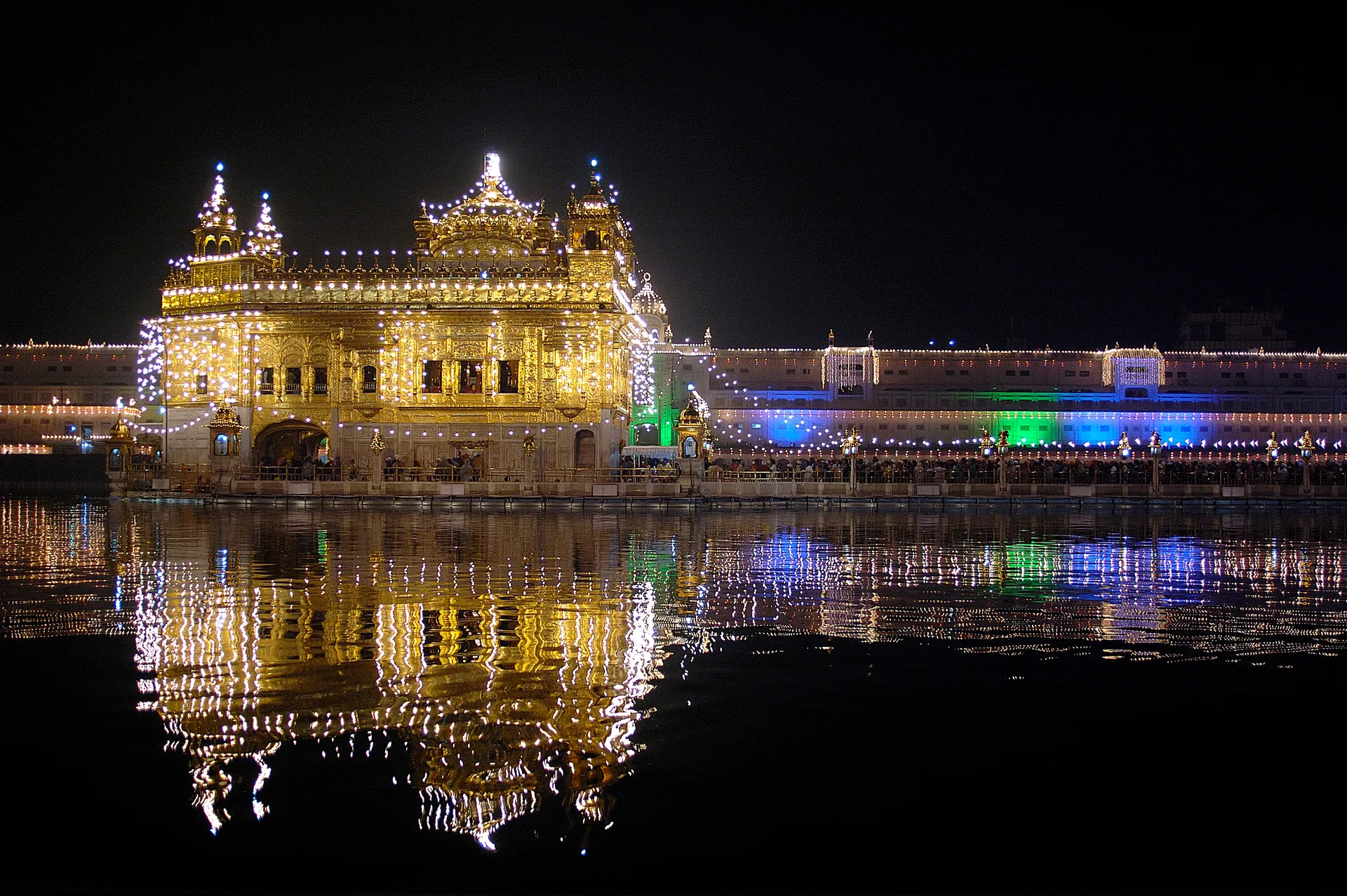
The best window for Amritsar is the cooler, drier season from October to March, when daytime temperatures are pleasant for exploring, though winter mornings can be foggy and chilly. Summer, from April to June, is punishing, often above 40 Celsius, which makes daytime activity exhausting. The monsoon from July to September brings humidity and rain. One important caveat: in late autumn, smoke from crop-stubble burning across Punjab can push air pollution to hazardous levels for weeks, so those sensitive to air quality may prefer the clearer winter and spring months. Bandi Chhor Divas, which falls alongside Diwali in the autumn, lights the whole temple complex and its pool with lamps and draws enormous crowds, and Baisakhi in mid-April turns the surrounding farmland into a harvest celebration. Both are extraordinary and both make rooms scarce, so book weeks ahead or stay well away from the old city. For a quiet, comfortable working month with clean air and no crowds, February is the single best pick.
Pros and Cons of Amritsar
Amritsar offers profound spiritual atmosphere and legendary food, with comfort a distant second. The honest version of that sentence is that one of these things is exceptional and the rest are ordinary or worse. The Golden Temple at four in the morning, with the kirtan going and almost nobody there, is among the few sights in India that people describe the same way decades later, and the kitchen behind it feeds tens of thousands a day without asking anyone for anything. That is the whole case for the city. Everything else is a working North Indian town with the noise, the traffic and the winter smoke that implies, and the smoke in particular is not a minor inconvenience but a measurable health cost over a long stay. Weigh a season of bad air against a month of something you will not see anywhere else, and the answer is usually to come, but not to stay all year.
- Pros: the awe-inspiring Golden Temple and its round-the-clock free community kitchen, some of India's best food in the home of Punjabi cuisine, extraordinarily low costs, and famously warm Punjabi hospitality.
- Cons: serious seasonal air pollution, crowds, noise and chaos, patchy internet and power, weak remote-work infrastructure, almost no nomad community, and searing summer heat. It works better for a shorter, immersive stay than a long-term base.
Who Amritsar Is For
Amritsar is for the culturally and spiritually curious traveller who wants depth and meaning, and who loves food, over comfort and infrastructure. Anyone drawn to the serene beauty of the Golden Temple, the ritual of the langar, and the punchy flavours of Punjabi cooking will find it unforgettable. It works best for shorter, immersive stays rather than a long work base, and rewards patience with India's intensity. It is a poor fit for those who need clean air, reliable infrastructure, a nomad community or a lively scene. Come in winter, stay near the old city, and let the temple and the food define your days. One practical shape for a stay: take a room a short walk outside the walled city, go to the temple at dawn before the day gets loud, work through the middle of the day when the heat or the smog keeps you indoors anyway, and eat your way through the dhabas in the evening. Two to six weeks fits that rhythm. Longer than a season and the air, rather than the internet or the loneliness, is what will eventually move you on.