Cost of Living in Port Said
Where this figure comes from. No cost survey covers Port Said, so the $600 a month above is our own estimate rather than a measurement. On 416 of our 999 city guides the figure is built from a published Numbeo basket, a one-bedroom rent in the centre plus one person's monthly costs without rent, converted to USD; this city is not one of them. How we source everything.
Port Said runs about $600 a month for one person, which is cheap even by Egyptian standards for a coastal city. A furnished apartment near the corniche or in the centre is $150 to $300, and away from the water considerably less. Food costs very little: koshari is under a dollar, a plate of grilled fish from one of the port restaurants $4 to $8, and a full meal for two $10 to $16. There is no coworking market to budget for. Internet from Telecom Egypt or one of the mobile operators is $12 to $25 a month. Microbuses and the canal ferry cost pennies, and taxis a dollar or two. The Egyptian pound is what makes any figure here provisional. It has been devalued repeatedly since 2016 and floated again in March 2024, roughly halving against the dollar within days, which is excellent for somebody earning abroad and brutal for anybody paid locally. Landlords increasingly ask for dollars or index the rent, and a long lease signed in pounds at a fixed rate is a bet the landlord is unlikely to take.
Where to Work in Port Said
Port Said has no coworking sector, so this means an apartment with a working connection. Telecom Egypt's fixed lines cover the city and fibre has reached parts of it, at $12 to $25 a month; older copper connections in the historic district are much slower and worth checking before you sign anything. Mobile data from Vodafone, Orange or Etisalat is cheap and 4G coverage is good, making tethering a sound backup. Egypt periodically throttles or blocks VoIP services, so test whichever calling platform your work depends on before committing to a stay. Cafes along the corniche have wifi but are places to sit rather than to work. The city's other economy is the free zone. Port Said has held duty-free status since the 1970s and Egyptians still travel here to buy imported goods, which is why shops in the centre carry electronics and appliances at prices the rest of the country does not see. For a remote worker the practical upshot is that a replacement laptop or router can be bought here rather than requiring a trip to Cairo, which is not true of most Egyptian cities this size.
Getting Around Port Said
Port Said is long and narrow, squeezed between the Mediterranean and the canal, so the centre is walkable and the corniche runs its full length. Microbuses cover the length of the city for pennies and are how most residents move. Taxis cost a dollar or two and app services operate patchily. The free ferry across the canal to Port Fouad runs constantly and takes a few minutes, and is worth doing simply to watch the shipping. Cairo is about three hours by road or bus, Ismailia an hour and a half south along the canal, and Damietta an hour west. There is no useful passenger airport; fly into Cairo. The ferry to Port Fouad crosses between continents. This bank is in Africa and the far one is in Asia, so a free five minute crossing that residents make to visit relatives is also an intercontinental journey, which is the sort of thing this city does without remarking on it. The canal itself has no locks and runs at sea level for its whole length, which is why the hulls slide past the end of a street at what looks like walking pace, apparently travelling overland.
Sorting transport? Book an airport transfer, or compare car rental on Auto Europe and QEEQ.
Visas for Port Said
Egypt issues a 30-day tourist visa on arrival to most Western nationalities for $25 in cash at the airport, or through an e-visa applied for online in advance, which is the smoother option. Extensions are handled at the Mogamma or a local passport office and are usually granted, though the process takes a morning and some patience. There is no digital nomad visa. Working remotely for a foreign employer while on a tourist visa is not addressed in Egyptian law and is not enforced against, but it is not authorised either. Longer stays are normally built on repeat entries or on a residence permit tied to study, work or property. The canal cities carry a security dimension the rest of Egypt does not, and it shows in small ways: photographing the waterway, the port installations or anything military is a genuine problem rather than a discouraged habit, and a foreigner with a camera near the water will be asked what they are doing. None of that affects a visa, but it affects how a stay goes. Hotels file the guest registration themselves, and anyone renting privately for months should ask a landlord how that is being handled rather than assume it is.
Best Time to Visit Port Said
Port Said sits on the Mediterranean and is milder than inland Egypt all year. April to June and September to November are the best months, with highs of 24C to 29C, sea breezes and warm water. July and August reach 31C to 33C with high humidity off the sea, uncomfortable but far easier than Cairo or Luxor at the same time. Winter from December to February is mild at 18C to 19C and is when the modest rainfall arrives, mostly in short showers. The city is busiest in summer when Egyptians come for the beaches. The Khamsin winds in spring can bring dust for a few days at a time. Victory Day on the twenty third of December belongs to this city more than to the country that observes it: it marks the withdrawal of the last British and French troops in 1956, and Port Said marks it hardest because it was the city bombed and occupied. Summer brings the domestic crowd and the corniche fills. The Mediterranean here stays swimmable well into October, which is later than most people assume of Egypt.
Pros and Cons of Port Said
Port Said is a Mediterranean city with an extraordinary setting of its own at the northern mouth of the Suez Canal, where you can sit on the corniche and watch loaded container ships pass straight through the middle of the town itself. The wooden-verandahed colonial houses along Sharia Palestine are unlike anything else in Egypt, the seafood is excellent, the beaches are within the city, and it costs $600 a month with easy visa entry. There is no coworking, no foreign community, patchy VoIP, limited English outside the tourist trade, a fairly conservative social atmosphere, and very little to do in the evening beyond eating and walking. The empty plinth on the breakwater is the city's sharpest object. It held a statue of de Lesseps, the Frenchman who built the canal, until 1956, when it came down after nationalisation, and the base was left standing without him on it. What the canal earns is not abstract here either: attacks on shipping in the Red Sea from late 2023 pushed traffic back around the Cape and cut canal revenue by more than half, which is felt in a town whose whole economy watches those ships.
Who Port Said Is For
Egypt without the scale and noise of Cairo, on a very low budget, and work that is independent and does not hang on video calls. Writers and researchers are the obvious fit, since that work is solitary and the city is cheap enough to make a long stretch of it affordable. It also makes a comfortable Mediterranean summer alternative to inland Egypt. There is no community to join, the nightlife amounts to the corniche, calling apps are throttled often enough to matter, and none of the long-stay foreigner infrastructure that Dahab and Hurghada have built exists here at all. It suits somebody writing about the twentieth century, because 1956 happened here in a way it did not happen anywhere else: this is where the invasion landed, where the statue came down, and where the end of empire stopped being a metaphor. It suits a ship watcher without embarrassment, since the canal traffic is a genuine spectacle and the corniche exists to watch it. Anyone whose work needs a video call should weigh the VoIP position first, and anyone expecting the foreigner infrastructure the Red Sea resorts have built over decades will not find it here.
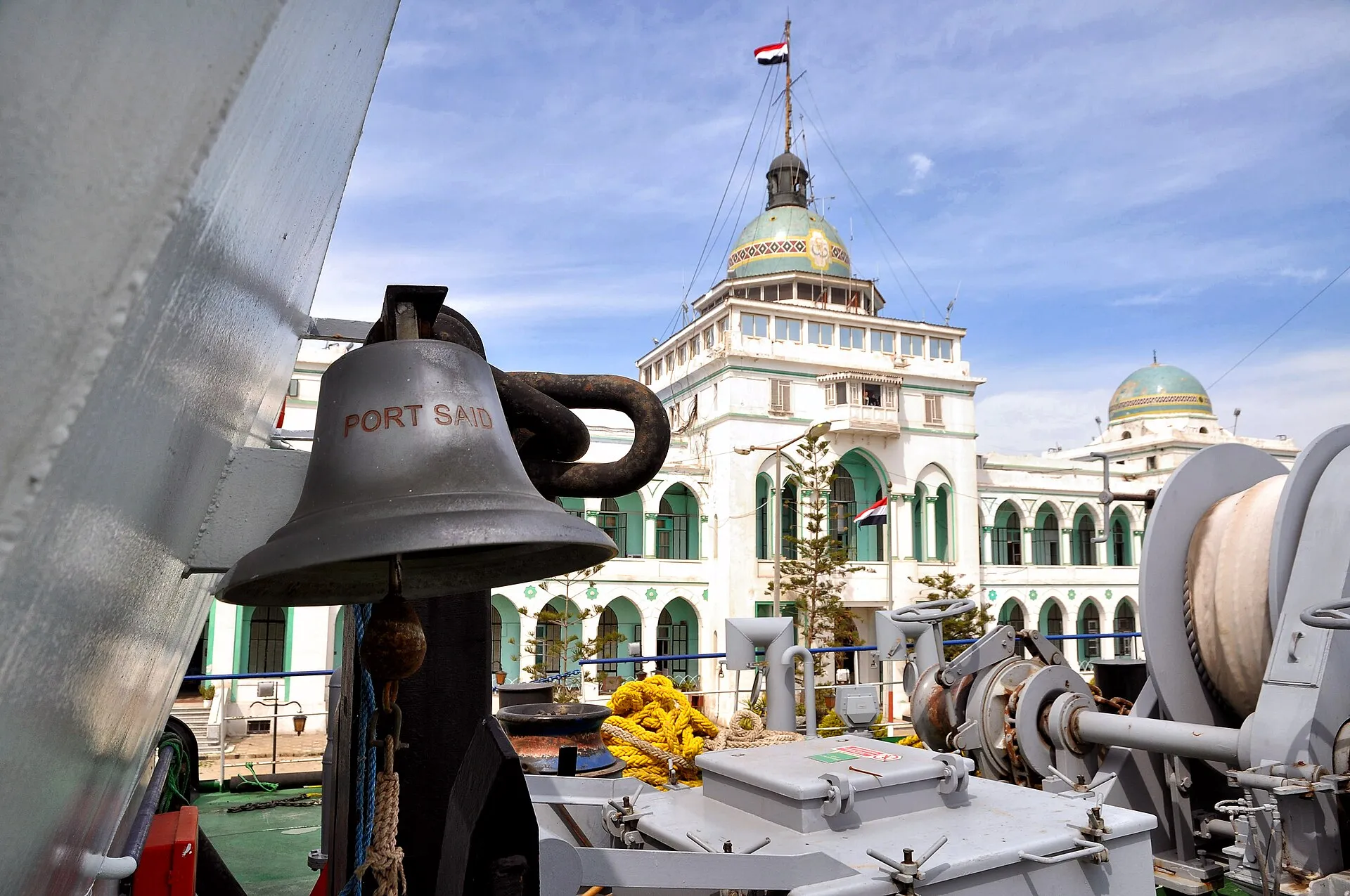 Photo: Mohamed kamal 1984 / Wikimedia Commons (CC BY-SA 3.0)