Cost of Living in Jodhpur
Real market data
Source: Numbeo · August 2026
$280/moSolo nomad1-bed centre + living costs
$410/moCoupleshared 1-bed + costs
$230/moLean / localcheaper area + costs
- 1-bed rent, city centre$120₹11,000
- 1-bed rent, outside centre$69₹6,625
- Monthly costs excl. rent (1 person)$160₹15,387
- Meal, inexpensive restaurant$2₹200
- Monthly transit pass$3₹250
- Buy price, per m² (centre)$1,240₹118,056
Prices are from Numbeo (August 2026), converted to USD at $1 = ₹95.52 (01 Aug 2026). The monthly living-costs figure is our transparent one-person basket, groceries, a few meals out, utilities, phone, internet, transport and essentials, priced from those figures. Solo adds central rent; couple and lean are estimates from the same numbers.
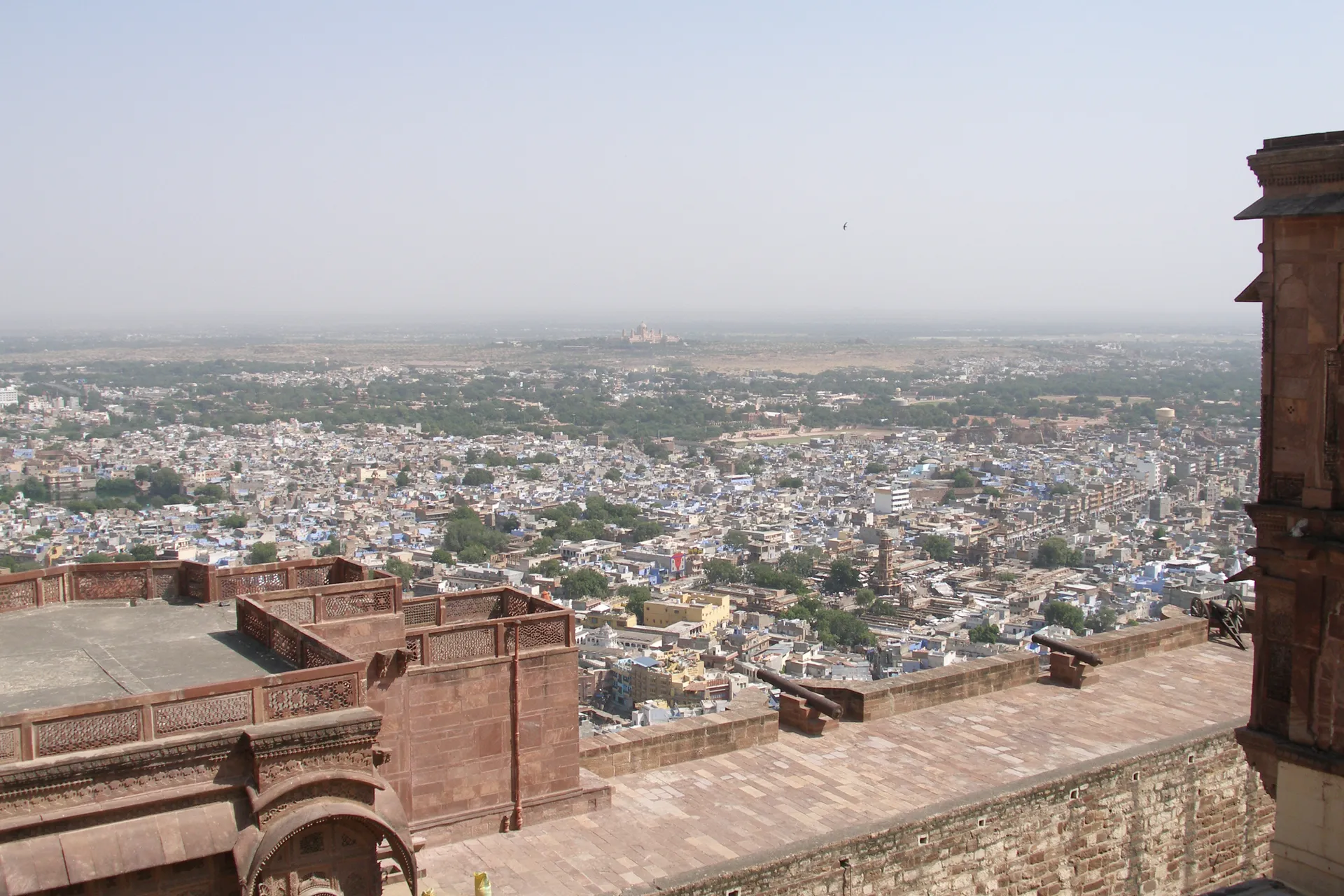
Jodhpur is very affordable, a classic budget base in Rajasthan. A comfortable single-person budget runs roughly $700 to $1,100 a month, two to three times the measured local basket of $230 to $280. That gap is what a foreign standard of living costs here: air conditioning, a room in the old city and eating out. Atmospheric guesthouse rooms in the old Blue City below the fort, many in converted havelis with rooftop views, rent long-term for about $150 to $400, with modern flats a little more. Rajasthani thalis and street food cost just a few dollars. These are our editorial estimates in US dollars, and prices rise a little in the cool October-to-March high season, but Jodhpur remains gentle on the wallet year-round. What varies most is the room. A rooftop haveli room with a fort view is priced for the view and can cost double an identical room one lane back with a wall in front of it, and in the high season those views are booked months out. Off the tourist grid, north and east of the clock tower where the city is newer, a plain serviced flat is cheaper again and comes with the fan, the water and the wiring you actually need. Air conditioning in the hot months is the one bill that genuinely bites.
- Haveli room or flat, long stay: roughly $150 to $400 a month
- Rajasthani thali: roughly $2 to $5
- Autorickshaw across the old city: roughly $1 to $2
- Rooftop cafe coffee with a fort view: a couple of dollars
Where to Work in Jodhpur
Jodhpur is a heritage-tourism city rather than a nomad hub, so its infrastructure is modest. Fibre and 4G reach the city and are cheap, but speeds vary and power cuts happen, so test any room's connection before relying on it for video-heavy work, especially in the dense old-city lanes. Dedicated coworking is scarce; the rooftop cafes of the Blue City, many with sweeping views of Mehrangarh Fort, are the de facto offices for the traveller crowd. A Jio or Airtel SIM is a reliable backup. Treat Jodhpur as a scenic, lower-intensity base and plan calls around a tested connection. The rooftops are lovely and they are also the worst place in the city to take a call. Wind, the call to prayer, the drumming that starts up on a wedding night and a router two floors below all conspire against you. Keep the roof for the writing you can do offline and the view you came for, and take meetings from the room. Indian Standard Time sits half a day away from the American west coast and only a few hours from Europe, so a London client lands comfortably in your afternoon while a Californian one costs you an evening.
Getting Around Jodhpur
The old Blue City below the fort is a compact, atmospheric maze of narrow indigo lanes best explored on foot, though it is easy to get lost. Autorickshaws are the default for longer hops and are cheap once you agree a fare, and ride apps operate in parts of the city. The magnificent Mehrangarh Fort looms above and is reachable on foot or by rickshaw. Jodhpur Airport connects to Delhi, Mumbai and other cities, and the railway station links into Rajasthan and the wider network. The city is also a springboard for desert trips toward Jaisalmer. A few specifics make the maze manageable. The clock tower and the Sardar Market beside it are the landmark everyone navigates by, and asking for the tower will get you pointed home from almost anywhere in the old lanes. Rickshaw drivers near the fort gate quote tourist prices, so walk a block before flagging one. The overnight train west into the desert leaves in the evening and arrives at dawn, which saves a night's rent and is the standard way to do that leg. Bring shoes with grip: the indigo lanes are steep, uneven and slick after rain.
Sorting transport? Book an airport transfer, or compare car rental on Auto Europe and QEEQ.
Visas for Jodhpur
Foreign visitors reach Jodhpur on India's e-Tourist Visa, arranged online before arrival and issued in 30-day, one-year and five-year forms, with the longer versions permitting multiple entries and a combined maximum of 180 days in India each calendar year. A tourist visa does not permit local employment, though remote work for a foreign employer sits in the same grey area many long-stayers occupy. Keep copies of your visa. Nothing in this state needs a special permit, unlike parts of the northeast and the border districts further west, so the standard e-visa is all the paperwork a stay here involves. And hotels and guesthouses are required to file a form recording every foreign guest, which is why a passport and visa are photographed at check-in; that is routine, not a problem, but it does mean informal room rentals arranged without any paperwork can leave you with no record of where you have been staying.
Best Time to Visit Jodhpur
Jodhpur sits on the edge of the Thar Desert, so its climate is defined by heat. The best time to visit is the cool, dry season from October to March, when pleasant days and cool evenings make exploring the old city and fort comfortable. This is peak season, so book ahead and expect higher prices and crowds, especially around festivals. April to June is intensely hot, often above 40 Celsius, which makes daytime activity draining. The monsoon from July to September brings some relief and a little greenery to the desert, with warm, humid, showery weather. The Rajasthan International Folk Festival brings musicians to the fort around the October full moon, and the Marwar Festival celebrates the region's heroes and folk traditions in the autumn as well; both fill rooms and both are worth catching if the timing lands. If you are choosing a single month to work here, November and February are the pick, dry and mild with the light that makes the blue walls photograph the way the pictures promise. Avoid May entirely unless you are content to live nocturnally.
Pros and Cons of Jodhpur
Jodhpur is one of India's most photogenic cities, a heritage feast with the trade-offs of a hot desert town. Photogenic is doing a lot of work in that sentence, and it is worth separating what the city gives a visitor from what it gives someone trying to live and work in it. As a place to look at, it is close to unbeatable: the fort is one of the great buildings in the country, and the blue quarter beneath it holds its atmosphere even on a crowded afternoon. As a place to get things done, it is thin. There is no coworking culture, no professional community to fall into, and a working day can be interrupted by a cut, a wedding procession or forty-four degrees of heat. The city rewards a creative worker who sets their own deadlines and punishes anyone whose calendar is set by other people. Judge it on that distinction rather than on the photographs.
- Pros: the magnificent Mehrangarh Fort and the storybook indigo lanes of the Blue City, rich Rajasthani culture and food, extremely low costs, atmospheric haveli stays, and easy access to the wider desert.
- Cons: a small nomad community, variable internet, punishing summer heat, tourist-driven hassle and touts, cleanliness and air quality that can be patchy, and limited nightlife or work infrastructure.
Who Jodhpur Is For
Jodhpur suits the culture-and-heritage nomad who prizes atmosphere, history and photography over infrastructure and community. Anyone captivated by forts, blue lanes and Rajasthani craft and cuisine will find it a joy, and it makes an inspiring, inexpensive base for focused creative work. It rewards travellers comfortable with some Hindi and India's intensity. It is a weaker fit for those who need fast, guaranteed internet for constant calls, a lively nightlife, or a large remote-work community. Come in the cool season, settle into an old-city haveli with a fort view, and let the Blue City and Mehrangarh set the scene. A realistic itinerary treats Jodhpur as one stop in a Rajasthan circuit rather than a base in its own right: three or four weeks here, then Udaipur or Jaisalmer, with Delhi or Mumbai when you need a real office, a hospital or a direct flight home. Anyone travelling with a partner who also works will find the room-and-rooftop arrangement cramped after a month. Solo, on a self-directed project, with a camera and a tolerance for heat, it is one of the better-value months in India.