Cost of Living in Savannakhet
Where this figure comes from. No cost survey covers Savannakhet, so the $560 a month above is our own estimate rather than a measurement. On 416 of our 999 city guides the figure is built from a published Numbeo basket, a one-bedroom rent in the centre plus one person's monthly costs without rent, converted to USD; this city is not one of them. How we source everything.
Savannakhet runs about $560 a month for one person, which puts it among the cheapest towns on this site. A furnished room near the old French quarter goes for $120 to $200, and a small house with air conditioning reaches $250 to $350. Noodle soup from a street stall is under a dollar; a full meal at a riverside restaurant with a Beerlao is $4 to $7. There is no formal coworking space, so budget nothing for a desk and something for cafe drinks instead. Motorbike hire is around $6 a day, and the bus over the bridge to Mukdahan in Thailand costs about $2. Utilities and a local SIM add roughly $40. Rent is quoted in dollars to a foreigner and in kip to a neighbour, and the gap between those two numbers is a negotiation rather than an exchange rate, so a week spent asking around is worth more than any listing site. Three currencies circulate this close to the border and a shop will quote in whichever it prefers. Cash machines have low withdrawal limits and charge for each transaction, so the sensible pattern is to cross the bridge and draw money on the other side, where the fees are smaller and the notes come larger.
Where to Work in Savannakhet
There is no coworking space in Savannakhet, which is the honest answer and the main practical constraint on staying here. Work happens in cafes around the old quarter and in guesthouse rooms. The places along Ratsavongseuk Road have wifi that handles email and documents but not reliably a video call. Fibre has reached the town centre and better guesthouses advertise it, so ask to run a speed test before paying for a week. A local 4G SIM from Unitel or Lao Telecom costs a few dollars and is the more dependable connection; tethering is what most people here actually do. Power cuts are short but common in the wet season, so keep a battery charged. The town sits on the corridor running from the Vietnamese coast across to Thailand, and a special economic zone on its edge was built to catch some of that freight, with assembly and logistics operations employing a few thousand people. None of it is visible from the old quarter. For a visitor the practical consequence is a steady flow of lorries, a border post that works efficiently by regional standards, and a town better connected to two neighbours than to its own capital.
Getting Around Savannakhet
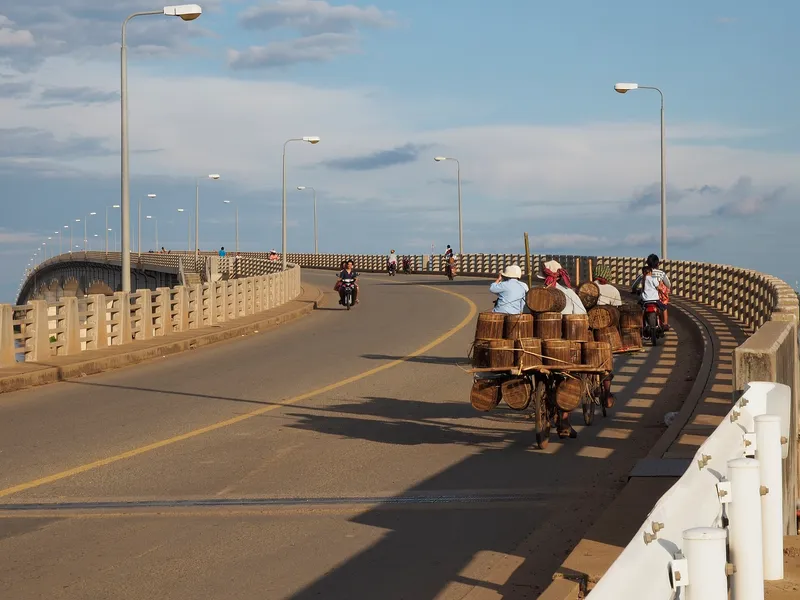
Savannakhet is flat and small enough to walk, and the old French quarter is roughly eight blocks square. A bicycle from a guesthouse is about $2 a day and covers everything including the riverfront and the dinosaur museum. Tuk-tuks work on negotiation and a ride across town runs $2 to $3. Motorbikes rent for around $6 a day and are how most people reach That Ing Hang, the sixteenth-century stupa about 15km northeast. The bus station sits 2km out of the centre and runs sleepers north to Vientiane and south to Pakse. The Second Thai-Lao Friendship Bridge crosses to Mukdahan, and the shuttle over it takes about half an hour including the border formalities. Traffic drives on the right in this country and on the left in the one across the water, so the bridge carries a crossover where the lanes swap sides, which is worth knowing before attempting it on a motorbike for the first time. The high-speed railway built through the country in recent years runs far to the north and does not serve this province at all, so everything here still moves by road. Sleeper buses leave in the evening and arrive uncomfortably early, which is the usual complaint about them.
Sorting transport? Book an airport transfer, or compare car rental on Auto Europe and QEEQ.
Visas for Savannakhet
Laos issues a 30-day e-visa online for most nationalities at around $50 plus a processing fee, and a visa on arrival at the Friendship Bridge for a similar amount. Extensions of 30 days are handled at the immigration office or through an agent for a daily fee plus a service charge. There is no digital nomad visa and no formal route to working remotely, so almost everyone here is on tourist status. The Mukdahan crossing makes a border run straightforward: cross into Thailand, spend an hour, come back with a fresh entry. Nobody is checking what a laptop is being used for, but that is a description of enforcement, not a residency plan you can rely on.
Best Time to Visit Savannakhet
November to February is the season worth planning around. Daytime highs sit near 30C, humidity drops, and evenings on the riverfront are pleasant enough to sit out until late. March through May is the hard part: temperatures climb past 36C and the haze from agricultural burning across the Mekong basin is genuinely bad for several weeks, usually the worst air of the year. The southwest monsoon runs roughly June to October and brings heavy afternoon rain, though mornings often stay clear and the countryside turns green. The Mekong is at its widest in September. The That Ing Hang festival falls in the twelfth lunar month, usually December, and fills the town for several days. When the river drops in the dry months it exposes wide sandbars, and families set up on them with mats and grills for the afternoon, which is a seasonal habit rather than an event and one of the pleasanter things to join. The rocket festival that comes just before the rains is the loudest week of the year, with homemade rockets fired into the sky to ask for them. The town empties for the lunar new year in the spring, and much of it simply closes for several days together.
Pros and Cons of Savannakhet
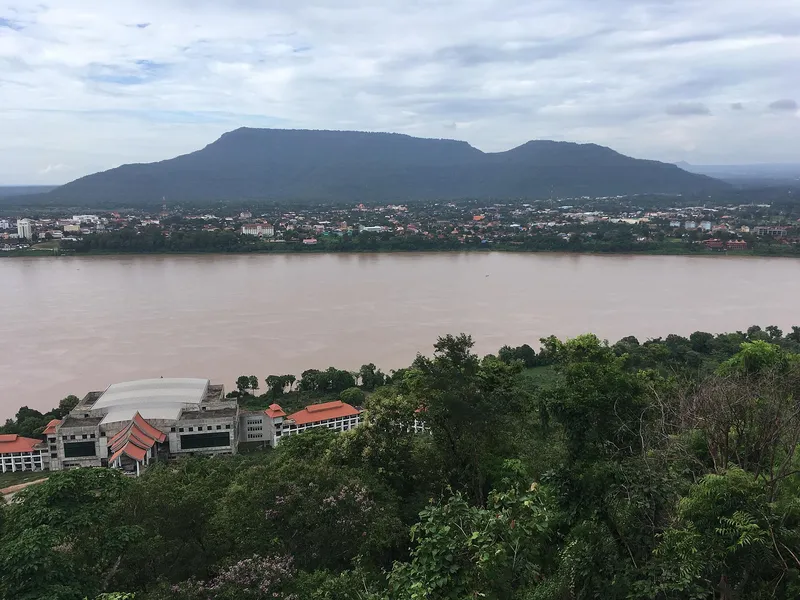
Cost and quiet are what this town has to offer. It is one of the cheapest places on this site, the old French quarter is genuinely handsome and almost entirely untouristed, and the Mekong runs along one edge of town. Border runs into Thailand take an afternoon. The list against it runs a good deal longer. There is no coworking space, no nomad community to speak of, and the internet is adequate rather than good. English is limited outside guesthouses. Serious medical care means crossing to Mukdahan or flying to Bangkok. The hot season is punishing and the March burning haze is a health issue rather than an inconvenience. Nightlife is a few riverside restaurants and an early close.
Who Savannakhet Is For
A writer, a researcher, or anyone whose work is asynchronous and text-based, on a budget that has to stretch a long way. If your month costs under $600 here and you want somewhere with real character rather than a nomad scene, it is a good bet. It also works as a slow stop on the Thakhek to Pakse run, or a base for the Ho Chi Minh Trail sites east of town. Reliable video calls are beyond what this town can support, there is nobody here to work alongside, and the nearest hospital worth the name is across the bridge in Thailand. It is a poor first stop in Southeast Asia; Vientiane or Chiang Mai will teach you the region with more support around you.
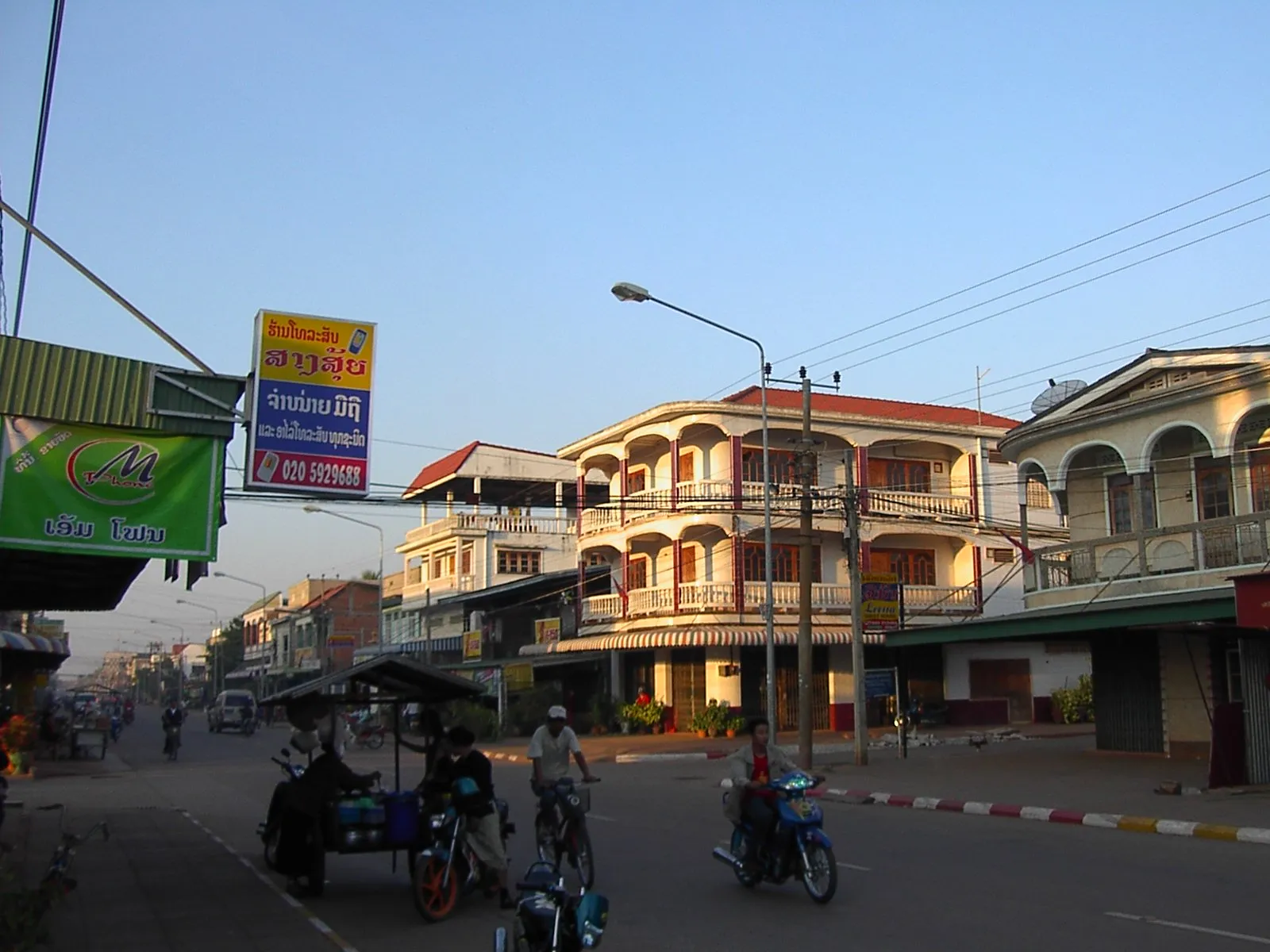 Photo: Aaker / Wikimedia Commons (Public domain)