Cost of Living in Islamabad
Where this figure comes from. No cost survey covers Islamabad, so the $800 a month above is our own estimate rather than a measurement. On 416 of our 999 city guides the figure is built from a published Numbeo basket, a one-bedroom rent in the centre plus one person's monthly costs without rent, converted to USD; this city is not one of them. How we source everything.
Islamabad is Pakistan's most expensive city and also its most liveable, and $800 a month covers a single nomad comfortably. A furnished one-bedroom or studio on a monthly lease in F-6, F-7, F-8 or E-11 runs $250 to $450, with G-sectors and Bahria Town cheaper at $150 to $280; serviced apartments aimed at expats climb past $600. Local food is very cheap, with a plate of nihari or karahi at $2 to $4 and street food under $1, while Western style restaurants in the F-6 Super Market or Kohsar Market area cost $8 to $18. A Jazz or Zong SIM with a generous monthly data bundle costs $5 to $10. Coworking desks are $70 to $130. Utilities including electricity, gas and a fibre line run $50 to $100, spiking in summer with air conditioning. Transport is $30 to $60 on ride-hailing. The value is strong: clean air, greenery and space for far less than comparable Asian capitals.
Where to Work in Islamabad
Base yourself in the F-6, F-7, F-8, F-11 or E-11 sectors; they are leafy, low-rise and close to the markets and cafes. Kohsar Market and F-6 Super Market are the cafe cores, with Chai Khana, Burning Brownie, Mocca Coffee and the various branches of Gloria Jean's and Second Cup all workable, and Monal and the Pir Sohawa road offering views rather than productivity. For dedicated space, the National Incubation Center at NUST, Daftarkhwan and Colabs have Islamabad operations, and Blue Area holds most of the serious office coworking stock. Fibre from Nayatel or StormFiber is genuinely reliable, which is the city's quiet advantage. The caveats: load shedding is milder here than in Karachi or Lahore but still occurs, so verify a UPS or generator; mobile internet is periodically throttled or suspended during protests, so a paid VPN is effectively mandatory; and cafes close early. This country has one of the largest populations of freelancers on the international platforms anywhere, and a good share of them work out of this city, which means the coworking spaces and the coffee shops are full of people doing more or less what you are doing.
Getting Around Islamabad
There is no metro in the underground sense, but the Islamabad-Rawalpindi Metrobus runs a dedicated corridor from Saddar in Rawalpindi to Pak Secretariat, with a separate line out to the airport, and fares are about $0.10 to $0.15. Beyond that, ride-hailing dominates: Careem, InDrive and Yango cover the city, with a typical cross-sector car ride at $1.50 to $4 and a bike ride at $0.60 to $1.50. Traditional taxis and Suzuki vans exist but are not worth the negotiation. Islamabad is unusually spacious, laid out on a numbered sector grid with wide roads and good greenery, but the sectors are large and distances long, so it is pleasant to walk within a sector and impractical between them. Islamabad International Airport is roughly 25km southwest; expect $8 to $15 by Careem or 45 minutes on the airport Metrobus. A car is not needed, though it helps for weekend trips toward Murree, Swat and the north. The airport is shared with the older city next door and sits well out to the west of both, which makes the run there longer than the map suggests at any hour of the day. The two cities run into one another and feel nothing alike.
Sorting transport? Book an airport transfer, or compare car rental on Auto Europe and QEEQ.
Visas for Islamabad
Pakistan runs an online e-visa system through the NADRA portal, and it is the standard route for Western nationals. Tourist e-visas are commonly granted for 30 to 90 days, and citizens of a long list of countries including the US, UK, most of the EU, Canada and Australia can apply fully online without a sponsor or letter of invitation; processing typically takes days to a few weeks and fees vary by nationality, often $30 to $60. Pakistan does not have a digital nomad visa despite periodic press speculation, so do not plan around one. Extensions are applied for through the same online portal and are sometimes granted, though outcomes are inconsistent and best started well before expiry. Business visas are available with an invitation from a registered Pakistani company. The important gotchas are regional rather than bureaucratic: some areas require a No Objection Certificate for travel, notably parts of Balochistan, Khyber Pakhtunkhwa's border districts and Azad Kashmir. Overstaying is treated seriously.
Best Time to Visit Islamabad
Islamabad's climate is one of its best arguments, with four real seasons rather than a wet and dry binary. March and April are the peak, with highs in the low twenties, blossom across the sectors and hiking weather on the Margalla Hills trails. May and June are hot and dry, regularly hitting 38C to 40C, and this is the window when the Margallas become unpleasant by midday. The monsoon lands roughly July through mid-September, bringing violent thunderstorms, spectacular skies, humidity and occasional flash flooding on the nullahs, though it also greens the hills. Late September through November is the second excellent window: dry, mild and clear, and the season for heading north to Hunza and Skardu before the passes close. December to February is genuinely cold, dropping near freezing at night, with fog and a smog season that is real though far milder than Lahore's. Pakistan Day in March and both Eids anchor the calendar.
Pros and Cons of Islamabad
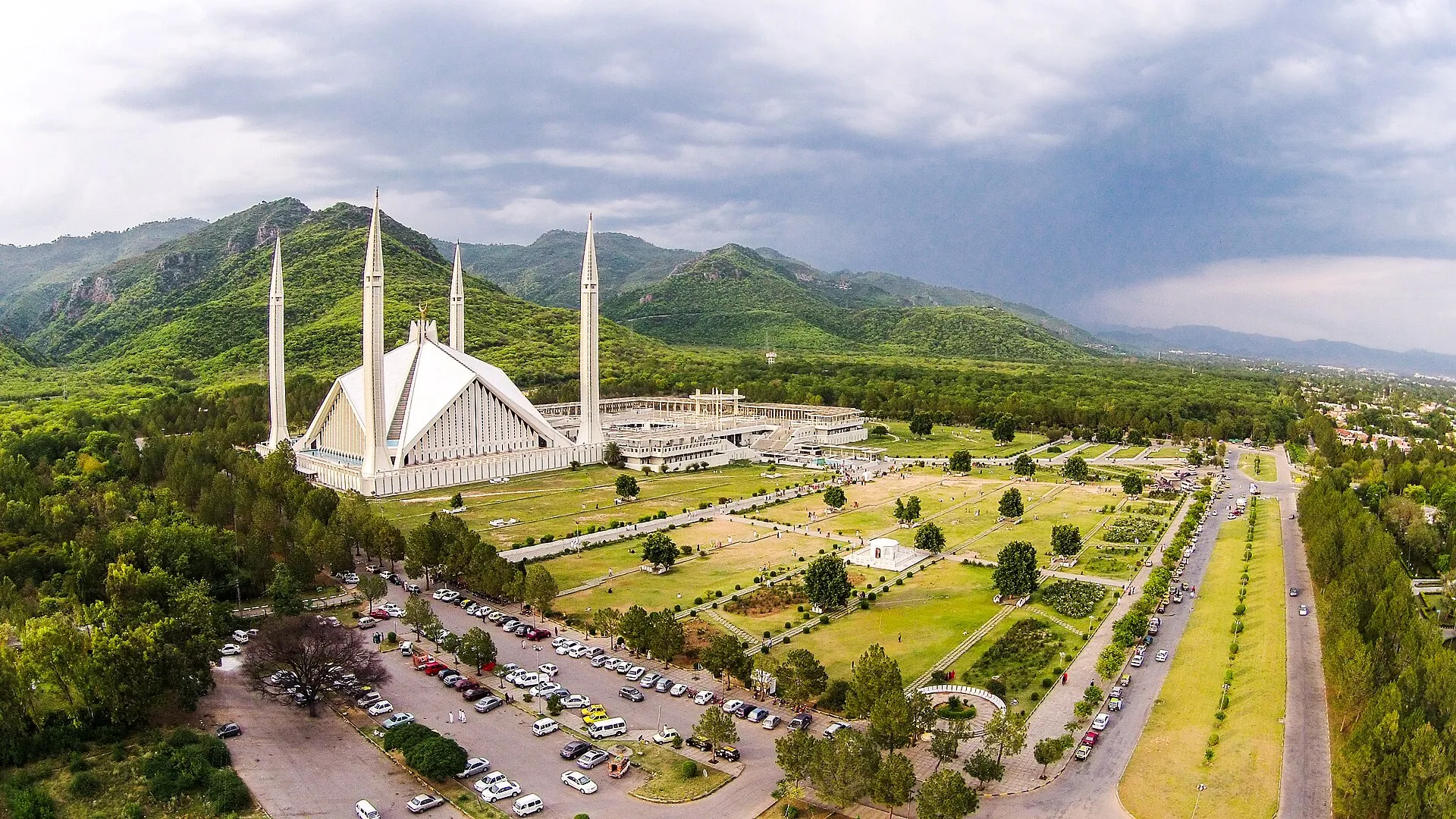
Islamabad is the anomaly in South Asia: a planned, green, low-density capital backed onto the forested Margalla Hills, with clean air by regional standards, wide roads, functional fibre, cheap ride-hailing and almost none of the density or noise of Karachi, Lahore or Delhi. Food is excellent and very cheap, the people are famously hospitable, and the city is the gateway to the Karakoram, arguably the best mountain trekking on the planet, with Hunza and Skardu a short flight or long drive away. The costs are considerable. It is quiet to the point of dullness, with an early-closing, largely alcohol-free social life and no nomad scene to speak of. Internet shutdowns and platform blocks during political tension are routine and can genuinely disrupt work. Security requires ongoing attention, with periodic incidents in the wider region and hard restrictions on travel to some provinces. Bureaucracy is heavy, distances are car-dependent, and solo women face real cultural friction.
Who Islamabad Is For
Islamabad fits the self-directed remote worker who wants mountains within reach, a low burn rate and clean air, and who does not need a scene to be productive. Trekkers, climbers, motorcyclists and photographers get outsized value because the city is a comfortable, well-connected base camp for the Karakoram and Hindu Kush. It also suits people with Pakistani family or business ties, and those already working with the country's fast-growing outsourcing and startup sector. Long-stay travellers who value order and greenery over stimulation will be surprised at how well it works. Skip it if a bar culture, an existing nomad community or a dense walkable core matters, if your work cannot tolerate occasional internet suspensions, or if you want a low-friction visa reset ecosystem. Solo women, LGBT nomads and anyone who needs to be visibly unconventional should weigh the social conservatism seriously. Party-oriented or first-time nomads will be much happier in Southeast Asia.