Cost of Living in Český Krumlov
Where this figure comes from. No cost survey covers Český Krumlov, so the $1,000 a month above is our own estimate rather than a measurement. On 416 of our 999 city guides the figure is built from a published Numbeo basket, a one-bedroom rent in the centre plus one person's monthly costs without rent, converted to USD; this city is not one of them. How we source everything.
Český Krumlov is an affordable base by Western European standards, though its tourist-town status nudges some prices above what you might pay in a quieter Czech backwater. A realistic monthly budget of roughly $900 to $1,300 covers a modest flat, groceries, transport and a fair amount of eating out. Rent is the biggest variable: the historic centre commands a premium and short-term holiday lets dominate, so a longer stay in the residential outskirts stretches your money much further. Prices below are editorial estimates rather than surveyed figures, and they climb noticeably in the peak summer season when demand from visitors is at its highest. The short-let economy is what makes this town expensive relative to the rest of the country, and the arithmetic behind it is stark: around thirteen thousand people live here and the annual visitor count runs into seven figures, so a large share of the housing inside the bend of the river has been converted to serve them. A flat in the centre is therefore priced against a nightly rate rather than against local wages. Look at the residential streets up the hill instead, where a given budget stretches to roughly double the floor area and the walk in still takes ten minutes.
- One-bedroom flat outside the centre: roughly $500 to $750 a month on a longer lease.
- Everyday lunch at a pub or bistro: around $8 to $14, less if you self-cater.
- Monthly groceries for one person: in the region of $200 to $300.
- Coffee, a half-litre of Czech beer or a tram-free walk everywhere: a few dollars, and walking is free.
Where to Work in Český Krumlov
This is a small town, so do not expect a dedicated coworking scene or a cluster of laptop-friendly cafes competing for your custom. Most nomads work from their accommodation, and a decent home connection matters more here than anywhere else. A handful of cafes and the odd hotel lobby offer wifi and a corner to settle into, though seats can be scarce when day trippers flood in. The Municipal Library provides a quiet, free alternative. If you need a professional coworking desk, Ceske Budejovice, about thirty minutes away by bus or train, has more options. Český Krumlov suits focused solo work and quiet mornings rather than buzzy shared offices. A working week here turns on two practical points. Czech fixed broadband is cheap and dependable, so the connection is genuinely not the constraint; the constraint is silence, because a flat on one of the central lanes sits above a street that carries coach parties from ten until five in season. Ask which way the windows face. The other thing is the winter: the town empties, much of the cafe trade shuts for the season, and the version of the place you are choosing between November and March is a quiet Czech small town rather than the postcard.
Getting Around Český Krumlov
Český Krumlov is best explored on foot, and honestly you will rarely need anything else. The UNESCO-listed centre is compact, wrapped inside a tight S-bend of the Vltava, and its cobbled lanes are largely pedestrianised, so walking is faster and far more pleasant than driving. Wear sturdy shoes, as the streets are steep and uneven in places. Local buses connect the outskirts and the train station, which sits a fifteen-minute walk uphill from the old town. Regional buses and trains link you to Ceske Budejovice in around thirty minutes and to Prague in roughly two and a half to three hours. A car is useful only for exploring the wider South Bohemian countryside. The station is the detail that catches arrivals. It sits well above the old town and the walk down is pleasant with a daypack and grim with luggage, so the coach from the capital, which stops much closer in, is the better arrival even though the train is the nicer journey. Book it ahead; it is cheap, frequent and reserved. On the river, the canoe and raft traffic through the town in summer is heavy enough to be part of the streetscape, and the section upstream is the classic day out rather than the one through the centre.
Sorting transport? Book an airport transfer, or compare car rental on Auto Europe and QEEQ.
Visas for Český Krumlov
The Czech Republic sits within the Schengen Area, so many visitors arrive visa-free for up to ninety days in any one hundred and eighty. That short window suits a scenic stint but not a long stay. For anything longer, the country offers self-employment and freelance residence routes, commonly reached through the zivnostensky list, or trade licence, which underpins a long-term business visa. These applications are paperwork-heavy and best started well ahead from your home country. A note on that trade licence route, because it is more accessible than it sounds and more consequential than people expect. It is a genuine self-employment status rather than a workaround, it obliges you to pay Czech social and health contributions monthly whether or not you invoiced, and those contributions are what buy you into a health system that is good and cheap. Anyone treating it as a paperwork exercise is missing the point of it. Start the application from outside the country, because converting from a tourist entry is not possible. The shuttle vans that link Český Krumlov with Salzburg, Hallstatt and Vienna never stop at the Austrian border, and that is precisely the trap: the EES started counting at whichever external border first took your fingerprints, and every night on that loop comes out of the same 90.
Best Time to Visit Český Krumlov
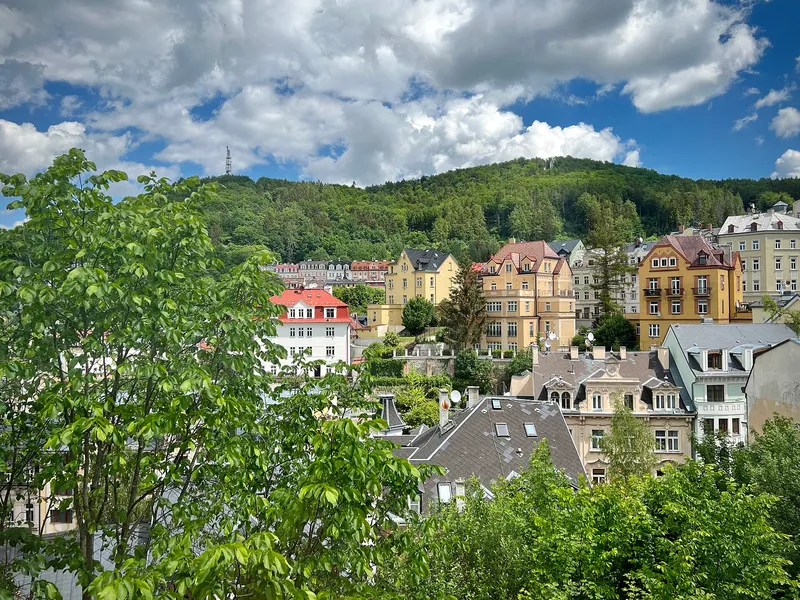
Český Krumlov has a humid continental climate, with cold, often snowy winters and mild, pleasant summers. Late spring and early autumn hit the sweet spot: the weather is comfortable, the light flatters those red rooftops, and the crush of high-season visitors has eased. Summer brings warm days, river rafting and canoeing, and a lively buzz, but also thick crowds of day trippers that can make the narrow lanes feel packed by midday. Winter is the quiet season, genuinely magical when snow settles on the castle, though some businesses trim their hours. For a working base with room to breathe, aim for May, June, September or October. The rafting season is the thing that most changes the town and rarely appears in a weather note. From June the river through the centre carries a steady procession of canoes and rubber rafts, most of them crewed by groups on a weekend away, and the noise of it reaches the streets either side. It is cheerful and it is not quiet. If you want the town at its best, take the last fortnight of September: the water traffic has stopped, the day coaches have thinned, the light is low and the castle gardens are at their finest.
Pros and Cons of Český Krumlov
Český Krumlov is one of the prettiest towns in Central Europe, and living inside a UNESCO World Heritage site has an undeniable charm. It is safe, walkable, affordable and steeped in history, dominated by its vast castle and the distinctive round painted Renaissance tower. But it is also tiny and intensely touristy, which cuts both ways. The nomad community is essentially nonexistent, nightlife is limited, and summer crowds can wear thin. Weigh it up honestly before you commit to a longer stay. The thing worth being concrete about is the ratio. Around thirteen thousand people live here and something over a million visit each year, which works out at roughly eighty visitors per resident, and almost all of them come between ten and five in the same few months. That is not a town with tourism in it; it is a town shaped entirely by tourism, and the consequence is that the centre has the shops, prices and rhythms of a visitor attraction rather than of a place people live. It does mean that the honest version of living here involves sleeping outside the historic core and treating it as somewhere you walk through in the early morning, which is when it is genuinely extraordinary and almost empty.
- Pros: stunning UNESCO setting; very safe and walkable; low cost of living; rich culture and architecture; peaceful in the off-season.
- Cons: heavy summer tourist crowds; almost no nomad community; limited nightlife and coworking; small size means few amenities; some winter closures.
Who Český Krumlov Is For
Český Krumlov rewards a particular kind of nomad: the one who wants a calm, scenic slow base over a busy social scene. If you crave a lively community, a wide choice of coworking spaces or nightlife that runs past midnight, you will find this town too quiet and too small, and you would be better served by Prague or Brno. But if you value beautiful surroundings, safety, gentle daily rhythms and history on your doorstep, and you can work happily from home, it is a genuine delight. It also works well as a restorative retreat between livelier stops, especially outside the crowded summer months. Commit to a month first, and take one of the shoulder seasons. Beyond three months most people have exhausted the town and are either commuting to the regional city half an hour away or thinking about the capital. Insist on a kitchen, because restaurant prices here are set for people on holiday. And if you are here for the quiet rather than the postcard, the villages and forest of the border country south of town are what would keep you here, and almost nobody who visits ever sees them.