Cost of Living in Fenghuang
Where this figure comes from. No cost survey covers Fenghuang, so the $700 a month above is our own estimate rather than a measurement. On 416 of our 999 city guides the figure is built from a published Numbeo basket, a one-bedroom rent in the centre plus one person's monthly costs without rent, converted to USD; this city is not one of them. How we source everything.
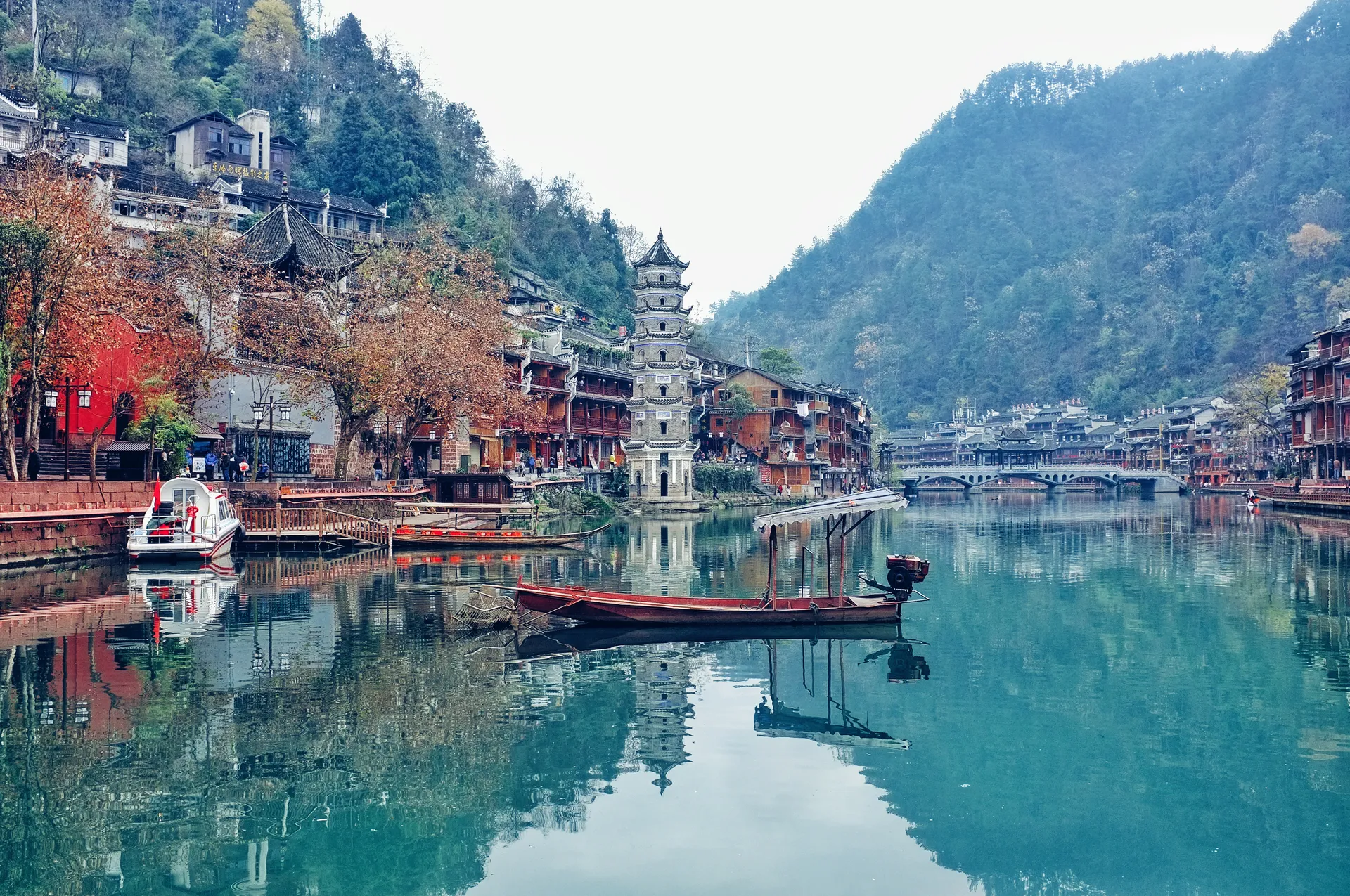
Fenghuang is genuinely cheap by any standard, one of the more affordable ancient towns in China. A comfortable solo month realistically runs between $600 and $1,100, depending on whether you rent a riverside guesthouse room or a plainer apartment in the newer town. Local Xiangxi food is inexpensive, minority-run guesthouses are plentiful, and daily life costs little once you step past the tourist stalls. Prices near the Tuojiang and the Hong Bridge are inflated for visitors, so eating and shopping a few lanes back saves a lot. Heating is the cost newcomers miss. Hunan lies south of the line above which China installs central heating, so winter rooms rely on air conditioners with a heat setting or on electric blankets, and it is worth confirming both work before agreeing a monthly price. Rooms are also priced by the view: a window over the river costs much more than a back room in the same inn, and the back room is the quieter one once the riverside bars start up.
- Guesthouse or simple monthly rental: roughly $250 to $550
- Local meals (rice noodles, Xiangxi dishes): $2 to $6 each
- Riverside cafe coffee: $3 to $5, tourist-priced
- Old-town scenic-area ticket and attraction passes: budget extra
- Buses, shared taxis, and short trips: a few dollars
Where to Work in Fenghuang
Fenghuang was built for river views and lantern-lit evenings rather than for people with laptops, and anyone trying to hold down remote work here meets real friction from the first day. China's Great Firewall blocks Google, most Western social platforms, and many work tools, so you will almost certainly need a working VPN installed before you arrive, since VPN sites are themselves hard to reach once inside China. Local fixed-line internet is generally decent and guesthouse and cafe wifi is usually fine for calls and email, but reliability varies. The riverside old town is atmospheric yet touristy and genuinely noisy at night, which makes focused deep work difficult near the water.
- Install and test a reputable VPN before entering China
- Guesthouse rooms are the most reliable quiet workspace
- Riverside cafes suit light work but get loud and crowded
- The newer town offers calmer, cheaper long-stay rooms
- Carry a local SIM with data as a backup connection
Getting Around Fenghuang
The ancient town itself is compact and pedestrian, a maze of cobbled riverside lanes, arched bridges, and stilt-house alleys best explored entirely on foot. Wear grippy shoes, since the old stones get slick. The old town itself has been free to enter since 2016, when a much-resented compulsory ticket was scrapped, but several sights inside it, along with the river boats, still charge. Beyond the walls, the newer town has ordinary buses and cheap taxis, and long-distance buses connect to regional hubs. The Fenghuang Ancient Town high-speed rail station, opened in 2021, is a major upgrade, putting fast trains toward Zhangjiajie and Huaihua within easy reach. The nearest airport is Tongren Fenghuang, across the provincial line in Guizhou and roughly 40 minutes by car, with domestic flights only, so most foreign arrivals come in by high-speed rail, changing from the fast line between Shanghai and Kunming. The high-speed station sits outside the old town, a taxi or bus ride rather than a walk from the riverside lanes.
- Explore the old town on foot; no cars in the core lanes
- Fenghuang Ancient Town high-speed rail station for fast regional trains
- Trains and buses link toward Zhangjiajie and Huaihua
- Taxis and buses serve the newer town outside the walls
Sorting transport? Book an airport transfer, or compare car rental on Auto Europe and QEEQ.
Visas for Fenghuang
Citizens of about 50 countries, including most of Europe, the UK, Canada, Australia, New Zealand, Japan and South Korea, can enter China visa-free for up to 30 days under a scheme that runs to 31 December 2026; US citizens need a tourist (L) visa arranged in advance, typically requiring itineraries, accommodation bookings, and sometimes proof of funds. There is no straightforward long-stay remote-work route here, and Fenghuang is best treated as a scenic stop within a broader China trip rather than a base. The 240-hour visa-free transit exemption also covers US citizens, but only when continuing to a third country through a designated port.
- Most European, UK, Canadian and Australian passports enter visa-free for 30 days
- US citizens need a tourist (L) visa or the 240-hour transit exemption
- No clear long-term remote-work visa pathway
Best Time to Visit Fenghuang
Spring and autumn are the sweet spots. From roughly March to May and September to November the weather is mild, the Tuojiang runs pretty, and the diaojiaolou stilt houses and arched bridges look their best against clear light, with the evening illuminations reflecting beautifully off the water. Summer is hot and humid and coincides with peak domestic Chinese tourism, when the riverside lanes get packed and prices rise. Winter turns cold, damp, and often misty; the town grows quiet and moody, which some travelers love for photography, though many guesthouses and stalls wind down and evenings feel sleepy. The first week of October, China's National Day holiday, is the one stretch to avoid outright, since it falls in the best weather and brings the biggest crowds of the year onto the bridges. The hot months carry a second risk: the river rises fast in heavy rain, and in July 2014 it flooded the ground floors of riverside inns, so ask for a room above street level in the rainy months.
- Spring (March to May): mild, green, and photogenic
- Autumn (September to November): comfortable and clear
- Summer: hot, humid, and heavily crowded with domestic tourists
- Winter: cold, misty, quiet, and atmospheric but subdued
Pros and Cons of Fenghuang
Fenghuang is one of China's most beautiful old river towns, a genuinely stunning place to spend a few days, but it is not a practical long-term remote-work base. The stilt houses over the Tuojiang, the illuminated bridges at night, and the layered Miao and Tujia culture, tied to the writer Shen Congwen who was born here, are unforgettable. The trade-off is heavy commercialization, thick crowds, limited English, the VPN and censorship reality, and demanding visas. Come for the scenery and heritage, keep expectations realistic about the tourist-town atmosphere. One quieter advantage is the food: Xiangxi cooking, smoked pork, sour fish and chilli-heavy stir-fries, is little known outside Hunan and costs a few dollars a plate in the lanes away from the river.
- Pro: gorgeous, well-preserved river-town heritage and night scenery
- Pro: very affordable food, lodging, and daily life
- Pro: rich Miao and Tujia minority culture and history
- Con: crowded, commercialized, and noisy at night
- Con: Great Firewall, limited English, and tough visas
Who Fenghuang Is For
Fenghuang suits travelers and slow tourists who want beauty, atmosphere, and cultural depth over connectivity and productivity. It is ideal for a scenic short stay, a photography trip, or a cultural detour woven into a wider China itinerary, especially paired with nearby Zhangjiajie. Nomads who can work fully offline for a stretch, or who simply want a striking, low-cost place to unplug for a week, will love it. It is a poor fit for anyone needing reliable unfiltered internet, video-call stability, a quiet long-term base, or an easygoing English-speaking environment. Readers of Shen Congwen's novella Border Town will recognise the world it describes, the ferries, stilt houses and river people of western Hunan, and his grave on the hillside at the eastern edge of town is a quiet walk away from the crowds. The Southern Great Wall, a Ming-era frontier wall a short drive away, makes an easy day out for anyone staying a week.
- Great for slow travelers, photographers, and culture seekers
- Ideal as a scenic stop within a larger China trip
- Good for a short unplugged break from screens
- Poor fit for connectivity-dependent, long-stay remote workers