Cost of Living in Guilin
Where this figure comes from. No cost survey covers Guilin, so the $900 a month above is our own estimate rather than a measurement. On 416 of our 999 city guides the figure is built from a published Numbeo basket, a one-bedroom rent in the centre plus one person's monthly costs without rent, converted to USD; this city is not one of them. How we source everything.
Guilin is genuinely cheap and $900 per month buys a comfortable single life. Furnished monthly rentals in the city centre near Zhengyang pedestrian street or the Two Rivers and Four Lakes area run $200 to $380 for a one-bedroom; Yangshuo, an hour south and the more scenic base, sits at $250 to $450 for a guesthouse room or small flat with a karst view. Food is inexpensive, with Guilin rice noodles at under $2 a bowl keeping monthly eating to $150 to $230. A data SIM is $10 to $18. Formal coworking barely exists here, so budget $0 to $80 for cafe spend or a desk in a Yangshuo guesthouse. Utilities average $30 to $60. Local transport is $10 to $20 a month. Value verdict: among the lowest costs available in a Chinese city with modern infrastructure, and the landscape is the compensation for the thinner urban amenities. Guangxi is among the poorer provinces and local wages reflect it, which is why the gap between what a visitor pays on West Street and what the same thing costs two streets back is so wide. Asking the price before ordering is ordinary practice rather than suspicion, and it saves an argument later.
Where to Work in Guilin
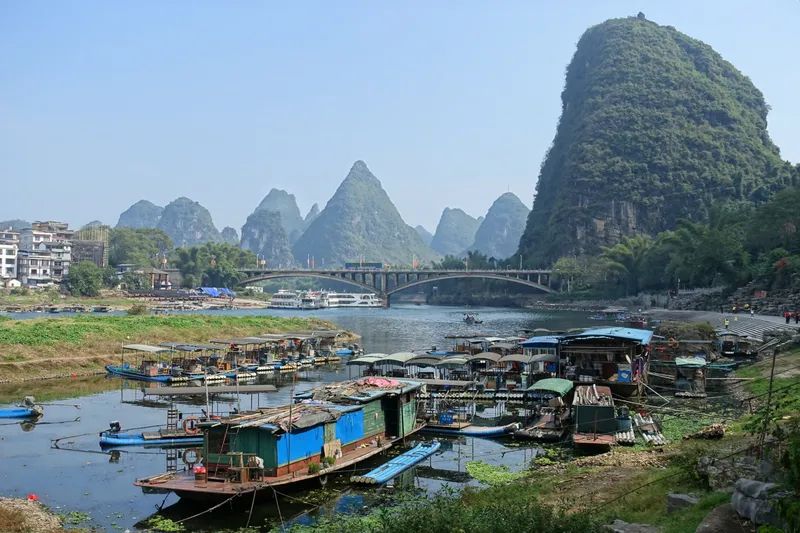
Guilin city is the practical base for infrastructure, with the area around the Lijiang riverbank and Zhengyang Road offering hotels, apartments and a reasonable cafe scene. Many long-stayers prefer Yangshuo, an hour away by high-speed rail, where West Street has decades of backpacker infrastructure and the surrounding villages of Jima and Gaotian offer riverside guesthouses with desks and terraces. Dedicated coworking is essentially absent in both; work happens in cafes, guesthouse lobbies and hotel business centres. Broadband is generally solid in the city and more variable in rural Yangshuo, where a good 5G plan and a mobile hotspot are the sensible backup. Coverage across the karst valleys is better than expected but has dead spots. The national firewall applies, so a working VPN is mandatory. Power is generally reliable but rural outages happen during heavy summer storms. Cafes are quiet outside tourist peaks. The city's name means a forest of sweet osmanthus, and the tree is planted everywhere, which in early autumn makes the whole place smell of it for a fortnight. The local economy beyond tourism is farming and the fruit trade, and neither has any use for an outsider with a laptop. What passes for a professional network here is other people who came for the scenery.
Getting Around Guilin
Guilin has no metro. City buses cover the centre at roughly $0.15 to $0.30 a ride and are the local default. Didi works throughout and is the practical choice for most trips, with typical city fares of $2 to $6; taxis are similarly cheap. Shared bikes and shared e-bikes are available in the city, and in Yangshuo renting an electric scooter for around $8 to $12 a day is the standard way to reach the villages, rice terraces and climbing crags, since the countryside is spread out and buses are infrequent. Guilin is flat and walkable in its centre, and the lakeside paths are pleasant. High-speed rail is the strong point: Yangshuo is under 30 minutes and Guangzhou around two and a half hours from Guilin West. Liangjiang International Airport lies 30 kilometres out, connected by an airport bus for about $3 or a $15 taxi. A scooter is genuinely useful in Yangshuo, unnecessary in the city.
Sorting transport? Book an airport transfer, or compare car rental on Auto Europe and QEEQ.
Visas for Guilin
National Chinese rules apply, and there is no digital nomad visa. Most EU, UK, Canadian, Australian, New Zealand, Japanese and Korean passport holders can enter mainland China visa-free for up to 30 days under the expanded unilateral scheme; US citizens still need an L tourist visa, usually issued for 30 or 60 day stays. Guangxi province has an additional regional feature worth knowing: a visa-free arrangement exists for ASEAN tour groups entering Guilin, but it applies to organised groups, not independent Western travellers, so it is not a workaround. The 240-hour visa-free transit policy covers designated ports, and travellers commonly enter through Guangzhou, Shenzhen or Shanghai and reach Guilin by high-speed rail within that window. Extensions of 30 days can be applied for at the Guilin exit-entry bureau, though smaller-city offices tend to be slower. Police registration within 24 hours is required for anyone not in a hotel.
Best Time to Visit Guilin
Guilin is subtropical with a long humid summer. April to June is when the karst landscape looks best, green and misty, but it is also the wettest stretch, with May the peak rainfall month and occasional flooding along the Li River. The most comfortable window is late September to November: warm days around 22C to 28C, far less rain, clear enough for the Longji rice terraces, which are golden in late September and October before harvest. July and August are hot at 33C to 35C, humid, stormy and crowded with domestic tourists on school holidays. December to February is cool, damp and often grey, with temperatures of 8C to 14C, misty in a way that photographers love and everyone else finds bleak; the Li River cruise still runs but views can vanish. Chinese New Year and the May and October golden weeks bring heavy domestic crowds to Yangshuo and the terraces.
Pros and Cons of Guilin
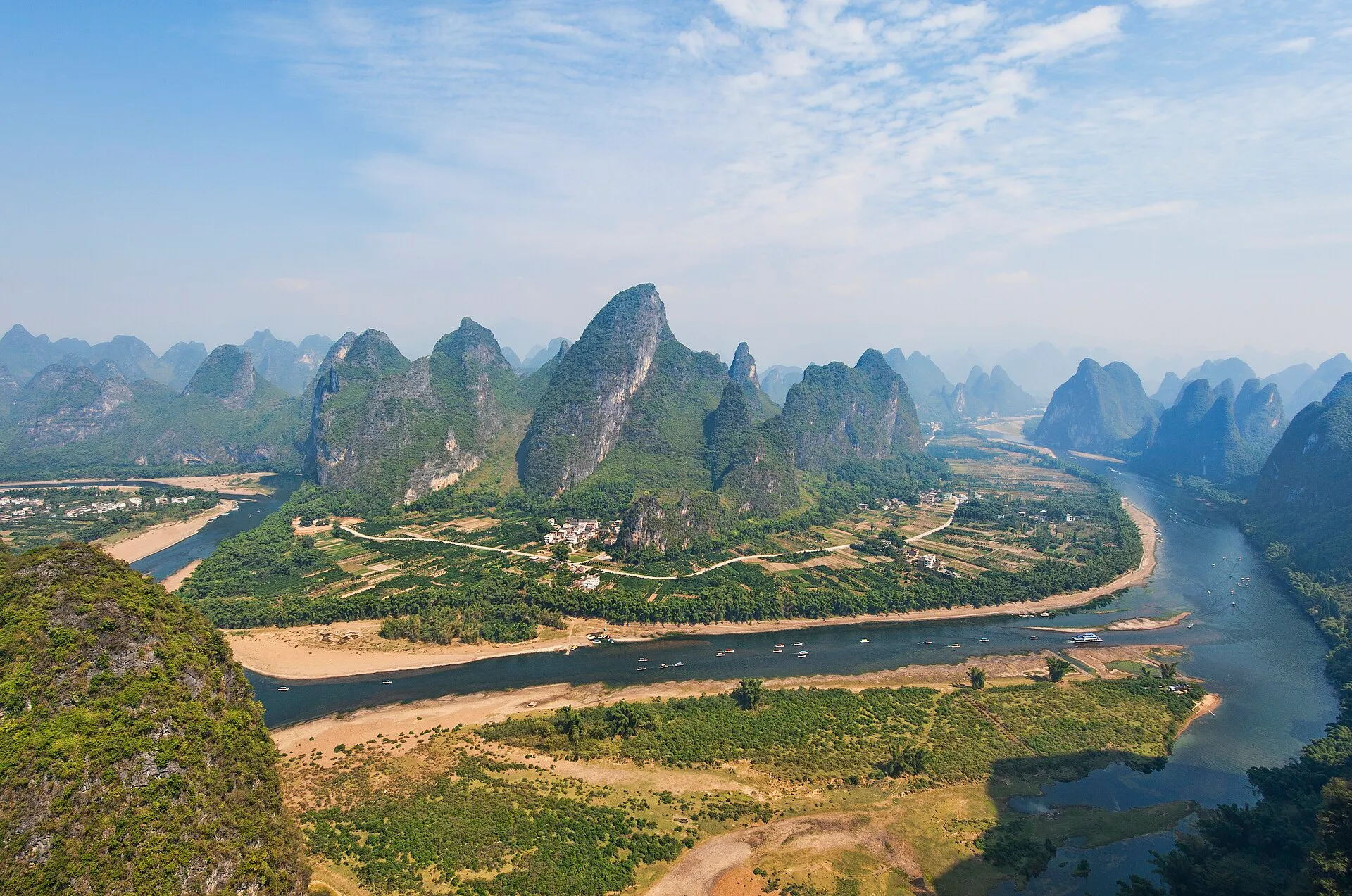
The landscape is the whole argument and it is a strong one. The karst hills along the Li River and around Yangshuo are among the most striking scenery in Asia, with world-class rock climbing, cycling through rice fields, bamboo rafting and the Longji terraces a few hours north. Costs are very low even by Chinese standards, food is cheap and distinctive, high-speed rail links the region efficiently, and Yangshuo has a decades-old backpacker infrastructure that means more English and more foreigner-friendly guesthouses than a city of this size would normally offer. The drawbacks are structural. There is no real coworking, no professional community and no nomad scene beyond climbers and travellers passing through. Guilin city itself is unremarkable and heavily geared to domestic tour groups, whose crowds and hard selling can wear thin. Summers are hot, wet and stormy, winters grey. The firewall applies, medical and international services are limited, and the 30-day visa ceiling caps any real settling in.
Who Guilin Is For
Guilin and Yangshuo fit the outdoor-minded nomad on a modest budget: rock climbers above all, since Yangshuo is one of the world's great sport-climbing destinations, plus cyclists, runners, photographers and writers who want low costs and dramatic scenery over urban amenities. It rewards short, focused stays of a few weeks where the work is solitary and the reward is the countryside, and it suits travellers already comfortable in China who can handle limited English outside the tourist strip. It is wrong for anyone who needs coworking, a professional network or reliable in-person meetings, for nomads who want nightlife, restaurant variety or a large international community, and for anyone with heavy bandwidth demands in rural accommodation. Those who dislike heat, humidity, heavy rain or tour-group crowds should avoid the summer entirely, and anyone seeking a long-term base will run into the visa limits quickly.