Cost of Living in Mendoza
Where this figure comes from. No cost survey covers Mendoza, so the $1,400 a month above is our own estimate rather than a measurement. On 416 of our 999 city guides the figure is built from a published Numbeo basket, a one-bedroom rent in the centre plus one person's monthly costs without rent, converted to USD; this city is not one of them. How we source everything.
Mendoza is one of the most affordable mid-sized cities in South America for remote workers, though Argentina's persistent inflation means prices shift frequently. The informal (blue) dollar rate sold through cuevas has mattered far less since Argentina lifted its currency controls in April 2025, removing the shortage of official dollars behind it. Paying in pesos at that rate significantly stretches your budget.
- Rent, central (Microcentro, Aristides Villanueva): USD 350-550/month for a furnished one-bedroom
- Rent, cheaper areas (Godoy Cruz, Las Heras): USD 200-350/month for a furnished one-bedroom
- Groceries: USD 80-130/month shopping at local markets and supermarkets
- Eating out: USD 4-8 for a lunch set (almuerzo), USD 10-20 for a proper dinner with wine
- Coworking hot desk: USD 60-120/month; short-term day passes run USD 5-10
- Local transport (SUBE card bus + occasional Uber): USD 20-35/month
- Total comfortable monthly range: USD 900-1,500, depending on lifestyle and accommodation choice
A bottle of decent local Malbec from a supermarket costs under USD 2. Eating and drinking well in Mendoza is genuinely cheap by any standard. Factor in occasional weekend wine tours or Andes day trips and budget around USD 100-150 extra per month for that.
Where to Work
Mendoza has a growing coworking scene anchored around the Microcentro and the Aristides Villanueva corridor. Tent Cowork (Aristides Villanueva 430) is the most nomad-frequented space, with natural light, ergonomic chairs, and reliable fiber. Atix Coworking (Catamarca 127) sits in the center and offers meeting rooms alongside shared desks. Redcouch (Av. Emilio Civit 484) leans more toward private offices but has hot desk options. For something with local character, GRAPE Wine Coworking (Garibaldi 7, 4th floor) operates out of a building that also houses wine industry professionals.
Cafe-working culture exists but is uneven. White Shark Coffee (multiple locations including Av. Colon 699) is purpose-built for the laptop crowd, with WiFi and dedicated power points. Silla 14 Cafe has no WiFi, despite appearing in nomad guides.
Home internet in apartments is generally FTTH fiber for most long-stay rentals. Coworking spaces have consistent connections. Video calls and cloud work are reliable in the center. Outages are rare but do happen during thunderstorms in summer. Keep a local SIM with data as a backup; Claro and Personal both offer decent LTE coverage.
Getting Around
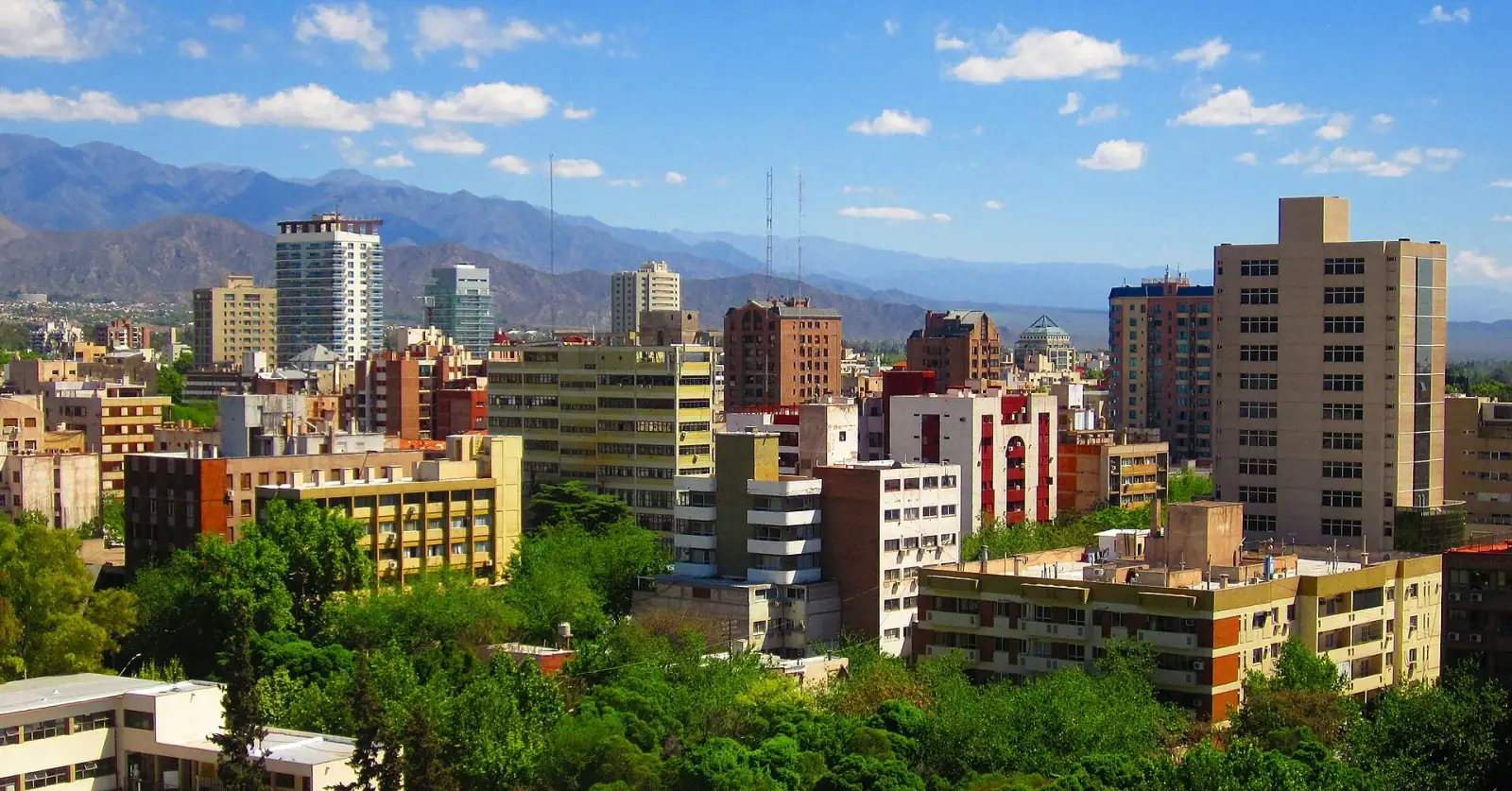
Mendoza's central grid is walkable and flat. The main strips you will spend time on, Sarmiento, Aristides Villanueva, and the area around Plaza Independencia, are all within comfortable walking distance of each other. A bike is practical in the center and the city has some dedicated lanes.
For longer trips, the city runs a bus network using SUBE cards (buy one in the center, not at the airport). Bus routes 675, 680, and 965 serve the airport, though you need a SUBE card to board. A taxi or Uber from El Plumerillo Airport (MDZ) to the center costs roughly USD 8-12 and takes 20-25 minutes. Uber works reliably in Mendoza and tends to be cheaper and safer than flagging down a street taxi.
For wine country day trips to Lujan de Cuyo or Maipu, you will need a bike rental, taxi, or tour. Maipu is commonly explored by bicycle. A car rental unlocks the Andes properly, with Aconcagua at roughly 2.5 hours and numerous mountain treks within reach.
Sorting transport? Book an airport transfer, or compare car rental on Auto Europe and QEEQ.
Visas and Staying Long-Term
Most Western passport holders including US, Canadian, EU, UK, and Australian citizens enter Argentina visa-free for up to 90 days as tourists. Extensions of another 90 days can be applied for at the Migraciones office in Mendoza or online. Many nomads simply cross to Chile (a short bus ride through the Andes) and re-enter for a fresh 90 days, though border officials have discretion to refuse re-entry if they suspect permanent residence.
Argentina launched a dedicated Digital Nomad Visa (Residencia Transitoria para Trabajadores Remotos) in 2022. It grants an initial 180-day stay, renewable once for another 180 days (up to one year total). Requirements include proof of remote income from a non-Argentine employer, a clean criminal record, and a fee of approximately USD 200. Applications go through the Migraciones TIE 24H portal. Processing takes 7-45 days.
Income earned from abroad is generally not taxed by Argentina during a stay under 12 months.
Best Time to Visit
Mendoza's climate is arid and continental, driven by its position at 750 meters altitude on the eastern slope of the Andes. Summers (December through February) are hot, regularly hitting 35-40°C, with afternoon thunderstorms that can disrupt internet briefly. Not ideal for focusing.
The best windows for remote work are March through May and September through November. Autumn (March to May) coincides with grape harvest: temperatures are mild at 18-25°C, the vineyards are at their most photogenic, and the city is lively without being crowded. Spring (September to November) brings similar temperatures and blossom season. Winters (June to August) are cold but dry and clear, with daytime highs around 12-15°C. Snow falls in the Andes but rarely in the city itself. Winter is quiet, costs drop, and the light is excellent.
Avoid the two weeks around the Vendimia harvest festival in early March if you dislike crowds and elevated accommodation prices.
Pros and Cons
- Excellent value: One of the most affordable wine regions anywhere, with genuine quality of life
- Andes access: World-class hiking, skiing, and mountain scenery on your doorstep
- Food and wine culture: Malbec, empanadas, parrillas, and a growing fine-dining scene
- Manageable size: Big enough to have real infrastructure, small enough to feel like a city you can learn
- Growing nomad scene: Multiple coworking options and a community of expats and remote workers
- Safe by regional standards: Historically one of Argentina's calmer cities
- Inflation: peso prices still change quickly, so a budget set on arrival needs revisiting
- Spanish is essential: English is limited outside of wine tourism and upscale restaurants
- Summer heat: Genuine heat waves make the hottest months uncomfortable for extended outdoor work breaks
- Limited flight connections: MDZ connects mainly to Buenos Aires; international travel requires a hop first
- Crime uptick: Petty theft has increased in recent years; standard city caution applies, particularly at night
- Time zone: Argentina Standard Time (UTC-3, no daylight saving) can be awkward for US East Coast calls
Who Mendoza Is Best For
Mendoza suits remote workers who want a genuinely cultured, affordable base without the chaos of Buenos Aires. If you care about food and wine, enjoy outdoor weekends, and can get by in Spanish (or are willing to learn), Mendoza rewards slow travel. It works particularly well for people on US, European, or Australian salaries who want to stretch their income while living at a real quality of life, not a budget-hostel version of it.
It also suits people who want to pair remote work with Andes adventures: ski season in winter at Las Lenas or Penitentes, mountain trekking in spring and autumn, and Aconcagua base camp trips for the serious hiker.
Skip Mendoza if you need a large English-speaking nomad community and regular co-working events, fast onward international connections, a true metropolis with diverse cultural programming, or reliably warm weather year-round. Buenos Aires serves those needs better, and Medellin or Mexico City serve the community-and-connectivity need more completely.