Cost of Living in Puebla
Real market data
Source: Numbeo · August 2026
$1,150/moSolo nomad1-bed centre + living costs
$1,540/moCoupleshared 1-bed + costs
$780/moLean / localcheaper area + costs
- 1-bed rent, city centre$650MX$11,350
- 1-bed rent, outside centre$290MX$5,033
- Monthly costs excl. rent (1 person)$490MX$8,507
- Meal, inexpensive restaurant$10MX$175
- Monthly transit pass$26MX$450
- Buy price, per m² (centre)$1,720MX$29,840
Prices are from Numbeo (August 2026), converted to USD at $1 = MX$17.34 (01 Aug 2026). The monthly living-costs figure is our transparent one-person basket, groceries, a few meals out, utilities, phone, internet, transport and essentials, priced from those figures. Solo adds central rent; couple and lean are estimates from the same numbers.
Puebla offers colonial-city charm at a lower price than Mexico City, with a comfortable single-person budget of roughly $900 to $1,400 a month. A furnished one-bedroom in or near the historic centre or the leafy Angelopolis area runs about $350 to $700, noticeably cheaper than comparable space in the capital. Puebla's famous food is a bargain, from a few dollars for a cemita or a plate of mole at a market to modest bills at smart restaurants. These are our editorial estimates, priced in pesos, and everyday costs stretch a remote income comfortably here. Leases here usually ask for an aval, a local property owner who guarantees the rent, which almost no foreigner can produce; the workaround is a furnished place aimed at newcomers at a premium, or a rental insurance policy some agencies now accept. Budget a month's deposit either way. Small recurring costs that surprise people: gas for hot water arrives by truck and is bought by the tank rather than metered, and a purified water garrafon is delivered to the door, because nobody drinks from the tap regardless of what the building claims.
- Furnished 1-bed near the centre: roughly $350 to $700 a month
- Cemita or market lunch: roughly $3 to $6
- DiDi or Uber across town: roughly $2 to $4
- Bus to Mexico City: roughly $10 to $15
Where to Work in Puebla
Puebla has a growing remote-work scene supported by its universities and its proximity to Mexico City. Home fibre is widely available and reliable, and a spread of coworking spaces and laptop-friendly specialty cafes has opened around the centre and the Angelopolis district. A Telcel or AT&T SIM gives cheap, fast mobile data as backup. The city sits on US Central time, which makes overlapping with North American teams painless, a real draw for nomads working with American clients. Between the affordable infrastructure and the easy hop to the capital's airport, Puebla works well as a calmer, cheaper CDMX alternative. A couple of local realities belong in the picture. The volcano to the west is active and periodically dusts the city with a fine ash that closes the airport for a day and gets into keyboards and lungs alike; it is a nuisance rather than a danger at this distance, but it does happen. And the city has a large industrial and engineering base built around car manufacturing and a cluster of universities, which is why the professional English here is better than the tourist English and why finding a technically competent person to fix something is easy.
Getting Around Puebla
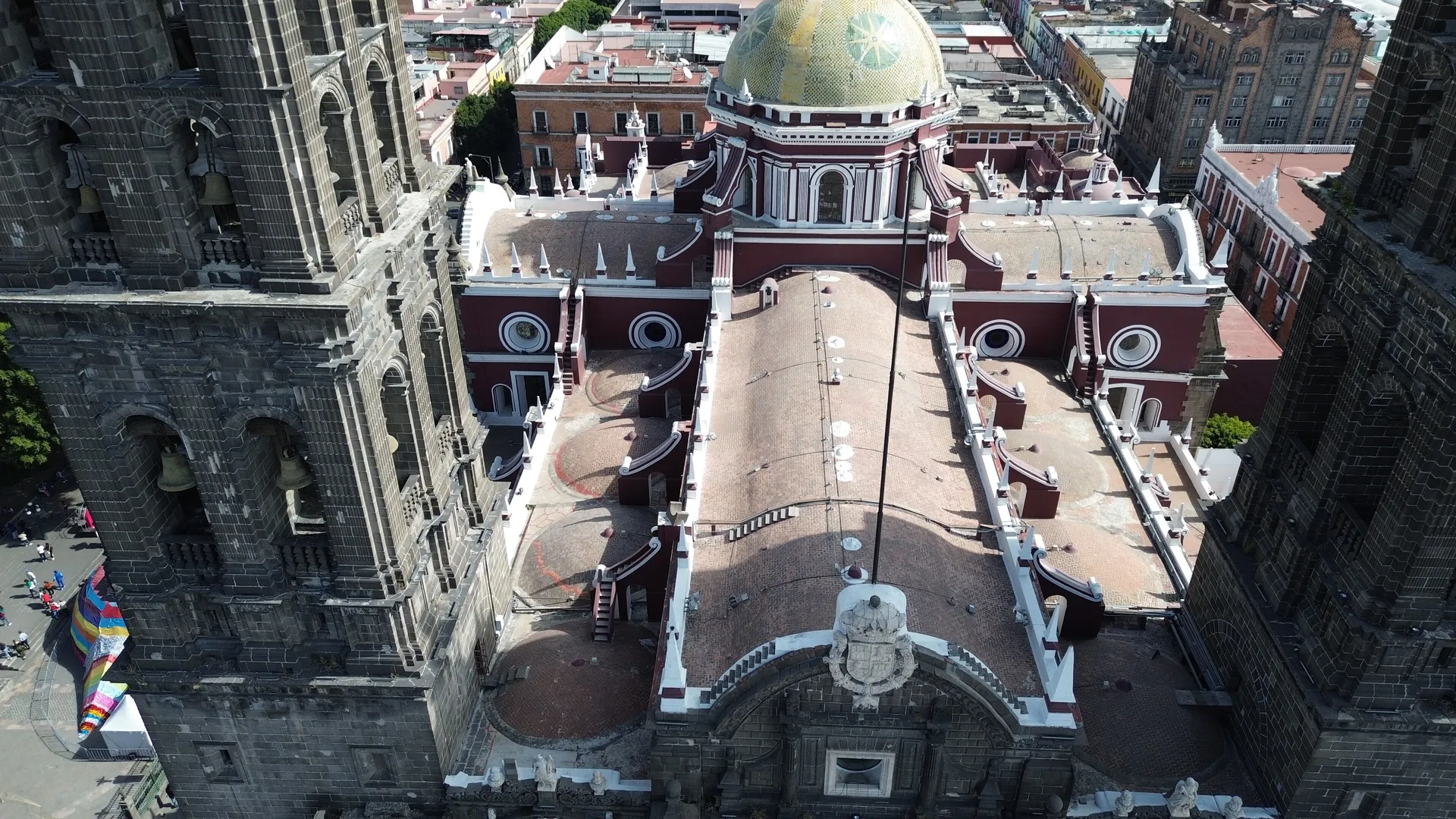
Puebla's historic centre is compact and walkable, a grid of colonial streets easily covered on foot around the zocalo and cathedral. For longer trips, Uber and DiDi are cheap and widely used, and the city has an extensive bus and RUTA rapid-transit network. Puebla has its own small airport, but most international travellers use Mexico City's airport, about two hours away by frequent, comfortable ADO buses. Day trips to the magical town of Cholula and its great pyramid, or toward the volcanoes, are quick and easy by bus or rideshare. The street grid deserves a paragraph of its own because it defeats newcomers. Streets are numbered rather than named, split into north, south, east and west halves either side of the cathedral, with odd and even numbers running in different directions, so an address is a small arithmetic problem until it suddenly is not. Give it a week. Buses to the capital leave from the main terminal on the northern edge of town rather than from the centre, and the toll motorway is worth the money over the free road every single time.
Sorting transport? Book an airport transfer, or compare car rental on Auto Europe and QEEQ.
Visas for Puebla
Most visitors enter Mexico as tourists, historically for up to 180 days, though immigration officers now set the exact length at the border and increasingly grant less than the full six months, so do not assume the maximum. For a longer, more secure stay, the Temporary Resident visa lets remote workers live in Mexico for one to four years and is applied for at a consulate abroad, usually requiring proof of income or savings. Border discretion has tightened recently; hold on to your entry permit, because it is needed again when you leave. The practical consequence of that discretion is that the old routine of leaving for a weekend and coming back for another six months no longer works reliably; officers can see the pattern and have been giving short stamps or refusing entry to people who have clearly been living here on tourist permits. Anyone planning to stay a year should apply for residency properly at a consulate before arriving rather than improvising once here, since a tourist entry generally cannot be converted into anything else without leaving. Note too that the paper entry form has gone digital at most airports.
Best Time to Visit Puebla
Puebla sits at over 2,000 metres, giving it a mild highland climate that is pleasant most of the year. The dry season from November to April brings warm, sunny days and cool evenings, ideal for exploring the centre, though winter nights can be genuinely cold. The rainy season, roughly June to September, delivers warm mornings and heavy afternoon showers that clear the air and green the surroundings. Spring is warm and dry. Cultural highlights include the Cinco de Mayo commemorations, which began here, and the vibrant Day of the Dead season, both worth timing a stay around. Worth adding a practical note about the highland climate: buildings here are built for the heat of the day rather than the cold of the night, and almost nothing has heating, so the December and January evenings feel colder indoors than the forecast suggests. Bring layers and expect to wear them at home. For the November season, the villages around the city are the real attraction rather than the city itself; one of them is known across the country for enormous multi-storey altars built inside family homes and opened to visitors.
Pros and Cons of Puebla
Puebla pairs world-class food and colonial beauty with strong value and easy access to Mexico City. The case against is mostly about what it is not. This is not a nomad town. There is no scene to arrive into, the coworking spaces are used by local startups rather than by visiting foreigners, and a single traveller who expects to make friends by showing up will find the first month slow. Spanish is not optional here in the way it is in the beach towns. The case for is that everything else is unusually good. The historic centre is one of the finest in the country and is inhabited rather than curated, the food culture is genuinely world-class and cheap with it, the internet is fast, the time zone matches North America, and a genuine world capital sits two hours down a motorway. For someone who wants an ordinary, well-run Mexican city to live in rather than a bubble to visit, the trade is a good one.
- Pros: one of Mexico's great food cities, a gorgeous UNESCO-listed historic centre, lower costs than the capital, reliable internet, US-friendly time zone, and quick access to Cholula, volcanoes and CDMX.
- Cons: less English than in major nomad hubs, a smaller remote-work community, some safety caution needed as in any large Mexican city, cool winter nights, and air quality that can dip on still days.
Who Puebla Is For
Puebla is a dream for food-loving, culturally curious nomads who want an authentic, affordable Mexican city without the scale and cost of the capital. Anyone who works with North American teams will appreciate the time zone, and the colonial architecture, Talavera ceramics and layered history reward slow exploration. It suits those happy to lean on some Spanish and build their own social scene rather than slot into a large expat crowd. It is a weaker fit for beach-seekers or those who need a big, ready-made nomad community. Base yourself near the centre, take the bus to CDMX when you need a metropolis, and eat your way through the region. A rough test for whether it fits: if your command of the language is at the level where you could rent a flat and argue with an internet provider, this city rewards you enormously. If it is not, spend the first two months in a language school here, which is cheap and effective, and treat that as the cost of entry rather than a detour. Six months is a sensible first commitment, long enough to get past the aval problem, learn the grid, and find the three or four places that make a city feel like yours.