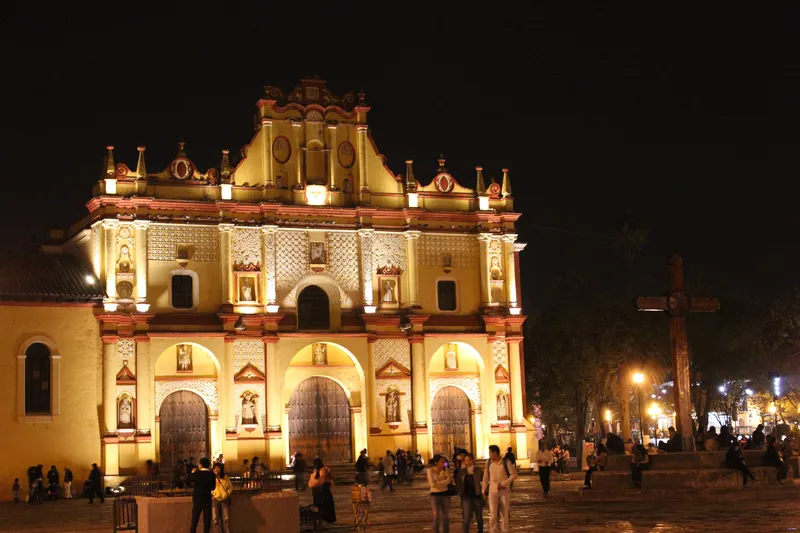
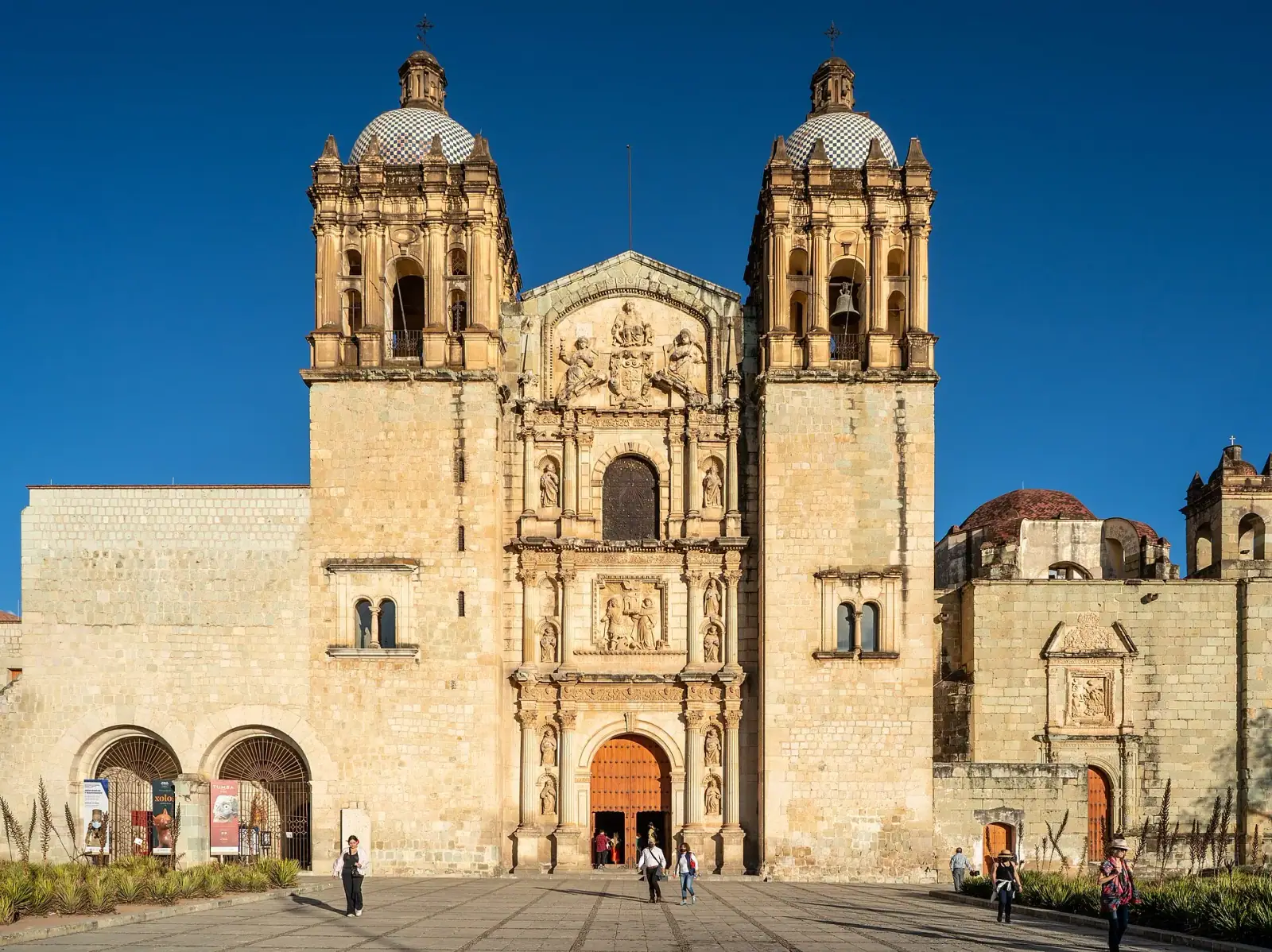
Facade of Santo Domingo de Guzman church in Oaxaca City under deep blue sky
Photo: nan palmero / Wikimedia Commons (CC BY 2.0)
Mexico flag

Oaxaca

Mexico

Mexico's culinary capital, mezcal, mole, and indigenous culture.

$1.600
Monthly Budget
--
Current Weather
Highland
Climate Type
50 Mbps
Avg. WiFi Speed
6/10
Safety Score
5,000+
Active Nomads
--
Time Difference
Scroll
0
Nomad Score

Living in Oaxaca as a Digital Nomad

Mexico's culinary capital, mezcal, mole, and indigenous culture. What pulls nomads here is food, backed by culture and easy visas. Budget around $1,600 a month. Cleanliness is the weak spot.

Compare Oaxaca vs Puerto Escondido →

Category Breakdown

How Oaxaca scores across all 13 factors

Weather in Oaxaca

Monthly averages from 2019-2023 (Open-Meteo), and the best time to visit

26°
11°
Jan
28°
11°
Feb
30°
13°
Mar
31°
15°
Apr
30°
16°
May
27°
15°
Jun
26°
14°
Jul
26°
14°
Aug
25°
15°
Sep
26°
14°
Oct
26°
12°
Nov
26°
11°
Dec
Daily high & low (°C)Rainfall (mm/month)Best months to visit

The best time to visit Oaxaca for comfortable weather is Mar, Apr, May. The warmest month is Apr (around 31°C by day), and the wettest is Sep (about 169mm of rain).

Chasing good weather? See other cities that are warm in Mar, or plan a multi-city route around the seasons. Staying a while in Oaxaca? Check visa options, your time-zone overlap and how far your budget stretches, or find it on the world map.

Historical monthly averages, not a forecast. Source: Open-Meteo.

Best Neighborhoods in Oaxaca

Where to base yourself for the perfect nomad experience

Centro Histórico

$$
Colonial & Cultural

Colonial beauty in Mexico's cultural heart

Oaxaca's Centro is a UNESCO treasure - baroque churches, shaded plazas, and some of Mexico's best food. The zócalo buzzes with life, mezcal bars dot the streets, and nomads gather in colonial courtyards turned cafes. Essential Oaxaca.

Best for: Culture lovers, foodies, and nomads seeking Oaxaca's most immersive experience
✓ Pros
  • Incredible culture
  • Best restaurants
  • Colonial beauty
  • Walkable
✗ Cons
  • Touristy
  • Noisy festivals
  • Higher prices

Jalatlaco

$
Colorful & Local

Oaxaca's colorful neighborhood with local soul

Jalatlaco is Oaxaca's most charming residential neighborhood - colorful streets, local markets, and the famous bread of the same name. Just east of Centro, it offers authentic barrio life with growing cafe scene. Instagrammable and real.

Best for: Photographers, long-term nomads, and those seeking authentic neighborhood life
✓ Pros
  • Beautiful streets
  • Local character
  • Famous bread
  • Near Centro
✗ Cons
  • Limited cafes
  • Basic infrastructure
  • Noisy mornings

Reforma

$$
Upscale & Quiet

Oaxaca's upscale residential calm

Reforma is Oaxaca's upscale residential neighborhood north of Centro. Tree-lined streets, good restaurants, and proximity to the Santo Domingo cultural area attract professionals and families seeking quality without tourist crowds.

Best for: Families, professionals, and nomads seeking quality residential living
✓ Pros
  • Quiet streets
  • Good restaurants
  • Near Santo Domingo
  • Safe
✗ Cons
  • Less character
  • Fewer tourists
  • Need transport

Xochimilco

$
Artisan & Traditional

Artisan neighborhood with workshop energy

Xochimilco is Oaxaca's artisan quarter - textile workshops, traditional crafts, and authentic neighborhood atmosphere. It's where Oaxaca's famous textiles are made, offering cultural immersion beyond the tourist center.

Best for: Craft lovers, culture seekers, and nomads interested in traditional Mexican artisanry
✓ Pros
  • Artisan workshops
  • Authentic culture
  • Affordable
  • Local markets
✗ Cons
  • Basic infrastructure
  • Less English
  • Far from cafes

San Felipe del Agua

$$$
Exclusive & Scenic

Mountain views in Oaxaca's exclusive heights

San Felipe del Agua climbs the hills north of Oaxaca - mountain views, cooler temperatures, and exclusive residences. It's where wealthy Oaxaqueños live, with growing expat presence seeking space and scenery.

Best for: Nature lovers, families, and nomads seeking views with exclusivity
✓ Pros
  • Mountain views
  • Cooler climate
  • Exclusive area
  • Space
✗ Cons
  • Need transport
  • Far from center
  • Limited walkability

Cost of Living in Oaxaca

Oaxaca is one of Mexico's most affordable cities for remote workers. Expect to spend between $900 and $1,500 USD per month depending on how you live.

  • Rent, Centro Historico: MXN $5,000-8,000 ($250-400 USD) for a furnished studio or one-bedroom
  • Rent, Barrio Jalatlaco or outer neighborhoods: MXN $3,500-6,000 ($175-300 USD) for comparable space
  • Groceries (one person, mix of market and supermarket): MXN $2,500-4,000 ($125-200 USD)
  • Eating out (local spots and tacos): MXN $80-200 ($4-10 USD) per meal; mid-range restaurants run MXN $250-500 ($12-25 USD)
  • Coworking hot-desk: MXN $150-300 ($8-15 USD) day pass; MXN $2,000-3,500 ($100-175 USD) per month
  • Local transport (colectivos, taxis): MXN $500-1,000 ($25-50 USD) per month
  • Total realistic range: $900-1,300 USD/month for a comfortable life; $1,400-1,800 USD if you eat out frequently and take a private room in a coliving space

The peso fluctuates, so check current rates before you budget. Eating at local markets and buying produce at Mercado de Abastos cuts grocery costs significantly compared to supermarkets.

Where to Work

Oaxaca has a small but solid coworking scene concentrated in Centro and Jalatlaco.

  • Gubixi Coworking (Centro, near Iglesia de la Merced) is widely considered the most reliable option, with speeds regularly hitting 200-300 Mbps on fiber. It occupies a catalogued colonial building and hosts occasional community events.
  • Convivio (Parque el Llano area) runs coworking by day and converts to a bar and event space at night. WiFi reaches 290 Mbps down; day passes and monthly memberships both available, with coffee and water included.
  • Centrico Cowork has two locations (Centro and Jalatlaco) with private offices, meeting rooms, a rooftop terrace, and cafeteria.

Cafe work culture exists but is uneven. Terno and Boulenc are both laptop-tolerated during off-peak hours, though neither has formal workstation setups. Expect 20-50 Mbps at cafes, which is usually fine for calls if the place is not packed. Do not count on reliable WiFi at traditional fondas or market-adjacent spots. If stable video calls matter, book a coworking day pass rather than gamble on a cafe.

At home, most furnished apartments in Centro come with 30-60 Mbps broadband. Ask to test the connection before committing to a month-long rental.

Getting Around

Oaxaca City's historic center is compact and walkable. You can reach most restaurants, coworking spaces, markets, and attractions on foot from Centro or Jalatlaco in under 20 minutes. The city is hilly but not steeply so.

For longer trips within the city, colectivos (shared vans and minibuses) run fixed routes for MXN $8-20 (less than $1 USD). They are frequent and cheap but require some familiarity with the routes. Ride-hailing apps including InDriver and Uber operate in Oaxaca, with most rides inside the city running MXN $60-120 ($3-6 USD). Street taxis are also common; agree on a price before you get in or confirm the meter is running.

Airport: Oaxaca International Airport (OAX) sits about 10 km south of Centro. A shared airport shuttle (colectivo) costs around MXN $100-160 ($5-8 USD) and takes 30-45 minutes. Private taxis run MXN $250-350 ($12-18 USD). There is no direct public bus from the terminal, though the route becomes straightforward once you reach the main road.

Visas and Staying Long-Term

Mexico does not require a visa for citizens of the US, Canada, the EU, the UK, Australia, and many other countries. At the border or airport, an immigration officer issues a visitor permit (FMM) valid for up to 180 days. The number of days granted is at the officer's discretion and may be fewer if your travel plans are not clear, so it is worth having a rough itinerary ready.

The FMM cannot be renewed. Once it expires, you must leave Mexico. Some nomads do a brief border run and re-enter for a fresh permit, though this is not a guaranteed strategy and is becoming less consistent at popular crossings.

Mexico does not have a formal digital nomad visa as of mid-2026. If you want to stay longer than 180 days, look into Temporary Resident status, which requires applying at a Mexican consulate in your home country before traveling and demonstrating sufficient income.

Always verify entry requirements with your country's embassy or the official Instituto Nacional de Migracion (gob.mx) before you travel, as rules change.

Best Time to Visit

Oaxaca has two seasons: a dry season from roughly October through April, and a rainy season from May through September. The rain is typically not all-day downpours but rather afternoon showers that clear by evening. Even during the rainy season the city remains functional and green.

For remote work, the sweet spot is October through February: dry, cool evenings (lows around 12-14C/54-57F), mild daytime temperatures around 25-28C (77-82F), and less tourist pressure than the December holiday spike. March and April are also dry but grow warmer and busier, with Semana Santa bringing crowds and price increases.

November is particularly good: post-Dia de los Muertos crowds thin out but the festive atmosphere lingers, and the weather is excellent. Avoid late September through early October if possible, as that is peak rainy season and also when some surrounding highways see issues from tropical weather systems on the coast.

Pros and Cons

Pros

  • Genuinely affordable cost of living in a city with real character
  • Outstanding food scene: considered one of the best culinary destinations in Mexico
  • Rich Indigenous culture, arts, and craft traditions that reward long stays
  • Growing nomad community without being overrun
  • Easy access to nature: mountains, valleys, Hierve el Agua, coast day trips
  • Compact, walkable Centro with good coworking infrastructure
  • Excellent local coffee and mezcal culture

Cons

  • WiFi at home and cafes is inconsistent; coworking is often necessary for reliable connectivity
  • Altitude around 1,550 m (5,085 ft) can cause fatigue and headaches for the first few days
  • Petty theft and phone snatching do happen, especially at night in busy areas
  • Air travel connections are limited: most routes go through Mexico City
  • Rainy season (May-September) can disrupt outdoor plans and some rural roads
  • The nomad wave has nudged rents up in Centro; deals are increasingly in outer neighborhoods
  • Spanish is essential outside tourist-facing businesses

Who Oaxaca Is Best For

Oaxaca rewards people who want more than a laptop backdrop. It is a strong fit if you have a genuine interest in food, craft, Indigenous culture, or the outdoors, and you are willing to spend time actually engaging with the city rather than just passing through. Slow travelers who take a month or two to settle in get the most out of it: you will find a rhythm, local spots, and a community that short-term visitors miss entirely.

It also works well for cost-conscious nomads on a $1,000-1,200/month budget who want a culturally rich environment without the price tag of Mexico City or Playa del Carmen. Intermediate Spanish makes daily life substantially easier and opens up experiences that are simply closed to English-only visitors.

Skip Oaxaca if you need enterprise-grade internet at home, cannot tolerate intermittent connectivity, or prefer a large established nomad hub with coworking on every corner. Also reconsider if altitude sensitivity is an issue, or if you need direct international flight connections to avoid layovers through Mexico City on every trip.
Where to Stay in Oaxaca

Top neighborhoods and accommodations for digital nomads

Marialicia Suites, Hotel Boutique

Serviced apartments
Centro Historico

Spacious suites with kitchenettes, free high-speed WiFi, and laptop-friendly workspaces just 600m from the Zocalo.

Check availability →

Pug Seal Oaxaca

Boutique hotel
Centro

Design-forward colonial boutique hotel steps from the Zocalo with private meeting areas and free breakfast included.

Check availability →

Hotel con Corazon

Hotel
Centro

Social-impact hotel at the edge of Centro with common workspace areas, free breakfast, and walkable access to the city.

Check availability →

Co404 Oaxaca

Aparthotel
Centro

Co-living space with fiber-optic WiFi, soundproofed call rooms, co-working area, and monthly rates from $570 in the UNESCO heritage district.

Check availability →

Casa Angel Hostel

Hostel
Centro

Award-winning hostel three blocks from Santo Domingo Church with free WiFi, rooftop bar, and a strong community of nomads and travelers.

Check availability →

Browse apartments, aparthotels and hotels across Oaxaca. Compare prices and book a base that suits a remote-work stay.

See available stays in Oaxaca →

Affiliate link. See our disclosure.

Best Coworking Spaces

Where nomads get work done in Oaxaca

Gubixi Coworking

Coworking space
Centro

Fast fiber internet up to 300 Mbps in a catalogued colonial building, with private offices, meeting rooms, and community events.

Visit website →

Convivio

Coworking and event space
Parque el Llano

Creative hub with 290 Mbps fiber, eclectic decor, coffee and water included, that transforms into a bar and gallery after hours.

View on Maps →

Centrico Cowork

Coworking space
Centro

Two-location coworking operation with private offices, meeting rooms, a rooftop terrace, and an on-site cafeteria.

Visit website →

Terno

Specialty coffee shop
Centro

Minimalist third-wave cafe with meticulous pour-overs using locally sourced Oaxacan beans, popular with nomads for focused work sessions.

View on Maps →

Centrico Cowork Jalatlaco

Coworking space
Jalatlaco

Second Centrico location in the charming Jalatlaco neighborhood, offering hot desks and meeting rooms away from tourist Centro bustle.

Visit website →

Where to Eat & Drink

Best food and drink spots in Oaxaca

Criollo

Contemporary Oaxacan
Centro

Michelin-recognized open-air restaurant by chefs Enrique Olvera and Luis Arellano, serving a daily-changing seasonal tasting menu.

Visit website →
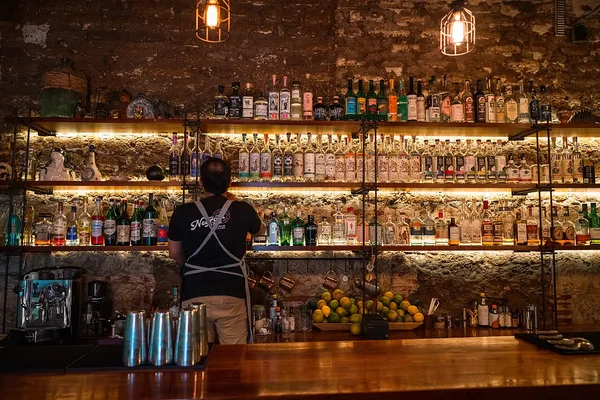
Interior of Sabina Sabe cocktail bar with backlit bottle shelves and stone walls, Oaxaca

Photo: nan palmero (CC BY 2.0)

Sabina Sabe

Mezcal cocktail bar
Centro

Ranked in North America's 50 Best Bars, serving inventive mezcal cocktails and solid food in a welcoming, convivial setting.

View on Maps →

In Situ Mezcaleria

Mezcal bar
Centro

Authoritative mezcaleria run by mezcal writer Ulises Torrentera, stocking one of Mexico's largest collections of artisanal mezcal.

Visit website →

Totopo Guero

Istmo Oaxacan
Centro

Specialist in the flavors of Oaxaca's Isthmus region, known for crispy hand-shaped totopos, sharp cheese, and bold savory dishes.

View on Maps →

Los Pacos

Traditional Oaxacan
Centro

Long-standing local favorite consistently cited for serving some of the best mole in the city at approachable prices.

View on Maps →

La Matatena Pizzeria

Italian pizzeria
Centro

Well-regarded wood-fired pizza spot offering a reliable break from Oaxacan cuisine, popular with locals and international visitors.

View on Maps →

What Do Nomads Say?

Vote on how accurate these scores are based on your experience

Cities with a Similar Vibe to Oaxaca

Different places that score alike across our 13 categories, if you like Oaxaca, these tend to feel similar.

Frequently Asked Questions About Oaxaca

How much does it cost to live in Oaxaca as a digital nomad?

Budget roughly $1,600 a month in Oaxaca for a furnished place, food, coworking, and transport. The most popular central areas cost more; suburbs and local spots cost noticeably less.

Is the internet fast enough for remote work in Oaxaca?

Oaxaca rates 5 out of 10 for WiFi in our scoring, so it handles video calls and daily remote work workable. Carry a local SIM with data as a backup for cafes and travel days.

Is Oaxaca safe for digital nomads?

Our safety score for Oaxaca is 6/10, workable for nomads. As anywhere, watch your belongings, favor busier streets after dark, and research neighborhoods before you book.

Is Oaxaca a good city for digital nomads overall?

Oaxaca stands out for food and culture among remote workers. With a typical budget near $1,600 a month and a growing nomad scene, it suits anyone whose priorities line up with those strengths.