Cost of Living in Wuzhen
Where this figure comes from. No cost survey covers Wuzhen, so the $800 a month above is our own estimate rather than a measurement. On 416 of our 999 city guides the figure is built from a published Numbeo basket, a one-bedroom rent in the centre plus one person's monthly costs without rent, converted to USD; this city is not one of them. How we source everything.
Wuzhen is genuinely affordable, though it is a scenic town rather than a city built for long-term living, so your costs depend heavily on whether you stay inside the ticketed scenic areas or in the ordinary town outside the gates. A comfortable monthly budget runs roughly $700 to $1,300, with the lower end reflecting simple local guesthouses and street food and the upper end covering a boutique canal-side room and frequent dining out. Everyday Chinese meals, local transport, and groceries are cheap by Western standards, while the atmospheric waterside inns inside Xizha command a tourism premium. Because Wuzhen is small, most people treat it as a short, romantic stay and base longer stints in nearby Hangzhou, where rentals, coworking, and amenities are far more nomad-friendly. Staying at one of the inns inside the western scenic area includes entry to it for the length of the booking, which offsets part of their premium, since a single day ticket for that zone costs about $20 on its own.
- Simple guesthouse or hostel bed: roughly $15 to $40 per night
- Boutique canal-side room in Xizha: $60 to $150 per night in peak season
- Local noodle or rice meal: $2 to $6; a sit-down Jiangnan dinner: $10 to $25
- Scenic-area entry tickets are a recurring, non-trivial extra cost
Where to Work in Wuzhen
Nobody restored Wuzhen's canals with a laptop in mind, and that becomes obvious within a day of trying to work here. It is a beautifully preserved, heavily managed tourist town, and the ticketed Xizha and Dongzha scenic areas are for wandering and photographing, not for opening a laptop. That said, China's mobile and fixed internet is fast and widely available, and most guesthouses and cafes offer decent wifi. The real catch is the Great Firewall: Google, WhatsApp, Instagram, many news sites, and countless work tools are blocked, so you will almost certainly need a reliable VPN installed before you arrive. For anything resembling a proper work rhythm, base yourself in Hangzhou, a 30 to 40 minute train away, where coworking spaces, coffee culture, and long-stay apartments are abundant, and treat Wuzhen as a scenic weekend escape.
- Install a paid, reputable VPN before entering China; app stores inside the country restrict them
- Guesthouse and cafe wifi is generally fine for calls and email once a VPN is running
- The scenic areas are pedestrian, crowded, and not designed for laptop sessions
- Hangzhou is the sensible work base; Wuzhen is the getaway
Getting Around Wuzhen
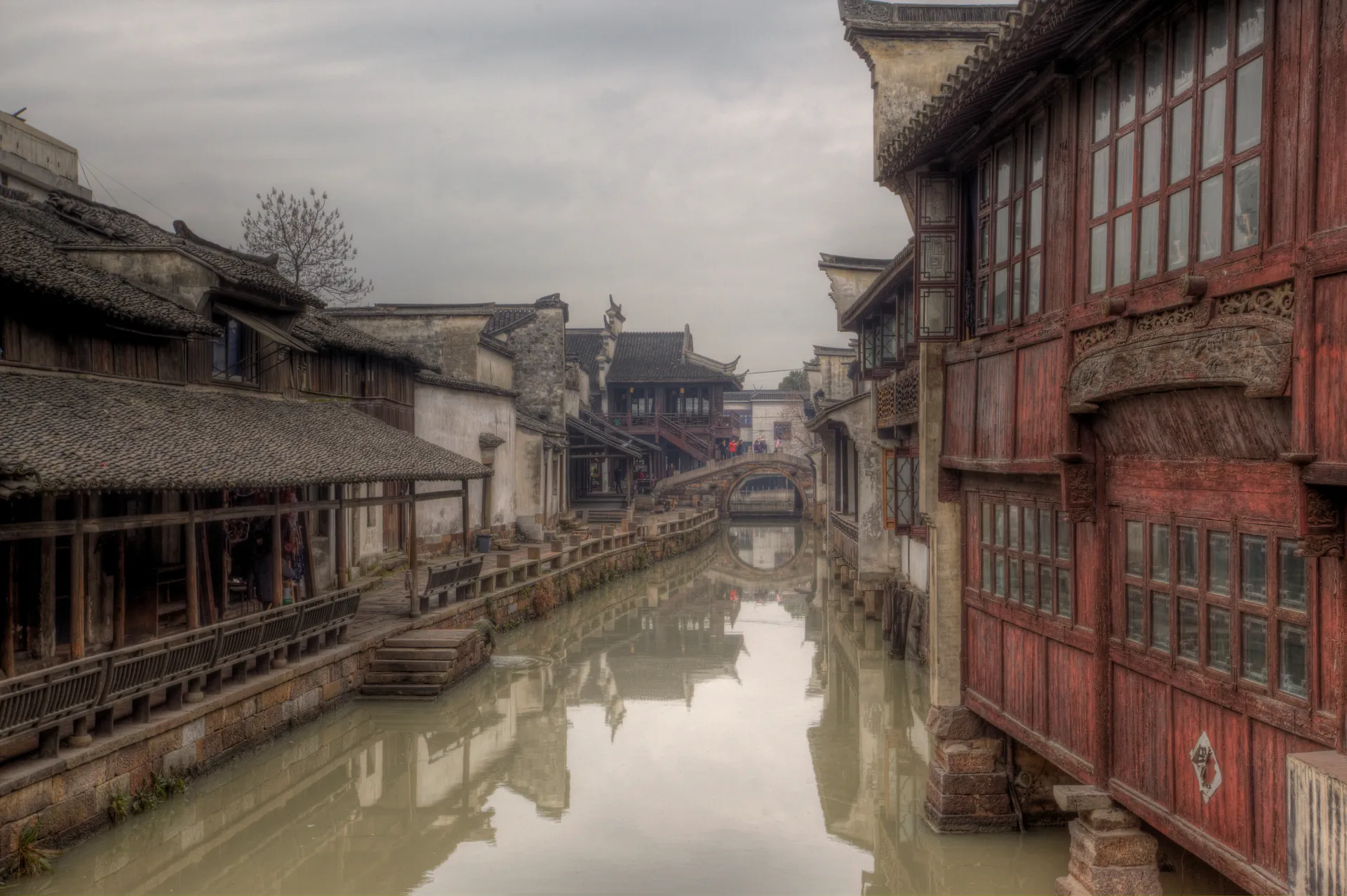
Wuzhen is compact and explored almost entirely on foot. The two ticketed scenic zones, Xizha (West) and Dongzha (East), are pedestrian-only warrens of stone-arched bridges, narrow lanes, and waterside walkways, and the classic way to see them is by hand-poled or motorized canal boat gliding beneath the black-tiled houses. Free or low-cost shuttle buses connect Xizha and Dongzha, which sit a few kilometers apart. To reach the wider region, the nearby Tongxiang high-speed rail station puts you about 30 to 40 minutes from Hangzhou and roughly an hour from Shanghai, while local and intercity buses fill the gaps. Note that both scenic areas require paid entry tickets, and Xizha charges again for night visits, so factor that into any repeat trips. The run from the high-speed station to the scenic gates takes around half an hour by taxi or bus, so add that to any quoted train time.
- Explore the scenic areas on foot and by canal boat
- Shuttle buses link the Xizha and Dongzha zones
- Tongxiang station: fast trains to Hangzhou (~30 to 40 min) and Shanghai (~1 hr)
- Separate entry tickets apply to each scenic area, with a night-visit option in Xizha
Sorting transport? Book an airport transfer, or compare car rental on Auto Europe and QEEQ.
Visas for Wuzhen
China is one of the more demanding destinations for travelers, and Wuzhen offers no shortcut around that. A Wuzhen trip usually fits inside China's 30-day visa-free window, which covers about 50 nationalities, including most of Europe, the UK, Canada, Australia, New Zealand, Japan and South Korea, until 31 December 2026. US citizens are not on that list and need a tourist (L) visa arranged in advance, which typically involves an application, supporting documents such as itineraries and hotel bookings, and sometimes an in-person appointment or biometrics. The 240-hour visa-free transit exemption through Shanghai and other designated ports also covers US citizens continuing to a third country.
- Most European, UK, Canadian and Australian passports enter visa-free for 30 days
- US citizens need a tourist (L) visa or the 240-hour transit exemption via Shanghai
Best Time to Visit Wuzhen
Spring and autumn are the sweet spots. From roughly March to May and September to November the weather is mild, the humidity eases, and the canals, gardens, and willow-lined banks look their loveliest, making these the best months for unhurried wandering and photography. Summer is hot, humid, and busy, coinciding with peak Chinese holiday crowds that pack the narrow lanes, though the greenery is lush. Winter turns cold and often misty, which thins the crowds and lends the water town a quiet, atmospheric melancholy that many photographers actually prefer. Whenever you go, the real showpiece is night: Wuzhen's famous illuminations reflected in the still canals are a highlight year-round, so plan to stay into the evening or overnight in Xizha. The Wuzhen Theatre Festival fills the second half of October with stage shows and street performance, and the World Internet Conference, held here every year since 2014, takes over the hotels and brings heavy security for its few days in November, so look up both dates before booking.
- Spring and autumn: mild, pretty, and the most comfortable
- Summer: hot, humid, and crowded during peak holidays
- Winter: cold, misty, quiet, and atmospheric
- The night illuminations are worth planning around in any season
Pros and Cons of Wuzhen
Wuzhen is one of China's most exquisitely preserved Jiangnan water towns, and its appeal is immediate: stone bridges, black-tiled Ming and Qing houses leaning over the canals, indigo cloth drying in the workshops, rice wine and shadow-puppet traditions kept alive, and those unforgettable evening reflections. It is very affordable, notably safe, and easy to reach from Hangzhou and Shanghai. The trade-offs are real, though. It is a ticketed, tightly managed, and frankly commercialized attraction rather than a living neighborhood, English is limited, and the Great Firewall plus demanding visas make it awkward as a working base. Set expectations accordingly and it delights; expect a nomad hub and it will not fit.
- Pros: stunning heritage and crafts, low cost, strong safety, easy rail links
- Pros: magical night scenery and a genuinely photogenic setting
- Cons: ticketed, commercialized, tourist-managed feel with limited English
- Cons: VPN needed for blocked services and relatively hard visas
Who Wuzhen Is For
Wuzhen is for the traveler who wants beauty, history, and atmosphere in a short, memorable dose rather than a place to settle and grind out work. It suits culture lovers, photographers, couples on a romantic detour, and slow travelers threading together Jiangnan's water towns, especially anyone already basing themselves in Hangzhou or Shanghai who wants a two or three day immersion in old-China charm. It is a poor fit for a nomad hunting cheap long-term rentals, reliable uncensored internet, an English-speaking scene, and a coworking community, since none of that is Wuzhen's purpose. Come for a scenic, ticketed escape, keep a good VPN running, sort your visa early, and treat the nearby cities as your actual home base.
- Great for: culture seekers, photographers, couples, and slow travelers
- Great for: Hangzhou or Shanghai residents wanting a short heritage escape
- Not for: nomads needing long-term rentals and a coworking community
- Not for: anyone unwilling to run a VPN or handle a Chinese visa