Cost of Living in Orchha
Where this figure comes from. No cost survey covers Orchha, so the $600 a month above is our own estimate rather than a measurement. On 416 of our 999 city guides the figure is built from a published Numbeo basket, a one-bedroom rent in the centre plus one person's monthly costs without rent, converted to USD; this city is not one of them. How we source everything.
Orchha is one of the most affordable places a nomad can base in India, though you trade infrastructure for those low prices. A comfortable solo budget runs roughly $500 to $1,000 a month, and you can go lower if you settle into a simple guesthouse and eat where locals eat. There is little to spend money on beyond room, food, chai and the occasional hired car, so costs stay naturally lean. Prices climb a little in the cool tourist season and drop in the low season. Bring a buffer for regional travel, since the best trips out of town, to Khajuraho or the wider Bundelkhand region, mean paying for cars or drivers. The one splurge worth making is a night in Sheesh Mahal, a state-run hotel of only a handful of rooms built into the palace complex between the Jahangir Mahal and the Raja Mahal, where the plainest room costs about $57 before tax.
- Guesthouse or budget hotel room: roughly $8 to $25 per night, with heritage stays higher.
- A thali or rooftop meal: about $2 to $6.
- Local SIM with generous data: a few dollars per month.
- Cycle rickshaw or auto hop around town: often under $2.
Where to Work in Orchha
If work is the reason for the stay, start from what Orchha actually is: a slow heritage town, not a productivity hub. There is no dedicated coworking space, and wifi in guesthouses and rooftop cafes is variable, sometimes fine for email and calls, sometimes frustrating. The reliable move is a local Jio or Airtel SIM with a big data pack, which usually gives steadier mobile internet than the shared connections. Before you book a stay, ask the property directly about wifi speed and whether it holds up in the evening. Rooftop cafes near the Ram Raja Temple and along the fort road are pleasant for a few focused hours with a river or palace view. Come here to slow down, write, edit and think, not to run a bandwidth-hungry operation.
- Buy a Jio or Airtel SIM and load a large data pack as your primary connection.
- Ask accommodation about real wifi speeds, including evenings, before committing.
- Use rooftop cafes for short, focused sessions rather than full workdays.
Getting Around Orchha
Orchha is small and wonderfully walkable, which is a big part of its charm. The fort complex, the temples, the market and the river cenotaphs all sit within an easy stroll of the town center, so most days you will not need transport at all. For anything further, cycle rickshaws and autos are cheap and plentiful, and drivers are used to ferrying visitors to the chhatris at sunset. Orchha has its own small railway station, but Jhansi, about 18km away, is the real transport hub, with fast trains to Delhi, Agra and onward connections toward Khajuraho. For day trips or the roughly 170km run to Khajuraho, hire a car or auto with a driver, which is the simplest way to explore the wider region at your own pace. The fastest trains from the capital reach that railhead in a little over four hours, so a morning departure arrives in time for sunset at the cenotaphs.
- Walk for the fort, temples, market and riverside; everything is close.
- Use cycle rickshaws and autos for short hops and sunset runs.
- Treat Jhansi (about 18km) as your main railhead for fast long-distance trains.
- Hire a car with driver for Khajuraho (about 170km) and regional trips.
Sorting transport? Book an airport transfer, or compare car rental on Auto Europe and QEEQ.
Visas for Orchha
Orchha has no special rules of its own; you follow India's national visa system. Most nomads and travelers arrive on the India e-Visa, applied for online in advance, which comes in tourist and business variants with different durations and entry allowances. Longer tourist and business visas are also available through Indian missions for those planning extended or repeat stays. Validity, the permitted length of each visit and the number of entries all depend on your nationality and on which version you apply for, from 30 days up to five years. Keep a printed copy of your approval and your onward plans handy, since heritage-town formalities can be old-fashioned. The 30-day version runs from the day you first land rather than from the day it is approved, so it can be secured well before the trip without losing any of the month. Applications open 120 days before arrival and close four days before it.
- The online India e-Visa suits most short cultural stays.
- Longer tourist and business visas exist for extended or repeat visits.
Best Time to Visit Orchha
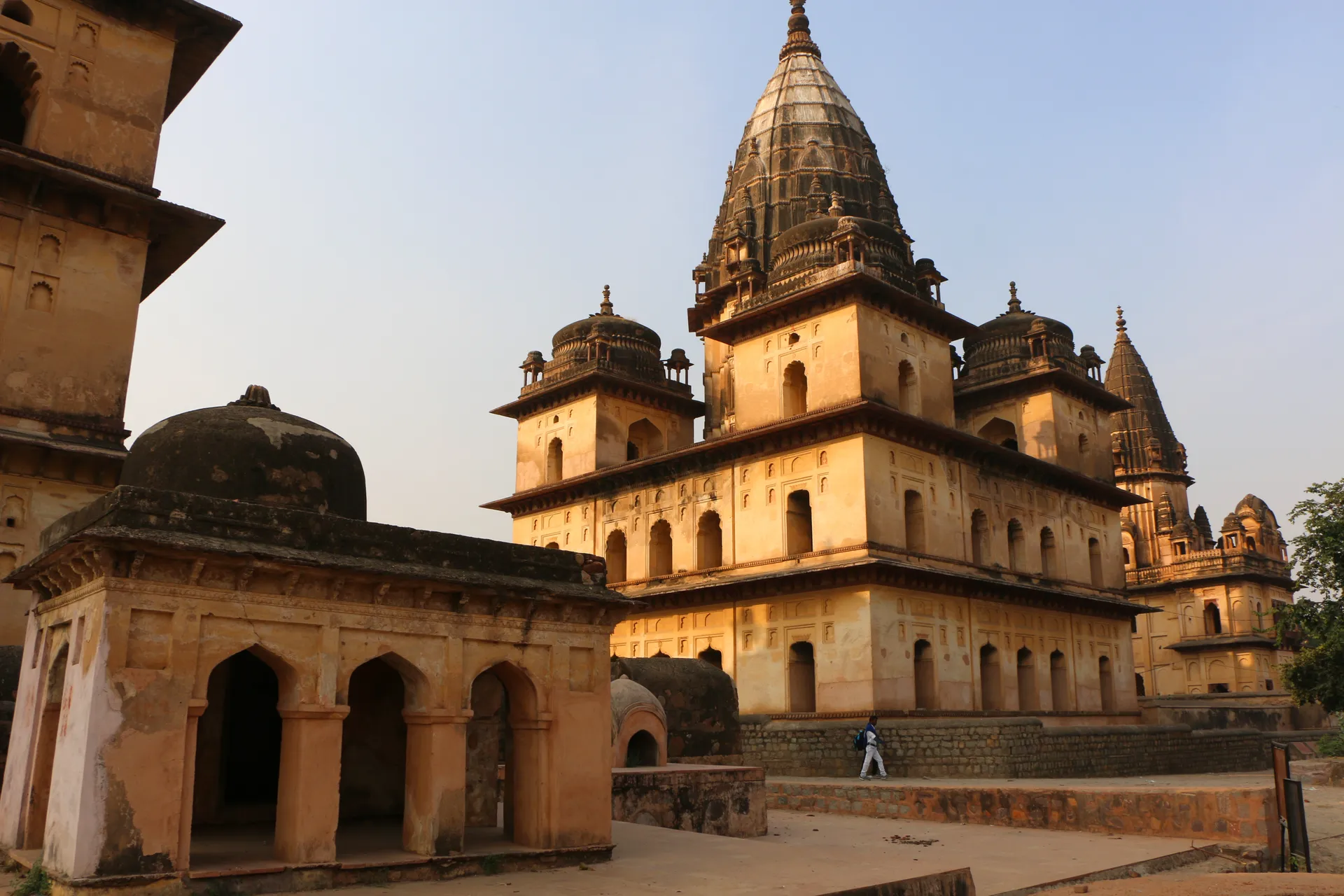
The cool dry season, roughly October to March, is the ideal window and the reason to time your stay carefully. Days are pleasant, evenings are crisp, and the royal chhatris lined along the Betwa glow gold at sunset in a way that alone justifies the trip. This is peak season, so the small traveler scene is at its liveliest and rooms fill faster. April to June is genuinely hot, with fierce afternoon sun that pushes you indoors and makes sightseeing hard going. The July to September monsoon transforms the setting: the Betwa runs high and fast, the countryside turns lush and green, and the palaces look dramatic against storm skies, though rain and humidity can disrupt plans. Choose the cool months for comfort, the monsoon for atmosphere.
- October to March: pleasant, dry, and best for the sunset cenotaphs.
- April to June: very hot; plan around early mornings and late afternoons.
- July to September: green, dramatic and humid, with the Betwa in spate.
Pros and Cons of Orchha
Orchha rewards a very specific kind of traveler and quietly disappoints others, so it pays to know which you are. The upside is a rare combination of extraordinary Bundela heritage, real tranquility and rock-bottom costs, all in a walkable riverside town that never feels overrun. The downside is everything a work-focused nomad might need: reliable internet, choice, energy and things to do after dark. Weigh these honestly against how you actually spend your days. If your work is light and your appetite is for atmosphere and slowness, the trade is a bargain. If you need dependable bandwidth and a busy scene, this is a short visit, not a base. The chhatris and the Chaturbhuj temple are also nesting sites for the critically endangered Indian vulture, and a 2020 survey counted about seventeen of them here along with a few Egyptian vultures; restoration work for a tourism festival removed some nests, so the birds are a reason to come that may not last.
- Pros: spectacular palaces and cenotaphs, deep calm, very low cost, easy walkability.
- Pros: a warm, low-key atmosphere and stunning sunsets over the Betwa.
- Cons: variable wifi, basic infrastructure and a very small traveler community.
- Cons: near-zero nightlife and limited dining or entertainment options.
Who Orchha Is For
Orchha is for the slow traveler, the culture lover and the nomad who can genuinely switch off. If you are a writer, photographer, history enthusiast or someone between contracts who wants a peaceful, beautiful and cheap place to recharge, this town delivers something most destinations cannot: unhurried immersion in living heritage. It suits people whose work is minimal or fully async, who are happy with mobile data and quiet evenings, and who treat a place as a setting rather than an office. It is not for those who need reliable high-speed internet, a social nomad crowd, nightlife or constant novelty. Come for a cultural, restorative stay measured in days or a couple of weeks, and let the pace of the town set your own.
- Ideal for slow travelers, writers, photographers and history lovers.
- Great for a short restorative base with light or async workloads.
- Not suited to bandwidth-heavy work, party seekers or those craving a big scene.