Cost of Living in Xiamen
Real market data
Source: Numbeo · September 2026
$650/moSolo nomad1-bed centre + living costs
$900/moCoupleshared 1-bed + costs
$570/moLean / localcheaper area + costs
- 1-bed rent, city centre$350¥2,338
- 1-bed rent, outside centre$260¥1,778
- Monthly costs excl. rent (1 person)$310¥2,075
- Meal, inexpensive restaurant$3¥20
- Monthly transit pass$12¥80
- Buy price, per m² (centre)$8,440¥57,125
Prices are from Numbeo (September 2026), converted to USD at $1 = ¥6.76 (01 Aug 2026). The monthly living-costs figure is our transparent one-person basket, groceries, a few meals out, utilities, phone, internet, transport and essentials, priced from those figures. Solo adds central rent; couple and lean are estimates from the same numbers.
Xiamen supports a comfortable single-person month at about $1200. Furnished monthly rentals on Xiamen Island, in Siming district near Zhongshan Road or the university, run $350 to $600 for a one-bedroom, and sea-view apartments in the newer Huli towers sit at the top of that band; mainland-side Jimei and Haicang drop to $250 to $350. Food is a highlight and a bargain: local seafood, satay noodles and Hokkien snacks keep monthly eating near $180 to $280. A 30GB SIM costs $10 to $18. Coworking desks are $90 to $170, well below the tier-one cities. Utilities average $35 to $70, driven mainly by summer air-conditioning. Metro, bus and BRT together cost $15 to $25 a month. Value verdict: Xiamen is one of the best cost-to-quality trades in coastal China, offering clean air, a subtropical waterfront and tier-one infrastructure at roughly two-thirds of Shanghai's price. Property here is priced like a first-tier city even though the salaries are not, which gives this island one of the worst ratios of purchase price to income anywhere in the country and is why so many people who work on it live across the water. Rents have not followed those purchase prices up, which is the arbitrage for anybody renting rather than buying.
Where to Work in Xiamen
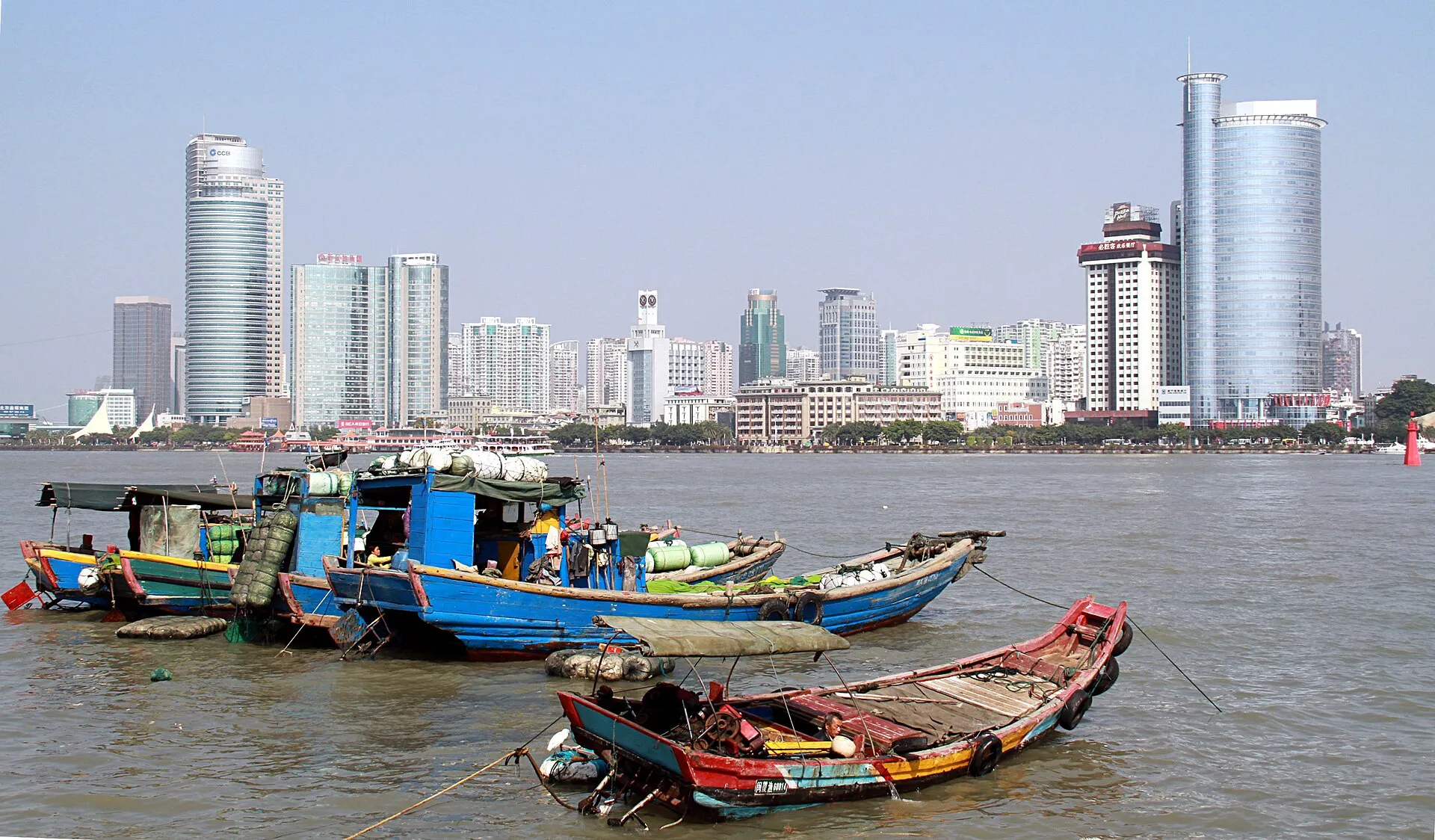
Base on Xiamen Island. Siming district puts you near the seafront ring road, Zhongshan Road's old shophouses and Xiamen University; the Shapowei and Zengcuoan areas draw a younger, creative crowd with a dense cluster of independent cafes. Huli is newer, more corporate and closer to the airport. The city's coffee culture is unusually strong for a second-tier Chinese city, and cafe work in Shapowei or around Baicheng Beach is straightforward, though most independents are small and seating is limited. Coworking exists through domestic operators and the Software Park II and III campuses in Siming, which host a real tech workforce and serviced offices at reasonable rates. Broadband is fast and 5G coverage is comprehensive across the island. The nationwide firewall applies, so a VPN is essential for Western tools. Power is reliable. Typhoon season can bring occasional outages and closures in late summer.
Getting Around Xiamen
Xiamen has a growing metro network, with Lines 1, 2 and 3 covering the island and the mainland districts and fares of about $0.30 to $1. Line 1 crosses the sea on a causeway, which is a genuinely scenic commute. Buses cost around $0.15 and the BRT elevated busway is fast across the island. Didi is the ride-hailing standard, with typical island trips at $3 to $8. Shared bikes are everywhere at roughly $0.20 per half hour, and Xiamen is one of the better Chinese cities for cycling thanks to the seafront path and a dedicated elevated bike skyway. The island core is genuinely walkable and pleasant on foot. Gaoqi International Airport sits on the island itself, only fifteen minutes from Siming by taxi at around $6. High-speed rail links Fuzhou in about ninety minutes and Shenzhen in three and a half hours. No scooter or car is needed; electric scooters are in fact restricted on the island.
Sorting transport? Book an airport transfer, or compare car rental on Auto Europe and QEEQ.
Visas for Xiamen
The rules are national, so Xiamen follows the same framework as Beijing and Shanghai. There is no Chinese digital nomad visa. Citizens of most EU countries, the UK, Canada, Australia, New Zealand, Japan and South Korea can enter visa-free for stays of up to 30 days under the scheme China has progressively widened since late 2023. US passport holders are not covered and must obtain an L tourist visa in advance, generally permitting 30 or 60 days per entry, with long multiple-entry validity common for Americans. Xiamen Gaoqi is a designated port for the 240-hour visa-free transit policy, allowing up to ten days when travelling onward to a third country, which suits a short island stopover well. A 30-day extension may be requested from the Xiamen exit-entry bureau but is granted at the officer's discretion. Police registration within 24 hours applies to anyone not staying in a hotel.
Best Time to Visit Xiamen
Xiamen is subtropical and mild, with a comfortable stretch that is longer than most of China's. October to December is the best window: dry, sunny, highs of 22C to 28C and low humidity, ideal for the seafront and for day trips to the Fujian tulou earth buildings. March to May is warm and pleasant but increasingly humid, with spring sea fog common. June through September is hot and sticky, regularly above 32C with high humidity, and this is also typhoon season; Fujian takes direct hits most years, and a serious storm can close the airport and shut the city for a day or two. Rainfall peaks between May and August. January and February are the coolest months, around 12C to 18C, damp but rarely cold. Chinese New Year fills Gulangyu island and the seafront with domestic tourists, as do the May and October national holiday weeks. The marathon in early January runs the seafront ring road and is one of the larger races in the country, filling every hotel on the island for that weekend. It is also about the coldest the place ever gets, which is precisely why the date works. Sea fog in spring can close the airport for a morning.
Pros and Cons of Xiamen
Xiamen is widely rated one of China's most liveable cities and the reasons hold up. The air is clean by mainland standards, the island is compact, green and edged by a continuous seafront promenade and bike skyway, and the climate is mild for most of the year. Seafood and Hokkien cuisine are excellent and cheap, the metro and airport are modern, Gulangyu island and the Fujian tulou are on the doorstep, and the pace is markedly calmer than Shanghai or Shenzhen while the infrastructure is barely worse. Costs sit around two-thirds of tier-one levels. The drawbacks start with isolation: the foreign community is small, English is much less common than in Shanghai, and there is no established nomad scene, so a Mandarin base or high tolerance for solitude matters. The firewall applies in full, coworking options are limited compared with tier-one cities, typhoons disrupt late summer, and domestic tourist crowds swamp the main sights during national holidays.
Who Xiamen Is For
This is for the self-sufficient, who want a coastal Chinese city with real quality of life and do not need a ready-made expat network: solo workers with steady clients, Mandarin learners looking for a calmer environment than Beijing, cyclists and runners drawn to the seafront, and anyone burnt out on megacity density but unwilling to give up fast trains, cheap metro and same-day delivery. It is a strong second or third China destination for someone who has already learned how the country works. Beginners who need English signage and some hand-holding will struggle, social nomads who want coworking friends and meetups on tap will not find them, and any job that cannot tolerate VPN-dependent access to Western tools will break here rather than bend around it. Those needing long visa runways will also find the 30-day ceiling restrictive, and travellers sensitive to humidity should avoid the June to September window entirely.