Cost of Living in Shakhrisabz
Where this figure comes from. No cost survey covers Shakhrisabz, so the $600 a month above is our own estimate rather than a measurement. On 416 of our 999 city guides the figure is built from a published Numbeo basket, a one-bedroom rent in the centre plus one person's monthly costs without rent, converted to USD; this city is not one of them. How we source everything.
Shakhrisabz is cheap even by Uzbek standards. A simple guesthouse or B&B room runs roughly $12-25 a night, and the handful of mid-range hotels near Ak-Saray top out around $35-50. A plate of plov or shashlik at a local cafe costs $2-4, and a full sit-down meal with tea for two rarely tops $10. Produce, bread, and dairy from the bazaar are very cheap, so self-catering pushes weekly food costs even lower. There is no real "coworking" economy here, so most remote workers budget for a private room with a desk rather than paying for workspace. Expect to live comfortably on $500-800 a month including lodging, food, and local transport, less if you stay a full month and negotiate a long-term rate on a guesthouse room. Everything is priced and paid in Uzbek som (UZS), and cash is still king: bring a mix of cash and a Visa/Mastercard for backup, since card acceptance outside hotels and the largest restaurants is patchy. ATMs exist in town but can run out of cash or reject foreign cards, so nomads passing through typically withdraw a larger sum in Samarkand or Tashkent before heading over the pass.
Where to Work in Shakhrisabz
There is no dedicated coworking space in Shakhrisabz, full stop, so working here means improvising. The realistic options are your guesthouse room (many have a desk and reasonably solid wifi), a hotel lobby or terrace cafe near Amir Timur park, or one of a few tea houses and modern cafes that have popped up to serve the tourist flow around the Ak-Saray ruins. None of these are built for laptop life: expect small tables, occasional noise from tour groups, and staff who may not be used to someone camping out for hours. Wifi is inconsistent, decent in newer guesthouses and hotels, weaker or absent in older family-run stays and most street cafes, so a local SIM with mobile data (Beeline, Ucell, or Uzmobile all sell cheap tourist packages) is essential as backup for video calls. Because of this, most digital nomads treat Shakhrisabz as a light-work base: mornings for calls from the room, afternoons for sightseeing, rather than a place to do deep focused work for weeks on end. If you need reliable coworking infrastructure, Samarkand (about two hours away) has real cafes and better connectivity and is a more practical home base, with Shakhrisabz as a day or overnight excursion.
Getting Around Shakhrisabz
The historic center itself, Ak-Saray, Amir Timur park, the Dorut Tilovat and Kok Gumbaz complex, and the bazaar, is entirely walkable, with most sights within a 15-20 minute stroll of each other. You will not need a car or taxi for daily sightseeing. Getting to and from Shakhrisabz is the real logistical piece: shared taxis and marshrutkas (minivans) run from Samarkand's southern taxi stand over the scenic but winding Takhtakaracha pass, taking about 1.5-2 hours depending on traffic and weather (the pass can be slow or closed in heavy winter snow). A seat in a shared taxi costs a few dollars; chartering the whole car privately costs more but is faster and more flexible, and is the easiest way for a small group or solo traveler unfamiliar with the language to arrange transport. Within town, cheap local taxis and app-based rides (where available) cover the rest. There is no airport or train station in Shakhrisabz itself, so onward travel means heading back to Samarkand for rail or air connections to Tashkent, Bukhara, and beyond.
Sorting transport? Book an airport transfer, or compare car rental on Auto Europe and QEEQ.
Visas for Shakhrisabz
Visa rules are set nationally, not locally: Uzbekistan offers visa-free entry for up to 30 days to citizens of a long list of countries including most of the EU, UK, US, Canada, Australia, Japan, South Korea, and several others, and e-visas for many more nationalities. The list has expanded in recent years. Shakhrisabz has no separate visa office or immigration desk of consequence, it operates entirely under the national rules, so any visa business (extensions, registrations) is handled in Samarkand or Tashkent. Hotels and registered guesthouses are required to register your stay, and mid-range and above properties handle this automatically at check-in; ask to confirm if you are staying in a smaller family guesthouse, since unregistered stays of more than a few nights can occasionally cause friction at departure. There is no formal digital nomad visa in Uzbekistan, so remote workers typically enter on the standard tourist visa-free allowance or an e-visa and treat their stay as tourism.
Best Time to Visit Shakhrisabz
Spring (April-May) and autumn (September-October) are clearly the best windows: daytime temperatures sit in a pleasant 20-28C range, the surrounding orchards and green spaces around Ak-Saray are lush, and the pass drive from Samarkand is scenic rather than stressful. Summer (June-August) is genuinely hot, frequently 35-40C with intense sun and little shade around the open ruins, which makes midday sightseeing uncomfortable and can sap motivation for any outdoor work breaks. Winter (December-February) turns cold, sometimes near or below freezing, with occasional snow that can slow or complicate the Takhtakaracha pass crossing; heating in older guesthouses can also be inconsistent. Given the honest infrastructure limits here, spring and autumn are worth planning a trip around if your schedule allows it, while summer and winter visits are more workable as a quick day trip or one-night stay from Samarkand than as an extended stopover.
Pros and Cons of Shakhrisabz
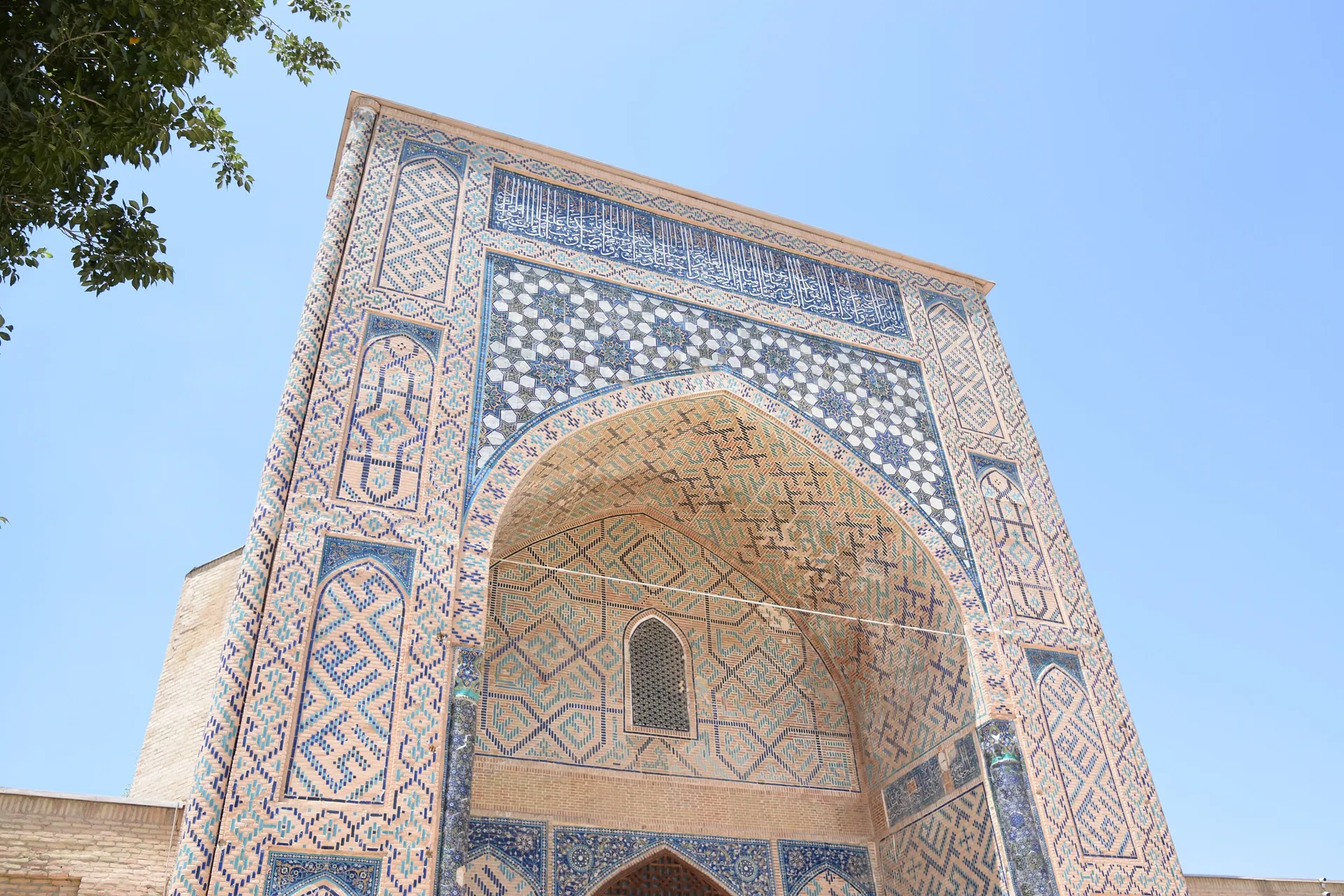
Pros: this is genuinely one of the most impressive Silk Road sites in Central Asia, the towering ruined portal of Timur's Ak-Saray palace and the UNESCO-listed Timurid cluster (Dorut Tilovat, Kok Gumbaz, the Dorus Saodat crypt) are on a different scale from typical tourist stops, the town is small and easily walkable, costs are very low, locals are generally warm toward visitors, and the pace of life is slow and unhurried compared to Samarkand or Tashkent. Cons: English is limited outside hotels and a few tourist-facing businesses, so basic Uzbek or Russian phrases, or a translation app, go a long way; there is no coworking scene and wifi is inconsistent; the town is genuinely small, meaning limited restaurant variety, nightlife, and things to do once you have seen the main sights, typically a day or two; and getting in and out always means the pass drive from Samarkand, adding friction to any spontaneous plans. It is a place best appreciated for what it is: a compact, historically extraordinary provincial town, not a full-service nomad hub.
Who Shakhrisabz Is For
Shakhrisabz suits history-focused travelers and remote workers who want to fold a serious Silk Road detour into a Central Asia trip based primarily out of Samarkand or Tashkent. It works well for a one-to-two night stay: enough time to explore Ak-Saray and the Timurid monuments at a relaxed pace, work a light morning or two from a guesthouse room, and move on. It is a poor fit if you need reliable coworking infrastructure, strong English support, an active social or expat scene, or enough variety to sustain weeks of stay, on those fronts, Samarkand, Bukhara, or Tashkent will serve you far better. Budget travelers, culture and architecture enthusiasts, and slow-travel nomads who enjoy quiet provincial towns and don't mind basic infrastructure will get the most out of Shakhrisabz; those who need fast, dependable internet for daily video calls should treat it strictly as a day trip rather than a base.