Cost of Living in Jeju Island
Where this figure comes from. No cost survey covers Jeju Island, so the $1,430 a month above is our own estimate rather than a measurement. On 416 of our 999 city guides the figure is built from a published Numbeo basket, a one-bedroom rent in the centre plus one person's monthly costs without rent, converted to USD; this city is not one of them. How we source everything.
Jeju is noticeably cheaper than Seoul, though it is not rock-bottom cheap. Expect to spend roughly $1,040-1,740 per month as a solo remote worker, depending on your housing choice and lifestyle.
- Rent, central Jeju City (1-bedroom): $485-695/month
- Rent, quieter areas or villages: $345-520/month
- Groceries: $245-345/month; local markets and supermarkets are well stocked
- Eating out: A simple local meal costs $5.50-9; a mid-range dinner for two runs $35-56
- Coworking hot-desk: Free at J-Space (government-supported); paid spaces like O-Peace run roughly $7-10/day
- Local transport: City buses cost about $1 per ride; car rental runs $28-42/day
- Total monthly range: $1,040-1,740 excluding a rental car
Jeju's signature foods, particularly black pork and fresh abalone, are a genuine treat but add up quickly if you eat them often. Cooking at home or eating at local kimbap shops keeps costs comfortable.
Where to Work
Jeju has a small but real infrastructure for remote workers. South Korea's internet is fast, with near-universal 5G coverage outdoors and in cafes.
Coworking Spaces
J-Space is a free coworking space and startup incubator in Jeju City, backed by the local government. It is fully equipped with high-speed WiFi and basic office facilities, though it is oriented toward Korean startups and can be quieter for international nomads. O-Peace Jeju, located in Jocheon-eup about 20 minutes from the airport, is a relaxed three-story building with ocean views, fast WiFi, specialty coffee, and an informal layout. Re:flow Jeju is a coliving property with 24-hour coworking access, better suited to longer stays.
Cafe Work Culture
Working from cafes is very common in South Korea, and Jeju is no exception. Most cafes tolerate laptop workers, particularly in the mornings on weekdays. WiFi is almost always available and fast. The catch is that cafe culture here leans toward aesthetics and Instagram appeal: seats can be limited, power outlets are not always accessible, and some popular spots have a high turnover expectation on weekends.
For a serious work session, dedicated coworking is more reliable. For a few hours of focused work, a cafe in Jeju City works fine. Outside of the city, especially in rural or coastal areas, options thin out quickly.
Getting Around
Jeju's attractions and neighborhoods are spread across a large island, and this is the main practical challenge for living here as a nomad.
Renting a Car
A rental car is the most practical option for exploring the island freely. Major rental companies run shuttle buses from Jeju International Airport (CJU). Costs run $28-42/day, and you need an international driving permit if you hold a non-Korean license.
Public Buses
Jeju has a reasonably comprehensive public bus network covering the city and major coastal routes. Buses cost about $1 per ride and stop announcements are in English. All buses have free WiFi. The downside is frequency: rural routes run every 30-60 minutes, and many smaller beaches or hiking trailheads require a long wait or a walk. Getting around without a car is workable but slow.
Taxis and the Airport
Jeju International Airport is located right at the edge of Jeju City, roughly 10 minutes and $3.50-5.50 by taxi from downtown. Airport limousine bus #600 connects to Seogwipo and southern areas every 20 minutes for $3-4. Daily flights connect Jeju to Seoul's Gimpo airport in about an hour, and to Busan's Gimhae in less. There are also direct international flights to select Asian cities, though the selection is limited.
Walkability
Jeju City itself is walkable for daily errands and coffee shops. The broader island is not walkable as a primary transport mode; most things worth seeing are 20-60 minutes apart by car.
Sorting transport? Book an airport transfer, or compare car rental on Auto Europe and QEEQ.
Visas and Staying Long-Term
Citizens of most countries worldwide can enter Jeju visa-free for up to 30 days when arriving directly from abroad at Jeju International Airport (CJU). This is Jeju's special visa-free zone and is separate from South Korea's standard visa exemptions. If you plan to travel to the mainland during your stay, you must meet South Korea's regular entry requirements, which grant most Western passport holders 90 days visa-free on the mainland.
South Korea's F-1-D digital nomad visa, piloted from January 2024, became a permanent category on 30 June 2026. It is for people employed by a company outside Korea who have at least a year in the same field. The income floor is a multiple of Korea's gross national income per head, set by age and region. Outside Seoul, Incheon and Gyeonggi, which includes Jeju, applicants aged 18 to 34 need one times GNI, about $36,400 a year, and applicants 35 and over, or anyone bringing a spouse or children, need one and a half times, about $54,600; the lower tier asks for proof you will live outside the capital region, such as a lease of a month or more. In the capital region the same tiers are about $54,600 and $72,800. Permits are issued a year at a time up to three years, private health insurance must cover at least about $69,500 for treatment and repatriation, and visitors already in Korea on a B-1, B-2 or C-3 entry who meet the rules can switch to the visa without leaving. Working for a Korean employer or earning locally is not allowed.
For most short-stay nomads on common passports, the 30-day Jeju visa-free entry or the 90-day mainland exemption is the practical route. Extensions beyond 90 days typically require departing and re-entering, or obtaining the F-1-D visa.
Best Time to Visit
Jeju has a subtropical climate with warm, humid summers and mild winters. The island experiences four distinct seasons.
Spring (March to May) is the most popular window and for good reason. Temperatures sit between 10-20 degrees Celsius, rainfall is moderate, and the island is covered in cherry blossoms and canola flowers in March and April. Crowds build through May but remain manageable compared to summer.
Summer (June to August) is hot, humid, and rainy. Average August temperatures hit 27-30 degrees Celsius with high humidity. Typhoons are possible from July through September. Korean domestic tourism peaks in July and August, pushing accommodation prices up and beaches to capacity. For remote work, the heat and crowds are a drawback.
Autumn (September to November) is the second-best window. Temperatures cool to 15-25 degrees Celsius, rainfall drops, and the island's hillsides turn with autumn foliage. October and early November are particularly good for a balance of good weather, scenery, and fewer crowds than summer.
Winter (December to February) is mild by Korean standards (around 5-10 degrees Celsius) but can be windy and occasionally snowy on Hallasan. Accommodation is cheaper and the island is quiet. It is a reasonable time for a focused work stint if you are comfortable with grey skies and limited outdoor activity.
For remote work specifically, April to May and October to November offer the best combination of pleasant weather, lower prices, and a less chaotic environment.
Pros and Cons
- Extremely fast and reliable internet virtually everywhere on the island
- Safe with very low crime rates and a relaxed, clean environment
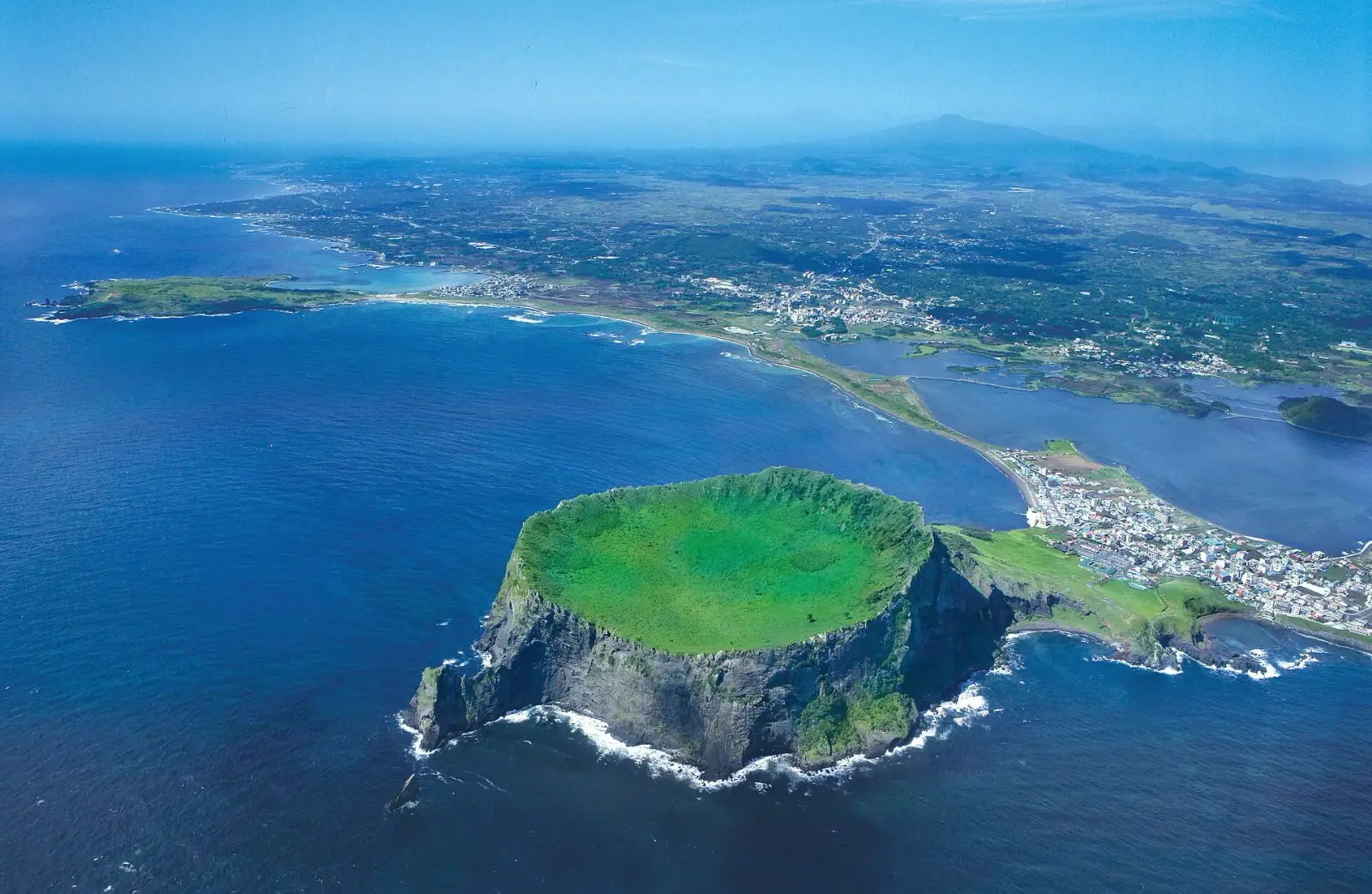
- Stunning natural scenery including Hallasan, coastal cliffs, lava tubes, and beaches within easy reach of a work base
- Affordable compared to Seoul or most Western cities, with good food quality for the price
- Visa-free entry for most nationalities without any paperwork
- Free coworking space (J-Space) reduces overhead for short stays
- Domestic flights to Seoul take about one hour, keeping you connected to a major hub
- Language barrier is real: English is limited outside tourist areas and younger demographics
- Small English-speaking nomad community; networking opportunities are thin compared to Southeast Asian hubs
- A car is near-essential for quality of life beyond Jeju City, which adds cost and complexity
- Hot, humid summers with typhoon risk and peak tourist crowds
- Limited nightlife compared to Seoul or regional hubs in Southeast Asia
- The 30-day Jeju-specific visa-free period is short for those who want to explore beyond the island
Who Jeju Island Is Best For
Jeju suits you well if you want nature and clean air alongside reliable infrastructure, and you are comfortable with limited English-speaking social scenes. It is an excellent fit for nature lovers, hikers, and anyone who finds Seoul too loud and expensive but still wants Korean food culture, fast internet, and personal safety as baseline conditions. Couples and solo workers who are self-sufficient and happy to rent a car will get the most out of the island.
Jeju also works well for shorter workation stints of two to four weeks, taking advantage of the visa-free period to decompress in a genuinely beautiful setting without the logistical weight of a long-term base.
Skip Jeju if you rely on a large English-speaking community or co-working social scene to stay motivated. It is also a poor fit if you want to be car-free: outside Jeju City, the bus network is slow and infrequent. Those on a tight budget who need sub-$1,000 monthly costs will also find Jeju harder to stretch than comparable spots in Southeast Asia.