Cost of Living in Samarkand
Where this figure comes from. No cost survey covers Samarkand, so the $1,000 a month above is our own estimate rather than a measurement. On 416 of our 999 city guides the figure is built from a published Numbeo basket, a one-bedroom rent in the centre plus one person's monthly costs without rent, converted to USD; this city is not one of them. How we source everything.
Samarkand is genuinely cheap, one of the most affordable historic cities anywhere. A single person lives comfortably on roughly $800 to $1,100 a month. Guesthouses and simple furnished flats near the centre cost little, often $200 to $400 for a long stay, and a filling plate of plov or a bowl of lagman runs just a few dollars at a local canteen. Bazaar produce, bread and dried fruit are almost free by Western standards. These are our editorial estimates, priced against a currency, the som, that has been fairly stable, and costs rise modestly around the centre's tourist sites. The gap between a cheap month and an expensive one comes down to two habits. Monument tickets are priced for visitors, and a serious week of sightseeing adds up to more than a week of food, so buy them as you go rather than treating them as incidental. And the purpose-built tourist quarter on the eastern edge of town, opened in recent years with its hotels and restaurants, runs at international rates that have nothing to do with local prices; walk ten minutes out of it and the same meal costs a fifth as much.
- Guesthouse or simple flat, long stay: roughly $200 to $400 a month
- Plate of plov at a local spot: roughly $2 to $3
- Shared taxi across town: roughly $1 to $2
- Afrosiyob fast train to Tashkent: roughly $10 to $20
Where to Work in Samarkand
Samarkand is not an established nomad hub, and the working infrastructure is modest but improving. Home internet and 4G reach the city and are cheap, though speeds are lower and less consistent than in a major capital, so test any accommodation's connection before relying on it for video calls. Dedicated coworking spaces are scarce; a small but growing set of modern cafes near the centre offer wifi and a place to settle in. A local Ucell or Beeline SIM is inexpensive and a useful backup. Anyone with heavy bandwidth needs should treat Samarkand as a focused, lower-intensity base rather than a call-centre. A detail that matters more here than the megabits: the city is largely Tajik-speaking in daily life, with Russian the common second language and Uzbek the official one, so a translation app that handles all three saves more time than any amount of preparation. For a desk, the university district north of the monuments has the cafes that stay open and quiet through the afternoon, while everything around the great square empties and fills with the tour schedule. Anyone who needs a stable link should also carry a second SIM on a different network.
Getting Around Samarkand
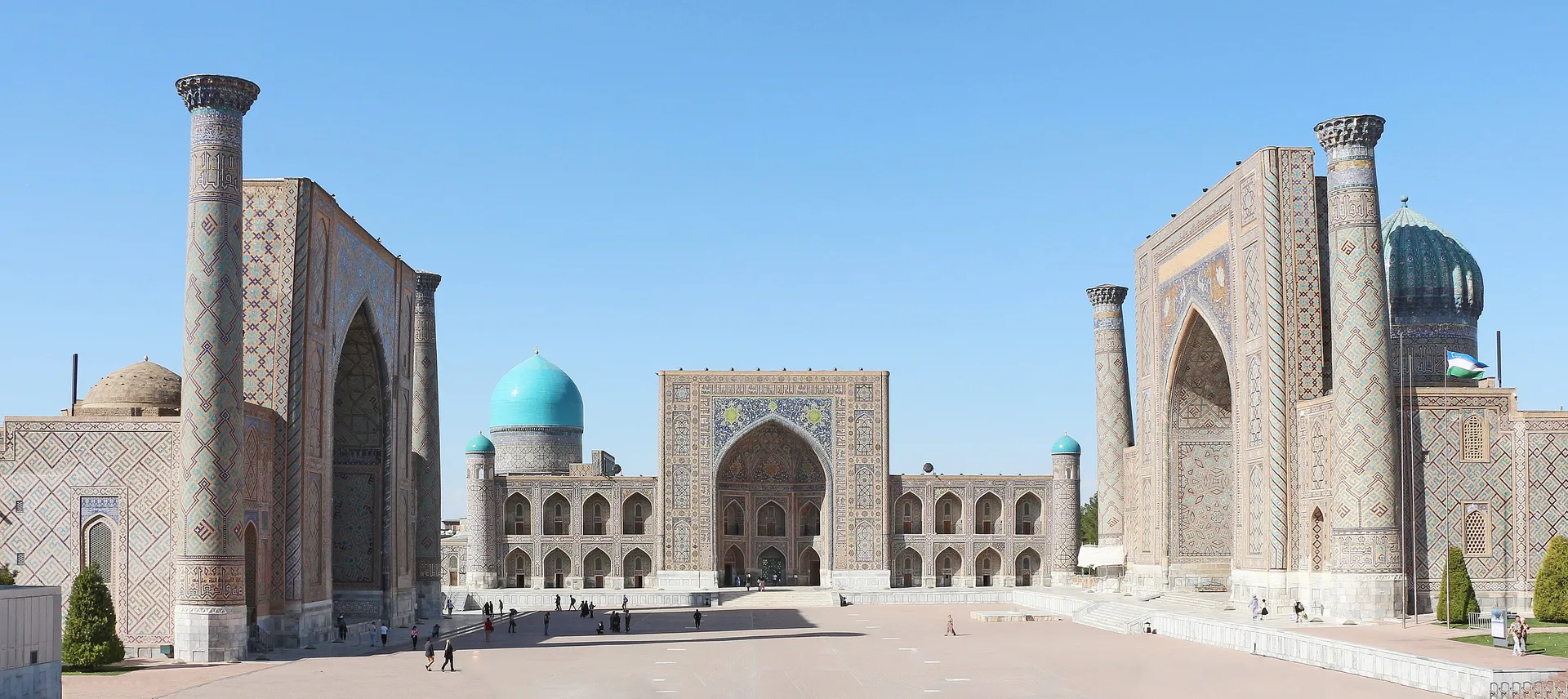
Samarkand's monumental core is walkable, with the Registan, Bibi-Khanym Mosque and Shah-i-Zinda within a manageable radius, though the city sprawls beyond it. Shared taxis and the Yandex app make short rides cheap and easy, and marshrutka minibuses cover set routes for pennies. The real gem is the Afrosiyob high-speed train, which links Samarkand to Tashkent in about two hours and to Bukhara, making Silk Road side trips simple. The airport has a growing roster of regional and some international flights, and the train station connects the wider country comfortably. The monuments look close together on a map and are not, which is the single thing visitors get wrong here. The stretch from the great square to the necropolis and on to the observatory is a couple of hours on foot in the sun, with very little shade, and most people underestimate it badly on the first day. Fast train seats sell out days ahead in spring and autumn, so book as soon as your dates are fixed rather than turning up at the counter. The airport is unusually close to the centre, which makes a short stay easy to arrange.
Sorting transport? Book an airport transfer, or compare car rental on Auto Europe and QEEQ.
Visas for Samarkand
Uzbekistan has opened up dramatically for visitors. Citizens of the EU, UK and many other countries can enter visa-free for 30 days, and travellers from the United States and others are also granted visa-free entry or a simple e-visa, arranged online in advance. This makes a month in Samarkand straightforward with little paperwork. For longer stays, an e-visa with extended validity or other permits may apply, and registration rules for accommodation exist, usually handled automatically by hotels and guesthouses. Policy has liberalised repeatedly in recent years. The border detail that matters from here specifically is the crossing toward Tajikistan, under an hour away and the natural route onward into the Fann mountains, which has closed for long stretches in the past; check it is open before planning a route through rather than around. The other is money. The customs form on arrival asks you to declare cash above a threshold, and travellers who skip it and then try to leave with more than they can account for have had an uncomfortable conversation at the airport.
Best Time to Visit Samarkand
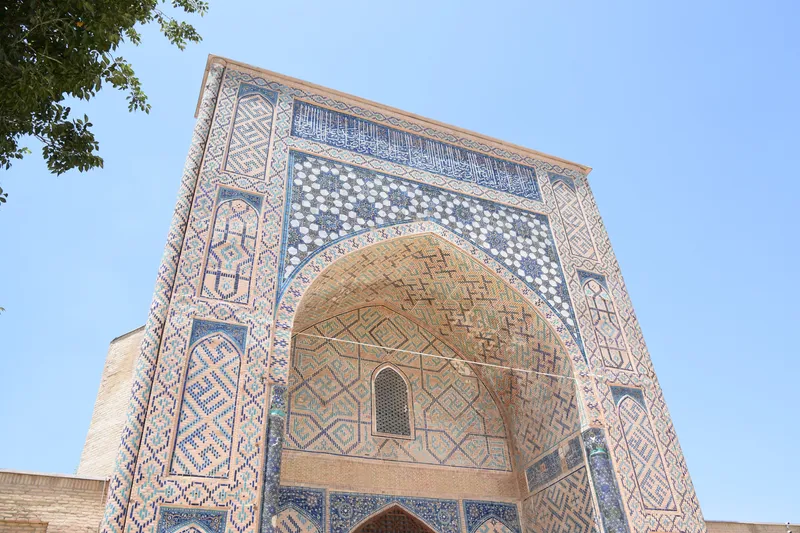
Samarkand has a sharp continental climate, and spring and autumn are by far the best times to visit. April to early June brings warm days, blossom and comfortable sightseeing weather, while September and October offer clear skies, mild temperatures and the grape and melon harvest. Summer, from late June to August, is hot and dry, often well above 35 Celsius, which makes midday exploring of open squares punishing. Winter is cold, sometimes snowy, and quiet, with the tiled monuments looking striking under grey skies but short daylight and chilly conditions. Aim for the shoulder seasons for the ideal balance. Photographers should plan around the light rather than the season. The tilework goes flat under a high midday sun and comes alive in the last hour before dusk, when the blue turns almost violet, and the great square is lit after dark as well, which is when it is emptiest. The melon and grape stalls appear from late summer and are one of the genuine pleasures of an autumn stay. Nothing closes in winter, so a cold, quiet January visit gets you the monuments almost to yourself for the price of a coat.
Pros and Cons of Samarkand
Samarkand trades modern nomad comforts for some of the most extraordinary architecture and value on earth. Worth separating the city from the postcard. Half a million people live here and most of them have nothing to do with tourism, which means ordinary neighbourhoods, a university, traffic and a bazaar that exists for locals rather than for visitors, and it makes a month here far less claustrophobic than a smaller heritage town would be. The reservation to register is that a great deal of what you see has been heavily restored, and some of the restoration has been criticised for smoothing away the original work; purists mind this, most visitors do not notice, and it is better to know beforehand than to feel misled. On the practical side, the fast train puts the capital two hours away, which quietly solves the isolation problem that usually comes with a place this cheap.
- Pros: jaw-dropping Silk Road monuments, extremely low costs, a very safe and hospitable culture, easy visa-free access, and fascinating food and history at every turn.
- Cons: little English outside tourism, a very small nomad and expat community, limited coworking and modest internet, quiet nightlife, harsh summer heat, and lingering bureaucracy around registration and longer stays.
Who Samarkand Is For
Samarkand is for the culturally curious, budget-conscious nomad who values history, safety and atmosphere over a ready-made social scene and fast infrastructure. Writers, photographers, history buffs and slow travellers drawn to the Silk Road will find it unforgettable, and the hospitality is genuinely warm. It works best as a focused, lower-cost base for someone who does not depend on constant high-bandwidth calls or a large peer community. Learn a few Uzbek or Russian phrases, come in spring or autumn, and use the fast train to weave Bukhara and Tashkent into a broader Central Asian chapter of your travels. Of the three cities on that line, this is the one to base yourself in if you are choosing only one. It is big enough to have a life outside the monuments, small enough to learn in a fortnight, and close enough to the capital that anything you cannot buy or arrange locally is a morning away. A month is the right first commitment. Anyone whose work needs a guaranteed connection every day should still treat the capital as the base and come here for a long weekend, which is no hardship at two hours each way.