Cost of Living in Trier
Where this figure comes from. No cost survey covers Trier, so the $1,650 a month above is our own estimate rather than a measurement. On 416 of our 999 city guides the figure is built from a published Numbeo basket, a one-bedroom rent in the centre plus one person's monthly costs without rent, converted to USD; this city is not one of them. How we source everything.
Budget around $1,650 a month. A one-bedroom runs roughly $700 to $1,100, kept moderate by a substantial student population and by Trier's position away from the German economic centres. Groceries are ordinary German prices, which are low for western Europe. Eating out is reasonable and the Mosel wine, grown on the slopes immediately outside the city, is very cheap at source. Utilities run through a mild winter by German standards. Luxembourg is fifty kilometres away and a great many people from Trier commute there for the wages, which pushes local rents above what the city would otherwise support. A semester ticket bundled into the university fee covers regional transport for students, which is one reason the town runs on buses rather than cars. Wine bought at the estate rather than in a shop costs roughly half, and the growers along the valley sell by the case to anyone who turns up, which is the largest single difference between living here and visiting. Rents rise noticeably in the streets with a direct bus towards the border, and the gap between those and the rest of the city is the clearest signal of who the market is serving.
Where to Work in Trier
Connectivity is good. Germany's fibre rollout has been slower than most of western Europe but Trier is reasonably served, with comprehensive mobile coverage and entirely reliable power. There is a coworking presence helped by the University of Trier. The time zone is central European. German administration is thorough and paper-based to a degree that surprises people: the Anmeldung registration within two weeks of moving in is mandatory, gates the bank account and the tax number, and generally requires an appointment booked well in advance. Anyone booking an Anmeldung appointment should do it weeks before arriving, since slots in most German cities are released in batches and go within minutes of appearing. Cross-border working is a legal category here rather than an informal arrangement, with its own tax and social security rules under a treaty, and anyone taking a job on the other side wants advice before signing rather than after. The number making that journey daily runs into the tens of thousands across the region. For remote workers the relevance is narrower: a German residence with a foreign client is an ordinary freelance arrangement and the border does not enter into it at all.
Getting Around Trier
Trier is compact and walkable, with the Porta Nigra, the cathedral, the basilica and the amphitheatre all within twenty minutes of each other. Buses cover the rest and the Mosel cycle path runs from the city through the vineyards towards Koblenz, which is among the best river cycle routes in Germany. Trains reach Luxembourg in fifty minutes, Koblenz in ninety and Cologne in about three hours. Luxembourg Findel is the nearest airport at under an hour, with Frankfurt Hahn also within reach. Anyone commuting to Luxembourg should know that the trains are busy at peak and that Luxembourg has made all its own public transport free, which starts at the border.
Sorting transport? Book an airport transfer, or compare car rental on Auto Europe and QEEQ.
Visas for Trier
Germany is in the European Union and the Schengen area, so European Union and EEA citizens may live and work here without a permit, though the Anmeldung registration is a legal requirement. Everyone else needs a Schengen visa for short stays or a residence permit for longer ones, with the EU Blue Card the main skilled route and a freelance visa available in some cities that is administered locally and varies considerably by Auslanderbehorde. Germany introduced an Opportunity Card in 2024 for job seekers with qualifying points. Anyone considering the freelance route should be aware that it is decided by the local foreigners' office rather than nationally, so what is accepted in Berlin may not be here. Anyone weighing a residence on one side of the border against the other should know that the neighbouring country runs its own permit system, its own thresholds and considerably higher costs, so the usual arrangement is German residence with employment across the line rather than the reverse. Cover from a recognised insurer is required from the day residence starts, and the public scheme is the default rather than the fallback. Nothing in the German file moves without a registered address, which is both the earliest task and the most awkward one. The Luxembourg commute crosses no Entry/Exit System check; Findel's London flights do.
Best Time to Visit Trier
May to September is the best window, with July around twenty three degrees and the Mosel valley at its best. September and October bring the grape harvest and the wine festivals, which are the region's real season. Winter from December to February is mild by German standards at around three degrees but grey and wet. Trier sits in a sheltered river valley that is among the warmest parts of Germany, which is why the Romans planted vines here and why they are still growing. Anyone cycling the Mosel should ride downstream towards Koblenz rather than up, since the gradient is gentle in that direction and the trains carry bicycles back. The Christmas market fills the square in front of the Porta Nigra through December and is one of the older ones in the country, which counts for something in a region where every town has one. Frost in April is the risk the growers watch, rather than anything the summer does. The valley holds its heat through September, and the harvest weekends are when the villages upstream open their cellars, each on its own date, which is a better reason to be here in autumn than the colour is.
Pros and Cons of Trier
Trier has more standing Roman architecture than any city north of the Alps: the Porta Nigra, the imperial baths, the basilica that was Constantine's throne hall and is still a working church, and an amphitheatre, all of it within a walkable centre and all of it UNESCO-listed. Karl Marx was born here and the house is a museum. Add Mosel wine at source and Luxembourg fifty minutes away. It is a small city, the cultural programme is modest, and the winter is grey from start to finish. The Porta Nigra also survived because a hermit lived inside it for decades and it was turned into a church, which is why it was never quarried for stone like the rest.
Who Trier Is For
An interest in Roman archaeology, for which this is among the most rewarding cities in Europe, and wine, since the Mosel Riesling vineyards begin where the houses stop. It suits anyone working in or towards Luxembourg, since the commute is under an hour and the wage differential is substantial. German is required for the administration and no amount of goodwill at the counter substitutes for it, and a hundred and ten thousand people make Germany's oldest town rather than a large city. Karl Marx was born in this city, the house is now a substantial museum in its own right, and Trier marked his bicentenary with a statue that started a local argument nobody has entirely finished having yet. A year here is long enough to learn the valley and short enough that the size of the place stays a feature rather than a limit. The commute across the border is what most arrivals are really choosing, and it is worth testing on an ordinary Tuesday morning before committing to a lease near the route.
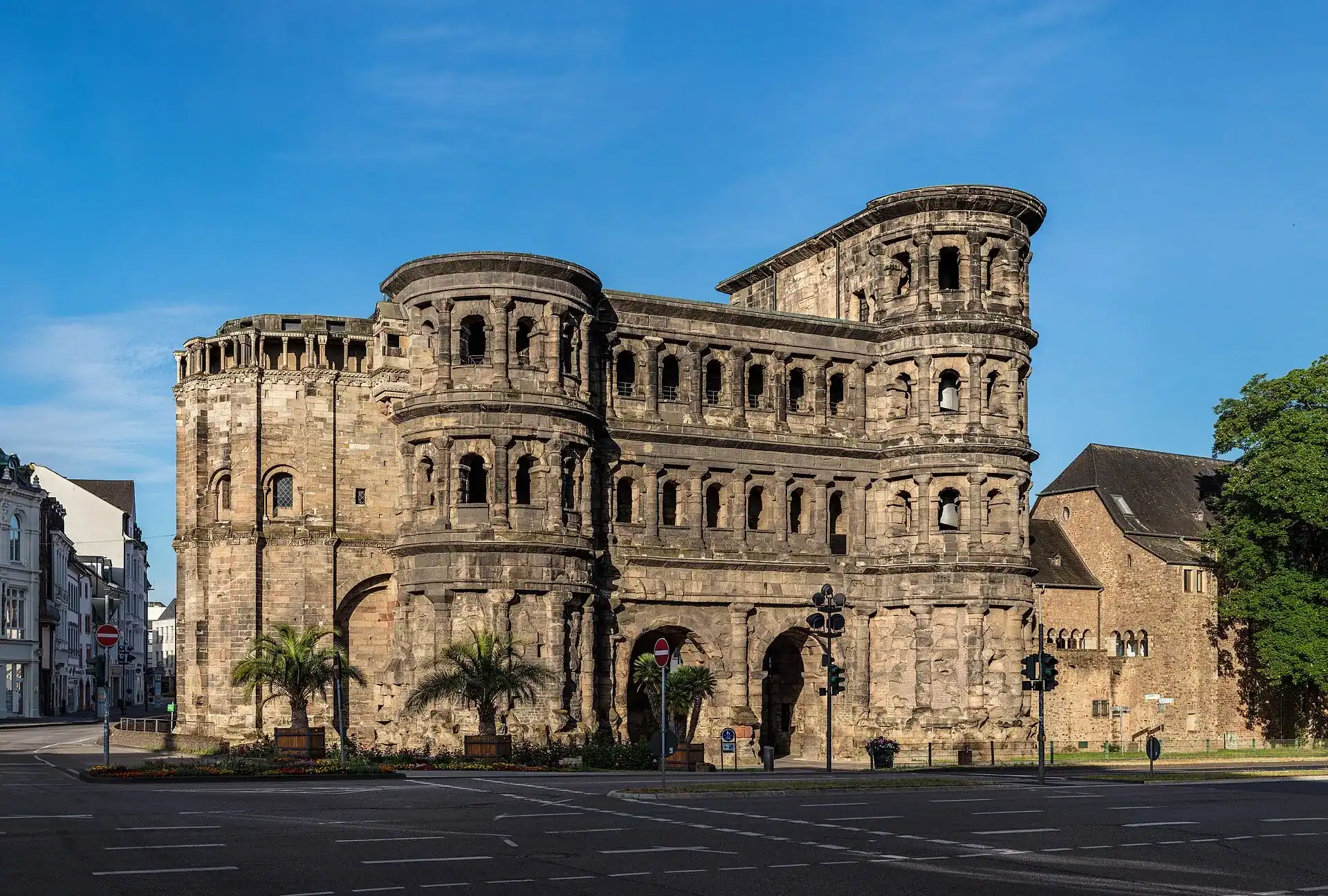 Photo: Thomas Wolf, www.foto-tw.de / Wikimedia Commons (CC BY-SA 3.0 de)