Cost of Living in Alberobello
Where this figure comes from. No cost survey covers Alberobello, so the $1,100 a month above is our own estimate rather than a measurement. On 416 of our 999 city guides the figure is built from a published Numbeo basket, a one-bedroom rent in the centre plus one person's monthly costs without rent, converted to USD; this city is not one of them. How we source everything.
Alberobello sits at the affordable end of the Italian spectrum, though it is not a bargain-basement destination like parts of Southeast Asia or the Balkans. A single nomad can live comfortably here on roughly $1,000 to $1,700 per month, with rent the biggest variable. Longer stays outside the summer peak stretch your money further, since off-season monthly rates on a trullo or apartment drop sharply once the day-tripper season fades. Groceries are inexpensive thanks to Puglia's rich agricultural output, and a plate of orecchiette or a glass of local Primitivo costs far less than in Rome or Milan. Utilities, a local SIM, and a coffee habit round out a modest budget. The town is small, so you will spend little on transport unless you rent a car to roam the Valle d'Itria.
- Rent (studio or small apartment, monthly): $550 to $950
- Groceries and household basics: $250 to $350
- Eating out and coffee: $150 to $300
- Local SIM and mobile data: $15 to $30
- Occasional car rental or regional transport: $80 to $200
Where to Work in Alberobello
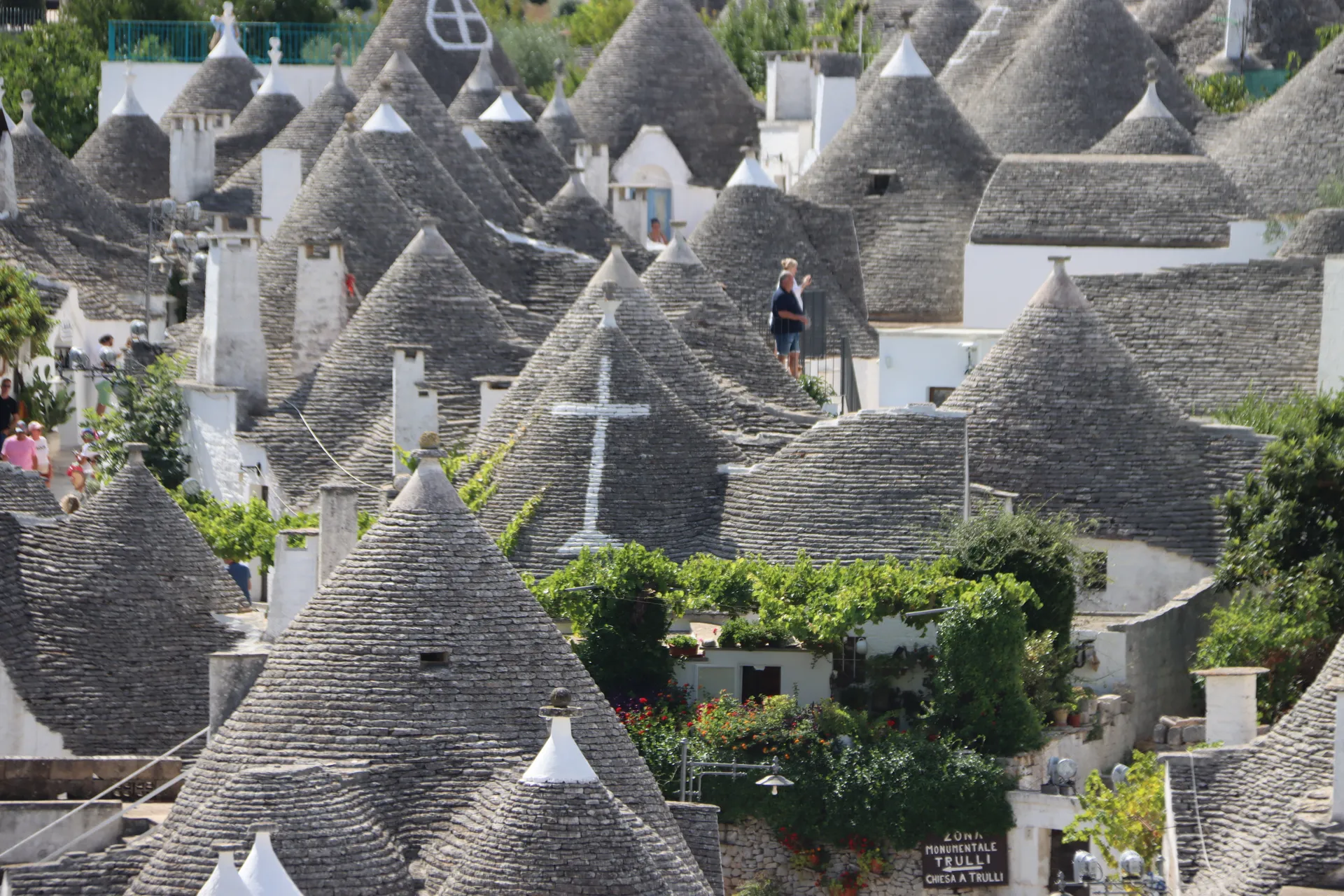
Nobody should arrive expecting a desk for rent: there is no coworking space to sign up to in Alberobello, which remains a small heritage town living off day visitors rather than a place people come to work. What it does have is reliable wifi in most cafes, guesthouses, and holiday trulli, which is enough for calls, email, and everyday remote work. The connection is generally fine, though the thick stone walls of a trullo can muffle a signal, so test yours before committing to a big video meeting. A converted trullo makes a genuinely memorable base, with cool interiors in summer and a working nook by a small window. For a change of scene, cafes around Piazza del Popolo and the edges of the Rione Monti district welcome laptops outside peak hours. If you need a buzzing office culture, this is not your town.
- Book a trullo stay with confirmed wifi and a dedicated desk or table
- Cafes near Piazza del Popolo are laptop-friendly in quieter windows
- Carry a mobile hotspot as backup for important calls
- Larger towns like Bari or Ostuni have coworking if you need it occasionally
Getting Around Alberobello
The historic trulli districts of Rione Monti and Aia Piccola are compact and best explored on foot, though the steep cobbled lanes reward sturdy shoes and take patience with a rolling suitcase. Everything in the old town is within a short walk, and the modern center around Piazza del Popolo is equally close. For wider travel, the Ferrovie del Sud Est train and regional buses connect Alberobello to Bari in around ninety minutes and link the pretty Valle d'Itria towns of Locorotondo, Martina Franca, and further afield Ostuni. Services can be sparse, especially on Sundays, so check timetables carefully. A rental car is genuinely useful for the olive-and-vine countryside, the caves of Castellana, and remote masserie farmstays. Bari Karol Wojtyla airport is the main gateway, roughly an hour away by road.
- Walk the trulli districts; expect steep, uneven cobbles
- Ferrovie del Sud Est trains reach Bari in about 1.5 hours
- Regional buses and trains link Locorotondo, Martina Franca, and Ostuni
- Rent a car for the Valle d'Itria countryside and Castellana caves
- Bari airport is the primary long-haul and international gateway
Sorting transport? Book an airport transfer, or compare car rental on Auto Europe and QEEQ.
Visas for Alberobello
Alberobello follows the same rules as the rest of Italy and the Schengen Area, so your paperwork is a national and European matter, not a local one. Many visitors from countries like the United States, Canada, Australia, and the United Kingdom can enter visa-free for up to 90 days within any rolling 180-day period, which suits a short cultural base but caps a longer stay. For those wanting to remain longer, Italy has introduced a digital-nomad and remote-worker visa aimed at higher-earning professionals, alongside more traditional long-stay and elective-residence routes, each with its own income, insurance, and documentation requirements. Summer flights from Dublin into Brindisi, about an hour's drive from the trulli, carry a quirk worth knowing: because Ireland sits outside the Schengen area, a non-EU traveller who connected there is registered by the Entry/Exit System at the Brindisi passport desk, so the allowance begins ticking on landing in Puglia rather than in Dublin.
- Schengen short-stay: up to 90 days in any 180-day window for eligible nationalities
- Italy's digital-nomad visa targets qualified remote workers meeting income thresholds
- Elective-residence and long-stay national visas suit longer, self-funded stays
Best Time to Visit Alberobello
Spring and autumn are the sweet spots for a nomad. From April to early June and again in September and October, the weather is mild and pleasant, the light is beautiful on the whitewashed trulli, and the crushing coach-tour crowds thin out noticeably. Summer, from July through August, is hot and very busy, with day-trippers pouring in through the middle of the day and the narrow lanes of Rione Monti packed shoulder to shoulder. If you come in summer, work in the mornings and explore late, once the tour buses leave and the town exhales. Winter is quiet, cool, and atmospheric, with far fewer visitors and lower prices, though some shops and restaurants keep reduced hours and the evenings can feel sleepy. For the best balance of comfort, calm, and value, aim for the shoulder seasons. Late September has a pull of its own: the feast of the patron saints Cosmas and Damian fills several days around the 27th, which is given over to the pilgrims who arrive from across the region for the late-morning procession, and the week closes with band concerts, street lights and fireworks. Book a room early for those dates, or make them the reason to come.
- Spring (April to June): mild, green, and pleasantly uncrowded
- Autumn (September to October): warm days, harvest food, thinning crowds
- Summer (July to August): hot and heavily day-tripped; work early, roam late
- Winter: quiet and cheap, but sleepy with reduced opening hours
Pros and Cons of Alberobello
Alberobello is one of the most photogenic small towns in Italy, and living among its UNESCO-listed trulli is a genuinely singular experience that no purpose-built nomad city can match. It is safe, affordable by Italian standards, and surrounded by the food, wine, and gentle countryside of the Valle d'Itria. The trade-offs are real, though. This is a tiny town built around heritage tourism, so the nomad scene is essentially non-existent, nightlife is quiet, and the community you build will lean local and expat rather than digital-nomad. English is limited outside tourist-facing businesses, and the daytime crush of visitors in peak season can wear thin. Weigh a charming, slow, deeply cultural base against the buzz and infrastructure of a larger hub, and decide honestly which one your work and temperament actually need.
- Pro: extraordinary trulli setting, safe, affordable for Italy, superb food and wine
- Pro: an ideal slow, cultural base with the Valle d'Itria on your doorstep
- Con: no coworking, thin nomad community, and quiet nightlife
- Con: heavy day-tripper crowds in peak season and limited English
Who Alberobello Is For
Alberobello rewards a particular kind of nomad. If you are drawn to history, architecture, and a slow rhythm of life, and if your work is steady, independent, and calls-light, you will find few places more charming to settle into for a few weeks. It suits writers, designers, solo travelers, and couples who want beauty, good food, and long walks over a packed social calendar. It is a wonderful base for exploring Puglia at an unhurried pace, ideally with a car and a flexible schedule. It is a poor fit if you need a lively community of other nomads, a bustling coworking scene, a dependable nightlife, or a big-city safety net for meetings and errands. Come for the trulli, the wine, and the quiet, and let a larger hub handle your busiest, most social work seasons.