Cost of Living in Koror
Where this figure comes from. No cost survey covers Koror, so the $2,100 a month above is our own estimate rather than a measurement. On 416 of our 999 city guides the figure is built from a published Numbeo basket, a one-bedroom rent in the centre plus one person's monthly costs without rent, converted to USD; this city is not one of them. How we source everything.
Budget around $2,100 a month as a solo remote worker in Koror, which is expensive and reflects a Pacific island nation of eighteen thousand people that imports almost everything. A one-bedroom place runs roughly $800 to $1,300. Groceries carry the full Pacific freight markup and fresh produce is limited. Palau uses the United States dollar, which removes any conversion. Diving is the line that dominates a real budget here, along with the environmental fees the country charges visitors. This is our own estimate rather than a reconciliation against measured data. Electricity is among the most expensive anywhere, since it is generated from imported diesel, and air conditioning through a humid year is what takes a bill from high to alarming. Eating out is limited and priced for visitors rather than residents, though the small local places serving fish and taro are both cheaper and better. Anyone staying months rather than days should ask operators about a resident or multi-day dive rate, which changes the arithmetic entirely, and should bring their own gear: rental adds up quickly and the choice on the island is narrow.
Where to Work in Koror
Palau's connectivity improved substantially with the Belau submarine cable and a second connection added since, and fibre reaches Koror at workable speeds, though prices are high and outages happen. Mobile data covers the populated islands. Power is reliable in Koror and expensive. There is essentially no coworking. Palauan and English are both official and English is used throughout government, business and education, which makes Palau one of the easiest Pacific nations to operate in. The country sits nine hours ahead of London. Anyone working with Australia will find the offset small, at an hour behind eastern Australian time, which makes that the practical business overlap. Humidity is the quiet enemy of equipment here, and anything left in an unconditioned room for a season will show it, so a dehumidifier or a dry box for cameras and drives is not an affectation. Work from the rental rather than expecting a cafe to serve the purpose. The other practical point is that mornings belong to diving: boats leave early and are back mid-afternoon, so people who stay long term tend to work the evening, which happens to be when Europe comes online.
Getting Around Koror
Koror is the country's main town and is compact enough to move around by taxi or the occasional bus, though most visitors rent a car. A causeway connects Koror to Babeldaob, the much larger and almost empty main island, where a single ring road passes the new capital at Ngerulmud, a purpose-built complex serving a country of eighteen thousand. Everything that matters, though, is by boat: the Rock Islands, the dive sites and Jellyfish Lake are all reached from the Koror harbours. Babeldaob also holds the Ngardmau waterfall and the stone monoliths at Badrulchau, both of which almost no visitor reaches. Getting to Palau at all is the harder journey. The airport takes a small number of flights from Taipei, Manila, Seoul and Guam, several of them at night and none of them daily, so an itinerary gets built around the schedule rather than the other way round. Speed limits on the islands are low and genuinely enforced. Peleliu and Angaur to the south are reached by state boat or a charter, and a kayak opens up the nearer Rock Islands without a tour, which is the cheapest good day out here.
Sorting transport? Book an airport transfer, or compare car rental on Auto Europe and QEEQ.
Visas for Koror
Palau grants visa-free entry to citizens of most countries for thirty days, extendable in-country, and to United States citizens indefinitely under the Compact of Free Association. On arrival every visitor must sign the Palau Pledge, stamped into the passport, a commitment to act responsibly toward the environment addressed to the children of Palau, which is the only such requirement anywhere. There is no remote work visa. An environmental impact fee is charged on departure and a separate permit is needed for the Rock Islands. Anyone diving should budget for the Rock Islands permit and the Jellyfish Lake surcharge separately, since both are charged in addition to the dive itself. Extensions are handled at the immigration office in Koror and granted a month at a time for a fee, so a long stay becomes a recurring errand rather than one application. Taking paid work in Palau needs a permit and is tightly controlled, since employment is protected for Palauans. Reef-toxic sunscreen is banned outright, the first such ban anywhere, and prohibited products are taken off you on arrival, so buy it locally rather than pack it.
Best Time to Visit Koror
Palau is warm and humid all year at around thirty degrees, and the calendar turns on rain and wind. November to April is the drier half with the calmest seas and the best diving visibility, and it is the busy season. May to October is wetter, and while Palau sits at the edge of the western Pacific typhoon belt it is struck far less often than the Philippines or Guam. Diving is possible year-round and the manta and shark aggregations at German Channel and Blue Corner are not seasonal. Anyone hoping to dive Blue Corner should be aware it is a current dive requiring a reef hook, and operators will ask about logged experience. Some of the best diving is tied to the moon rather than the month: the grouper and bumphead parrotfish aggregations gather around particular lunar phases in the spring, and operators plan for them well ahead. Rain in the wetter half tends to arrive in heavy bursts rather than settled grey days, so a wet-season trip loses far less water time than the averages imply, and it is meaningfully cheaper and emptier for it.
Pros and Cons of Koror
Palau made its entire exclusive economic zone a marine sanctuary in 2015, closing eighty per cent of it to commercial fishing, and the diving that results is regularly called the best in the world: Blue Corner, German Channel, the Ulong Channel and dozens of Second World War wrecks. The Rock Islands are a UNESCO World Heritage site and Jellyfish Lake holds millions of stingless jellyfish. It is expensive, very small indeed, English-speaking but extremely remote with it, and there is essentially nothing to do that is not on or under the water. Medical care runs to a small hospital, and anything serious means evacuation to Taiwan, Guam or Manila, which is a long way from a reef. And Jellyfish Lake is a reminder that this is a fragile system rather than a fixed attraction: the population collapsed during a drought in the middle of the last decade and the lake was closed to visitors for about two years before it recovered. What compensates is a country that has been more serious than almost any other about protecting exactly what people come for.
Who Koror Is For
A diver, and as with Bonaire the honest answer is that hardly anyone else should bother. For someone who wants world-class diving with English throughout and the dollar as currency, Palau is exceptional and the country has organised its entire environmental policy around keeping it that way. Somebody who does not dive has removed the reason Palau exists as a destination, the prices are high in the way that remote Pacific imports always are, and variety runs short quickly on small islands served by a handful of long flights. Pacific war history is unusually present here. The Peleliu battlefield to the south sits largely as it was left in 1944, with the equipment still where it stopped rather than gathered into a museum. Marine biologists and conservation people are the other group who genuinely belong here, since Palau functions as a working example of what a protected ocean looks like and the research presence reflects it. For everyone else the honest recommendation is weeks rather than months, because however good the reef is it is still the same fifteen or twenty sites, and most people find they have taken what they came for well before a visa run becomes necessary.
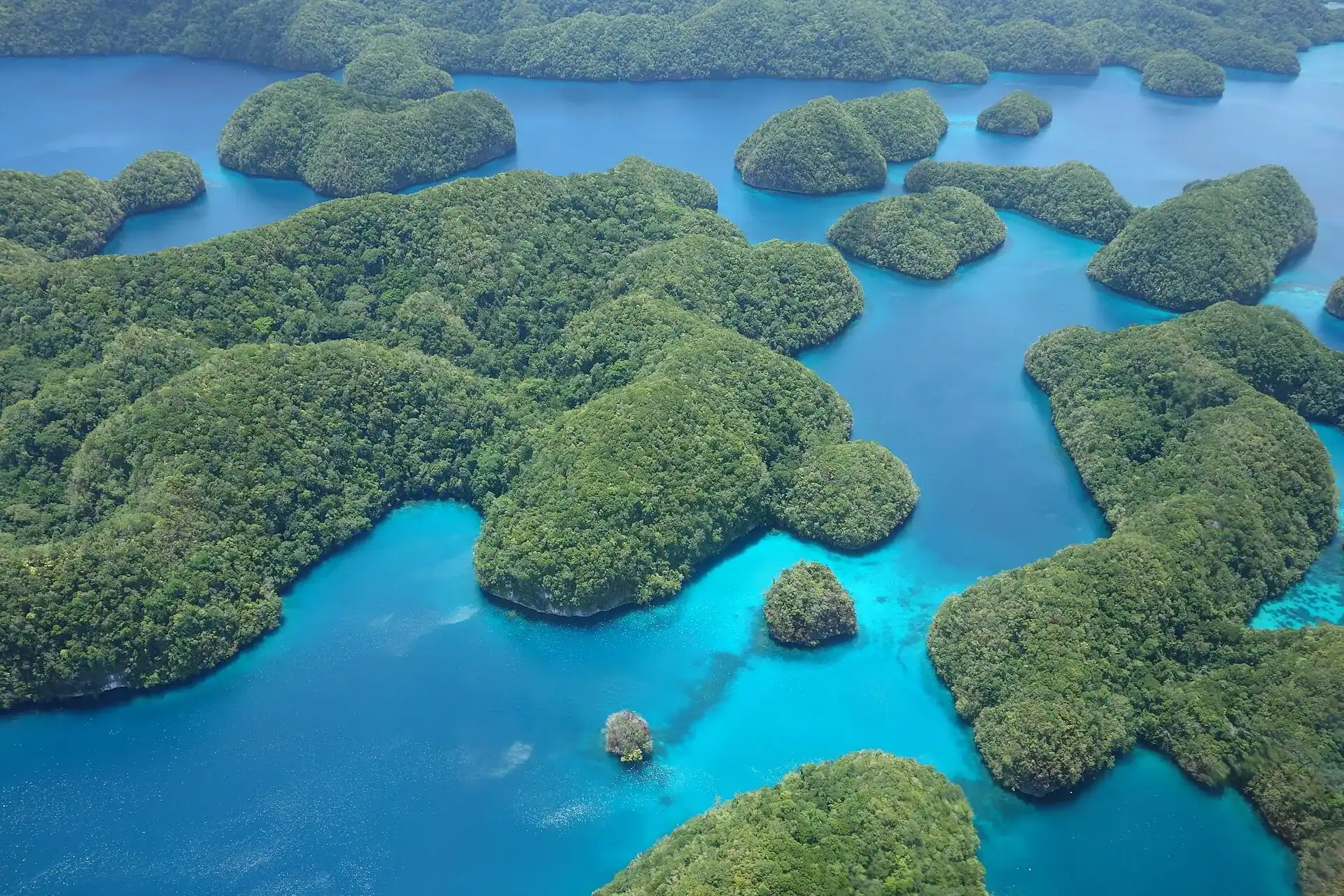 Photo: Luka Peternel / Wikimedia Commons (CC BY-SA 4.0)