Cost of Living in Stone Town
Where this figure comes from. No cost survey covers Stone Town, so the $900 a month above is our own estimate rather than a measurement. On 416 of our 999 city guides the figure is built from a published Numbeo basket, a one-bedroom rent in the centre plus one person's monthly costs without rent, converted to USD; this city is not one of them. How we source everything.
Stone Town is not the cheapest base in East Africa, but it is still affordable by nomad standards, roughly $1,200 to $2,200 a month for a comfortable single-person budget including rent. A one-bedroom apartment in or near the old town runs $400 to $900 a month, more if you want reliable air conditioning and a generator backup for the frequent power cuts. Guesthouse rooms and short-term rentals through local agents are common since long-term listings on the big platforms are thin. Food splits sharply in two: eating like a local at Forodhani Gardens or small Zanzibari cafes (rice, beans, mishkaki, Zanzibar pizza) costs $3 to $6 a meal, while the tourist-oriented rooftop restaurants around Shangani and Kiponda charge $12 to $25 a plate. Imported goods, sunscreen, wine, specialty groceries, are expensive because almost everything arrives by ferry or plane. Budget an extra buffer for bottled water, since tap water is not drinkable.
Where to Work in Stone Town
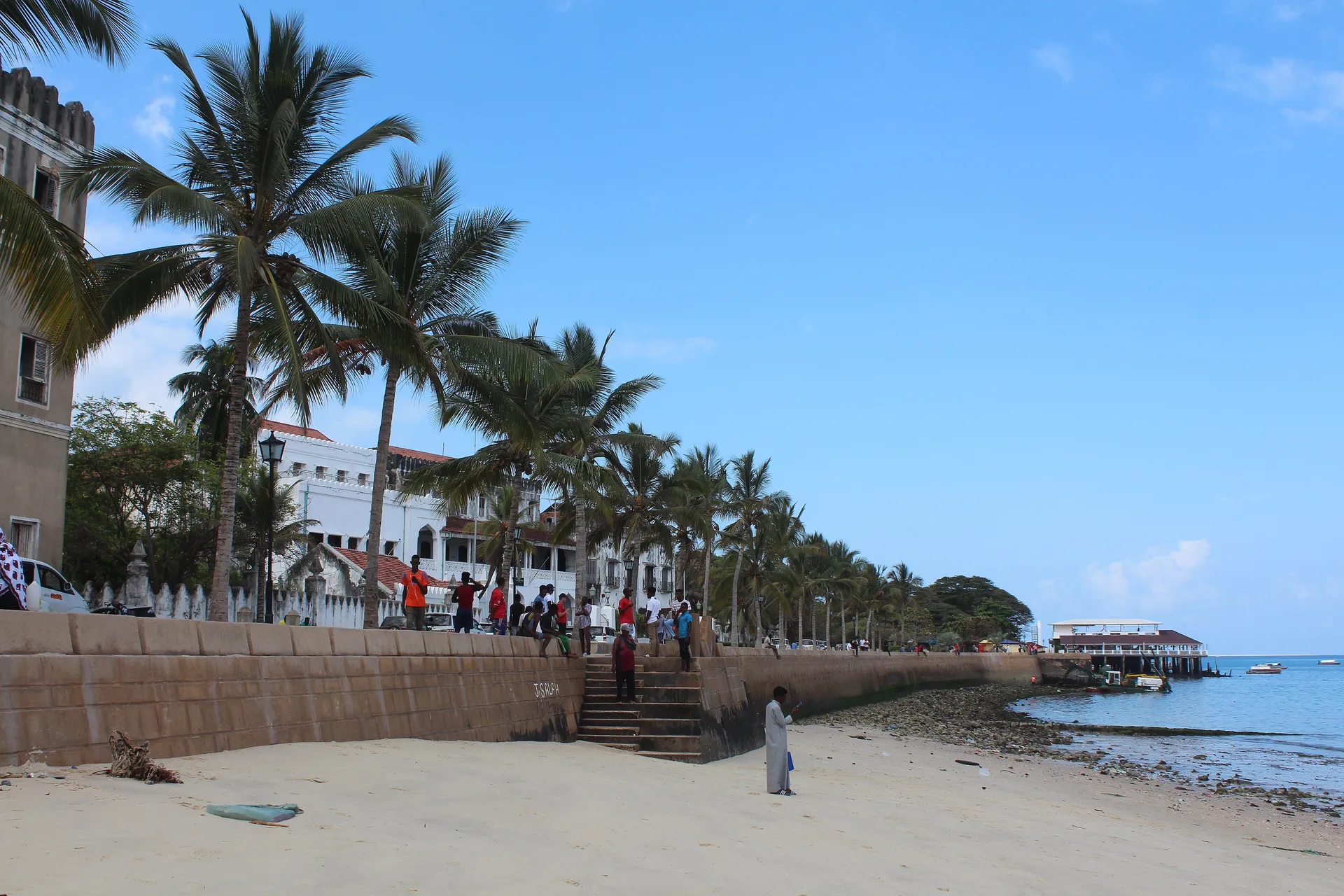
Stone Town itself has very little dedicated coworking infrastructure. Most remote workers park at hotel rooftop cafes and a handful of laptop-tolerant coffee shops in Shangani and around the old fort, working in short bursts around the heat and the wifi's mood swings. Emerson Spice's rooftop and a few boutique hotel lounges will let you nurse a coffee for a couple of hours if you order enough. The honest picture: this is not Bali or Canggu with rows of coworking desks, it is closer to "find a shaded corner with a plug and a signal and defend it." Many long-stay nomads based on Zanzibar actually work from the east-coast kite beaches (Paje, Jambiani) where a few real coworking spaces have opened, then come into Stone Town for a few days at a time for culture, food, and errands like visa runs or ferry connections. If you need videocalls or large uploads, keep a local SIM with mobile data as backup, since cafe wifi drops out often, especially during power cuts.
Getting Around Stone Town
The old town itself is entirely walkable, in fact cars barely fit through most of its coral-stone alleys, so daily life happens on foot, dodging bicycles and the occasional motorbike. For anywhere else on Unguja island, dala-dalas (shared minibuses) are the cheap, slow, crowded default, while tuk-tuks (bajaji) and metered-ish taxis are the faster, pricier option for direct trips to the airport or the beach towns, always agree the fare before getting in. Renting a scooter or small car is popular for reaching Nungwi, Paje, or Jambiani, roads are rough in places and driving is on the left. To reach the mainland, fast ferries run between Stone Town's port and Dar es Salaam in about two hours, book the reputable operators (Azam Marine is the established name) since safety standards vary and overloaded older boats have had serious incidents in the past. Zanzibar's Abeid Amani Karume International Airport has direct flights from several European hubs plus regional connections via Nairobi, Dar, and Addis Ababa.
Sorting transport? Book an airport transfer, or compare car rental on Auto Europe and QEEQ.
Visas for Stone Town
Tanzania (which Zanzibar is part of) offers visa-on-arrival for many nationalities and a straightforward eVisa applied for online in advance through the official Tanzania immigration portal, typically issued as a single-entry 90-day tourist visa for around $50 to $100 depending on nationality, with US citizens paying more. Apply at least a few days ahead of travel and keep the approval PDF and a printed copy, since immigration at Zanzibar's airport and the Stone Town port both check it. Extensions are possible through the immigration office in Zanzibar Town but involve queuing and patience. There is no formal digital nomad visa for Tanzania as of writing, so long-stayers typically do visa runs or extensions to stay legal, and should not rely on remote work being an explicitly sanctioned visa category. Flying or sailing straight to the island adds one obligation: since October 2024, visitors whose first point of entry is the archipelago must buy travel insurance from ZIC, the island government's own insurer, for the length of their stay, up to 92 days, whatever cover they already hold.
Best Time to Visit Stone Town
The most comfortable stretch is June through October, dry season with lower humidity, sea breezes, and the best diving and beach visibility on the island. December to February is also dry-ish and popular but hotter and more humid. Avoid, or at least plan around, the long rains from March to May, when Stone Town's narrow streets flood, humidity spikes, and many guesthouses close for maintenance, it is genuinely the low point of the year for both weather and infrastructure reliability. The short rains in November are lighter and more manageable, brief afternoon downpours rather than days of steady rain. Year-round, expect heat and humidity that make un-airconditioned upper floors uncomfortable at midday. Ramadan, which falls across February and March in 2026 and 2027, changes the old town more than the weather does: many local cafes stay shut until sunset, eating or drinking in the street by day is frowned on, and the evenings come alive instead, so anyone working through it should keep a kitchen or a hotel restaurant within reach.
Pros and Cons of Stone Town
Pros: a genuinely unique UNESCO old town with carved doors, layered Swahili, Omani, Indian and colonial history, excellent fresh seafood, a real sense of place rather than a manufactured nomad bubble, easy access to world-class beaches and diving within an hour's drive, and a slower pace of life. Cons: wifi and power are inconsistent, with scheduled and unscheduled outages that disrupt calls and uploads, dedicated coworking is scarce, petty theft (phone and bag snatching, especially after dark in quieter alleys) does happen and is worth taking seriously, healthcare for anything beyond minor issues means a flight to Dar es Salaam or further, and the maze-like streets combined with poor lighting make solo night walks something to plan around rather than assume is fine. The coral-stone buildings are more fragile than they look: part of the House of Wonders, the sultan's palace of 1883 and the first building in East Africa with a lift, collapsed during renovation work in December 2020, and the town's older upper floors deserve a careful look before you rent one.
Who Stone Town Is For
Stone Town suits nomads who want cultural immersion and history alongside their work, not a plug-and-play coworking scene, people who are comfortable improvising around patchy infrastructure and treat a good local SIM and a power bank as essential kit. It is a strong fit for slow travelers, writers, and anyone building a Zanzibar stay that mixes a few days of old-town culture with longer stretches on the coworking-friendlier east coast beaches. It is a weaker fit for anyone who needs guaranteed fast wifi for daily video calls, wants a large existing remote-work community on their doorstep, or is not willing to dress conservatively (covering shoulders and knees) out of respect for the predominantly Muslim old town. Anyone who wants the town's history straight, not only its carved doors, should start at Christ Church: the Anglican cathedral was built on the site of the largest slave market, with its altar where the whipping post stood, and a museum beside it tells that story plainly. Music fans come looking for Freddie Mercury, who was born here, and readers for the Nobel laureate Abdulrazak Gurnah, who also came from Stone Town.