Cost of Living in Arusha
Where this figure comes from. No cost survey covers Arusha, so the $820 a month above is our own estimate rather than a measurement. On 416 of our 999 city guides the figure is built from a published Numbeo basket, a one-bedroom rent in the centre plus one person's monthly costs without rent, converted to USD; this city is not one of them. How we source everything.
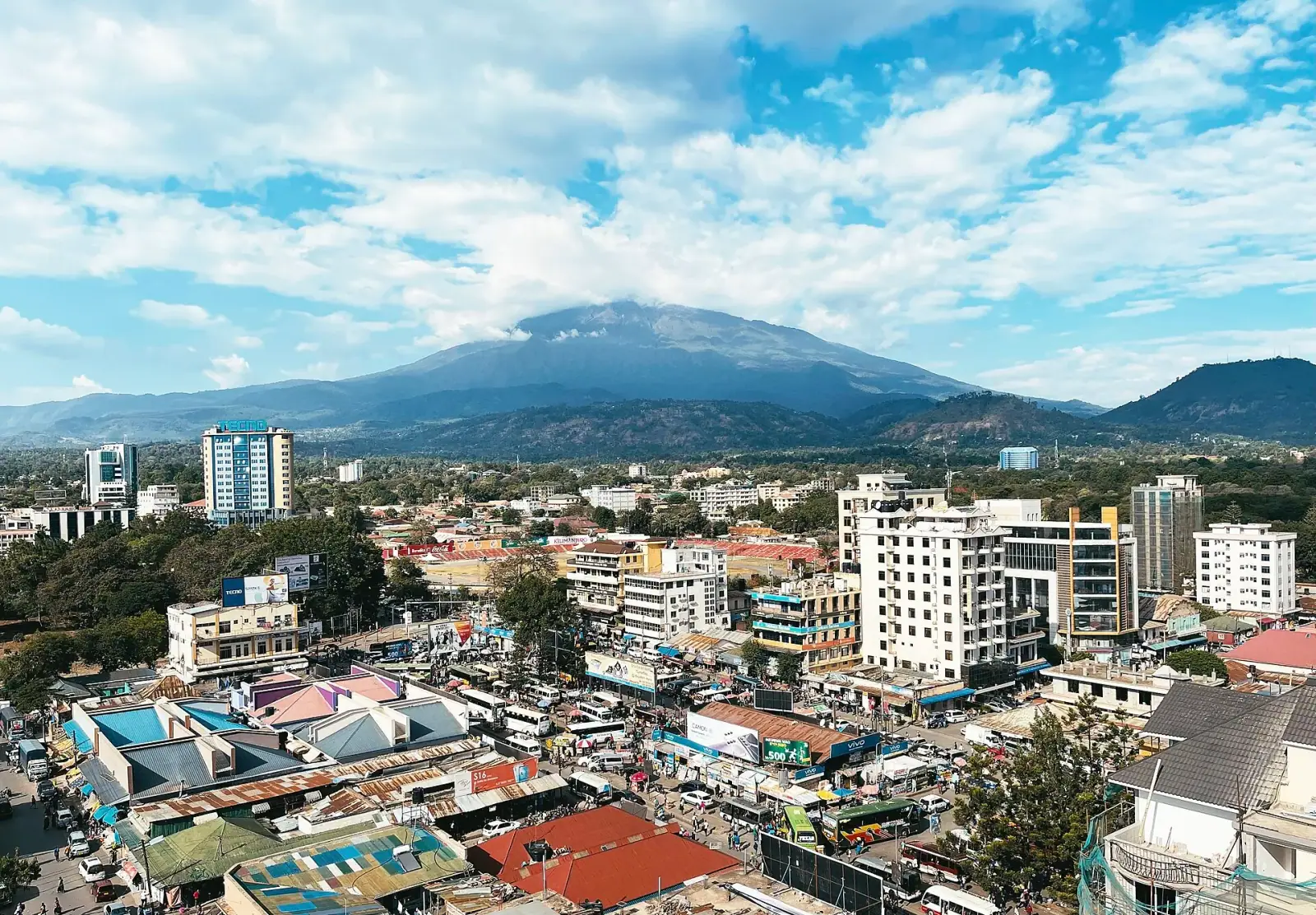
Arusha sits at roughly 1,400 metres above sea level and benefits from a cooler, highland climate that keeps costs moderate relative to other African cities with comparable amenities. Expect a monthly budget in the range of $800-1,400 depending on your lifestyle and accommodation choices.
- Rent, central area (Haile Selassie Road, CBD, Njiro): $330-500 per month for a furnished one-bedroom
- Rent, cheaper outer areas (Sakina, Kimandolu): $180-300 per month for a one-bedroom
- Groceries: $100-150 per month if you cook locally; fresh produce from Arusha Central Market is very affordable
- Eating out, local spot (ugali, nyama choma, chips mayai): $2-4 per meal
- Eating out, mid-range restaurant: $10-20 per meal
- Coworking hot-desk: $100-140 per month (Link Space, Anza Hub) or as low as $1.50 per day at Anza Hub
- Local transport (dala dala minibuses): $0.15-0.35 per ride; Bolt app rides typically $2-5 for short trips
- Total monthly range: $800-1,000 for a budget-conscious nomad; $1,200-1,600 for a more comfortable setup
Utilities (electricity, water) add roughly $40-60 per month. Power outages occur, so factor in a backup battery or choose accommodation with a generator.
Where to Work
The coworking scene in Arusha is small but growing. Two dedicated spaces stand out as reliable options for remote workers.
- Link Space Tanzania (Kaloleni, DENSO Building): The most established space, with high-speed fibre WiFi, ergonomic furniture, complimentary coffee, and a professional atmosphere. Membership rates are on request; the space targets both freelancers and teams.
- Westerwelle Startup Haus Arusha (Bondeni Street, 6th Floor, Mega Complex): A startup-focused hub with strong WiFi and a tech community feel. Offers daily, weekly, and monthly desk access alongside events and networking.
- Anza Hub (Old Moshi Road, NSSF Mafao House, 7th Floor): Run by the Anza accelerator. Daily hot-desks cost just $1.50, making it one of the most affordable options in any East African city. Fast internet, backup generator, and free beverages.
Cafe culture for work is still developing. Africafe on Boma Road near the Clock Tower is the most reliable laptop-friendly cafe, with free WiFi and power outlets. Via Via near the Clock Tower is atmospheric but gets noisy in the evenings. Outside of these spots, most local restaurants do not cater well to laptop workers.
The WiFi situation in Arusha is honest. Fibre is available in the city centre and reaches most coworking spaces. Mobile data via Vodacom or Airtel on 4G LTE is a solid backup. Speeds drop in residential outer areas and outages happen, so coworking spaces with generators and fibre backup are worth the monthly fee if reliable connectivity is critical for your work.
Getting Around
Arusha is a compact city and you can walk across the central area in about 45 minutes. The CBD, Clock Tower area, and Njiro corridor are reasonably walkable during daylight hours, though pavements vary in quality and traffic is chaotic.
For longer trips, dala dalas (shared minibuses) run fixed routes for under $0.50 per ride and cover most of the city. They are crowded and schedules are informal, but they are the way locals get around. Bolt works well in Arusha for app-based taxis and is the most convenient option for nomads; a 5-kilometre ride costs roughly $2.50-4. Bajajis (tuk-tuks) and boda bodas (motorbike taxis) fill gaps but come with safety trade-offs.
Kilimanjaro International Airport (JRO) serves Arusha and is located about 50 kilometres east of the city, roughly a 70-90 minute drive depending on traffic. There is no train or bus link; you will need a private transfer ($50-80) or a shared shuttle ($15-25). Arusha also has a small domestic airstrip (ARK) for bush flights to parks. Budget extra time for the airport run; morning traffic into the CBD can slow things down significantly.
Sorting transport? Book an airport transfer, or compare car rental on Auto Europe and QEEQ.
Visas and Staying Long-Term
Tanzania does not offer a dedicated digital nomad visa as of 2026. Your main options are:
- Tourist eVisa (single entry): $50, valid for 90 days from arrival. Available online before travel. Tanzania phased out visa-on-arrival in January 2025, so apply online at the Tanzania Immigration portal before you fly.
- Multiple-entry eVisa: $100, valid for 12 months with individual stays of up to 90 days each. Good if you plan to base here and travel regionally to Kenya, Rwanda, or Uganda.
- Extensions: You can apply to extend a single-entry visa at the Immigration Department office in Arusha (on Simeon Road). Extensions are generally granted but add bureaucratic overhead.
- East African Tourist Visa: $100, covers Tanzania, Uganda, and Kenya in a single trip for up to 90 days.
Most Western, European, and many other passports qualify for the eVisa. Your passport must have at least 6 months of validity remaining from your entry date.
Best Time to Visit
Arusha's elevation keeps temperatures comfortable year-round, ranging from around 15-28 degrees Celsius. Unlike lowland East African cities, it never gets oppressively hot. The challenge is the two rainy seasons.
- Long rains (March-May): Heavy, daily rain, muddy roads, some flooding. Not ideal for getting around, though indoor work is unaffected and accommodation rates drop.
- Short rains (November-mid December): Lighter and more predictable than the long rains; usually afternoon showers.
- Best window (June-October): Dry, sunny, low humidity, and comfortable temperatures. This is also peak safari season so accommodation prices and tourist density rise.
- Shoulder seasons (January-February): A solid balance of dry(ish) weather, fewer tourists, and lower prices. January and February see some rain but far less than the main rainy season.
For remote work, any time of year is workable since coworking spaces and internet are indoors. If you also want to explore the surrounding national parks and hike on weekends, June through October is the clear winner.
Pros and Cons
- Very low cost of living relative to other emerging nomad hubs in Africa
- Pleasant highland climate, no extreme heat, no harsh winters
- Gateway to world-class nature: Serengeti, Ngorongoro, Kilimanjaro, and Arusha National Park all within reach
- Growing tech and startup community with friendly, English-speaking professionals
- Authentic, non-touristy city life alongside safari infrastructure
- East Africa's regional connectivity, easy to hop to Nairobi, Zanzibar, or Dar es Salaam
- Small coworking scene: only a handful of spaces, limited for those needing large networks or niche events
- Internet reliability outside the centre can be frustrating; power cuts are real
- Airport is far: 50 km transfer adds cost and time to every trip
- Limited direct international flights; usually connect via Nairobi or Dar es Salaam
- Safety requires awareness at night: petty crime exists, walking alone after dark in some areas is inadvisable
- No digital nomad visa: 90-day tourist limit requires planning for longer stays
Who Arusha Is Best For
Arusha suits nomads who want low costs, a meaningful outdoor life outside working hours, and the experience of living in a real East African city rather than a polished expat bubble. If you can handle occasional WiFi hiccups and enjoy the idea of weekend safaris or treks to Kilimanjaro base camp as your version of a "weekend away," Arusha is genuinely compelling.
It works particularly well for:
- Adventure-oriented nomads who want nature access baked into their base
- Long-stay travellers doing 2-3 month stints while also exploring the region
- Those in the conservation, social enterprise, or East Africa tech space who want proximity to that community
- Budget-focused workers who want comfort without paying Nairobi or Cape Town prices
You should probably skip Arusha if fast fibre and multiple coworking options are non-negotiable for your workflow, if you rely on frequent direct international flights, or if a lively urban nightlife and restaurant scene is central to your experience. The city is focused on safari tourism and local business, not on catering to remote workers, and that shows in the infrastructure.