Cost of Living in Kandy
Real market data
Source: Numbeo · September 2026
$400/moSolo nomad1-bed centre + living costs
$580/moCoupleshared 1-bed + costs
$340/moLean / localcheaper area + costs
- 1-bed rent, city centre$170Rs57,500
- 1-bed rent, outside centre$110Rs37,500
- Monthly costs excl. rent (1 person)$230Rs75,868
- Meal, inexpensive restaurant$3Rs900
- Monthly transit pass$4Rs1,500
- Buy price, per m² (centre)$400Rs134,549
Prices are from Numbeo (September 2026), converted to USD at $1 = Rs335.83 (01 Aug 2026). The monthly living-costs figure is our transparent one-person basket, groceries, a few meals out, utilities, phone, internet, transport and essentials, priced from those figures. Solo adds central rent; couple and lean are estimates from the same numbers.
Kandy is affordable, a little cheaper than Colombo and gentler on the wallet than Sri Lanka's beach hotspots. A comfortable single-person budget runs roughly $800 to $1,200 a month. A furnished flat or a room in a guesthouse near the lake or in the surrounding hills costs about $250 to $500 for a longer stay, and local rice-and-curry meals cost just a couple of dollars. These are our editorial estimates in US dollars, shaped by Sri Lanka's post-2022 price rises, and living a little outside the compact centre or eating local keeps costs comfortably low. Electricity is the surprise. Tariffs rose steeply after the economic crisis and have been revised repeatedly since, so running air conditioning through the day can produce a bill that looks out of place beside the rent, though the hill climate means you rarely need it. A view costs money here in a way floor space does not: the same size room looking over the water or the hills can be half again as much as one facing a wall. Imported groceries and anything electronic carry a heavy premium.
- Furnished room or flat, long stay: roughly $250 to $500 a month
- Rice and curry at a local spot: roughly $2 to $3
- Tuk-tuk across town (PickMe): roughly $1 to $2
- Scenic hill-country train ticket: a few dollars
Where to Work in Kandy
Kandy is a cultural town rather than a coworking hub, so set expectations accordingly. SLT fibre reaches much of the city and handles calls well in a well-chosen home, but speeds are more modest than in a major capital, so test any accommodation's connection before committing. Dedicated coworking is very limited; most remote workers pair a home fibre line with laptop-friendly cafes around the lake and centre. A Dialog or Mobitel SIM with a generous data package is a sensible backup. Treat Kandy as a calmer, culture-rich base for focused work rather than a place with a busy nomad-office scene. The island shares India's offset from UTC, which puts a comfortable afternoon overlap with Europe and makes anything transatlantic a very early or very late commitment. Rain on a tin or tile roof in the wetter months is loud enough to ruin a call, so find out what is over your head before you sign anything. Rolling outages returned during the worst of the economic crisis and have never entirely stopped being a possibility, so a power bank and a tethered phone are not paranoia here, they are the normal setup.
Getting Around Kandy
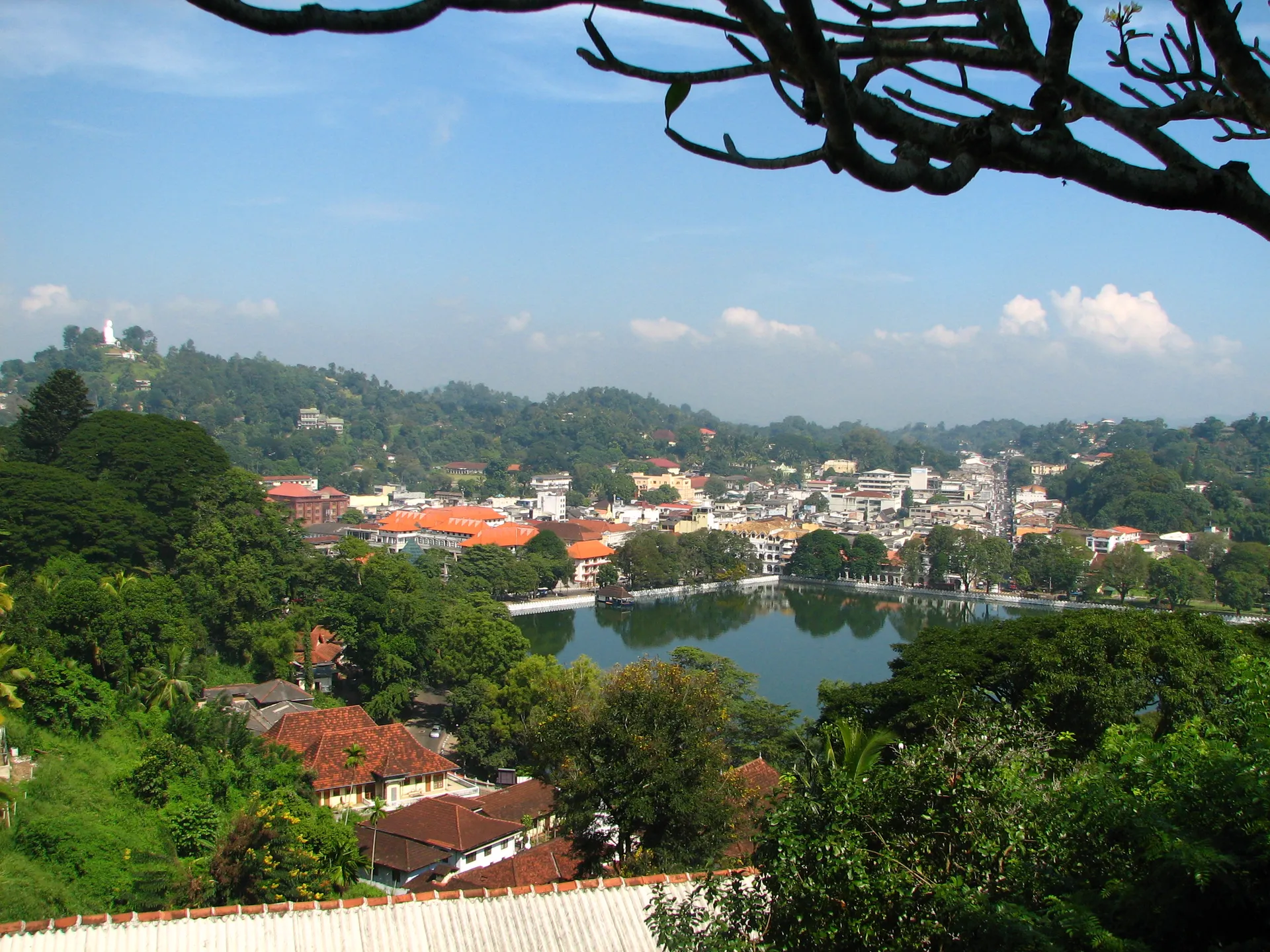
Kandy's centre, wrapped around its serene lake, is compact and walkable, with the Temple of the Tooth, markets and main streets within easy reach on foot. Tuk-tuks handle longer or uphill trips, and the PickMe app gives metered, fair-priced rides. The real highlight is the railway: Kandy sits on one of the world's most beautiful train lines, winding up through tea country to Ella and Nuwara Eliya, and down to Colombo. Intercity buses are cheap if crowded. The nearest airport is Colombo's, a few hours away by expressway and road. Book the hill train ahead if you want a reserved seat; the observation and first-class carriages sell out days in advance in high season, while third class is unreserved, cheap and often the better experience with the doors open. The single road circling the lake is a genuine bottleneck at school times and in the evening, so a journey that takes ten minutes at noon can take forty at five. On foot the town is safe and easy, though the pavements are narrow and the traffic gives way to nobody, so walk with some assertiveness.
Sorting transport? Book an airport transfer, or compare car rental on Auto Europe and QEEQ.
Visas for Kandy
Most visitors enter Sri Lanka on an Electronic Travel Authorization, granting a 30-day stay applied for online before arrival. It can be extended through the immigration department's online system, commonly to 90 days and, with further paperwork, up to six months, which makes a longer stay in Kandy realistic without leaving. Sri Lanka has floated longer-stay and remote-work visa options. Overstaying carries fines, and visa policy has changed several times in recent years, so treat secondhand advice with caution. That spares the old day of travel down to Colombo and back, though it still pays to apply a week before the permit runs out rather than in its final days. The fee for the entry authorisation has been changed, challenged and changed again repeatedly over the last few years, so the amount someone quotes you from their own trip is worth nothing; check the official portal on the day you apply. Foreign visitors also pay a separate, higher entry price at heritage sites, which is worth knowing when budgeting a month of sightseeing.
Best Time to Visit Kandy
Kandy sits in the hills at around 500 metres, giving it a cooler, fresher climate than the coast, with pleasant days and mild evenings year-round. The drier, brighter months tend to run from around January to April, while the inter-monsoon periods bring afternoon showers and the southwest monsoon adds rain from May onward, though downpours are often short. The cultural highlight is the Esala Perahera in July or August, a spectacular nightly procession of drummers, dancers and decorated elephants, which is unforgettable but pushes accommodation prices and crowds up sharply. Every full moon is a public holiday on this island, and on those days shops shut early, alcohol is not sold and the town fills with people going to the temple, which is charming the first time and worth diarising thereafter. The island's new year in mid-April empties the cities as families travel home, so transport is packed for a week and then everything goes quiet. If you want the hills at their greenest without the procession crowds, aim for late February or early March.
Pros and Cons of Kandy
Kandy trades coastal buzz for cool-climate calm and deep culture. What that trade actually buys is sleep and concentration. The nights are cool enough to need a blanket, which on this island is a luxury, and the town winds down early rather than running until three like the beach towns do. People who come from the south usually notice within a week that they are working better and going out less. Whether that reads as a benefit or a sentence depends entirely on what you wanted from the year. The limitation is size. This is a town of a few hundred thousand with one real centre, and after two or three months you will know every cafe worth sitting in and have met everyone you are going to meet. It repays a stay that has something behind it, a book, a course, a project, far more than it repays open-ended drifting.
- Pros: a cooler hill climate, a beautiful lakeside setting, the sacred Temple of the Tooth and rich Kandyan heritage, easy access to tea country by scenic rail, widely spoken English, low costs and a safe, relaxed feel.
- Cons: a very small nomad community, modest internet and little coworking, minimal nightlife, frequent rain in the wetter months, and a compact town that can feel limiting for a long stay compared with a bigger city.
Who Kandy Is For
Kandy is for the culture-loving, slower-paced nomad who prefers cool hills and heritage over beaches and nightlife. Anyone drawn to temples, tea country, hiking and one of the world's great train journeys will find it a rewarding base, and the easy English and low costs smooth daily life. It suits writers, wellness-minded travellers and those happy with their own company or a small circle rather than a ready-made scene. It is a weaker fit for those who need fast, guaranteed internet, a lively coworking community or a buzzing social life. Base yourself near the lake, take the train into the hills at weekends, and let Kandy's calm set the pace. Anyone studying something, whether that is meditation, Ayurveda, a language or a craft, does unusually well here, because the town is organised around exactly that kind of patient, repeated attendance. So does anyone with a partner or family, since the cool nights, the low costs and the general safety add up to a far easier domestic life than a beach town offers. The single traveller looking for other single travellers is the one who tends to leave early, and they usually head south to the coast rather than home.