Cost of Living in Stepantsminda
Where this figure comes from. No cost survey covers Stepantsminda, so the $800 a month above is our own estimate rather than a measurement. On 416 of our 999 city guides the figure is built from a published Numbeo basket, a one-bedroom rent in the centre plus one person's monthly costs without rent, converted to USD; this city is not one of them. How we source everything.
Stepantsminda is one of the cheapest bases you will find anywhere in Europe's mountains, though that low price comes with genuinely limited choice. A comfortable month here runs roughly $600 to $1,100 for one person, depending mostly on whether you book a simple guesthouse room or one of the smarter boutique hotels. Food is inexpensive if you eat where locals eat, and a hearty plate of khinkali or a khachapuri costs very little. Because the village is tiny, you will not find the endless cafes, gyms, or delivery apps that pad budgets elsewhere, which naturally keeps spending down. Heating in winter and 4x4 transport are the main variables that push costs up.
- Guesthouse room: roughly $15 to $35 per night, often with breakfast.
- Boutique hotel room: roughly $80 to $150 per night in high season.
- Restaurant meal: roughly $5 to $12 for a filling Georgian dish.
- Shared taxi or marshrutka to Tbilisi: roughly $5 to $15.
Where to Work in Stepantsminda
Neither a coworking space nor any culture of reliable, fast internet exists here to lean on, and no amount of searching around the village will turn one up. The realistic setup is a guesthouse or hotel with a decent room and a window onto Mount Kazbek, plus a Georgian SIM as your backbone. Connectivity is thin and can drop during weather or peak evening load, so anyone on daily video calls will struggle. Stepantsminda suits deep, offline-leaning work in focused blocks between hikes, not a heavy real-time schedule. If you truly need bandwidth, plan to do it in Tbilisi and treat Kazbegi as a slow-travel writing or research retreat rather than a full remote-office base.
- Buy a Magti (Geocell) or another Georgian SIM and top up mobile data as your primary connection.
- Choose a hotel lobby or guesthouse cafe with reliable power and seating for daytime work.
- Download files, maps, and calls-worth of material in advance for offline stretches.
- Schedule important meetings for Tbilisi trips rather than trusting village wifi.
Getting Around Stepantsminda
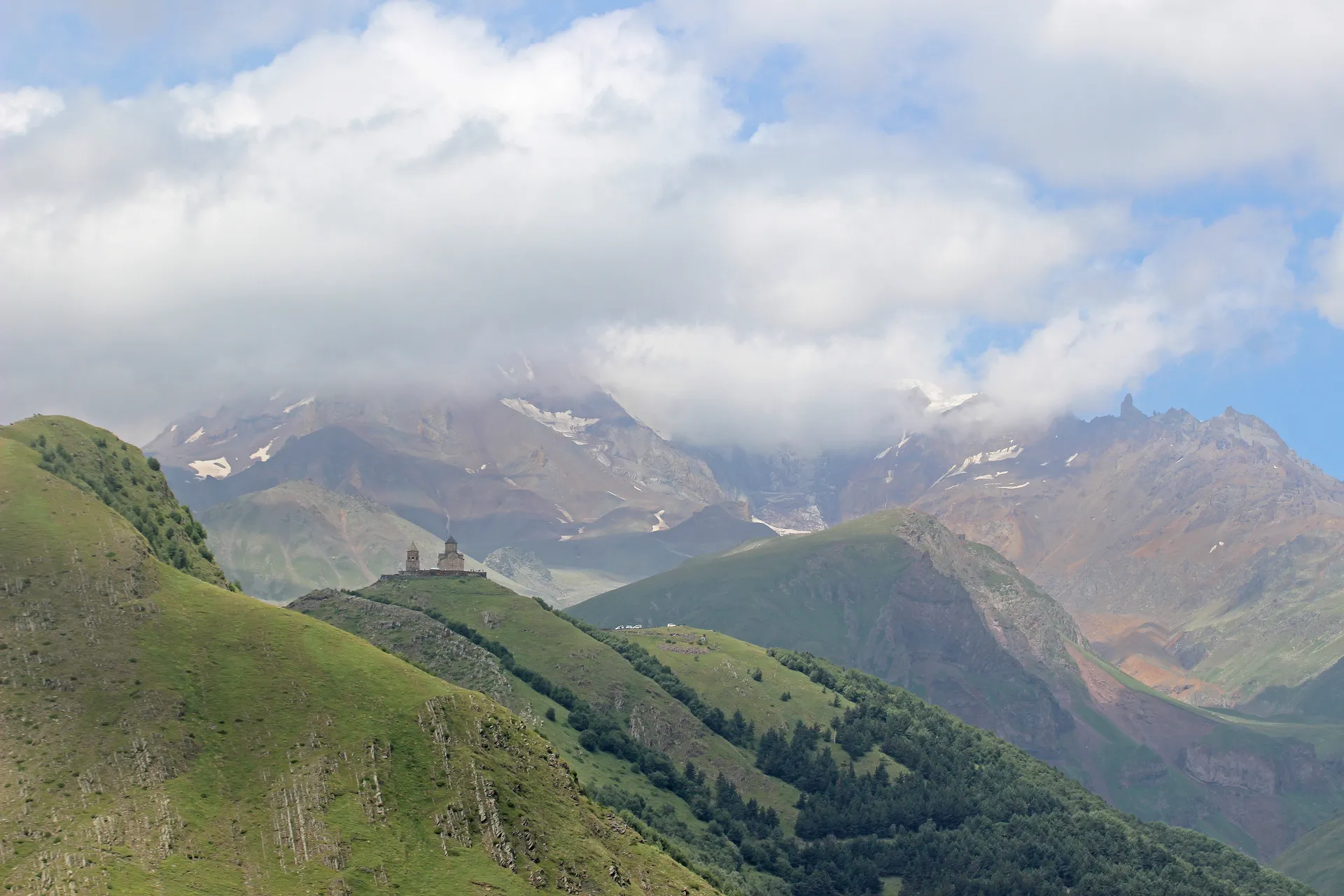
The village itself is small enough to cross entirely on foot, and walking is genuinely the main way to get around day to day. To reach the famous Gergeti Trinity Church (Tsminda Sameba) on its ridge, most visitors hire one of the local 4x4 taxis, though the walk up through Gergeti village is a rewarding couple of hours if you are fit and acclimatized. For longer trips, marshrutka minibuses and shared taxis run the dramatic Georgian Military Highway to and from Tbilisi in roughly three hours, weather permitting. A rental car gives you real freedom to reach the Juta and Truso valleys, but the mountain roads are rough and a 4x4 is strongly preferable. Minibuses to Kazbegi leave from Didube bus station in the capital, and the stretch that decides whether they run at all is the Jvari Pass, at about 2,400 metres, south of the village. The highway is also Georgia's main freight artery to Russia, so expect slow lorries on the hairpins, and when snow shuts the pass the trucks wait it out in long lines along the road.
- On foot: the whole village and Gergeti are walkable.
- 4x4 taxi: the standard ride up to the Gergeti Trinity Church.
- Marshrutka or shared taxi: the main link to Tbilisi, about three hours.
- Day hikes: the real point of being here, from glacier viewpoints to side valleys.
Sorting transport? Book an airport transfer, or compare car rental on Auto Europe and QEEQ.
Visas for Stepantsminda
Georgia is one of the most welcoming countries in the world for long-stay travelers, and that generosity is a big part of why nomads tolerate the remoteness. Citizens of many countries can enter visa-free and stay for a full 365 days, which is unusually long and removes the constant border-run anxiety common elsewhere. Georgia has also actively courted remote workers in recent years, including the Remotely from Georgia initiative aimed at location-independent professionals. None of this changes the fact that Stepantsminda is a village with no immigration office, so you handle everything on arrival at the airport or land border. The Georgian checkpoint at Dariali, the Upper Lars crossing into Russia, is only a short drive north of the village, but it is no place for a border run. Most Western passports need a Russian visa to go any further and the lorry queues there can stretch for kilometres, so the year-long reset is better done from the capital with a bus to Armenia or a flight.
- Many nationalities receive up to 365 days visa-free on entry.
- Georgia has promoted itself to remote workers through initiatives like Remotely from Georgia.
- There are no visa services in Stepantsminda itself; sort status at your point of entry.
Best Time to Visit Stepantsminda
Timing matters more here than in almost any city base, because this is a high-altitude village at around 1,740 meters and the seasons are dramatic. The sweet spot is summer through early autumn, roughly June to early October, when the trails to the Gergeti glacier, Juta, and Truso are open, the wildflowers are out, and you get the best odds of clear views of the 5,047-meter Mount Kazbek. Late September can be glorious with autumn color and thinner crowds. Winter is a different proposition entirely: cold, snowy, and very quiet, with a real risk of the Georgian Military Highway pass closing after heavy snow, which can strand you. Come in winter only if solitude and snow are the point. Visitors who come for the snow usually base themselves in Gudauri, the ski resort on the Tbilisi side of the pass, under an hour's drive away in good conditions. A closure therefore cuts Stepantsminda off from the slopes and from the capital at the same time, so a ski month works better in Gudauri with Kazbegi as a day trip.
- June to early October: prime hiking and the clearest Kazbek views.
- Late September: autumn color and fewer visitors.
- Winter: cold, snowy, quiet, with genuine road-closure risk on the pass.
Pros and Cons of Stepantsminda
Stepantsminda rewards a specific kind of traveler and frustrates everyone else, so it pays to be clear-eyed. The upside is extraordinary: some of the most beautiful mountain scenery in the Caucasus, exceptionally clean air, a strong sense of safety, warm Georgian hospitality, dirt-cheap living, and that remarkable visa. The downside is equally real: thin and unreliable wifi, near-zero nightlife, a tiny community that thins out further off-season, limited English, and harsh winters. This is a place to slow down, hike, write, and disconnect, not to network or chase productivity. Go in with the right expectations and it is unforgettable; go in expecting a nomad hub and you will be disappointed within days.
- Pros: world-class nature, superb air, very safe, very cheap, generous visa.
- Cons: weak wifi, almost no nightlife, tiny community, limited English.
- Winters are cold and can isolate the village entirely for stretches.
Who Stepantsminda Is For
Stepantsminda is for the slow traveler and the hiker, not the conventional digital nomad. It suits writers, researchers, photographers, and anyone whose work bends easily around unreliable connectivity and who genuinely wants to trade cafes and coworking for glaciers and silence. It is ideal as a one to three week base built around trekking, or as a restorative retreat between spells in Tbilisi. It is a poor fit if you depend on daily video calls, crave community and social energy, or need any kind of nightlife. Come here to acclimatize, walk to the church at dawn, eat khinkali after a long trail, and let the pace of a tiny Caucasus village reset how you work and rest.
- Great for: hikers, writers, photographers, and deliberate slow travelers.
- Best as: a short-to-medium retreat or a Tbilisi-paired base.
- Not for: call-heavy workers or anyone needing community and nightlife.