Cost of Living in Pamukkale
Where this figure comes from. No cost survey covers Pamukkale, so the $800 a month above is our own estimate rather than a measurement. On 416 of our 999 city guides the figure is built from a published Numbeo basket, a one-bedroom rent in the centre plus one person's monthly costs without rent, converted to USD; this city is not one of them. How we source everything.
Pamukkale is genuinely affordable, one of the cheaper stops in western Turkey. A solo nomad can live comfortably on roughly $700 to $1,400 a month, with most people landing in the middle of that range. The village runs on tourism, so a short-stay pension or small apartment costs more per night than a monthly rental in nearby Denizli, where prices drop noticeably. Eating is where you save: hearty Turkish home cooking, gozleme, and grilled plates are cheap, and local produce is excellent. The main costs are accommodation and the occasional pricey tourist-facing meal near the site entrance. Budget more if you want a hotel with reliable wifi and a pool.
- Pension or small studio: $350 to $700 per month, cheaper in Denizli
- Local restaurant meal: $4 to $9; tourist-strip meals run higher
- Monthly transport by dolmus and occasional buses: $30 to $60
- Travertine and Hierapolis site entry: a one-off ticket, not daily
Where to Work in Pamukkale
Pamukkale grew up around a hillside of white terraces and tour coaches, and remote work never entered into it. There is no dedicated coworking space in the village, and wifi is basic, sometimes slow or unreliable, especially in older pensions. If your work depends on solid upload speeds or video calls, this is a stop, not a base. That said, plenty of people get light work done here. Many pensions and hotels have a quiet lobby or terrace café with a view, and a few village cafés welcome laptops during off-peak hours. For anything serious, Denizli, twenty minutes away by dolmus, has proper cafés, faster connections, and more reliable infrastructure. A local Turkish SIM with a generous data plan is the smartest backup for tethering.
- Pension and hotel terraces: fine for email and light tasks, variable speed
- Village cafés: laptop-friendly off-peak, weaker at midday tourist rush
- Denizli: better cafés and connections, a short dolmus ride away
- Buy a local eSIM or SIM for reliable mobile-data tethering
Getting Around Pamukkale
The village itself is small and completely walkable; you can cross it in ten minutes, and the travertine terraces and the Hierapolis ruins sit right above town, reachable on foot through the south gate. For anything beyond the village, the workhorse is the dolmus, a shared minibus that runs frequently to central Denizli in about twenty minutes for a small fare. Denizli is your hub: its otogar (bus station) connects to Antalya, Izmir, Cappadocia, and beyond via comfortable intercity coaches. Denizli also has a train station and the regional Cardak Airport (DNZ) roughly an hour east, with domestic links to Istanbul and some seasonal routes. Within Pamukkale you rarely need a car, and taxis are easy for the airport or Karahayit.
- Village and both UNESCO sites: on foot
- Dolmus to Denizli: about 20 minutes, frequent, cheap
- Denizli otogar: coaches to Antalya, Izmir, Cappadocia and more
- Cardak Airport (DNZ): about an hour away, mainly domestic flights
Sorting transport? Book an airport transfer, or compare car rental on Auto Europe and QEEQ.
Visas for Pamukkale
Many nationalities can enter Turkey visa-free for short stays, while others buy a straightforward online e-Visa in advance; a common allowance is up to 90 days within any 180-day period, but the exact terms depend entirely on your passport. Turkey is not part of the Schengen area, so its clock is separate from the EU. For anyone wanting to stay longer, the route is a short-term residence permit (ikamet), applied for through the migration authority once you are in the country. That process has become stricter and slower in recent years, so plan ahead if you intend to settle. Because the village is part of Denizli province, a residence application from a Pamukkale address is handled by the provincial migration office in Denizli, which at least means a short dolmus ride to the appointment rather than a trip across the country.
- Short stays commonly allow up to 90 days per 180, but verify
- Turkey is outside Schengen; the day count is independent
- Longer stays require a residence permit; expect stricter rules lately
Best Time to Visit Pamukkale
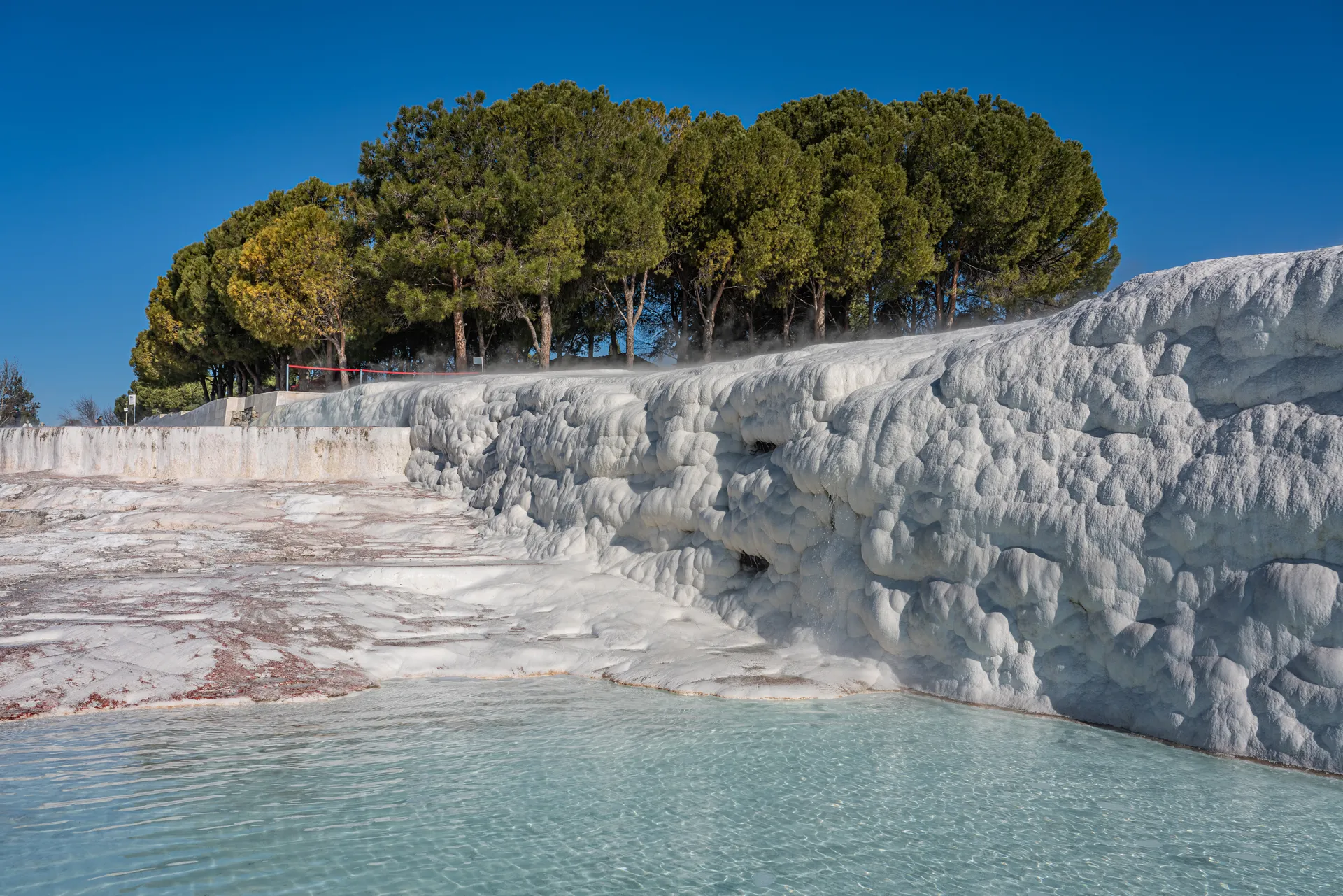
Spring and autumn are the clear winners. From April to early June and again from September into October, the weather is mild, the light is soft on the white terraces, and the crowds thin out compared with peak summer. Summer, from July to August, is hot and very busy; the travertines dazzle under a blazing sun, but you will share them with tour groups and want an early-morning or late-afternoon visit to beat both heat and coach parties. Winter is cool and quiet, occasionally grey, yet it has a quiet magic: the thermal water stays warm, steam rises off the pools, and you may have viewpoints almost to yourself. Whenever you come, go early or late to enjoy the site in calmer light. The authorities control the flow of water over the travertines and close sections in turn so the deposits can recover, which means the pools in the photographs are not always the ones open on a given day, and a longer stay is the surest way to see them full.
- Spring (Apr to Jun): mild, green, fewer crowds, ideal light
- Summer (Jul to Aug): hot and crowded, dazzling but busy
- Autumn (Sep to Oct): warm days, thinning crowds, excellent value
- Winter: cool and quiet, warm thermal water, occasional grey skies
Pros and Cons of Pamukkale
Pamukkale's appeal is easy to sum up: it is scenic, cheap, safe, and steeped in history, a place where you wake up under a hillside of white travertine and can walk into a Roman ruin before breakfast. Food is delicious and inexpensive, locals are warm, and the pace is calm. The trade-offs are just as clear. This is a small tourist village, not a working city, so the nomad scene is thin, nightlife is quiet, English drops off quickly outside tourism, and wifi is basic. Services, healthcare, and variety all live in Denizli rather than the village itself. It is a wonderful short, cultural, scenic stop, but a limiting long-term base for anyone who needs a real urban rhythm. The ruins do not stop at Hierapolis. Laodicea, one of the seven churches named in the Book of Revelation, lies across the valley on the road into the city and sees a fraction of the crowds, which makes it the better choice for a quiet morning among colonnaded streets.
- Pros: stunning UNESCO landscape, low cost, safe, rich Roman history, great food
- Pros: calm, walkable, warm locals, easy day trips from Denizli
- Cons: basic wifi, tiny nomad community, quiet nightlife
- Cons: limited English and services in the village; rely on Denizli
Who Pamukkale Is For
Pamukkale is for the traveler who values scenery and history over hustle. If you are a slow traveler, a culture-first nomad, a photographer, or someone stringing together a Turkey loop and wanting a few restful, beautiful days between bigger cities, it is close to perfect. It rewards early risers, thermal-pool soakers, and anyone happy to trade nightlife for stargazing and Roman ruins. It is not the place for a nomad who needs fast, reliable internet, a busy coworking crowd, a social scene, or big-city amenities on the doorstep. Think of it as a scenic, affordable interlude of one to two weeks rather than a months-long base, and pair it with Denizli or a larger hub if you need to actually get heads-down work done.
- Great for: slow travelers, culture and history lovers, photographers
- Great for: a short, scenic, affordable stop on a Turkey itinerary
- Less ideal for: work-heavy nomads needing fast wifi and community
- Best paired with Denizli or a larger city for services and speed