Cost of Living in Kutaisi
Where this figure comes from. No cost survey covers Kutaisi, so the $1,200 a month above is our own estimate rather than a measurement. On 416 of our 999 city guides the figure is built from a published Numbeo basket, a one-bedroom rent in the centre plus one person's monthly costs without rent, converted to USD; this city is not one of them. How we source everything.
Kutaisi is one of the cheapest cities in an already affordable country. Most remote workers budget between 700 and 1,100 USD per month, depending on how much they eat out and how central their apartment is.
- Rent, central area: $150-230 per month for a one-bedroom
- Rent, quieter residential area: $95-145 per month
- Groceries: $150-190 per month for a single person shopping at local markets and supermarkets
- Eating out: A sit-down dinner at a Georgian restaurant costs $4.50-9.50; coffee at a cafe runs $1-1.50
- Coworking hot desk: approximately $95-105 per month
- Local transport: City buses and marshrutkas cost $0.50 per ride; a Bolt taxi across the city center runs $2-4
- Total realistic range: $725-1,140 per month for a comfortable but modest lifestyle
The Georgian Lari (GEL) trades at roughly 2.6 to the US dollar. Food costs are particularly low if you cook at home and shop at the Kutaisi Central Market.
Where to Work
Kutaisi has far fewer remote-work options than Tbilisi, so it pays to know where to go before you arrive.
Coworking Spaces
Space Z Kutaisi on Grishashvili Street is the most established dedicated coworking space in the city, with private offices, open desks, meeting rooms, and reliable fiber internet. It caters primarily to local freelancers and small businesses. Coworking and Coliving Gumbrini, located about 10 km outside the city center in a forested area, is aimed squarely at digital nomads and includes coliving accommodation alongside a coworking floor.
Cafe Work Culture
Cafe work culture exists but is still developing. Several cafes near the central park and along Tabidze Street have power sockets and decent WiFi, including spots like Doli and Our Garden Cafe. Staff are generally tolerant of laptop workers during off-peak hours, though you will not find a Tbilisi-style density of "laptop cafes."
WiFi Reality
Fixed-line broadband in Kutaisi is sufficient for video calls and standard remote work. Mobile data (Magti, Silknet, Geocell) is a solid backup. Be aware that a few older guesthouses and budget hotels still have slow connections.
Getting Around
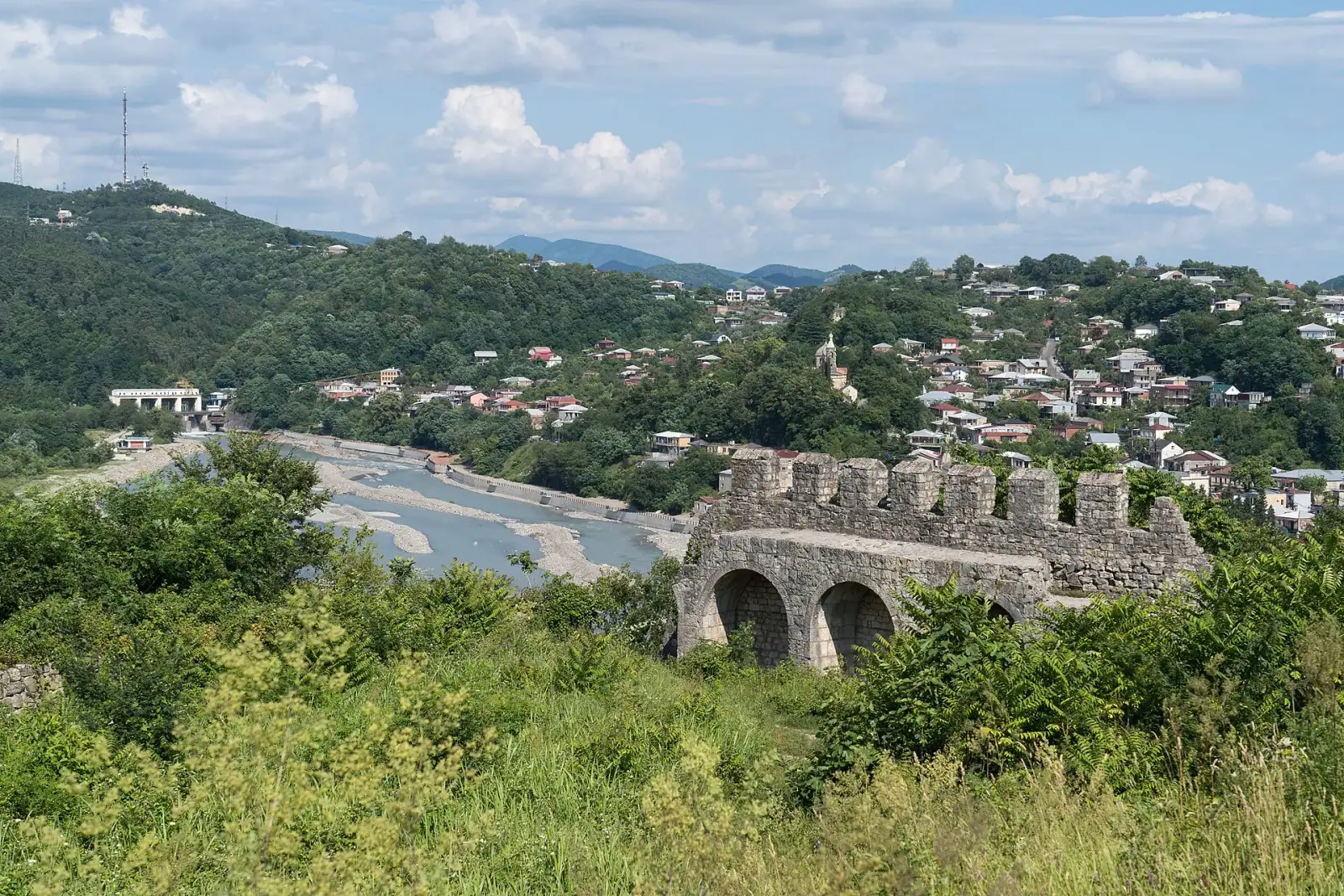
The city center is compact and very walkable. You can cover most of the old town, central park, and the Rioni River embankment on foot without trouble. The historic core around Bagrati Cathedral and White Bridge is entirely navigable on foot.
City buses and marshrutkas (shared minibuses) cover broader neighborhoods for $0.50 per ride using a tap card. Bolt operates in Kutaisi and is the recommended option for taxis; avoid negotiating with unmarked taxis at the bus station.
Airport transfers: Kutaisi International Airport (KUT) is about 20 km from the city center. Bus #101 runs every 30 minutes for $2 (paid by contactless card only). A Bolt taxi from the city costs around $9.50-11 and takes about 25 minutes. The airport is a major Wizz Air hub, giving you cheap connections to many European cities.
There is no metro. Biking is possible but not well-supported given uneven roads and limited bike infrastructure.
Sorting transport? Book an airport transfer, or compare car rental on Auto Europe and QEEQ.
Visas and Staying Long-Term
Georgia has one of the most permissive entry policies in the world for digital nomads. Citizens of over 90 countries, including the United States, Canada, the United Kingdom, all EU member states, Australia, New Zealand, Japan, and South Korea, can enter Georgia visa-free and stay for up to 365 consecutive days without registering or applying for anything in advance.
There is no separate Georgian digital nomad visa because the standard 365-day visa-free allowance already covers most stays. If you need to stay longer than a year, you can apply for a temporary residence permit or re-enter after a brief trip abroad.
Since January 2026, foreign nationals entering Georgia must hold travel medical insurance valid for their stay, with a minimum coverage of $11,430.
Best Time to Visit
Kutaisi sits in western Georgia and gets more rain than the capital. Annual precipitation is high, so factor that into your expectations.
Best windows for remote work: April through early June and September through October. Temperatures are mild (18-25°C), rain is lighter than peak summer, and the city is not crowded. The surrounding countryside is green in spring and golden in autumn.
Summer (July to August): Hot and humid, with temperatures regularly reaching 30°C and high humidity. It is the busiest tourist season, so accommodation costs rise and the city center fills up. Not ideal for focused work but fine if you enjoy the energy.
Winter (November to March): Cool and wet, with temperatures dropping to 0-7°C. Kutaisi itself rarely gets heavy snow, but the surrounding mountains do. It is very quiet and cheap, which suits some nomads, though shorter days and grey skies can wear on you.
Pros and Cons
- Pro: Very low cost of living, well below Tbilisi and Batumi
- Pro: 365-day visa-free stay for most Western passport holders
- Pro: Compact, walkable old town with genuine Georgian character
- Pro: Quick access to Prometheus Cave, Sataplia Nature Reserve, and Racha wine region
- Pro: Good flight connections via Wizz Air to European cities
- Pro: Safe city with low crime
- Con: Very small nomad community; limited networking opportunities
- Con: Few dedicated coworking spaces compared to Tbilisi
- Con: English is limited outside tourist-facing businesses; Russian or Georgian helps
- Con: WiFi in budget accommodation can be slow
- Con: Rainy climate, especially outside the spring and autumn sweet spots
- Con: Limited nightlife and entertainment compared to Tbilisi or Batumi
Who Kutaisi Is Best For
Kutaisi works well for nomads who prioritize keeping costs low above almost everything else and who are comfortable working independently without a ready-made remote-work community. If you want to focus on your work, explore Georgian history and nature at the weekend, and spend under 800 USD a month, Kutaisi delivers that without compromise.
It is also a natural choice for people who have already spent time in Tbilisi and want a quieter, cheaper base for a month or two. The 365-day visa-free stay means you can combine both cities within a single entry period.
You should probably skip Kutaisi if you need a dense coworking scene, regular English-language networking events, or a vibrant expat social life. Tbilisi handles all of those better. Kutaisi is also a harder fit if slow or unreliable internet would seriously disrupt your work, since the coworking options are limited and you cannot always rely on accommodation WiFi.