Cost of Living in Mestia
Where this figure comes from. No cost survey covers Mestia, so the $700 a month above is our own estimate rather than a measurement. On 416 of our 999 city guides the figure is built from a published Numbeo basket, a one-bedroom rent in the centre plus one person's monthly costs without rent, converted to USD; this city is not one of them. How we source everything.
Mestia is genuinely inexpensive, one of the cheapest mountain bases you will find anywhere. A slow-travel nomad can live comfortably on roughly $600 to $1,100 a month, with most people landing near the lower half of that range. Guesthouses are the backbone of the economy, and many owners will happily cut a monthly rate in the shoulder season. Meals are hearty and cheap, local transport is a few dollars, and there is very little to spend money on once the trekking gear is bought. Costs climb in July and August when the town fills with hikers and rooms tighten. Bring cash: there are ATMs on Seti Square, but they can run dry, and card acceptance is patchy outside the bigger guesthouses. Winter changes the arithmetic, because many guesthouses heat with wood stoves, so ask whether firewood is included before you agree a monthly price for December. Eating out stays cheap all year: kubdari, the Svan bread stuffed with spiced meat, and dishes seasoned with Svanetian salt are on every guesthouse table and cost a fraction of anything that has to be trucked up the gorge.
- Guesthouse room, monthly negotiated: roughly $250 to $500
- Simple Svan or Georgian meal out: $4 to $8
- Marshrutka to Zugdidi: around $8 to $12
- Local SIM with data top-ups: a few dollars a week
Where to Work in Mestia
Mestia is built for disconnecting rather than for polished remote work, and that is worth settling in your own head before the long drive up the gorge. There is no true coworking space, and wifi across the town is limited and variable, throttled by the remote mountain infrastructure and prone to dropping in bad weather. Your best insurance is a local SIM. Buy a Magti or Geocell (Silknet) prepaid card in town and lean on mobile data, which is often steadier than guesthouse wifi. Before you commit to a room for the month, test the connection yourself and ask the owner directly about speeds and outages. A few larger guesthouse cafes on and around Seti Square are the most reliable spots for a video call, but do not plan a launch week here.
- Buy a Magti or Geocell (Silknet) SIM on Seti Square for backup data
- Test wifi in person before booking a monthly stay
- Expect outages during storms and heavy snow
- Schedule critical calls with a buffer, and download work offline
Getting Around Mestia
The town itself is small and easily walkable; you can cross it in fifteen minutes and reach the museum, square, and most guesthouses on foot. Getting beyond town is where planning matters. Shared marshrutka minibuses and 4x4 jeeps run to the trailheads and along the rough road to Ushguli, and drivers gather on Seti Square each morning to fill seats. The long road out to Zugdidi takes about three to four hours by marshrutka or shared taxi, winding down through the gorge, and from Zugdidi you connect onward by train or minibus to Tbilisi and Batumi. The small Queen Tamar (Mestia) airport sits just outside town with occasional light-aircraft flights to Tbilisi, weather permitting, which can save a very long day on the road. Vanilla Sky flies a 19-seat Let L-410 into Mestia from Natakhtari, an airfield north of the capital rather than its main international airport, and from Kutaisi, so the transfer out to Natakhtari has to be planned as a leg of its own. Cloud in the valley grounds those small planes easily, which is why anyone with an onward international departure should leave a spare day or take the road instead.
- Walkable town center around Seti Square
- Shared 4x4s and marshrutkas to Ushguli and the trailheads
- Marshrutka or shared taxi to Zugdidi, roughly 3 to 4 hours
- Queen Tamar (Mestia) airport for occasional flights to Tbilisi
Sorting transport? Book an airport transfer, or compare car rental on Auto Europe and QEEQ.
Visas for Mestia
Georgia has one of the most generous visa policies in the world, and it is the single biggest practical draw for nomads. Citizens of many countries can enter visa-free and stay for a full 365 days, then reset with a simple border run. That one-year window removes the constant visa anxiety that shadows life in most destinations and makes a long, slow immersion in the mountains realistic. The country has actively courted remote workers, running the Remotely from Georgia program during the pandemic to welcome location-independent professionals. Keep an eye on any tax-residency implications of a genuinely long stay. Since 1 January 2026 Georgia has required every foreign visitor to carry travel medical insurance for the whole stay. The minimum cover is 30,000 lari, roughly $11,000, and in Svaneti the clause to read is mountain rescue, because an evacuation from a trail above the town is the expensive scenario here, not a clinic visit.
- Visa-free stays of up to 365 days for many nationalities
- A straightforward reset by exiting and re-entering
- Georgia has openly welcomed remote workers
Best Time to Visit Mestia
Summer to early autumn, roughly June through September, is the window that makes Mestia worth the journey. Trails are clear, the peaks around Ushba and Tetnuldi show themselves, and the Mestia-to-Ushguli trek, the Chalaadi glacier, and the Koruldi lakes are all in season. July and August are busiest and warmest; September brings thinning crowds and crisp light. Winter is a different proposition entirely: deep snow, biting alpine cold, and a real risk of the Zugdidi road closing for days after storms. There is a small ski scene at Hatsvali and the larger Tetnuldi area for those who want it, but services shrink and access gets uncertain. Spring is the season to avoid, all mud, snowmelt, and unsettled weather with trails still buried.
- June to September: best trekking, clear peaks, most services open
- Winter: snowy and cold, skiing at Hatsvali and Tetnuldi, road-closure risk
- Spring: muddy, unsettled, many high trails still under snow
Pros and Cons of Mestia
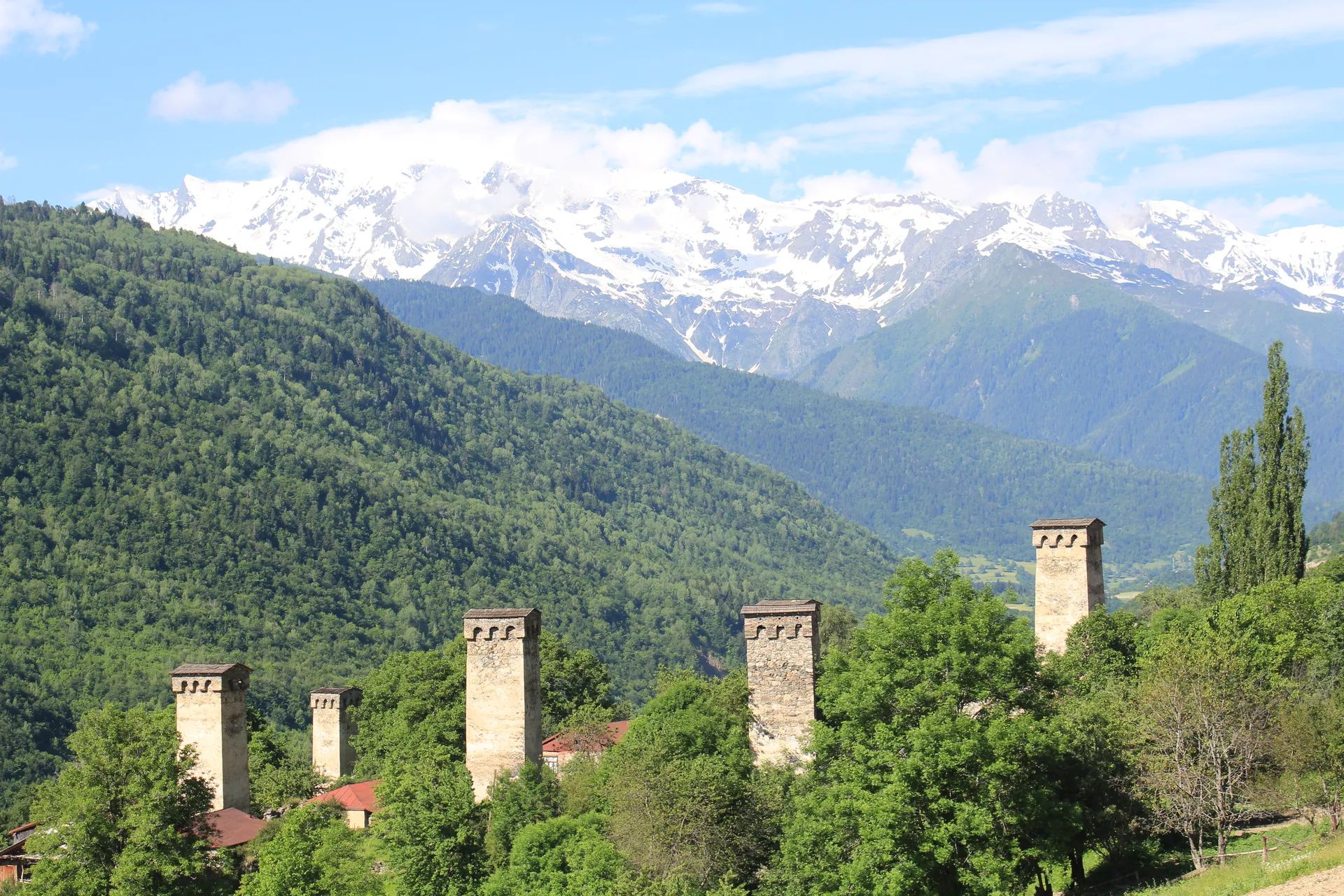
Mestia is a place of genuine extremes, and it rewards the right traveler while frustrating the wrong one. On the upside, you get world-class Caucasus scenery, a living Svan culture wrapped around medieval stone tower-houses, extraordinarily low costs, clean mountain air, strong personal safety, and Georgia's unbeatable year-long visa. On the downside, this is remote and hard-edged: the internet is limited and unreliable, winters are harsh, the road in is long and occasionally closed, the nomad community is tiny to nonexistent, English is limited, and everyday services are thin. Weigh those honestly against how you actually work and live. If deadlines and dependable connectivity define your income, the cons will bite. If your work is flexible and you crave nature and culture, the pros are hard to match.
- Pros: spectacular mountains, Svan tower culture, very low cost, clean air, safety, 365-day visa
- Cons: limited and variable wifi, harsh winters, remote access, tiny scene, limited English
Who Mestia Is For
Mestia suits the adventurous, culture-and-nature slow traveler far more than the conventional productivity-focused nomad. It is for the person whose work fits into flexible blocks, who can live with a shaky connection, and who would rather end the day on a ridge beneath Ushba than in a buzzing cafe. If you are drawn to trekking, quiet, medieval towers, and a culture unlike anywhere else in Europe, and you are honest about needing to disconnect, this town can be a highlight of your travels. It is a poor fit for anyone who needs reliable high-speed internet, a lively social scene, nightlife, or easy access to services and airports. Come for a season, treat it as immersion rather than a base, and let the mountains set the pace.
- Great for: flexible-schedule adventurers, trekkers, culture seekers, slow travelers
- Not for: deadline-driven remote workers who need fast, reliable wifi
- Best approached as a seasonal immersion, not a year-round hub